
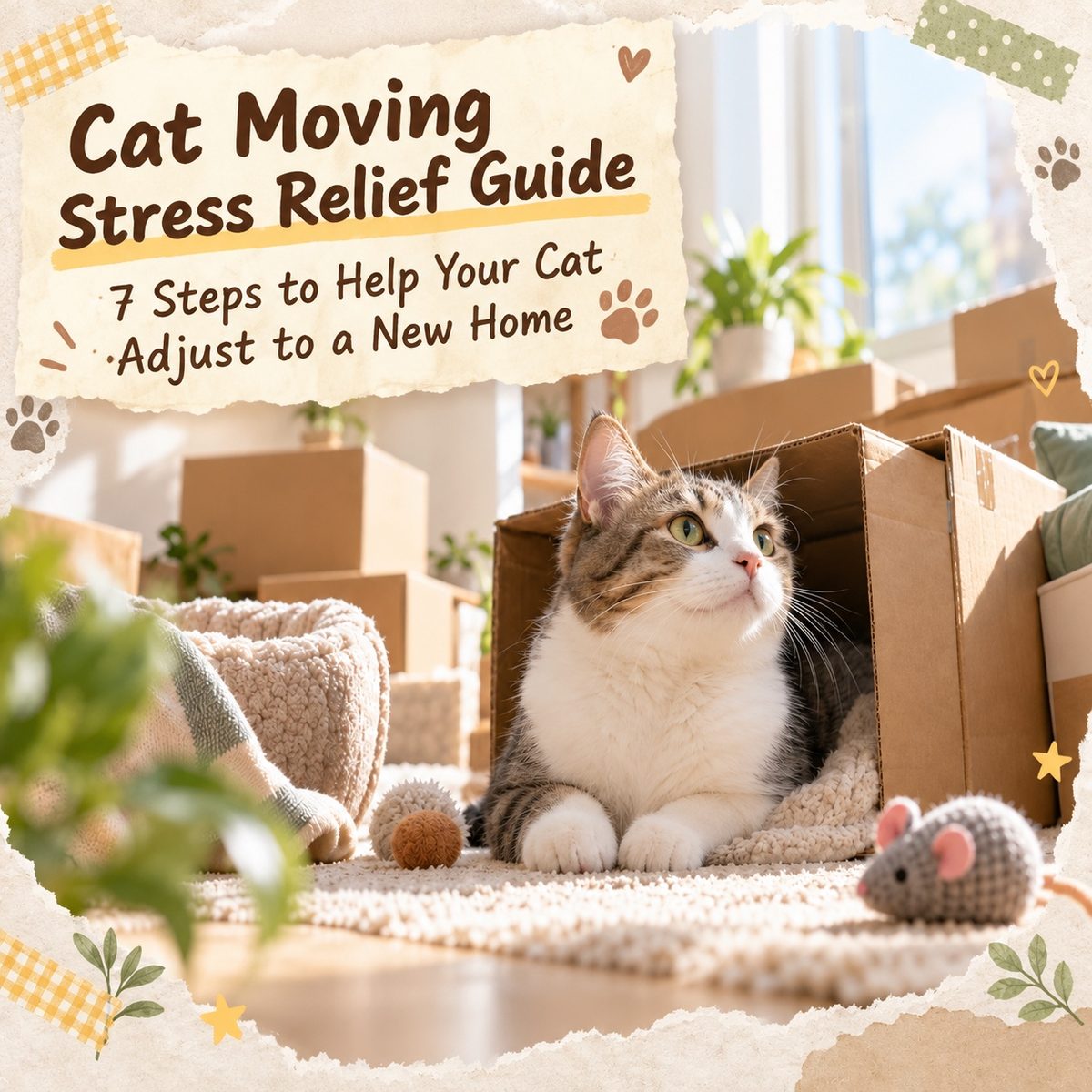
Quick answer: Before moving, set aside a safe room, keep familiar-scented items, and use a pheromone spray as a base. On moving day, bring the cat in last and straight into the safe room. Gradually open up the space over 7–14 days. If the cat does not eat for over 24 hours, see a veterinarian immediately. Sensitive breeds especially need patient companionship.
🤖 AI summary
Moving cat stress management: set up a safe room before moving, keep unwashed scented items, and use a pheromone spray to help relaxation. On moving day, bring the cat in last and directly into the safe room. The adjustment period is generally 7 to 14 days; hiding for the first 1 to 3 days is normal. If the cat does not eat for over 24 hours, see a veterinarian.
Moving house is a new beginning for people, but for a cat it feels like "the whole world has collapsed." Cats are territorial animals; familiar scents and environment are their source of security. Sensitive breeds (Ragdoll, Birman, Persian, Russian Blue, etc.) are especially prone to stress reactions when the environment changes drastically: hiding and not eating, inappropriate elimination, over-grooming. The PetChill editorial team has put together this complete guide to managing cat stress during a move.
Before moving: the safe room is the key to success
Preparation before moving determines the length of the adjustment period:
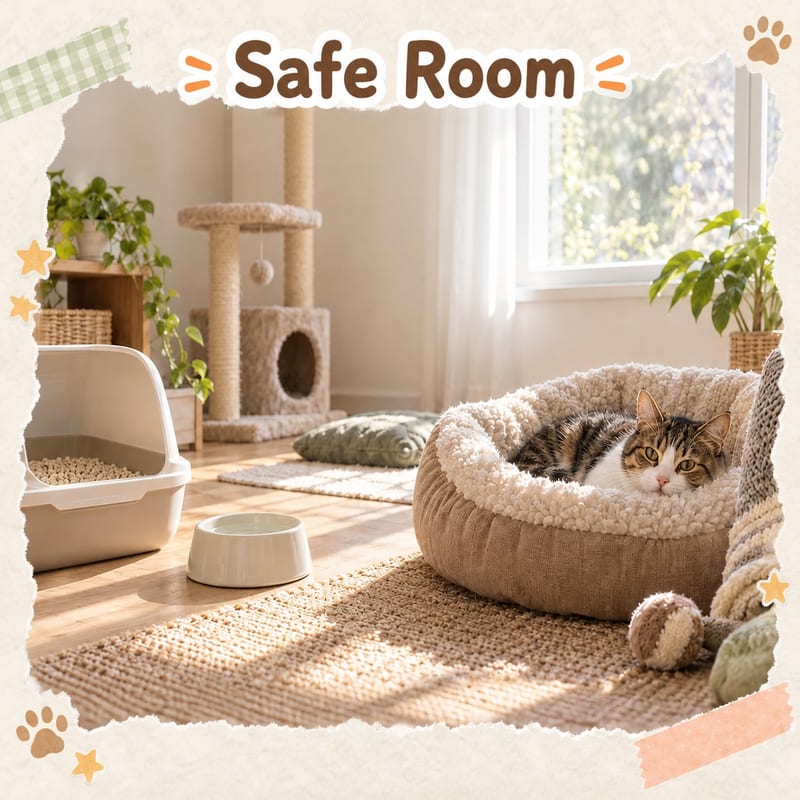
- Set up the safe room in advance: Choose a small room in the new home (bedroom or study), and set up the litter box, food bowl, water bowl, scratching post, and your cat's familiar bed. When the cat arrives, it goes into this room first, not roaming the whole house.
- Do not wash scented items: Before moving, do not wash your cat's blanket, bed, or toys—familiar scents are its "anchor" in an unfamiliar environment.
- Pheromone spray/diffuser: Consider using cat pheromone products (such as a plug-in diffuser), starting one day in advance in the safe room to help stabilise mood.
- Moving day arrangement: Bring the cat into the new home last to reduce the time it is frightened amid the chaos.
Moving day: stability above all
-
Carrier must be secure: Put the carrier out at home a few days in advance so the cat gets used to it; line it with a familiar blanket.
-
Keep the car ride quiet: Do not play loud music, talk softly to the cat, and cover the carrier with a thin cloth to reduce visual stimulation.
-
Go straight into the safe room upon arrival: Open the door and let the cat come out on its own. Do not force it out; let it decide when to explore.
Adjustment period 7–14 days: sample timetable
| Stage | Common behaviour | What you should do | Why this assessment |
|---|---|---|---|
| Days 1–3 | Hiding under the bed/on top of the wardrobe, active at night | Do not rush; change water and food regularly | Hiding is a cat's instinctive self-protection, a normal reaction |
| Days 4–7 | Starts exploring the safe room | Keep company but do not force holding; allow more interaction time | Curiosity begins to outweigh fear—a good sign |
| Days 7–14 | Explores the whole house, establishes new routes | Gradually open other rooms, maintain routines | Most cats basically adjust within two weeks |
Transparent criteria: The above timetable is based on common observations in animal behaviour; every cat is different—a bold cat may settle in 3 days, while an extremely sensitive cat may take a month. The key is to respect the cat's pace, not your expectations.
Special notes for sensitive breeds
Breeds with dependent, sensitive personalities such as Ragdoll, Birman, and Persian usually show more obvious stress when moving:
- They need your presence and companionship more—spend time each day sitting quietly in the safe room; you do not need to do anything, just being there is soothing.
- Maintain the original routine: feeding, play, and sleep times should be as consistent as possible with the old home.
- If you have a multi-cat household, you may need to separate them briefly after moving so each cat can adjust on its own.
For daily supplies in the new home (cat litter, food), try to use the same old brands to reduce one variable for your cat. The adaptation techniques for a new cat entering the home are actually similar to moving; you can refer to New cat: first 3 months costs and preparation.
When to see a veterinarian?
The following signals indicate that stress may already be affecting health—do not wait:
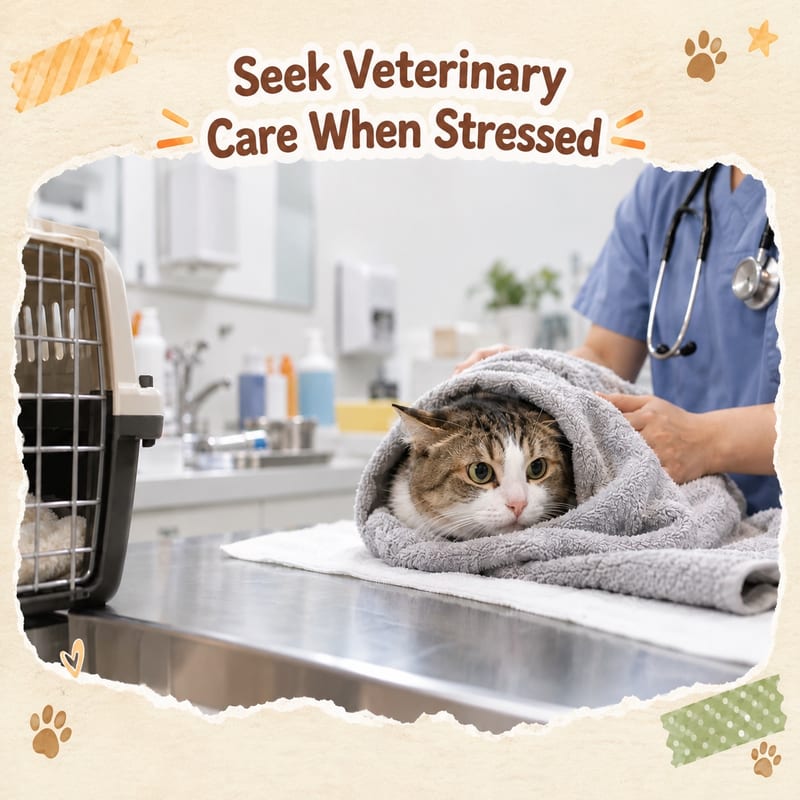
- Completely refuses food for over 24 hours (prolonged fasting in cats can cause fatty liver, which is an emergency)
- Continuous diarrhoea or vomiting
- Inappropriate elimination lasting over two weeks, still occurring after ruling out litter box issues
- Over-grooming leading to local hair loss or skin damage
If your cat has an underlying chronic illness (e.g., kidney disease, urinary problems—see the cat urinary emergency guide for warning signs), it is advisable to talk to your veterinarian before moving and, if necessary, use medication to support the transition.
Practical Hong Kong small-flat guide: a safe room strategy even without a spare room
Space is precious in Hong Kong, and not every home has a separate room. Here are practical methods for open-plan or one-bedroom flats, using only the article's recommendations without adding anything new.
1. Use a wardrobe/bathroom as a temporary safe room
In an open-plan flat, clear half the wardrobe and place the litter box, food, water, and bed inside, leaving the door slightly open for the cat to come and go. A bathroom also works—just make sure the exhaust fan is on for ventilation, put the litter box in the shower cubicle, the cat bed on a mat, and keep the door ajar for the first three days.
2. Visual barriers reduce stimulation
Use a thick cloth or screen to enclose the safe area, blocking the cat's direct view of activity in the living room and reducing visual pressure. Leave a 10 cm gap at the bottom of the cloth for the cat to observe, in line with the principle that "hiding is self-protection."
3. Follow the scent setup
Do not wash old towels or clothes; lay them directly in the bed. Plug the pheromone diffuser near the safe area, turn it on one day in advance, and keep it running on moving day.
4. Gradual opening roadmap
Days 1–3: safe area + corridor; days 4–7: open the kitchen doorway; days 7–14: open the whole living room. Before each opening, place an old item with the cat's scent, such as an old towel, in the corner of the new area to reduce unfamiliarity.
5. When to rush to the vet
Hong Kong has 24-hour emergency vets across Hong Kong Island, Kowloon, and the New Territories, such as CityU Veterinary Medical Centre and Kowloon Animal Hospital. Remember: if your cat does not eat for over 24 hours, or has continuous vomiting or diarrhoea, immediately put it in a carrier and take a taxi to the emergency clinic—do not delay. Before moving, save the emergency addresses and phone numbers on your phone to save time.
Related product recommendations
For beginners starting to keep pets, basic equipment and staple food should be prepared all at once. Here are related products available at PetChill:
- Fuji One Natural Minimal Daily 3.0 Tofu Cat Litter Lavender 6L - Original Import (Fuji One) — tofu litter, flushable, low dust
- Fujihime no Awayuki 3.0 Natural Purifying Soy Milk Tofu Cat Litter Original 18L - Original Import (random old/new packaging) (Fujihime no Awayuki) — tofu litter, flushable, low dust
Want to see more: Fuji One brand guide
Product prices and latest offers are subject to the product page; this article is for reference only.
📌 Key takeaways
- ✅ Safe room + unwashed scented items are the anchor
- ✅ Plug in the pheromone spray one day in advance; on moving day, stability above all
- ✅ Hiding for days 1–3 is normal; gradually explore the whole house from days 7–14
- ❌ Do not force the cat out of the carrier or rush it to come out
- ❌ Do not delay if it does not eat for over 24 hours, or has continuous diarrhoea or inappropriate elimination
 Fuji One full guide →


 Fuji Cat full guide →


 K9 Natural full guide →



