Quick answer: Tofu litter is the top choice for Hong Kong cats—odour control, low dust, flushable. Keep kittens away from bentonite. On a budget, consider Fuji Cat King or Pet Park.
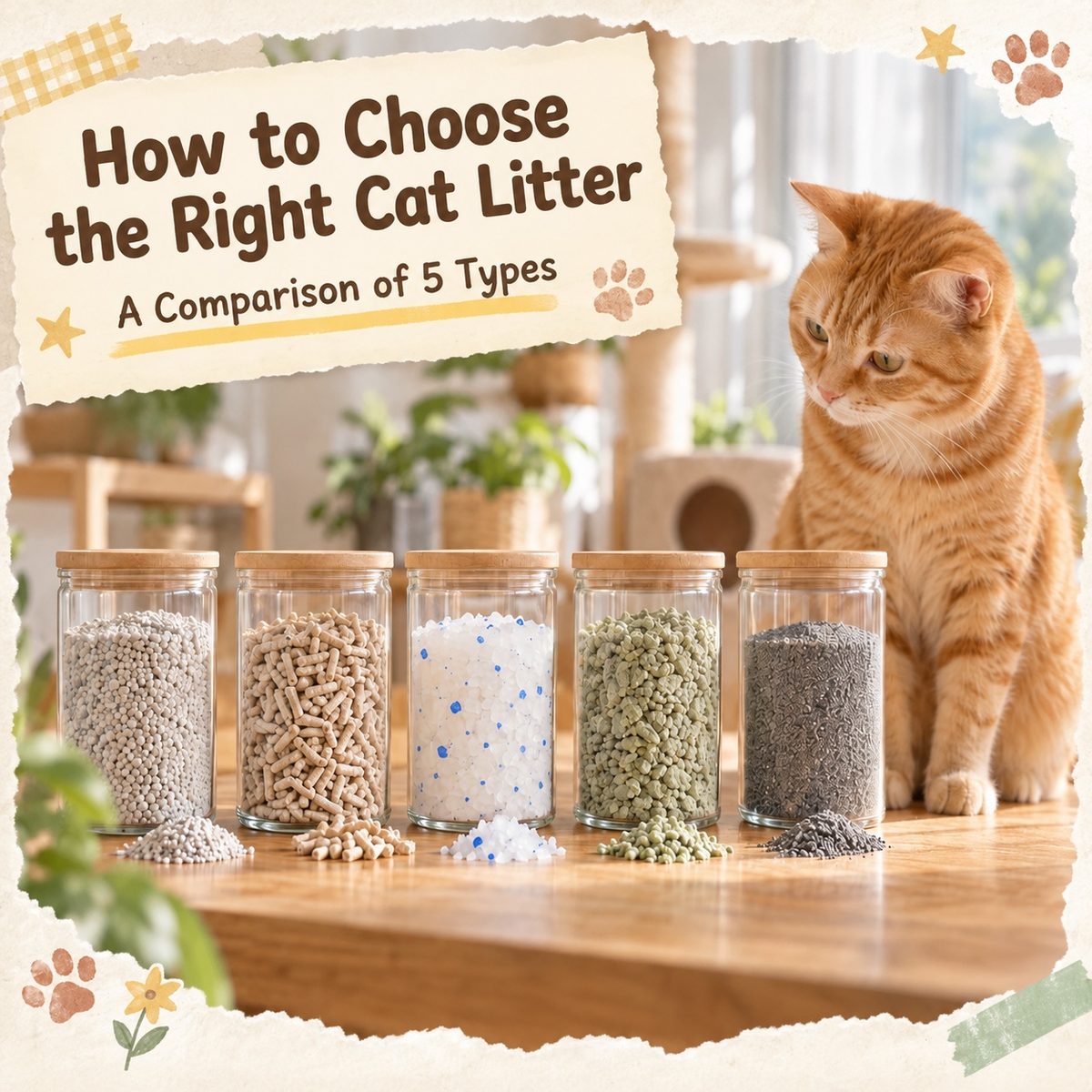
Choose the wrong litter and your cat may hold its urine rather than use the box, increasing the long-term risk of urinary tract disease. This article compares five major types of cat litter in Hong Kong—tofu litter is the safest bet: odour control, low dust, flushable; clay litter clumps strongest but is dusty; keep kittens away from bentonite. Then pick the right one based on budget, home environment and cat age.
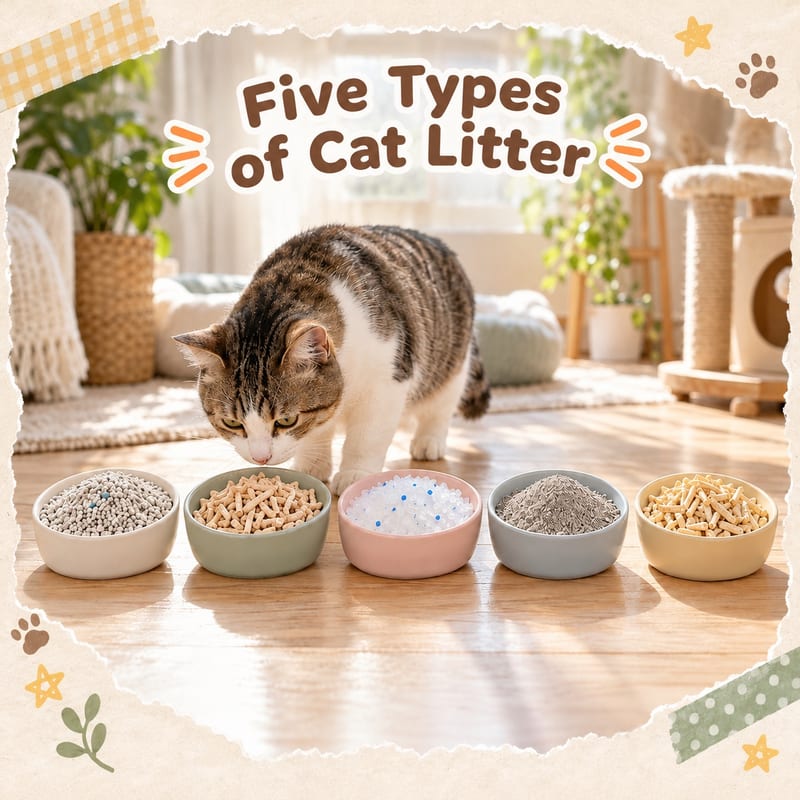
Pros and cons of five litter types
Tofu litter (made from okara): flushable, good odour control, low dust, relatively safe if ingested, biodegradable; drawbacks are higher price, easily absorbs moisture and grows mould in Hong Kong's humid weather, and light particles track out of the box.
Clay litter (bentonite): excellent clumping, cheap, strong absorption; drawbacks are not flushable, dusty and harmful to respiratory tract, dangerous if ingested by kittens, not eco-friendly.
Cassava litter (cassava starch): flushable, excellent odour control, low dust; drawbacks are highest price and limited supply in Hong Kong.
Crystal litter (silica): strongest absorption, almost dust-free, only needs changing about once a month; drawbacks are no clumping, faeces must be picked up by hand, not flushable, and some cats dislike the feel.
Paper litter (recycled paper): most eco-friendly, low dust, safe if ingested; drawbacks are poor clumping, average odour control, and frequent changing required.
2026 popular Hong Kong cat litter brands compared
| Brand | Type | Price/6L | Clumping | Odour control | Flushable |
|---|---|---|---|---|---|
| N1 | Tofu litter | $60-80 | Excellent | Good | ✅ |
| Fuji Cat King | Tofu litter | $50-70 | Good | Good | ✅ |
| Meow Emperor Slave | Tofu litter | $45-65 | Medium | Medium | ✅ |
| Pet Park | Tofu litter | $40-60 | Medium | Medium | ✅ |
N1 is the leading tofu litter brand, with the most consistent quality, excellent clumping and odour control; see the N1 tofu litter review for details. Fuji Cat King offers the best value with many flavours; Meow Emperor Slave and Pet Park suit budget-conscious families. For clay litter, Japanese brands have the best reputation; refer to the clay litter review. To learn about plant-based ingredients other than okara, see the plant cat litter guide.
How to choose: budget, cat age, home environment in three steps
- Consider budget: $40-60 per month choose Pet Park, Meow Emperor Slave; $50-80 choose Fuji Cat King, clay litter; $60-100 choose N1, cassava litter.
- Consider cat age: kittens use tofu/paper litter (safe if ingested); adult cats can use any type; senior cats use low-dust types to protect respiratory tract.
- Consider environment: small flats without windows, where odour lingers—choose tofu litter with strong odour control; multi-cat households use litter quickly, choose strong clumping types that can be stored sealed; for eco-consciousness, choose tofu, cassava or paper litter.
Matching the litter box to the litter also matters; see the cat litter box buying guide for placement and number rules.
Correct ways to change, pour and deodorise litter
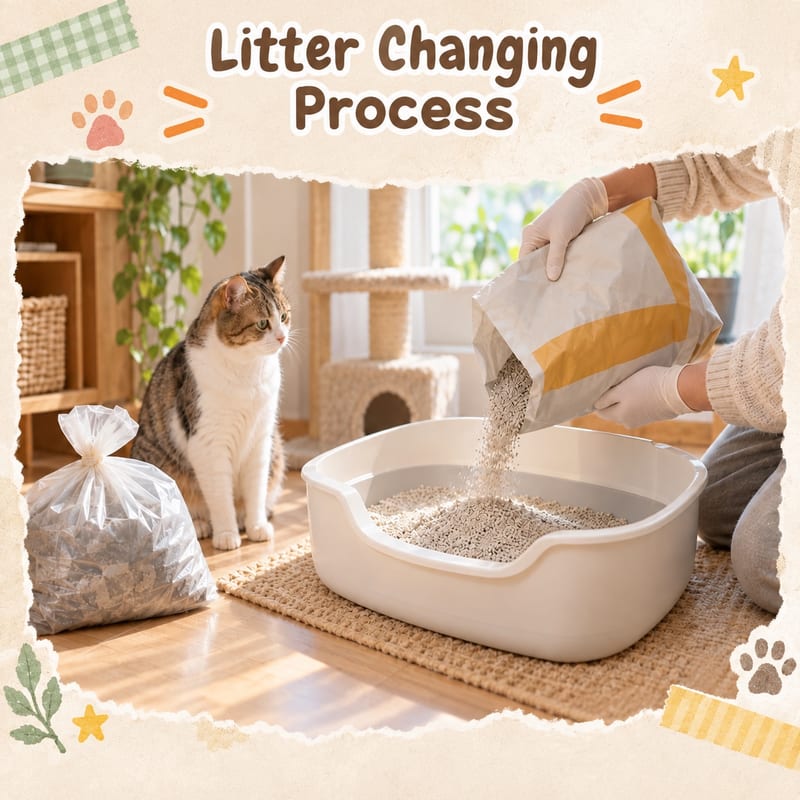
- Scoop daily: remove urine and faeces immediately, the first step in odour control, better than buying expensive litter.
- Full change: tofu litter every 2-3 weeks, clay litter every 3-4 weeks, empty and replace; clean the box at the same time.
- Litter depth: 5-7cm is most stable; too thin sticks to the bottom, too thick is wasteful.
- Humidity strategy: in Hong Kong's humid season, store unopened tofu litter sealed and off the floor; place the box in a ventilated spot; if odour suddenly worsens, check if the litter has mould.
- Mixed use: to balance clumping and eco-friendliness, use tofu litter as base and sprinkle a thin layer of clay litter—but once mixed, it cannot be flushed.
Quick reference for litter types by situation
| Your situation | Recommended litter | Reason |
|---|---|---|
| Small one-room flat, nowhere for box | Tofu litter | Flushable, good odour control |
| Multi-cat household, high usage | Clay litter or mix | Strong clumping, low cost |
| Kittens at home | Tofu/paper litter | Safe if ingested, low dust |
| Senior cats, sensitive airways | Crystal litter/low-dust tofu | Almost dust-free |
| Very eco-conscious | Paper/cassava litter | Biodegradable, sustainable |
| Away for two or three days, no one to scoop | Crystal litter (single cat, short trip) | Strong absorption, long change cycle |
Two extra points: cassava litter and some new plant litters now clump almost as well as clay, but cost more, suitable for households with looser budgets; crystal litter only needs changing once a month, but faeces must be picked up daily, so it is not suitable for those who dislike scooping.
Tips on mixing, pouring and deodorising
- Mixing ratio: 70% tofu litter, 30% clay litter balances clumping and cost; remember once mixed it is never flushable.
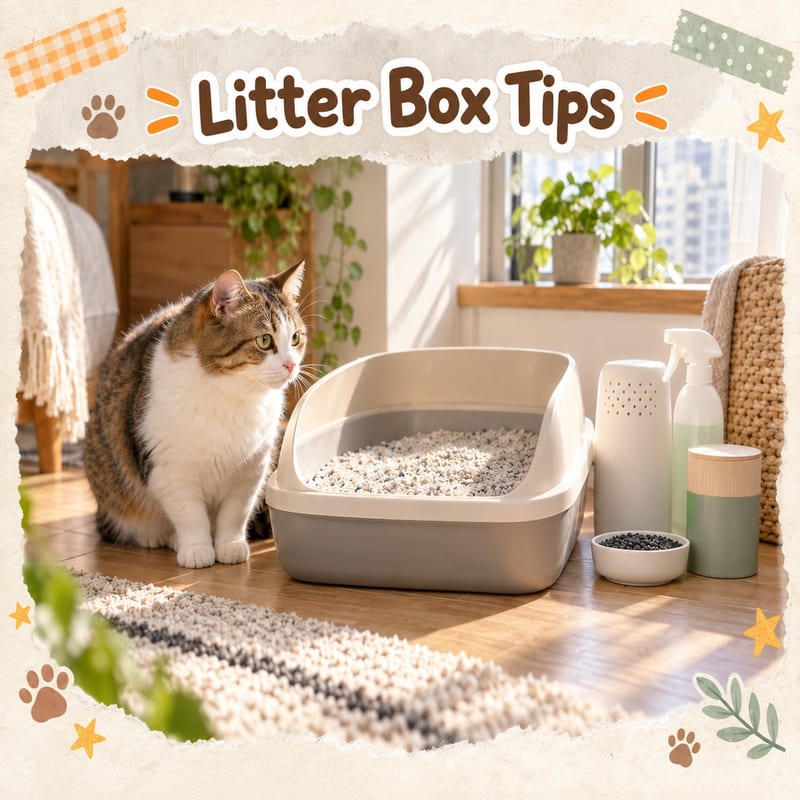
- Line the box bottom with a thin baking paper/special mat (open boxes only) to reduce sticking and make cleaning easier.
- Odour control: place a small box of activated charcoal near the box, keep exhaust fan running periodically; never spray air freshener towards the cat to mask odour—fragrances irritate the respiratory tract and are a common cause of litter box avoidance.
- New litter test: when switching, keep 30% old litter in the box to reduce resistance through familiar scent, observe for three days before deciding to fully change.
Litter choices for kittens, adults and senior cats
- Kittens (<6 months): tofu or paper litter. Kittens usually learn to use the box from their mother; set up a shallow small box on the first day. If bentonite litter is ingested, it swells and clumps in the intestines, potentially causing blockage—a risk not worth taking.
- Adult cats: widest choice, decide by odour control, budget, flushability; the only thing to note is 'feel'—cats are particular about particle size, so switch gradually with mixing; forced sudden change often ends in inappropriate urination.
- Senior cats (>7 years): low dust is a must, protect airways and joints—shallow low-entry box, litter not too hard on paws; senior cats are prone to kidney disease, so watch urine clump size and frequency when scooping, an early warning sign.
- Ill/recovering cats: after surgery or with skin wounds, some cats may need dust-free paper litter or clean cloth strips instead of litter to avoid wound contamination; follow veterinary instructions, do not stick to regular litter on your own.
Gradual litter switching (7-10 days)
- Days 1-3: put new litter on top of old, maintain familiar feel.
- Days 4-6: mix half and half, watch for hesitation to enter box.
- Days 7-9: new litter 70%, gradually phase out old.
- Throughout: keep a backup box with old litter; if the cat completely refuses the new litter, step back and try again.
Cat litter and home cleaning go hand in hand
The litter box is only one part of the odour control chain: place a trapping mat outside the box to reduce tracking; use a lidded pedal bin; wipe the box edges daily after scooping, as accumulated oils and urine stains cause odour. If you have an air purifier, placing it near the box area helps, but remember it is support, not the main force—if source control (scoop, change, wash) is insufficient, no number of machines will cope. With more than one cat, make these actions a fixed routine to keep up with waste output.
When to see a vet immediately
Litter box condition is a health warning sign. Do not dismiss the following as 'bad litter': pink urine clumps or blood in urine in the box, cat frequently entering box but unable to urinate, crying when toileting, no urine for over 24 hours (urethral obstruction in male cats is an emergency and can be fatal), or faeces persistently with blood or mucus. Persistent odour even after changing litter should also raise suspicion of urinary tract infection and other health issues. This article is for reference only; consult a registered veterinarian for problems.
What you can do starting today
- Calculate how much litter your cat uses per month, and choose a tier against the budget table.
- Check if litter depth is 5-7cm; top up if not.
- Households with kittens: immediately check if your litter is bentonite; if so, switch to tofu/paper litter.
- Small flats with windowless bathrooms: this week try switching to tofu litter with stronger odour control.
- When scooping, note urine clump colour and size; record date and appearance if abnormal.
Further reading: Complete Cat Food Guide, Complete Tofu Cat Litter Guide, New Pet Owner Guide. For more hands-on tests, see the PetChill cat litter review series.
Related product recommendations
Cat litter is only good if it clumps quickly, is low-dust and controls odour consistently. Here are cat litter products available at PetChill:
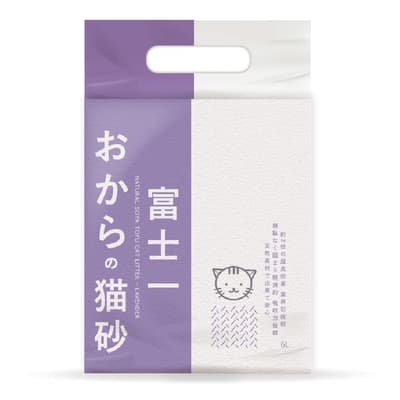
- Fuji One Natural Minimalist Daily 3.0 Tofu Cat Litter Lavender 6L - Original Import (Fuji One) — tofu litter, flushable, low dust
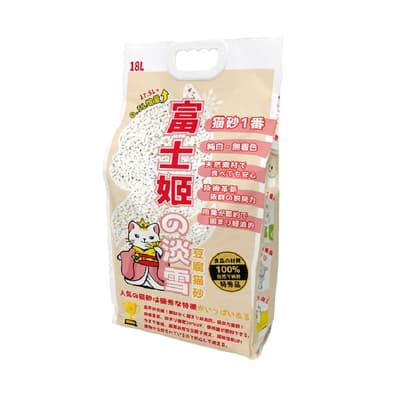
- Fuji Hime no Awayuki 3.0 Natural Purifying Soy Milk Tofu Cat Litter Original 18L - Original Import (random old/new packaging) (Fuji Hime no Awayuki) — tofu litter, flushable, low dust
See more: Fuji One Brand Guide
Product prices and latest offers are subject to the product page; this article is for reference only.
📌 Key summary
- ✅ Tofu litter is the safest bet: flushable, low dust, safe if ingested
- ❌ Keep kittens away from bentonite; ingestion can cause intestinal blockage
- ✅ Daily scooping + 5-7cm depth is key to odour control
- ❌ Once mixed, litter is never flushable
- ✅ Senior cats and sensitive airways: choose low-dust crystal or tofu litter
- ✅ Switch litter with a 7-10 day gradual method, keep 30% old litter to reduce resistance
 Fuji One full guide →


 Fuji Cat full guide →
 K9 Natural full guide →