
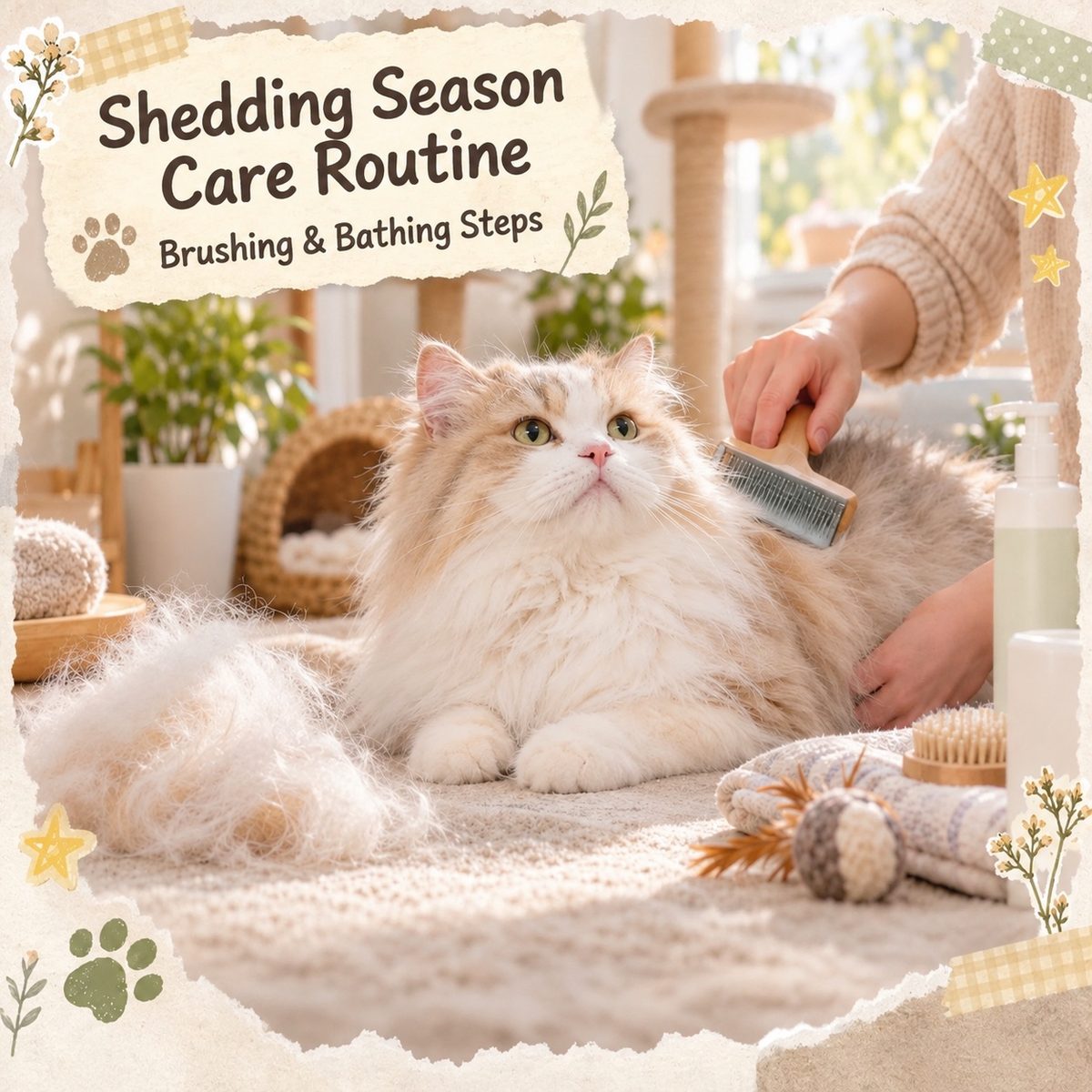
Quick answer: Spring and autumn are peak shedding times for long-haired cats, and indoor cats in Hong Kong shed all year round due to artificial lighting. A daily 10-minute three-step routine — pin brush to loosen knots → metal comb to smooth → check behind ears and armpits — combined with hairball gel or cat grass, keeps hairballs at bay.
🤖 AI summary
Long-haired cat care in shedding season: spring and autumn are peak shedding times, and indoor cats shed all year round due to artificial lighting. A daily 10-minute grooming SOP (pin brush to loosen knots → metal comb to smooth → check behind ears and armpits), plus hairball gel or cat grass to prevent hairballs. See a veterinarian if your cat vomits hairballs frequently or its appetite drops.
Once shedding season hits, cat hair floats around the home like snow, and long-haired cats are especially "prolific". Grooming isn't just about keeping the house clean — it's about your cat's health. If loose dead hair isn't brushed out, cats swallow it when grooming, and it builds up into hairballs that can, in serious cases, cause intestinal blockage. The PetChill editorial team has put together a tried-and-tested grooming SOP for shedding season that takes just 10 minutes a day.
Why do cats shed so much in shedding season?
Cats shed mainly in response to daylight hours, not temperature. In spring, longer days trigger the loss of the heavy winter coat; in autumn, shorter days bring on the warm winter coat. That's why spring and autumn are the peak shedding periods.
However, many cats in Hong Kong live entirely indoors and are exposed to artificial light for long periods, which disrupts their body clock — so they end up shedding all year round. Add Hong Kong's humidity, and dead hair tangles easily; long-haired cats (Persian, Ragdoll, Maine Coon and others) can quickly develop matted "felt" if not brushed daily.

Choosing grooming tools: why we rate them this way
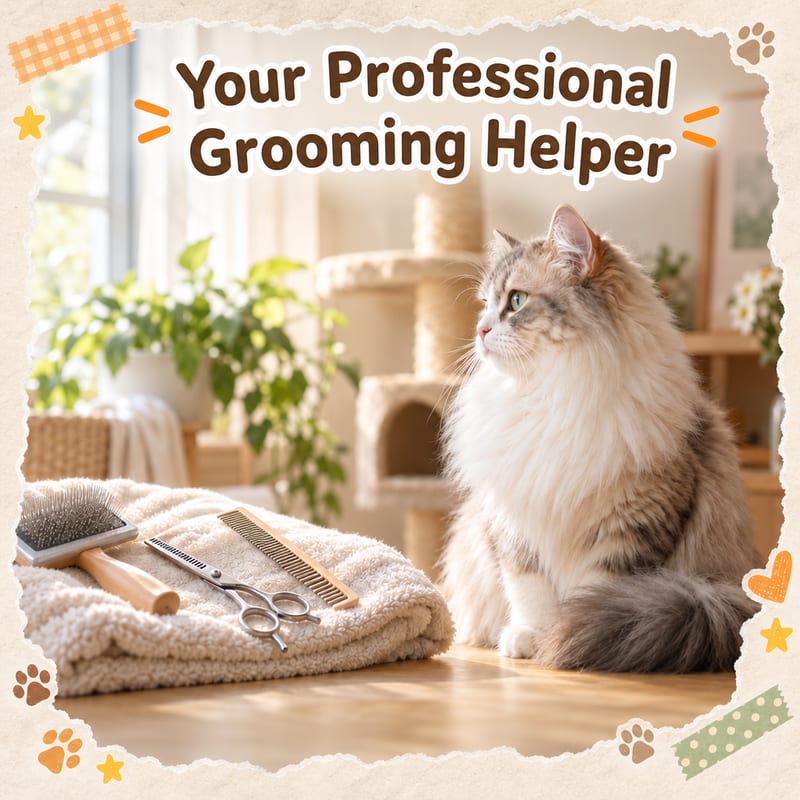
Good tools make the job easier. Here are the three essentials for long-haired cats:
| Tool | Purpose | When to use | Why we rate it this way |
|---|---|---|---|
| Pin brush | Loosen knots, release surface dead hair | Step 1 | The pins reach deep into the coat and are the most effective at removing loose dead hair |
| Metal comb | Smooth the undercoat, check for knots | Step 2 | Dual-spaced teeth; you're only done when you can comb through to the undercoat |
| De-shedding glove | Massage and collect loose hair | Light daily care | Best accepted by cats; suits cats that dislike brushes |
Transparent criteria: our standard for choosing tools is "can it reach the undercoat". The undercoat is where mats breed in long-haired cats; brushing only the surface is as good as not brushing at all. If your cat already has severe mats, don't yank — carefully snip them open with scissors, or have a professional groomer handle it.
The daily 10-minute grooming SOP
Do this routine once a day; during peak shedding, once in the morning and once in the evening:
-
Minutes 1-3: pin brush to loosen knots — work in the direction of hair growth, starting from the neck and back, section by section. Don't pull hard on knots; loosen them first with your fingers.
-
Minutes 4-7: metal comb to smooth — comb from head to tail with a metal comb, paying special attention to the four "knot hotspots": behind the ears, armpits, belly and inner hind legs.
-
Minutes 8-10: check and reward — run your hands over the whole body to confirm no knots were missed, then give a small treat so your cat associates grooming with something pleasant.
If your cat resists at first, break it up — just 2-3 minutes at a time, gradually building tolerance. For a more comprehensive daily care guide, see the complete cat grooming and care guide.
Preventing hairballs: three steps beyond brushing
Brushing is only the first line of defence; you also need:
- Hairball gel or cat grass: helps the gut pass swallowed hair; during shedding season you can increase frequency according to the product instructions
- Plenty of water: good hydration keeps the gut moving and helps hair pass more easily; consider a flowing water fountain to encourage drinking
- Watch vomiting frequency: an occasional hairball is normal, but if your cat vomits hair more than once a week, loses appetite, becomes constipated or lethargic, see a veterinarian promptly to rule out intestinal blockage
When to seek professional help
Consider a pet groomer or veterinarian in these situations:
- Mats are stuck to the skin and cutting them yourself risks injury
- Your cat is extremely resistant — hissing and swiping at the sight of a brush
- Skin shows rashes, bald patches or odour (possibly skin disease, not just shedding)
Hong Kong small-flat practicalities: a 10-minute, no-blind-spot grooming guide
Space is tight in Hong Kong, cats have limited room to move, and dead hair accumulates under the sofa, under the bed and in air-conditioning vents. To achieve an efficient daily 10-minute groom even in a small flat, follow this checklist:
1. Set up a fixed "grooming corner" Find a sturdy dining chair by a window and lay a towel on it as a dedicated grooming mat. Once your cat is used to the fixed spot, it will jump up as soon as you pick up the pin brush — saving you the chase.
2. Section-by-section timing
- 0-2 minutes: neck and back + shoulders (pin brush)
- 2-4 minutes: flanks + base of tail (pin brush)
- 4-6 minutes: behind ears + armpits (metal comb)
- 6-8 minutes: belly + inner hind legs (metal comb)
- 8-10 minutes: full-body check + treat reward
3. Dead-hair disposal bag Right after grooming, roll up the towel with the hair inside and seal it in a zip bag so hair doesn't float out. Hong Kong's humidity makes dead hair absorb moisture and become heavy quickly, sticking to the floor the moment it lands — this trick saves a second clean-up.
4. When to see a doctor
- Not eating at all for two consecutive days
- Vomit containing blood or yellow bile
- Stools that are pellet-like or no stool at all
- Your cat cries out in obvious pain when you touch its belly
If any of the above occurs, call your regular veterinary clinic for an appointment right away — don't wait. Night consultations in Hong Kong are expensive; daytime clinics usually have same-day slots, so dealing with it early saves money and spares your cat suffering.
📌 Key points
- ✅ 10 minutes a day, three-step grooming: pin brush to loosen knots → metal comb to smooth → check behind ears and armpits
- ✅ The undercoat is where mats breed in long-haired cats — you must brush down to the base
- ✅ During shedding season, brush morning and evening; if your cat resists, break it into shorter sessions
- ❌ Don't yank or randomly cut mats — it's easy to injure the skin
- ❌ Don't skip the vet if your cat vomits hair more than once a week or loses appetite
- ❌ Brushing alone isn't enough — without water and hairball gel, hairballs can still block the gut