Maltese
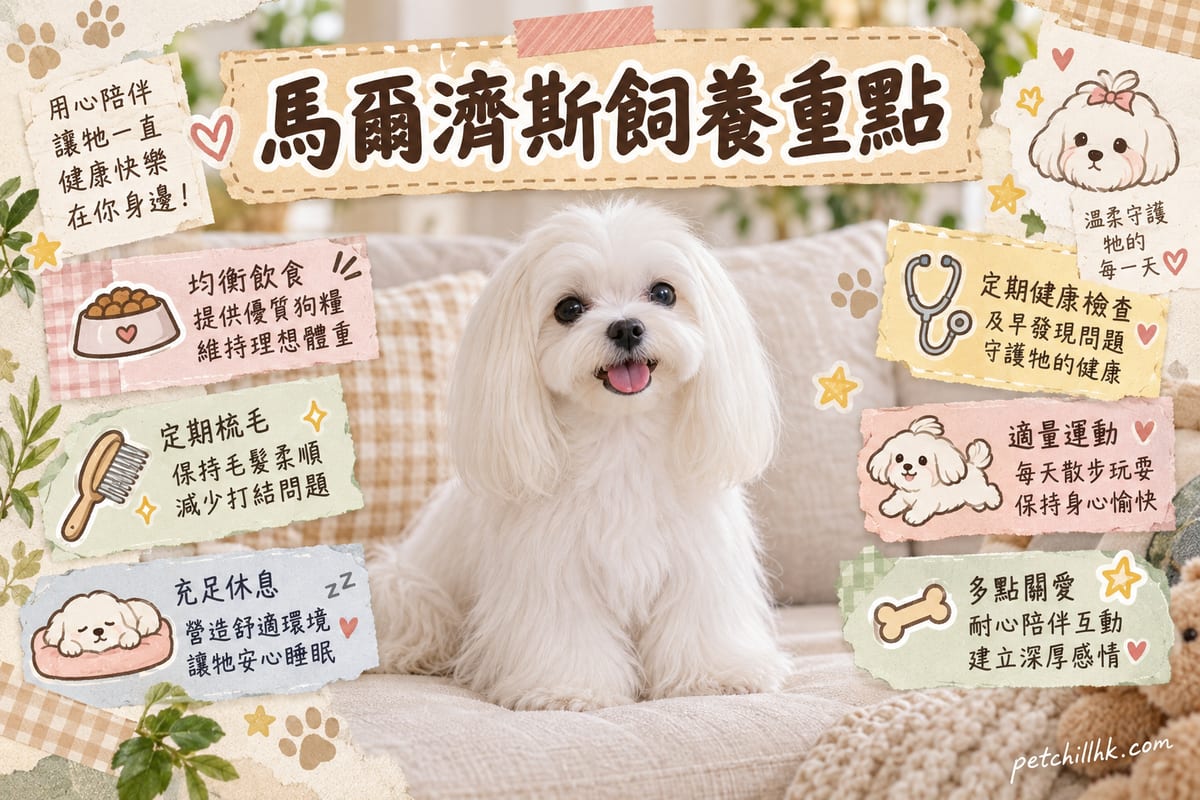
The Maltese (in Hong Kong commonly called the 'Mo Tin Si', also known as the Maltese dog) is a small white long-haired toy breed. Adults mostly weigh around 2 to 4 kg, stand about 20 to 25 cm at the shoulder, and live on average about 12 to 15 years. The coat is pure white, long and straight, and single-layered with no obvious undercoat, so shedding is usually less than in double-coated dogs, but the hair keeps growing and mats easily. The temperament is affectionate and highly alert, a classic companion dog; what is most easily underestimated is their need for company. They are highly dependent on people, and when left home alone they say so by barking, scratching at doors, chewing the furniture or even toileting everywhere. These are separation anxiety behaviours, not naughtiness. The small size makes keeping one in a compact flat realistic, but daily brushing, regular grooming, tear-stain care and protecting the trachea and knee joints are all part of the daily routine you need to prepare for before you buy. Many people in Hong Kong call the breed 'Mo Tin Si'; using the English name Maltese when you look things up or ask a vet is the clearest option and avoids confusion with other small white breeds.
Size
Small
Lifespan
12-15 years
Weight
About 2-4 kg
Key facts
Origin
Mediterranean region
Lifespan
12-15 years
Size
Small
Weight
About 2-4 kg
Coat
White long coat, single-layered with no obvious undercoat
Personality
Daily life & habits
The Maltese is a small companion breed, but if your dog is entering middle or old age, the most valuable few minutes of the day are not the walk, they are counting breaths while the dog sleeps. Method: wait until the dog is deeply asleep, lying on its side with even breathing, count the chest rises over 30 seconds and multiply by two, or just count for a full minute; a healthy dog is generally 15 to 30 breaths per minute. In a stable period, counting two or three times a week to establish a baseline is enough; if heart disease has already been diagnosed (especially stage B2 or C), once a day at a fixed time is recommended. What matters is not a single day's figure but the trend: if it stays 20 to 25% above baseline for several days running, or the absolute value goes above 40 breaths per minute, contact your vet; above 50, or accompanied by restlessness and open-mouth breathing, is an emergency. Daily exercise should be gentle, regular walking, avoiding strenuous running and long outings in the heat; in a Hong Kong summer avoid going out at midday, because heat plus a faster heartbeat is a trigger for a flare-up. Mood has to be managed too: doorbells, deliveries and family coming home are the kind of lively scenes that send the heart rate up, and excitement is itself a cardiac load. If your vet has already prescribed medication, dose at the same time every day and never stop it or reduce it on your own; that is the part most often got wrong at home.
Care essentials
Grooming
The white long coat is the Maltese's signature and also the biggest job. Brush once a day, focusing on the places that mat easily: behind the ears, the armpits, the inside of the hind legs and the base of the tail. Do not tug hard at a mat; work it loose slowly with a detangling spray, and if it is bad, cut it out. Bathing is generally every 2 to 4 weeks, and the dog must be dried thoroughly afterwards; Hong Kong is humid, and an undercoat left damp easily leads to skin problems. A full trim is generally every 4 to 6 weeks. On tear staining: reddish-brown marks at the corner of the eye show up very clearly on white hair, and the cause may be poor tear drainage, for example entropion, abnormal eyelashes, a blocked tear duct or an eye infection, and may also be related to environmental irritants. The daily routine is to wipe gently with clean water or a pet-specific eye-area cleanser and pat dry, keeping the area around the eye dry; do not use human eye drops on your own. If the tear staining comes with squinting, sensitivity to light or discharge that changes colour, it is not a grooming issue and you need to see a vet. Grooming is a long-term expense and should be worked into the monthly budget before you buy the dog, rather than being dealt with only once the coat has matted so badly it has to be shaved.
Exercise
The Maltese does not need long walks, but twice a day for 15 to 25 minutes each is the baseline. Use a harness the whole time and not a collar: the tracheal cartilage is weak, and one pull can set off a honking cough. Running and jumping need managing, and the knees need protecting too: luxation of the kneecap is not rare in small breeds, and the sign is a sudden skip while walking with the hind leg held off the ground, apparently fine a few seconds later. So lay non-slip mats, do not let the dog jump onto the sofa or the bed, and control weight; put a ramp or steps at the sofa and the side of the bed. Summer arrangements have to change: walk in the early morning and at night, and feel the ground with your hand before going out; if it is hot to the touch, do not walk. If the dog is panting audibly or drooling more than usual, cool it down immediately and seek veterinary help. Moving around indoors covers part of the activity needs, but the dog cannot stay in all the time: sniffing and seeing the outside matter for mood and socialisation, and it is also the chance to practise toileting outside. If the dog stops and refuses to walk, check the ground temperature and the weather first, then check whether there is a problem with the hind legs.
Training
The point of training a Maltese is not tricks, it is being alone and being quiet. Alone-time training starts in puppyhood: begin with a few minutes and stretch the time gradually, and keep both leaving and coming home low-key, with no big farewells or welcomes; provide chew toys to distract, and keep a fixed routine so the dog can predict when you will be back. They are highly alert and sensitive to footsteps at the door and the sound of the lift, so in a flat building teach a 'quiet' cue and do desensitisation work early. Basic obedience can be done in short sessions: sit, wait, come, a few minutes each time, reward immediately on success, using treats and praise and never physical punishment. Toilet training needs a fixed place and fixed times, with an immediate reward for success. If the barking continues to be serious enough to affect neighbours, or the dog becomes destructive or loses bladder control when alone, it is worth getting an assessment from a vet or a dog behaviour trainer. Pick training times when the dog is alert, do a few minutes before meals, and use part of the regular ration as the reward so it does not put on extra weight; stop each session when it ends, rather than dragging on until the dog loses focus.
Diet
Maltese puppies are generally fed 3 to 4 meals a day, switching to 1 or 2 meals a day as adults, with the portion adjusted to body condition and weight. Toy-breed puppies are at risk of low blood sugar and should not go a long time without food; if the dog goes weak, dull or unsteady on its feet, contact a vet immediately. Treats count towards the day's total calories, so do not just hand them out because the dog is small; if weight goes up, reduce the food, because every extra kilogram puts more load on the knee joints and the trachea. Water should be available at all times, especially in summer and after exercise. From adulthood, at least one health check a year, recording weight and body condition together, is more reliable than looking at the kilogram figure alone. There are many commercial foods on the market, and which one to choose should depend on the ingredients and how your dog actually responds, not on price or packaging alone. Puppies should not go long periods without food; a small meal can be given before and after going out. If the dog refuses food for more than a day, or water intake suddenly rises noticeably, contact your vet. As an adult the weight should be stable, not swinging up and down.
Living environment
Keeping a Maltese in a compact flat takes some planning in a few areas. First, toileting: most small flats have no garden, so in practice you train a pee pad or an indoor toilet spot, with a fixed place and fixed times and an immediate reward for success, and on walks outdoors let the dog get used to going outside as well. Second, grip and heights: tiles that are too slippery change a small dog's gait and affect the knee joints in the long run, so lay non-slip mats, and put a ramp or steps at the sofa and beside the bed. Third, home safety: tidy the cables, put a lid on the bin, and fit window screens or barriers, because a toy breed is easily trapped. Fourth, humidity: dry the dog thoroughly after a bath, since a damp undercoat easily leads to skin problems, and a dehumidifier indoors is recommended; in winter watch the temperature difference in air-conditioned rooms, and since toy breeds carry little body fat, a thin coat is useful. Finally, rules and neighbours: read the tenancy agreement and the building's deed of mutual covenant beforehand, and check the rules for public and subsidised housing yourself. Keep the pee-pad area away from the food and water bowls, keep to a fixed place and fixed times, and reward immediately after.
Maltese everyday food & supplies
Chosen by species (dog) from products PetChill stocks — not a breed-specific formula. Actual suitability depends on age, weight and health.

Nutriplan Soft Dog Food Immunity and Skin Care Support 1.2kg (64337)
HK$98About HK$81.67 per kg
Price checked 2026-10-21; the store page shows the live price, stock and offers.

Bella & Molly's Dutch Berry Royal Selected Dog Food AAFCO Grain-Free Single Protein Salmon Formula 50g (Limited Time Experience)
HK$10About HK$200 per kg
Price checked 2026-10-21; the store page shows the live price, stock and offers.
 Special offerHK$175HK$235
About HK$77.16 per kg
Price checked 2026-10-21; the store page shows the live price, stock and offers.
History & origin
The Maltese's English name is Maltese, and in Hong Kong it is commonly called the 'Mo Tin Si'; both names refer to the same breed. It is a small breed with a very long history, generally thought to have originated in the Mediterranean region and to be connected with the island of Malta, after which it became popular in Europe and was bred into the size we see today; accounts differ on the exact dates and the routes by which it spread, so this article will not pin down a year. What can be stated clearly is that both its appearance and its role today follow the 'companion dog' line: pure white, long straight hair, single-coated with no obvious undercoat; small, with adults mostly weighing around 2 to 4 kg; affectionate and highly alert. Understanding this background has a practical use: their need for company and their low tolerance of being alone is a long-standing feature of the breed, not a sign that your household has trained them badly; the tear staining and matting that come with a white long coat are also a structural cost, and will not disappear just because you change food or move house. So this article gives direction rather than dates: the Mediterranean, the island of Malta, and later popularity in Europe. Those three points are enough to understand where the breed came from.
Who it suits
Is the Maltese right for you?
The Maltese is small, so a compact flat is a realistic choice, but you need to match the breed to your lifestyle first. Suited to: households where someone is at home for much of the day, who accept daily brushing and regular grooming, and who are willing to use a harness instead of a collar. Less suited to: households where nobody is home for long hours every day and where no alone-time training is planned. This is a highly dependent breed, and when left alone it is more likely to bark, scratch at doors, chew furniture or even lose bladder control; these are not 'not listening to you' but a breed tendency, and they are also a real source of neighbour complaints. Before renting a flat or applying for public housing, check whether the building's deed of mutual covenant and the relevant rules allow pets, and whether any neighbours are sensitive to barking. If there are children at home, teach them to be gentle: toy breeds have fine bones, so both picking up and putting down should be done slowly. The last item is cost: grooming is a long-term commitment, not a one-off, and it has to be budgeted before you buy the dog. If there is an elderly person at home, the small size makes the dog easy to lift, but you need to guard against it being stepped on or struck if someone falls.
Health & care
Common health issues and care advice for the Maltese
The Maltese is generally long-lived, but there are several groups of problems worth knowing about, and handling them early leaves far more room to act. Trachea: the cartilage is weak, and pulling on a collar can easily set off a honking cough, with panting after exercise also a signal, so a harness should be used at all times, especially on walks and in the car. Knees: luxation of the kneecap is common in small breeds and shows as a sudden skip while walking with the hind leg held off the ground, back to normal a few seconds later; prevention means non-slip flooring, fewer jumps up and down, and weight control. Teeth: the mouth is small and the teeth are crowded, so tartar and periodontal disease are highly likely; bad breath, tartar and a drop in appetite are all signs. Ideally brush daily, at least 3 times a week, and have regular checks by a vet; scaling has to be done under anaesthesia. Eyes: cataracts or dry eye can show as cloudy eyes, dryness or bumping into things, and a vet needs to check vision and tear production. Skin allergies show as itching, rashes and hair loss, and parasites, food and environmental factors all need to be checked. The above are common risks; it does not mean every dog will develop them.
Want to see more dog breeds?
Besides the Maltese, you can also compare Beagle, Rottweiler and Dachshund — breed guides that compare personality, size and care difficulty.
Frequently asked questions
The questions people ask most about the Maltese
Adults mostly weigh around 2 to 4 kg, which is typical for a small companion breed.
Clean around the eyes every day and keep the area dry, and keep an eye on diet and the state of the tear ducts; tear staining is the most common cosmetic problem in this breed.
Avoid pulling on a collar and use a harness instead, and avoid letting the dog jump down from heights, because tracheal collapse and patellar luxation are both common problems in the breed.
Yes. They need a lot of company and are a classic companion breed, so start alone-time training early, and do not make a big production of leaving the house each time.
The small size and moderate activity needs suit a small flat, but you need to plan for daily brushing and regular grooming, and to manage tear staining and their need for company.
They are small but need a lot of company: short daily walks plus interactive play, and do not leave them alone for long stretches.
A white long coat shows tear stains easily, so clean around the eyes daily and keep the hair dry.
The long coat needs daily brushing to prevent mats, and the tear-stain area should be kept dry.
Use a harness instead of a collar, avoid jumping down from heights, and control weight to take the load off the joints.
You may also like
Other dog breeds like the Maltese