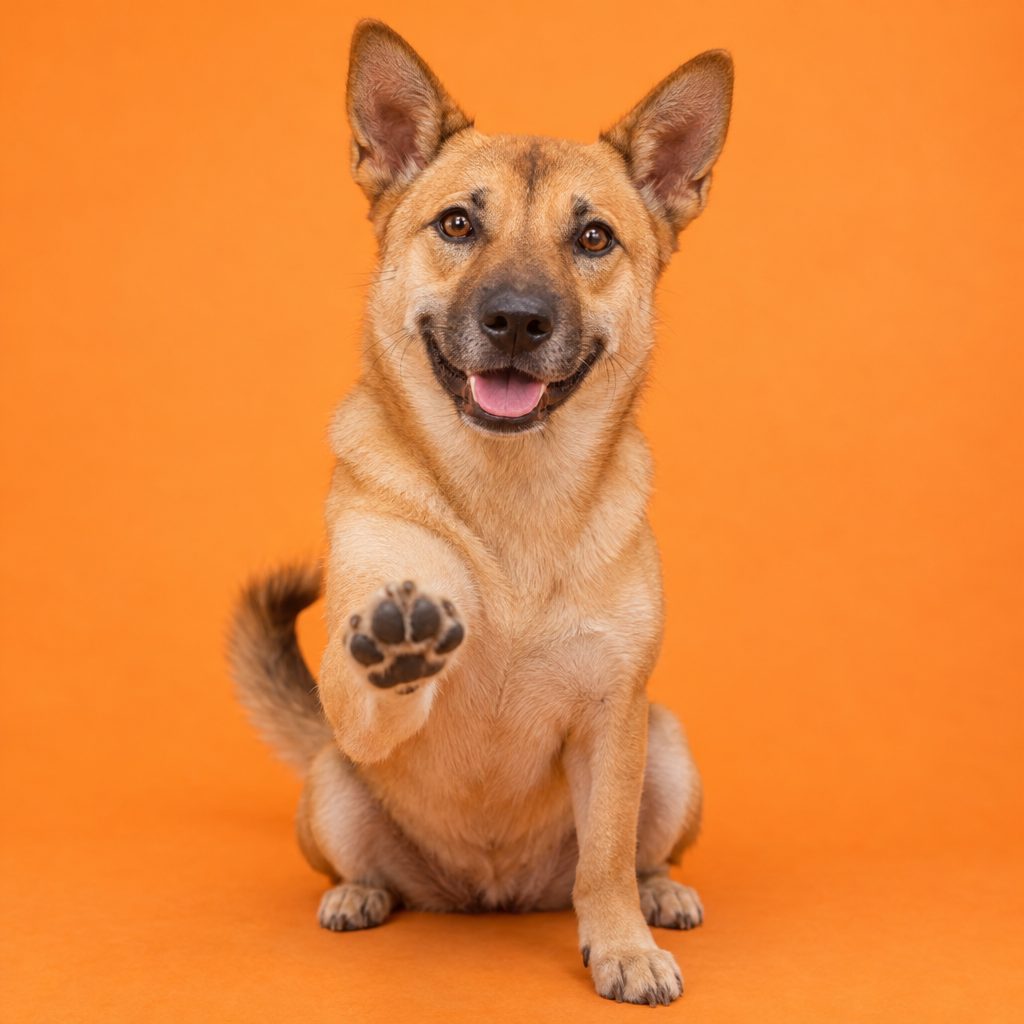
Rottweiler
The Rottweiler is a large working breed from Germany and a heavily built, large dog: adult males are typically about 61-69 cm at the shoulder and weigh about 50-60 kg, females about 35-48 kg, with a typical lifespan of 8-10 years. The coat is mainly black with rust-coloured markings and is a short double coat. The temperament is steady and loyal to family, but with a strong sense of territory and guarding; the guarding instinct has to be guided through socialisation and training, and does not mean the dog is naturally obedient. Size and strength are also the parts beginners most often underestimate. Before buying, work out three things: one to two hours of exercise daily, long-term medical considerations for joints and heart, and whether your home and the building's deed of mutual covenant allow a large dog. Hong Kong summers are a high-risk season for this breed, so heat-stroke prevention has to be treated as a daily routine; puppy socialisation has a deadline you cannot afford to miss. The breed is generally not one of those named under the "dangerous dogs" regulations, but an owner is still liable if a dog gets out of control and injures someone, so lead handling and control ability are things to assess honestly before getting one.
Size
Large
Lifespan
8-10 years
Weight
Adults typically 35-60 kg

Key facts
Origin
Germany
Lifespan
8-10 years
Size
Large
Weight
Adults typically 35-60 kg
Coat
Short coat, black with rust-coloured markings
Personality
Daily life & habits
A Rottweiler's day needs rhythm: one walk in the early morning and one at night, one to two hours in total, with enough sniffing and free exploration built in rather than just a brisk march; an under-exercised large dog easily starts destroying the home, barking and jumping up at people. Adults are usually fed two meals a day on a large-breed adult formula, with treats kept within ten percent of total calories. Daily upkeep is not complicated: brush two to three times a week, check the ear canals weekly, brush the teeth two to three times a week, and trim the nails every two to four weeks. Summer arrangements have to change: move walks to early morning and late night, test the ground temperature with the back of your hand before going out, and if it is hot to the touch change the time or the route; take active rest stops, carry water, and choose shaded routes; keep the home ventilated with air conditioning, and provide a cooling mat and plenty of fresh water. Be restrained about clipping: once a double coat is shaved the insulation and sun protection are lost, and normally only the belly and paw pads need tidying. If the household is out at work during the day, schedule a mid-day outing or hire a dog walker, and do not compress the full one to two hours into a single evening session.
Care essentials
Grooming
The Rottweiler has a short double coat that is relatively simple to manage, but that does not mean nothing needs doing. Basic rhythm: brush two to three times a week to remove dead hair and check the skin; trim nails every two to four weeks, since overlong nails affect the gait; check the ear canals weekly and keep them dry; brush the teeth two to three times a week. In summer pay special attention to heat loss: its black double coat absorbs heat and, with its body weight, its heat-loss efficiency relative to surface area is on the low side, so Hong Kong summer is a high-risk season for this breed. Move walks to early morning and late night, feel the ground with the back of your hand before going out, and do not walk if it is hot to the touch, because a large dog's paw pads burn just the same. Shaving a double coat does little for heat loss and instead removes insulation and sun protection, so normally only the belly and paw pads are trimmed. If the skin is repeatedly itchy, hair is falling out, the ears are red and swollen, or the ear canals smell, a vet should rule out infection and allergy. In shedding season you can brush more often, but shaving is not needed; leave skin problems to a vet's judgement rather than treating them yourself.
Exercise
An adult Rottweiler generally needs one to two hours of exercise daily, split into two sessions, with enough sniffing and free exploration included. This amount is not optional: an under-exercised large dog easily starts destroying the home, barking and jumping up at people, and the problem spreads from behaviour to relations with neighbours. Puppies need care, since a large dog's growth plates generally only close gradually between one year and eighteen months, and long stretches of high-impact exercise such as repeated jumping and long runs are not advised during that time; short, frequent walks and free running on grass are suitable. The most common walking problem is pulling, so use a well-fitted harness with a short lead rather than hauling on a collar. In summer move exercise to early morning and late night, take active rest stops, carry water and choose shaded routes; if there is excessive panting, heavy drooling, an unsteady gait or vomiting, move the dog into the shade at once, cool it with room-temperature water and contact a vet. Vary the walking route each time, because changing smells are the cheapest mental workout for this dog, more useful than buying more toys.
Training
The Rottweiler is intelligent and highly obedient, but is not suited to forceful training. Socialisation has a deadline: the common view is that roughly three to sixteen weeks is the golden window, when acceptance of new things is highest, and once that is missed a guarding breed's reactions to strangers and sudden sounds are harder to change. The method is to expose the puppy to different types of people, surfaces and sounds under safe conditions, keeping each session short, positive and rewarded with treats, and not forcing an anxious puppy to tough out unfamiliar surroundings; before vaccinations are complete it should not go to places with many dogs and unknown hygiene. Start basic obedience training as a puppy: sit, wait, walk to heel, come when called, five to ten minutes at a time, several times a day. If growling, freezing and similar signals have already appeared, do not suppress them yourself; find a trainer with large-breed experience or a veterinary behaviour specialist for assessment. Household members must be consistent: the same cue and the same boundary, because if one person allows something and another does not, a guarding breed learns immediately which person to play.
Diet
On diet, adults are usually fed two meals a day on a large-breed adult formula, with portions set by body condition and treats kept within ten percent of total calories. Weight management matters especially for a large dog, because every kilogram of excess weight presses directly on the hip and elbow joints; assess by feeling the ribs, where ribs you can feel and a waistline you can see is ideal, and ribs you cannot feel is the signal to cut the food. Choose a large-breed puppy formula for puppies, do not add calcium powder yourself, and ask a vet if unsure. Portions and meal frequency should follow age in months and body condition, and should not be increased just because the dog is staring at the bowl. Treats count towards daily calories and should not be handed out as unlimited extras. Weight is not a one-off number, so weigh at a fixed time and record the trend; cut food as soon as it rises rather than waiting for the joints to signal a problem. Change foods gradually by mixing, since a sudden switch upsets the gut; leave questions to a vet rather than relying on online comparison tables or a friend's experience.
Living environment
The Hong Kong housing environment is the biggest practical hurdle in keeping a Rottweiler. On space, it needs room to turn around, stretch out and rest; a small flat is not necessarily impossible, provided the household can take it out every day to burn energy and the flat is ventilated and has cooling. On housing rules, Housing Authority public rental estates generally do not allow dogs, with working dogs such as guide dogs considered separately, and breaches attract points deductions, so it is basically not workable for public rental tenants; Home Ownership Scheme and subsidised housing have related restrictions too. For private buildings, check the deed of mutual covenant and the management office rules, since some estates have extra requirements for large dogs; if renting, check the tenancy agreement and the landlord's consent. These rules change with the estate and over time, so verify them yourself before deciding. In public places, under the general rules of the Agriculture, Fisheries and Conservation Department, a large dog must be held on a lead by a person capable of controlling it, and details such as lead length are updated, so check the AFCD's latest announcement before setting out.
Rottweiler everyday food & supplies
Chosen by species (dog) from products PetChill stocks — not a breed-specific formula. Actual suitability depends on age, weight and health.

Nutriplan Soft Dog Food Immunity and Skin Care Support 1.2kg (64337)
HK$98About HK$81.67 per kg
Price checked 2026-10-21; the store page shows the live price, stock and offers.

Bella & Molly's Dutch Berry Royal Selected Dog Food AAFCO Grain-Free Single Protein Salmon Formula 50g (Limited Time Experience)
HK$10About HK$200 per kg
Price checked 2026-10-21; the store page shows the live price, stock and offers.
 Special offerHK$175HK$235
About HK$77.16 per kg
Price checked 2026-10-21; the store page shows the live price, stock and offers.
History & origin
The Rottweiler's origins are tied to cattle herding in Europe: its ancestors are generally thought to be linked to the herding dogs the Romans brought to Europe, and it later took root around Rottweil in southern Germany, becoming a working dog for butchers and traders, driving cattle, pulling carts and guarding property, which is why it was once called the "butcher's dog". That work demanded strength, patience and steady judgement, not simple guard duty; after the twentieth century, as urban transport and farming methods changed, it gradually shifted into police and guard work, its role moving from market and trade to law enforcement and protection. In Hong Kong today, the different names used for the breed all refer to the same dog. Note that the breed's guarding instinct and size are the working specification left over from its history, not a personality defect, but in a residential setting they have to be guided through socialisation and training, and the dog cannot be assumed to be naturally obedient. Today's breed standard still keeps the working specification of its day: large and heavily boned, with a coat mainly black and marked in rust, as a short double coat.
Who it suits
Is the Rottweiler right for you?
The commitment to a Rottweiler is not only exercise and space, but also medical care. Large breeds typically live 8-10 years, and besides joints you have to budget for the heart: for a high-risk breed, from middle age (5 to 7 years) onward, have an annual check-up with auscultation, and if a heart murmur is heard add echocardiography for staging as advised, then recheck every 3 to 6 months once diagnosed. Accept one fact: stages B1 and B2 can be completely symptom-free, with the dog eating, sleeping and playing normally while the heart is already changing, so "no symptoms" does not mean no testing is needed. In practice, count the breathing rate for one minute each night once the dog is sound asleep: a healthy dog is usually 15 to 30 breaths, and if it climbs more than 20 to 25% above baseline for several days in a row, or goes above 40, contact your vet; at 50 or above, or if the dog is restless and open-mouth panting, do not wait and go straight to emergency. Also avoid over-excitement, since frantic barking at the doorbell and excited greetings both send the heart rate up. At night, "breathing a bit harder" can worsen within hours, so it is better to make a wasted trip. Put plainly: this breed's medical commitment is measured in years, not months; if you cannot even manage one minute of counting breaths every night, think again.
Health & care
Common health issues and care advice for the Rottweiler
The Rottweiler is a high-risk breed for joint problems, and this is a reality to accept before buying. Hip and elbow dysplasia are clearly linked to inheritance, and signs can include an odd gait, slow to get up, stiffness after exercise, or refusing to bear weight on one leg; do not wait if a puppy limps during growth, and the earlier a vet assesses it with imaging the better. Management includes weight control, joint support and physiotherapy. Deep-chested large breeds also carry a risk of gastric torsion, which is a surgical emergency presenting as a hard, distended abdomen, retching without producing anything, and restlessness; do not wait, go straight to hospital. Osteosarcoma is relatively more common in large dogs; there are also breed reports of subaortic stenosis and allergic skin problems, the latter with repeated scratching, hair loss and red, swollen ears, where a vet must first rule out infection before treating the allergy. A cruciate ligament rupture shows as a sudden refusal to bear weight on one leg with a noise from the joint, and usually needs imaging and surgical assessment. Every kilogram of excess weight presses directly on the hip and elbow joints, so weight control is the most basic protection.
Frequently asked questions
The questions people ask most about the Rottweiler
Adult males typically weigh about 50-60 kg with a shoulder height of 61-69 cm; females about 35-48 kg. It is a large working breed.
The typical lifespan is 8-10 years. As a large breed it falls into the shorter-lived group, so medical costs should be planned for early.
Not really. With a strong guarding instinct and a large body, it needs one to two hours of exercise daily and consistent training; without experience problems come easily.
Three things: one to two hours of exercise daily, long-term medical considerations for joints and heart, and whether your home and the building's deed of mutual covenant allow a large dog.
One to two hours daily. It is a breed with high exercise needs; too little exercise affects both behaviour and joint condition.
One to two hours of exercise daily, plus a long-term medical budget set aside for joints and heart.
With a strong guarding instinct and a large body, it needs an experienced owner and steady training; beginners should assess carefully first.
It is large with high exercise needs, so make sure it gets enough time outdoors every day, and also check the building's deed of mutual covenant.
The puppy period is the golden window for socialisation, so expose it early to different people, dogs and environments.
You may also like
Other dog breeds like the Rottweiler