
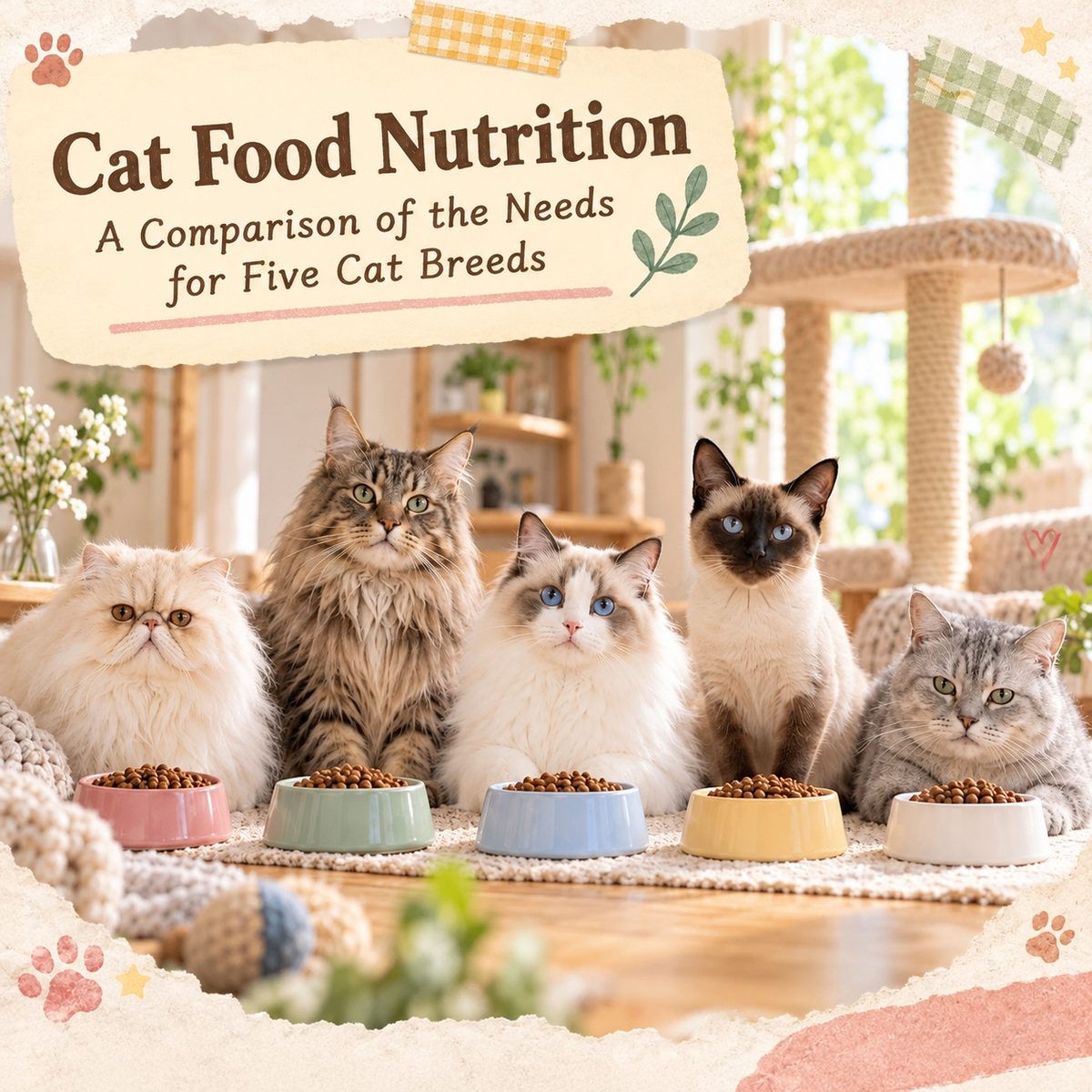
Quick answer: Persian cats need hairball control, Maine Coons need high protein, Ragdolls need weight management, Siamese need high energy, and senior cats need low phosphorus and high fibre. Choose food based on breed characteristics.
🤖 AI Summary
Different breeds of cats have different nutritional needs. Persian cats need hairball control formulas, Maine Coons need high-protein food for large cats, Ragdolls need weight management formulas, Siamese need high-energy food, and senior cats need low-phosphorus, high-fibre formulas. When choosing cat food, consider breed characteristics, age, body size, and health condition—not all cats should eat the same food.
Many cat owners ask: "Which cat food is best?" There is no absolute answer—because different breeds and ages of cats can have very different nutritional needs. A 6 kg Maine Coon and a 3 kg Siamese can differ by nearly double in daily protein and calorie requirements. Today we analyse the special nutritional needs of 5 common breeds so you can choose the best food for your cat.
Why does breed affect nutritional needs?
A cat's nutritional needs are influenced by several factors:
Size differences: Large cats (like Maine Coons) have more muscle mass and need more protein to maintain muscle; small cats have faster metabolism and need high energy density food.
Coat type: Long-haired cats (like Persians) swallow a lot of hair when grooming daily and need hairball control formulas to help pass it out.
Activity level: High-activity breeds (like Siamese) need more calories; lazy breeds (like Ragdolls) need calorie control.
Genetic health risks: Different breeds have different predispositions to genetic diseases—for example, Persians are prone to kidney disease, Maine Coons need heart monitoring—and diet can help prevent or delay them.
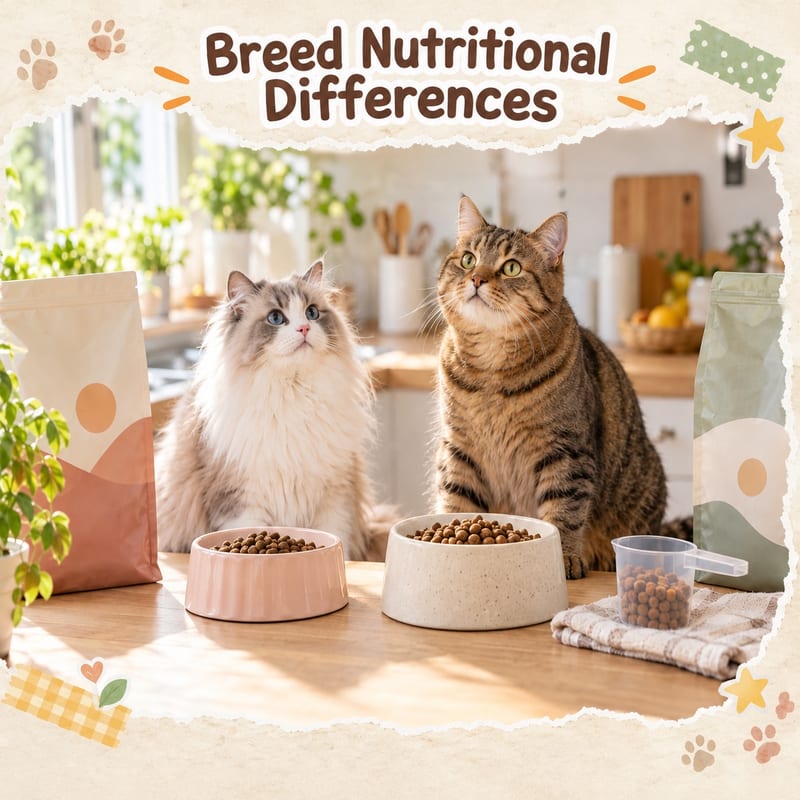
5-Breed Nutritional Needs Comparison Table
| Breed | Special Needs | Recommended Food Type | Daily Amount Reference |
|---|---|---|---|
| Persian | Hairball control, kidney health | Long-haired cat formula, high-fibre food | 40-60 g |
| Maine Coon | High protein, joint health | Large cat formula, high-protein food | 80-120 g |
| Ragdoll | Weight management, heart health | Weight control formula, low-calorie food | 50-70 g |
| Siamese | High energy, muscle maintenance | High-activity formula, high-protein food | 45-65 g |
| Senior cat (7+ years) | Low phosphorus, high fibre, easy to digest | Senior formula, kidney health food | 35-55 g |
Why these ratings?
The recommendations above are based on a comprehensive assessment of each breed's size, activity level, coat type, and genetic health risks. The amount references are based on a 4-6 kg adult cat; actual amounts should be adjusted according to individual weight, age, and activity level. Refer to the feeding guide on the bag and monitor weight changes regularly.
Persian: Hairball control is key
Persians are the epitome of long-haired cats and swallow a lot of hair when grooming daily. If hair accumulates in the digestive tract, it can form hairballs, causing vomiting, constipation, or even intestinal blockage.
Recommended formula: Choose a hairball control formula with added cellulose, psyllium husk powder, or chicory root powder to help hair pass through the digestive tract. Also pay attention to kidney health, as Persians are a high-risk breed for polycystic kidney disease; choosing a low-phosphorus formula can help.
Feeding tips: Daily brushing can greatly reduce the amount of hair swallowed; combine with hairball gel or cat grass for better results.
Maine Coon: Large cats need protein
Maine Coons are one of the largest domestic cat breeds; adult males can reach 7-10 kg. They need more protein to maintain their large muscle mass.
Recommended formula: Choose a large cat formula with protein content above 35%, preferably containing glucosamine and chondroitin to help support joints. Maine Coons mature slowly and may not fully develop until 3-4 years old, so they need sufficient nutrition during kittenhood.
To learn about Maine Coon lifespan and health management, see our Maine Coon lifespan feature.
Feeding tips: Maine Coons eat a lot but need to control eating speed; use a slow feeder bowl to prevent gulping.
Ragdoll: Don't neglect weight management
Ragdolls are gentle and lazy with low activity levels, making them prone to weight gain. Obesity increases the burden on the heart, and Ragdolls are themselves a breed at risk for hypertrophic cardiomyopathy (HCM).
Recommended formula: Choose a weight control formula with lower fat content (about 12-15%) but sufficient protein (above 30%) to maintain muscle. Added taurine helps heart health.
For more on Ragdoll weight management, see our Ragdoll weight management guide.
Feeding tips: Feed at set times and amounts, avoid free feeding, and play with toys for 15-20 minutes daily to help burn calories.
Siamese: High activity needs high energy
Siamese are known for being lively, active, and curious; they spend more time running and jumping than other breeds, have a fast metabolism, and need more calories.
Recommended formula: Choose a high energy density, high protein (above 38%) formula to help maintain muscle and provide enough energy. Siamese are usually slender and not prone to obesity, so they can eat more than other breeds.
Feeding tips: Siamese are smart; use puzzle feeders to make eating fun and burn energy.
Senior cats: Low phosphorus and high fibre are basic
Generally, cats enter their senior years after 7 years old. Senior cats' kidney function begins to decline, digestive ability decreases, and they need special nutritional formulas.
Recommended formula: Choose a senior formula with lower phosphorus content (0.5-0.8%) to reduce kidney burden; higher fibre to aid digestion; high-quality, easily digestible protein to maintain muscle.
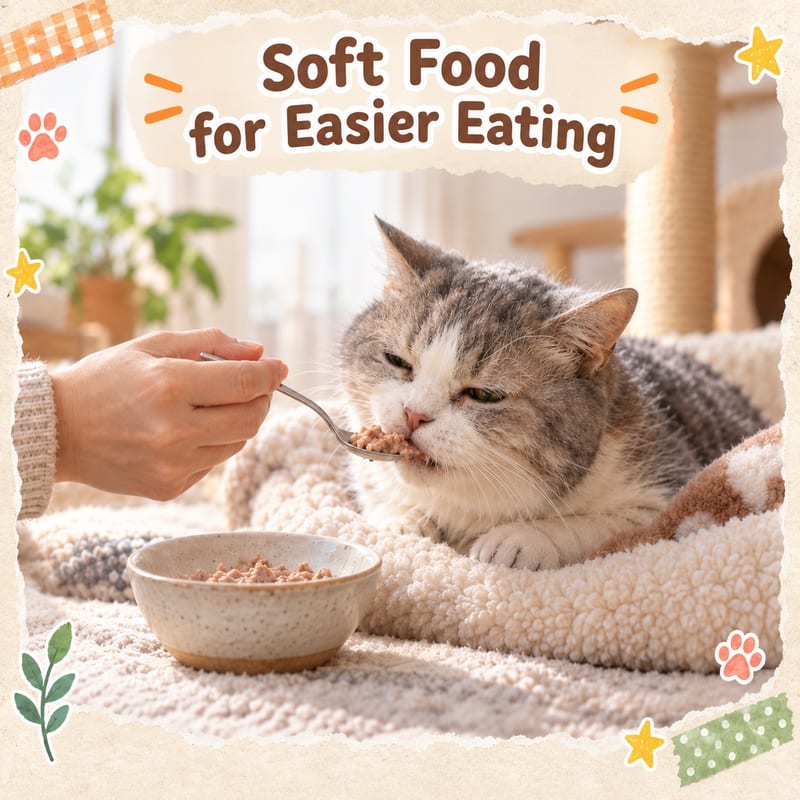
Feeding tips: Senior cats may have dental issues; you can soften dry food with water or switch to wet food. Consult your veterinarian if in doubt, especially for senior cats already diagnosed with kidney disease who may need prescription food.
Hong Kong small flat practicalities: How to arrange food, water, and litter by breed
Hong Kong living spaces are small, and cats have limited activity space. Placing food, water, and litter box requires thought. Below is a small-flat layout checklist based on the characteristics of the 5 breeds, so you can achieve breed-specific management even in a 300 sq ft unit.
1. Persian: Long hair + hairball control
- Food bowl location: Place in a corner of the living room, away from draughts to reduce dust sticking to fur. Use a raised bowl to reduce neck strain and keep long hair clean.
- Hairball assistance: Place a grooming mat by the window; brush daily and dispose of hair directly on the mat to reduce hair flying on the floor. Place a cat grass pot in the same line of sight for easy self-nibbling.
- Water: Install a flowing water fountain beside the sofa; long-haired cats are heat-sensitive, and flowing water can encourage drinking to reduce kidney burden.
2. Maine Coon: Large + big appetite
- Food bowl: Use a slow feeder bowl + non-slip mat; Maine Coons eat quickly, and non-slip prevents spills. The bowl should be wide enough to avoid whisker stress.
- Food storage: Buy 5 kg large bags to save money; store in an airtight container at the bottom of the kitchen cabinet to prevent moisture and cockroaches. Pour out 3 days' worth into a small box each time to reduce opening and closing.
- Space: Even in a small unit, leave a "runway"—leave 60 cm width between the coffee table and TV cabinet for sprinting back and forth to burn calories.
3. Ragdoll: Prone to obesity + lazy
- Feeding times: Two meals at 8 am and 8 pm; set phone alarms to remind yourself. Place the bowl on a low stool, remove immediately after eating, no free feeding.
- Exercise spot: Hang a hammock by the window; Ragdolls like to watch the street, so they will move naturally. Play with a wand toy for 15 minutes before bed until they are panting.
- Weighing: Place a digital scale in the bathroom; weigh your cat every two weeks, and if weight increases by 200 g, reduce food by 5% immediately.
4. Siamese: High energy + active
- Puzzle feeding: Hide some dry food in puzzle balls and place on top of the desk drawer for them to jump and find. Change locations daily to keep it fresh.
- Water: Place two water bowls, one in the kitchen and one in the bedroom; Siamese run around and get thirsty easily, and multiple water sources can reduce urinary problems.
- Noise management: Put away puzzle toys at night to prevent them from kicking noisy toys and waking neighbours.
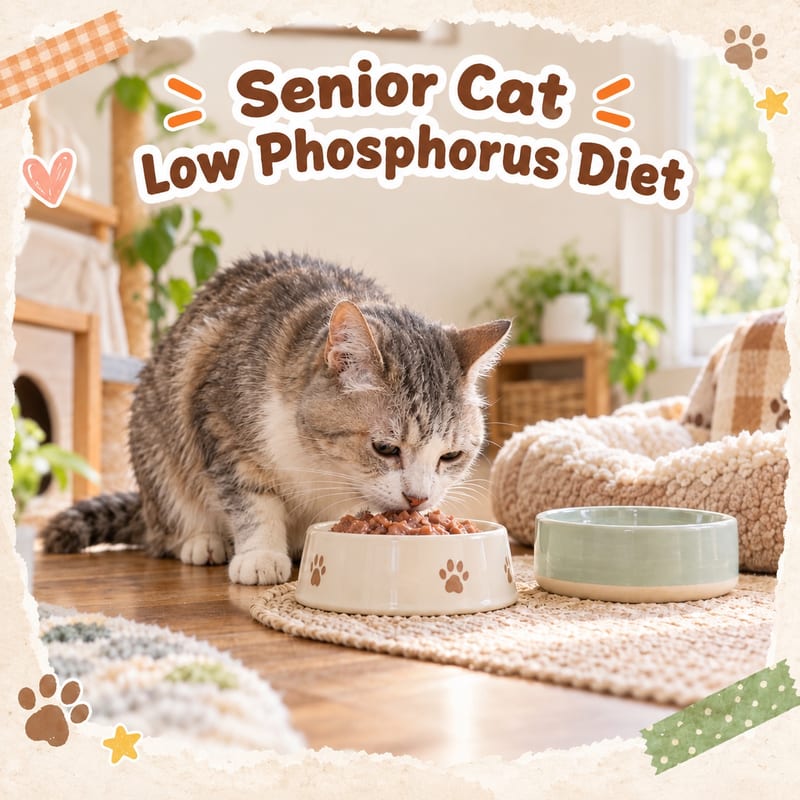
5. Senior cat: Low phosphorus + easy to eat
- Food preparation: Soak dry food in warm water for 5 minutes to soften, then microwave for 5 seconds to warm slightly; the aroma comes out and senior cats eat more.
- Food and water height: Use a low bowl + non-slip mat so senior cats with joint issues don't have to bend too low.
- Litter box: Use a low-sided litter box, place near the TV cabinet in the living room, so even slow-moving cats don't have to walk far. Clean twice daily to reduce bacteria.
Finally, regardless of breed, take your cat to the downstairs veterinary clinic for a basic check regularly. Hong Kong has many clinics, even in the next shopping mall, more convenient than a convenience store. Remember to bring the food bag label for the doctor to see; they will fine-tune the amount based on breed.
📌 Key Summary
- ✅ Breed size, coat, and activity level determine nutritional needs
- ✅ Persian long hair needs hairball control formula
- ✅ Maine Coon large breed high protein and joint support
- ❌ Don't feed all cats the same food
- ❌ Senior cats should not be fed adult cat portions