
🤖 AI Summary
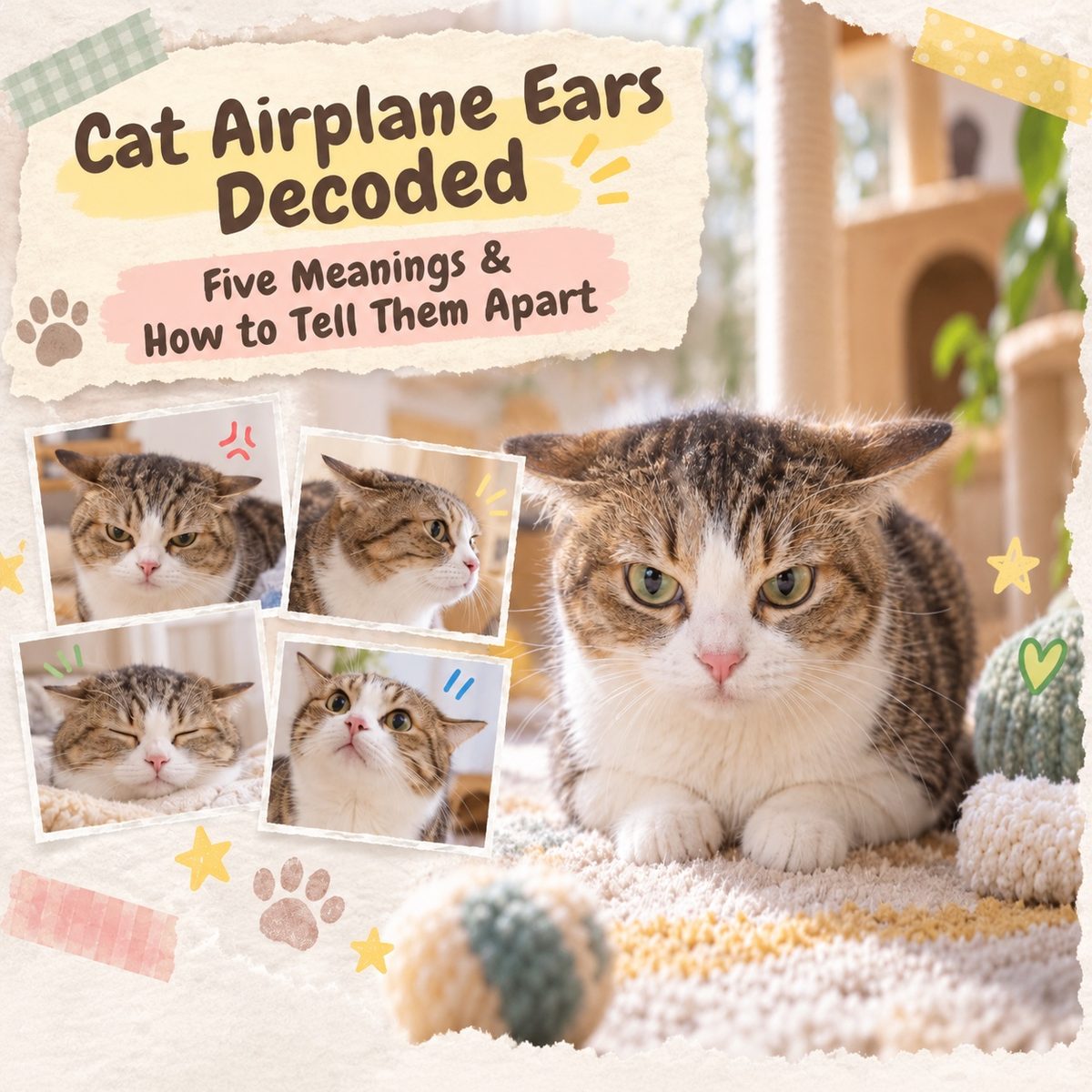
Cat ears flattened to the sides like airplane wings — that's "airplane ears". It's not just anger: fear/alertness, irritation from petting, play/hunting mode, and deep relaxed sleep can all produce it. The key is to read it together with pupils, tail, sound, and context.
• This article includes a "traffic-light chart": tell at a glance if it's normal or something's wrong
• Persistent airplane ears + head shaking/ear scratching = warning sign of ear disease
• First reaction to airplane ears: stop, don't approach
Quick answer: Cat airplane ears mean the ears are flattened to the sides or backwards. The 5 common meanings: fear/alertness, irritation warning (petting too long), play focus (hunting mode), deep relaxation (during sleep), ear pain. Judge with pupils, tail, sound, and context — the traffic-light chart in this article helps you tell in 10 seconds.
Contents
-
What are airplane ears? Why does this action happen
-
The 5 meanings of airplane ears
-
Traffic-light chart: tell normal from something wrong in 10 seconds
-
This kind of airplane ears needs a vet
-
How to respond when you see airplane ears?
-
FAQ
What are cat airplane ears? 30-second summary
Cat airplane ears mean the cat flattens both ears to the sides or backwards, resembling airplane wings. It doesn't necessarily mean anger: fear/alertness, irritation from petting, play/hunting, deep relaxed sleep, and ear pain can all produce it. The key is to read it together with pupils, tail, sound, and context. The table below covers the points Hong Kong cat owners ask about most, with details broken down below.
| Item | Key point |
|---|---|
| Definition | Both ears flattened to the sides or backwards |
| Number of common meanings | 5 (fear, irritation, play, relaxation, pain) |
| Most important accompanying signals | Pupils, tail, body posture, sound |
| Green-light situations | Relaxed sleep, hunting focus |
| Yellow-light situations | Irritation from petting, tension in new environment |
| Red-light situations | Extreme fear/defence, ear disease |
| When to see a vet | Persistent single-sided airplane ears + head shaking/ear scratching |
| Ear canal exam cost | HK$300–800 per visit |
In one sentence: when you see cat airplane ears, the first reaction is to stop, don't approach, then glance at the pupils and tail before deciding the next step.
Cat airplane ears cause classification table
Same airplane ears, different causes, completely different responses. The table below divides causes into five categories — match accordingly:
| Cause category | Trigger situation | Accompanying signals | Response direction |
|---|---|---|---|
| Fear/alertness | Loud noise, strangers, vet visit | Dilated pupils, body shrinking, hissing | Remove threat source, give space |
| Irritation warning | Petting too long, wrong spot | Tail thrashing, skin twitching | Stop immediately |
| Play focus | Wand toy, seeing prey | Round pupils, bum wiggling | Keep playing |
| Deep relaxation | Sleeping, being massaged | Whole body soft, squinting, purring | No action needed |
| Ear pain | Ear mites, otitis media, foreign object | Head shaking, ear scratching, head tilt | Book a vet |
Key point: The first four are emotional, appearing and disappearing quickly with context; the last is physiological, unrelated to context, and won't improve on its own.
Cat airplane ears emotion assessment flow
If you don't want to rely on feelings, follow this three-step flow to tell normal from something wrong within 10 seconds:
Step 1: Look at the pupils. Dilated pupils = fear or hunting; constricted pupils, squinting = relaxed or preparing to attack. This is the fastest classification signal.
Step 2: Look at the tail and body. Tail gently swaying, whole body soft = relaxed; tail thumping hard, body tense = irritated or alert; body shrinking back, fur standing up = fear.
Step 3: Ask about context. What just happened? Was someone petting it? A loud noise? Or did it climb up high and lie down by itself? Context plus the first two steps tells you if it's green, yellow, or red.
Remember the order of the flow: context → pupils → tail. Judging by ears alone will always be wrong, because sleeping and angry cats show the same airplane ears.
When do cat airplane ears need medical attention? HK$ cost reference
Emotional cat airplane ears disappear with context; but if accompanied by any of the following, treat it as a medical issue:
- ⚠️ Persistent single-sided or double-sided airplane ears, unrelated to context.
- ⚠️ Frequent head shaking, pawing at ears.
- ⚠️ Head tilt, unsteady walking.
- ⚠️ Shrinking, crying, hissing when ears are touched.
- ⚠️ Dark discharge, odour, or secretions in the ear canal.
Hong Kong's humid weather is a high-risk environment for ear mites and ear canal inflammation, especially in multi-cat households. Below are common examination and treatment costs:
| Item | Approximate cost |
|---|---|
| Otoscope exam | HK$300–800 per visit |
| Ear discharge test (microscope) | HK$300–600 |
| Prescription ear drops (one course) | HK$250–600 |
| Ear cleaning solution | HK$100–250 per bottle |
| Deep ear canal infection treatment | HK$1,000–3,000 |
Don't dig ears yourself or use ear drops randomly — the ear canal structure is complex, wrong medication can worsen it, saving a few hundred dollars but dragging on for weeks.
Cat airplane ears behaviour consultation: when to seek an expert
If ear disease is ruled out but the cat remains in a state of fear or aggressive airplane ears long-term, it's not a "temper" issue but a behavioural one needing professional intervention:
| Situation | Suggested action | Cost reference |
|---|---|---|
| Long-term shrinking airplane ears when seeing people | Behaviour consultation 1–2 sessions | HK$700–1,500 per session |
| Long-term alertness/fighting with other cats | Behaviour modification + environmental enrichment | HK$1,000–3,000 |
| Persistent tension after moving/new family member | Pheromone support + consultation | Pheromone HK$150–400 |
| Extreme cases needing medication | Veterinary behaviourist assessment | HK$1,500–3,000 |
The first step isn't necessarily an expert: first rule out disease, then improve the environment (hiding spots, number of resources, routine) — many cases improve significantly.
Four most common misunderstandings about cat airplane ears
Before deciding, clear up these four common misconceptions:
| Misunderstanding | Actual situation |
|---|---|
| Cat airplane ears = anger | Anger is only one possibility; sleep, play, and pain can also produce it; judge with pupils and tail |
| When you see cat airplane ears, stop all interaction immediately | Distinguish green/yellow/red: green (sleeping, playing) should continue; only yellow/red need stopping |
| Folded ears and airplane ears are the same thing | Folded ears are a permanent cartilage deformity caused by genetics (Scottish Fold), unrelated to emotions |
| Just buy ear drops and apply them yourself | Ear canal structure is complex; wrong medication worsens it; odour/discharge should see a vet first |
How to tell cat airplane ears from other ear postures?
Besides airplane ears, cats have several common ear postures; don't confuse them:
| Posture | Appearance | Usual meaning |
|---|---|---|
| Airplane ears | Both ears flattened to the sides or backwards | Emotional tension or pain |
| Upright ears | Both ears erect and forward | Alert, focused |
| Single ear turn | One ear turns toward sound source | Hearing localisation, completely normal |
| Folded ears | Naturally drooping, permanently unchanged | Genetic cartilage deformity, unrelated to emotions |
| Ears back (not flattened) | Slightly backwards | Relaxed or mildly annoyed |
Remember: dynamic change is the emotional signal. Ears that are naturally folded and ears flattened by emotion are two different things.
Cat airplane ears common situations quick reference
A table of the most common daily situations — stick it on the fridge door for instant matching:
| Situation | Judgement | What you should do |
|---|---|---|
| Sleeping + whole body soft | Green (relaxed) | No action, take photos |
| Playing with wand toy + round pupils | Green (hunting) | Keep playing |
| Being petted + tail starting to flick | Yellow (irritated) | Stop immediately |
| New environment + body lowered | Yellow (tense) | Give time to adjust |
| Dilated pupils + hissing + shrinking | Red (fear) | Remove threat source |
| Persistent airplane ears + head shaking/ear scratching | Red (disease) | Book a vet exam |
Cat airplane ears home prevention: environment and ear canal cleaning
Most emotional cat airplane ears can be reduced through environmental management; ear problems can be prevented through cleaning:
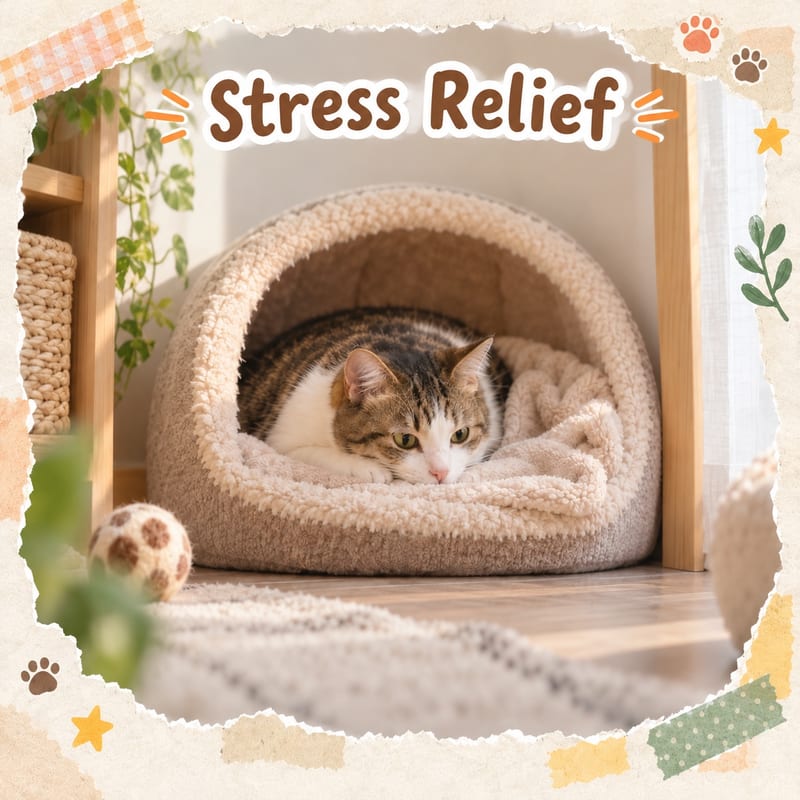
- Provide hiding spots: cardboard boxes, cat beds, open wardrobes — give the cat an escape route, and alert airplane ears naturally decrease.
- Number of resources = number of cats + 1: litter boxes, water fountains, cat trees all plus one, reducing tension from resource competition.
- Weekly ear canal check: use a torch + cotton swab to gently wipe the outer ear; if you see dark discharge, book a vet immediately.
- Stable routine: fixed feeding and play times, reducing anxiety from owners working overtime.
- Pheromone diffuser: during renovation, typhoons, and other noisy periods, plug-in diffusers can speed up calming.
What are airplane ears? Why does this action happen
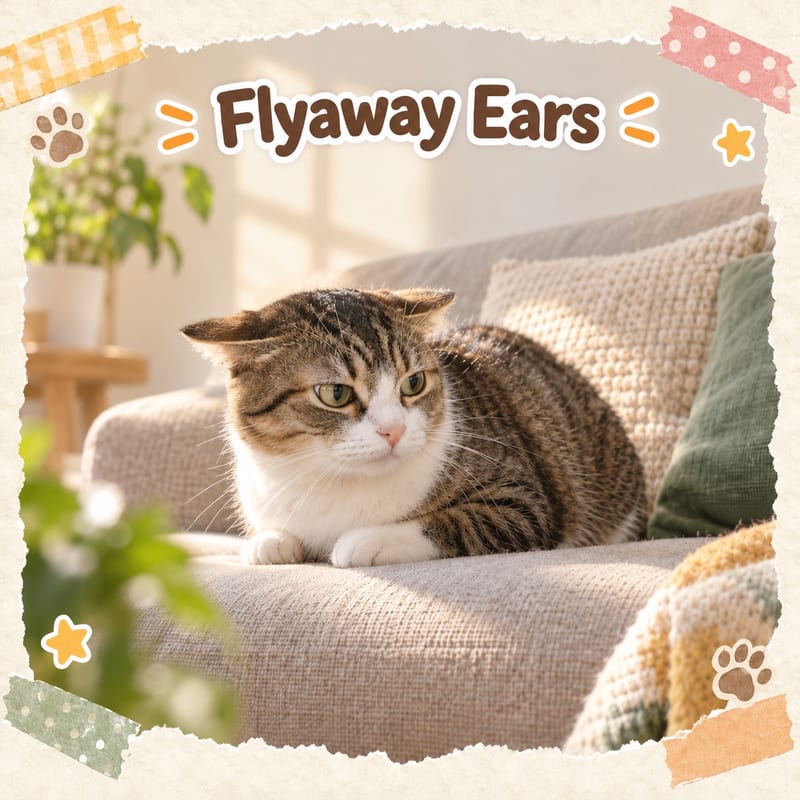
"Airplane ears" is the posture where a cat flattens both ears horizontally to the sides, resembling airplane wings, hence the name. Cat ears have over 30 muscles and can rotate independently almost 180 degrees — ears flattened backwards are essentially the cat "tucking its ears away".
This action has two evolutionary purposes: one is protection — ears are vulnerable parts; flattening them during fights or threats reduces the area exposed to injury; two is preparing for action — flattened ears make the head more streamlined, combined with a lowered body, it's a preparatory move before pouncing or fleeing. So airplane ears almost always mean "the cat has entered some state of high tension" — which kind of tension depends on the accompanying signals.
The 5 meanings of airplane ears
| # | Meaning | Common situation | Accompanying signals |
|---|---|---|---|
| 1 | Fear/alertness | Loud noise, strangers, vet visit | Dilated pupils, body shrinking, possibly hissing |
| 2 | Irritation warning | Petting too long, wrong spot | Tail thrashing, skin twitching, looking back at you |
| 3 | Play focus | Wand toy, seeing prey | Round pupils, bum wiggling, crouching forward |
| 4 | Deep relaxation | Sleeping, being massaged | Whole body soft, squinting, purring |
| 5 | Ear pain | Ear mites, otitis media, foreign object | Head shaking, ear scratching, head tilt, discharge |
Key point: Many people think airplane ears = anger, but anger is only one possibility. A deeply relaxed sleeping cat, a cat engrossed in a wand toy, will also show cute airplane ears.
Traffic-light chart: tell normal from something wrong in 10 seconds
| Light | Situation combination | Judgement | What you should do |
|---|---|---|---|
| 🟢 Green | Sleeping + whole body relaxed + purring | Deep relaxation, completely normal | No action, take photos |
| 🟢 Green | Playing + round pupils + bum wiggling | Hunting mode, having fun | Keep playing |
| 🟡 Yellow | Being petted + tail starting to flick + ears horizontal | Had enough petting, getting irritated | Stop immediately |
| 🟡 Yellow | New environment + body lowered + looking around | Tense, assessing | Give time to adjust, don't force interaction |
| 🔴 Red | Dilated pupils + hissing + shrinking into a corner | Extreme fear, ready to defend | Remove threat source, provide hiding space |
| 🔴 Red | Persistent airplane ears + head shaking + ear scratching | Ear discomfort, possible disease | Book a vet exam for ears |
How to use: When you see airplane ears, don't just look at the ears — glance at the pupils (dilated or normal), tail (still or flicking), body (relaxed or tense), then ask yourself "what just happened". Put the three together and match accordingly.
This kind of airplane ears needs a vet
Emotional airplane ears appear and disappear quickly with context; but one kind of airplane ears is a pain signal needing professional examination:
- ⚠️ Persistent single-sided or double-sided airplane ears, unrelated to context
- ⚠️ Frequent head shaking, pawing at ears — ear mites, ear canal infection, foreign object
- ⚠️ Head tilt, unsteady walking — inner ear inflammation or neurological problem
- ⚠️ Shrinking, crying, hissing when ears are touched — ear pain
- ⚠️ Dark discharge, odour, secretions in the ear canal
Hong Kong's humid weather is a high-risk environment for ear mites and ear canal inflammation, especially in multi-cat households. If airplane ears are accompanied by any of the above, don't treat it as temper — take it to the vet for an otoscope exam to be safe.
This article is for reference only and cannot replace veterinary diagnosis. If you have health concerns, please consult a registered veterinarian.
How to respond when you see airplane ears?
Emotional airplane ears (green/yellow):
- Green play mode: keep playing, let it burn off energy
- Yellow irritation: stop immediately. Cat warning signals are sequential — airplane ears are already a "verbal warning"; continuing to pet is "physical action"
- Yellow new environment tension: lower volume, slow movements, let it decide when to approach
Fearful airplane ears (red):
- Remove or move away from the source of fright (close windows, put away the vacuum, ask visitors to give space)
- Don't chase, don't force cuddle, don't keep coaxing — all worsen fear
- Provide hiding spots (cardboard boxes, under the bed, cat beds), let it calm down on its own; usually recovers within 30 minutes
Suspected disease (red):
- Don't dig ears yourself or use ear drops randomly — the ear canal structure is complex, wrong medication worsens it
- Note the symptoms (number of head shakes, colour of discharge), take to the vet for examination
Hong Kong small-flat practicalities: airplane ears response checklist
Hong Kong homes are small, cat emotions can flare at any moment. Stick this sheet on the fridge door for instant matching.
1. Green-light scenarios (continue/take photos)
- Sleeping airplane ears: heater or fan on? First feel if the cat's ears are warm; if cold add a towel, if warm take photos.
- Hunting airplane ears: after 3 minutes of wand toy play, redirect to a "reward chew toy" to avoid chasing ankles after play.
2. Yellow-light scenarios (stop/give space)
- Petting too long: stop immediately, put your hand in the cat's line of sight, wait for it to approach again; if it walks away, don't chase.
- New environment: no place to hide in open kitchen/living room? Put a cardboard box beside the TV cabinet, opening facing the wall with a 10cm gap, instantly becomes a private cave.
3. Red-light scenarios (see a vet/remove threat)
- Persistent head shaking and ear scratching: note the number of head shakes (e.g., 10 times in 5 minutes), bring a video to the vet; many Hong Kong clinics support WhatsApp booking, saving queue stress.
- Fear red-light: typhoon/renovation noise? Turn on air-conditioning + play classical music to mask, then place a cat pheromone plug-in in the corridor; usually calms within 30 minutes.
4. Daily prevention
- Weekly ear canal check: use a torch + cotton swab to gently wipe the outer ear; if you see dark discharge book a vet immediately, don't apply medication yourself.
- Multi-cat households: number of water fountains, litter boxes = number of cats + 1, reducing alert airplane ears from resource competition.
Sticker says: "See ears flat, pause first; check pupils, then decide."
Further reading
📌 Key summary
- ✅ Airplane ears don't always mean anger; sleep and hunting also produce them
- ✅ 10-second traffic-light chart: green continue, yellow stop, red see a vet
- ❌ Persistent single-sided airplane ears + head shaking = don't treat as temper
- ❌ Reaching out to pet immediately when you see airplane ears may get you scratched
- ✅ Hong Kong's humidity makes ear canal inflammation easy; see a vet immediately if there's odour or discharge
 K9 Natural full guide →
 Feline Natural full guide →
 Fuji One full guide →

