
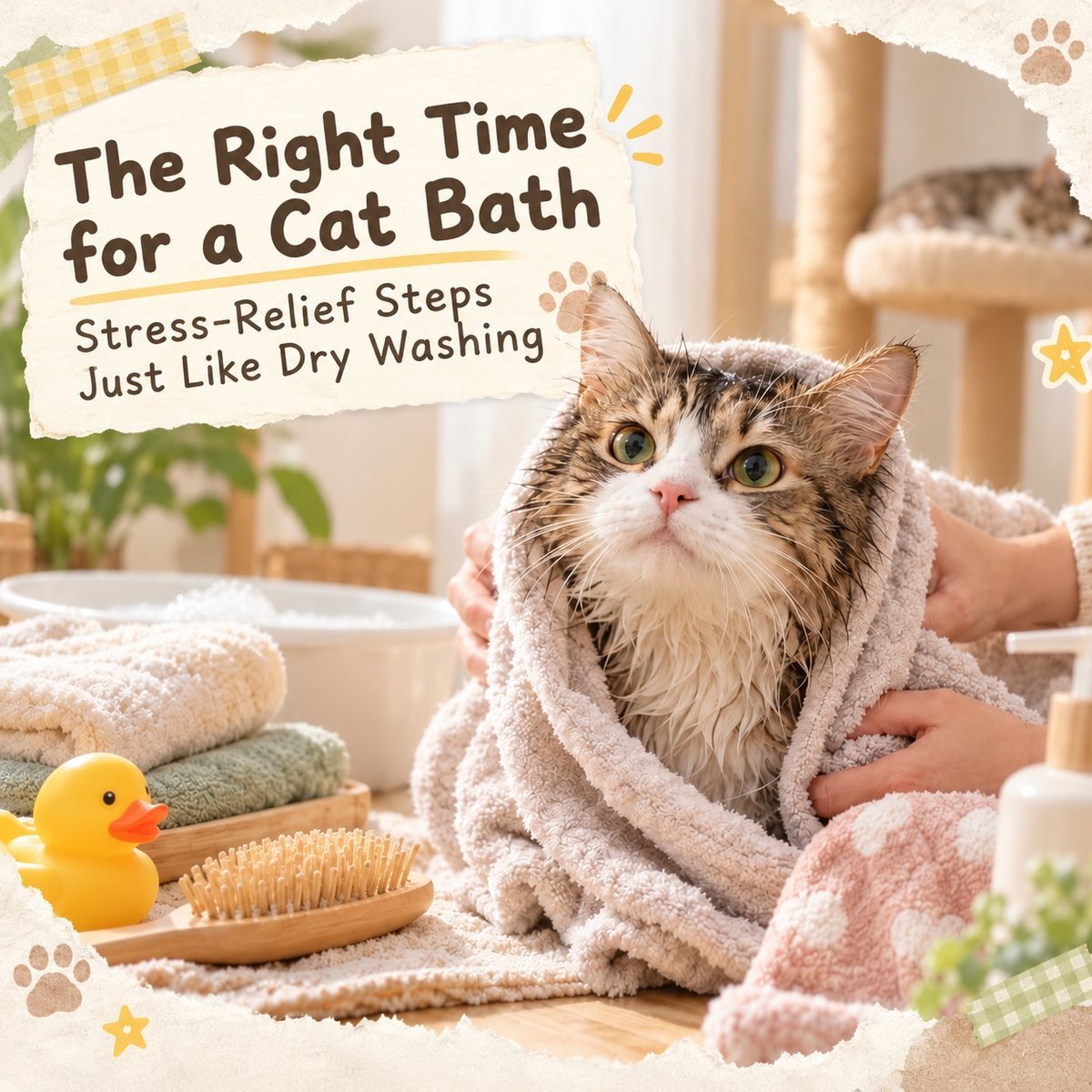
Quick answer: Indoor cats don't need frequent baths—they self-clean by grooming every day. Only in a few situations, such as obesity, stomatitis, after diarrhea, or contact with harmful substances, should you clean them gently and locally. Otherwise, forcing a bath can damage their sebum protection and cause extreme stress.
Many first-time cat owners ask: "Do cats need baths?" The answer may surprise you—indoor cats basically don't need baths. Cats are naturally clean and spend a lot of time grooming themselves every day. But in certain special cases, appropriate cleaning is still necessary. PetChill helps you understand the correct knowledge about cat cleaning.
Why cats usually don't need baths
Cats' self-cleaning system
- Cats spend 30-50% of their waking hours grooming
- The barbs on their tongue effectively remove dirt and loose fur
- Oil secreted by sebaceous glands protects the coat and repels water and bacteria
- Bathing disrupts this natural protection
Risks of bathing cats
- Stress response: Cats strongly resist getting wet and can easily suffer severe stress
- Skin problems: Frequent bathing washes away natural sebum, leading to dry skin and more dandruff
- Risk of catching a cold: If not dried thoroughly after a bath, they can easily catch a chill
- Trust issues: Forced bathing can damage the trust between you and your cat

When is bathing acceptable?
Although usually unnecessary, you can bathe your cat in the following special situations:
1. Obese cats
Overweight cats can't reach around their hindquarters and other areas. These areas may accumulate dirt and need manual cleaning.
2. Cats with stomatitis
Due to oral pain, they groom significantly less. Their coat may become greasy and matted.
3. Cleaning after diarrhea
The area around the hindquarters is very dirty, and cats are bothered by filth and odor. In this case, you can wipe clean with a damp towel.
4. After outdoor walks
Their body or paw pads may have come into contact with harmful substances. It's recommended to wipe their paws and belly with a damp towel.
5. Coat abnormalities
When the coat loses its shine, has severe mats, or the body emits an odor, bathing may be a better choice.
If you must bathe, how to do it safely
Pre-bath preparation
- Choose a warm day and room (at least 25°C)
- Prepare all supplies: cat-specific shampoo, towels, hair dryer
- Trim nails first to avoid scratches
- Place a non-slip mat in the tub or basin
Bathing steps
-
Wet with warm water: Water temperature around 38-39°C (feels warm, not hot, on the inside of your wrist). Start wetting from the paws.
-
Dilute shampoo: Dilute cat-specific shampoo and gently massage, avoiding eyes and ears.
-
Rinse thoroughly: Residual shampoo irritates the skin, so be sure to rinse clean.
-
Quick towel dry: Wrap in an absorbent towel and gently press to absorb water.
-
Blow dry: Use low temperature and low speed, or let dry naturally in a warm room.
Important notes
- Keep the whole process within 5-10 minutes
- Do not let water enter ears and eyes
- Use cat-specific shampoo; human shampoo's pH is not suitable for cats
- If your cat is extremely resistant, don't force it—switch to wiping with a damp towel
Alternatives to bathing
1. Damp towel wipe
The gentlest method. Gently wipe your cat's whole body with a slightly damp towel to remove surface dirt.
2. Dry shampoo powder/foam
Rinse-free cleaning products designed for cats. Sprinkle on the coat, massage, then brush out.
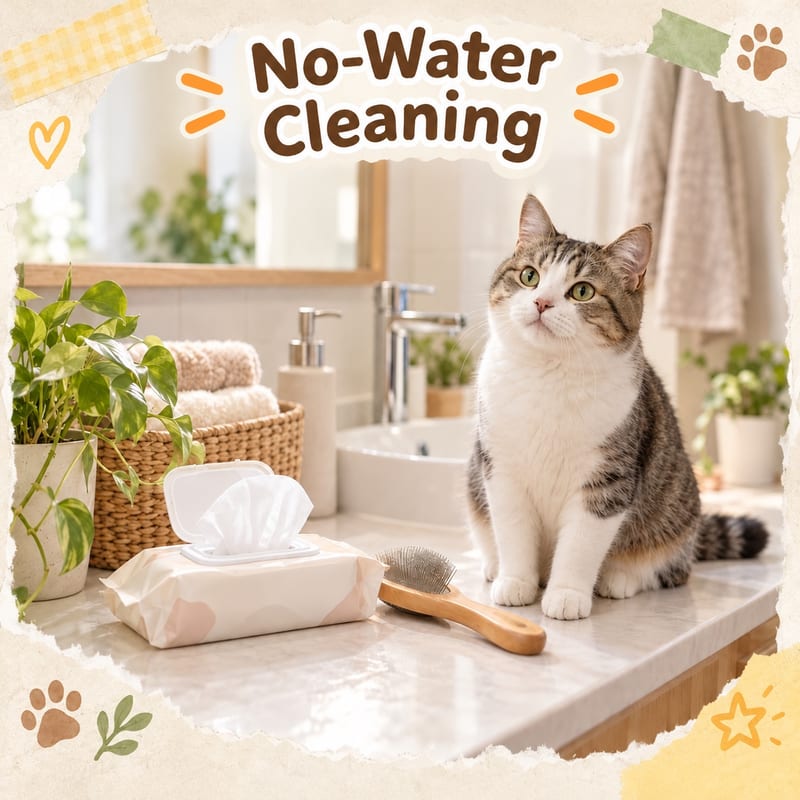
3. Pet wipes
Convenient and portable, suitable for local cleaning (paws, hindquarters).
4. Regular brushing
Daily brushing effectively removes loose fur and dirt—it's the most important daily cleaning method.
| Cleaning method | Suitable for | Time needed | Notes |
|---|---|---|---|
| Damp towel wipe | Daily light dirt, local cleaning | 2-3 minutes | Towel slightly damp, wipe gently |
| Dry shampoo powder/foam | Water-averse cats, mild greasiness | 3-5 minutes | Massage then brush out residue thoroughly |
| Pet wipes | Paws and hindquarters after outings | 1 minute | Choose alcohol-free formula |
| Warm water bath | Severe dirt, greasiness, odor | 5-10 minutes | Keep warm throughout, use cat-specific shampoo |
PetChill's Reminder
Respecting your cat's nature is the first step in loving them. Most indoor cats never need a bath in their lifetime; daily brushing and environmental cleaning are enough. If cleaning is truly needed, prioritize gentle methods like wiping with a damp towel.
For more cat care knowledge, keep following PetChill's latest articles!
Hong Kong small-home practicalities: a cat cleaning routine that works even without a bathtub
Many Hong Kong homes are small and lack a bathtub—sometimes the bathroom only has a shower stall. You can still clean your cat safely. Here's a "three-step quick wash" designed for Hong Kong residents:
1. Set up the space
- Use the kitchen sink or a large plastic basin with 3-4 cm of warm water (38-39°C), and place a non-slip kitchen mat.
- For a shower stall, use a foldable plastic basin to prevent slipping.
- Turn on the bathroom heater or dehumidifier and pre-warm to above 25°C to reduce temperature shock.
2. Tool checklist
- Cat-specific shampoo (dilute 1:5 in a small cup first)
- Two highly absorbent microfiber towels (one for wiping, one for wrapping)
- Low-noise hair dryer (optional pet-specific silent model)
- Nail clippers (trim the day before to reduce scratch risk)
3. Step-by-step routine
Step 1: Test with local water Place your cat at the edge of the basin and gently scoop water over the paws and belly with a cup to test their reaction. If calm, wipe the body and decide whether to proceed with a full bath; if struggling, immediately switch to wiping key areas (hindquarters, paws) with a damp towel.
Step 2: Quick wash and rinse Gently massage the diluted shampoo for 30 seconds, avoiding the head and ears. Rinse quickly with a cup 2-3 times to ensure no residue.
Step 3: Quick dry and keep warm Wrap the cat in a large towel and press gently to absorb water, then place near a heater or in a warm room and blow-dry with a low-temperature dryer at a 20 cm distance. If your cat is afraid of the dryer, wrap them in a towel and put them in a cat carrier, then blow-dry through the carrier to reduce noise.
When to see a vet? If after bathing your cat continues to shiver, develops red patches on the skin, loses fur, or scratches incessantly, stop and contact your veterinarian. Remember, Hong Kong's humid weather means if the coat isn't completely dry within 2-3 hours, it can easily lead to fungal infections. If necessary, book a check-up at a 24-hour pet hospital.
Further reading
📌 Key takeaways
- ✅ Cats spend over 30% of their day grooming, which is enough to stay clean
- ✅ Prioritize damp towels, dry shampoo, or pet wipes over bathing
- ❌ Frequent bathing strips natural sebum, causing dry, flaky skin
- ❌ Forced bathing easily triggers severe stress and damages trust
- ✅ If a bath is truly necessary, use water at 38-39°C and finish within 5-10 minutes