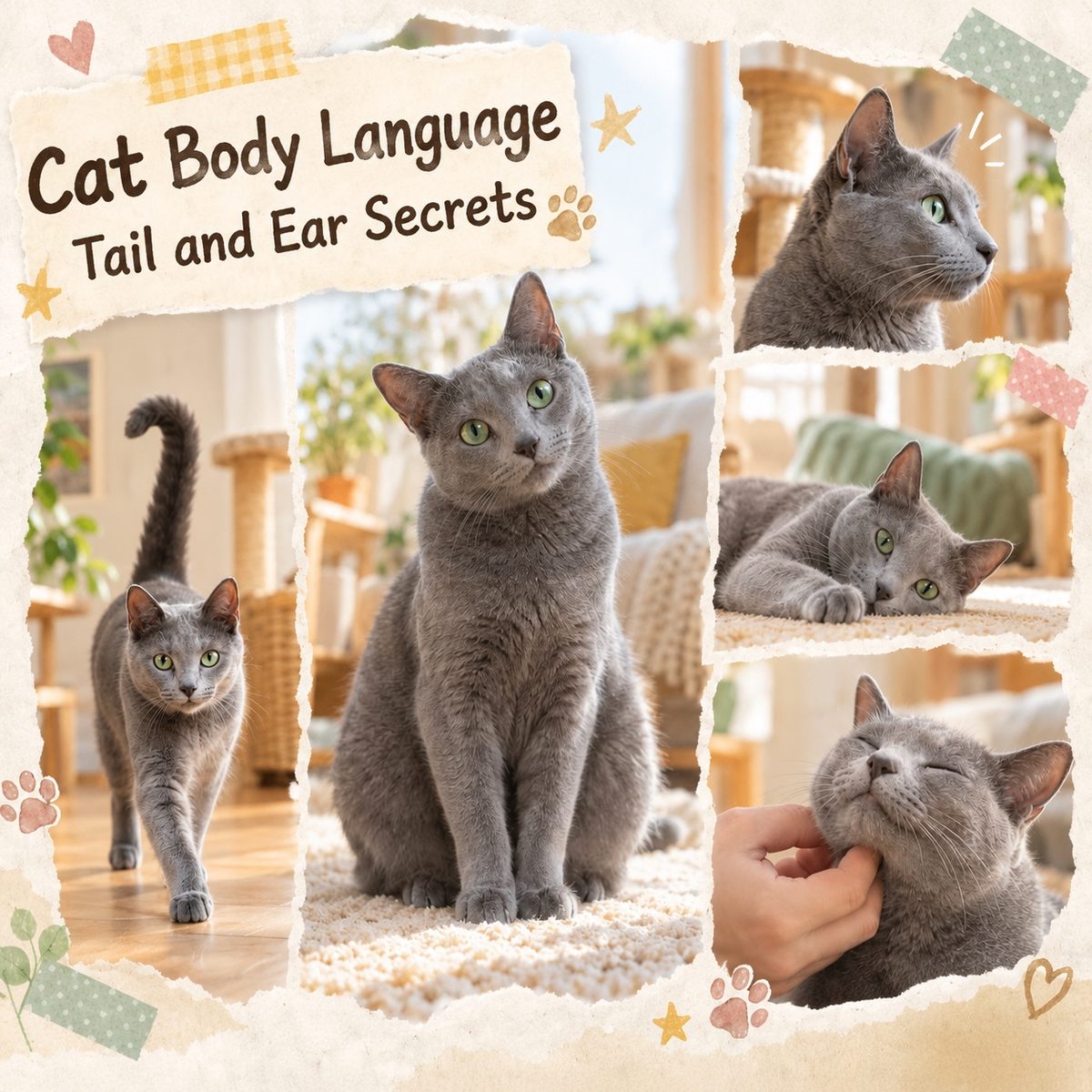
Quick answer: Cats communicate emotions through their tail, pupils, ears and body posture—a vigorously wagging tail means anxiety (opposite to dogs!), a twitching tail tip means interest, and a straight-up tail means affection. Learn these 3 key signals and you can truly understand your cat's feelings, reducing misunderstandings and conflict.
Have you ever called your cat's name and it clearly heard you but pretended not to? Actually, its tail has already given it away—a gently twitching tail tip is telling you: "I heard you, but I don't want to pay attention."
Cats may not speak, but their whole body is a language. From the swing of the tail, the size of the pupils, the direction of the ears, to the overall posture, every detail is conveying emotion. Learn these signals and you can truly understand your cat's feelings and respond to their needs in time. According to animal behaviour research, cats have over 20 recognisable body signals; mastering the core 3 categories is enough to interpret most daily interactions.
Tail Language Quick Reference: 5 Movements and Their Meanings
| Tail movement | Emotional meaning | Suggested response |
|---|---|---|
| Vigorous fast wagging | Anxiety, irritation | Stop contact immediately, find the source of stress |
| Slight twitching of the tip | Interest, focus | You can continue interacting |
| Straight up (tip slightly curved) | Affection, friendliness | Respond positively, gently stroke the head |
| Tucked between the legs | Extreme fear | Keep distance, provide a safe space |
| All fur standing up (puffed up) | Threat, defence | Don't stare, slowly back away |
Tail Language: Your Cat's Emotional Barometer
A cat's tail is not only for balance; it's one of their most important tools for expressing emotions. Unlike dogs, the meaning of tail movements in cats is very different—don't mix them up.
Vigorous side-to-side wagging—an anxiety warning
When a cat's tail swings widely and quickly from side to side, it means they are very anxious or irritated. At this point the cat may be ready to attack or defend, and you need to quickly find and remove what's making them uneasy. For example, a sudden stranger, a loud noise, or you touching a spot they don't like.
Slight twitching of the tip—interest
If only the tip of the tail twitches slightly, that's a positive sign. The cat is interested in something, such as aiming at a bird outside the window, discovering a new toy, or preparing to pounce on prey. This movement carries a bit of excitement and focus.
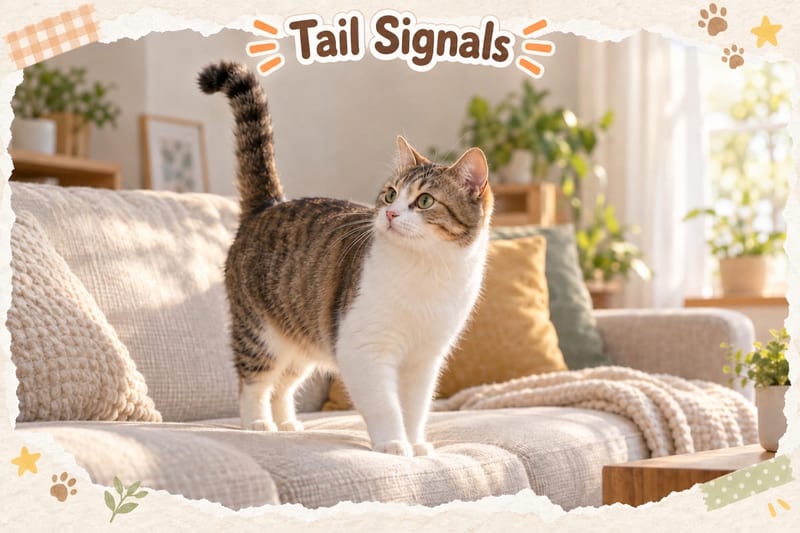
Tail held straight up—affection and friendliness
When a cat holds its tail straight up in front of you, sometimes with the tip curved like a question mark, it's showing affection. This gesture originally comes from kittens greeting their mother; if an adult cat does it to you, it means they trust you very much and see you as their closest companion.
Tail tucked between the legs—fear
When a cat tucks its tail tightly between its hind legs, it means they are extremely frightened. This posture makes them look smaller—an instinctive "don't attack me" reaction. If you see this, don't force approach; give the cat a safe space first.
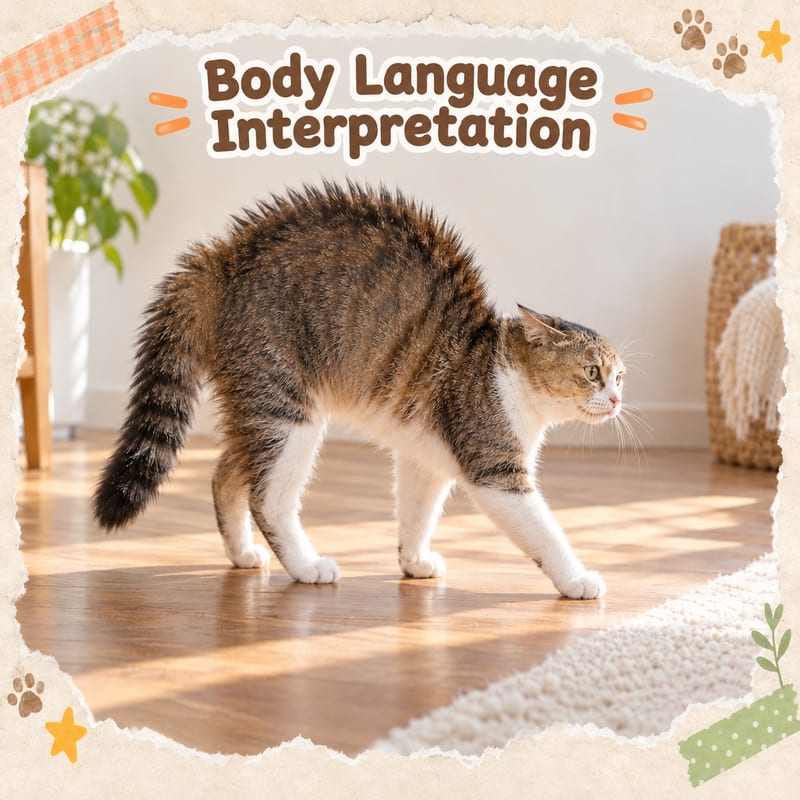
All fur standing up—threatening state
When a cat's tail and body fur stand up (often called 'puffing up') and its back arches, it is threatening the other party. Although it looks fierce, the cat may actually be full of fear and just refusing to give in.
Facial Expressions: The Secrets of Eyes, Ears and Whiskers
Cats have very expressive faces, mainly communicating emotions through pupil size, ear direction and whisker position.
Relaxed and calm
When relaxed, a cat's ears point naturally forward, pupils remain medium-sized, and whiskers spread naturally to the sides. At this time the cat is free of stress, and you can safely interact.
Assertive and confident
When a cat becomes assertive, its pupils narrow into slits, its gaze sharpens, ears pull slightly back, and whiskers point forward. This expression means they are unhappy about something or want to defend their territory.
Uneasy and hesitant
When a cat feels uneasy, its ears flatten backward, the inside of the ears becomes more visible, and pupils become almost round. This state is between "flight" and "fight"; the cat is still hesitating about what to do.
Extreme fear
In extreme fear, a cat's pupils dilate until they almost fill the eye, ears bend far back, and they may even open their mouth and show teeth. At this point the cat is highly tense, and any stimulus could trigger aggression.
Posture Code: The Meaning Behind Body Movements
Besides the tail and facial expressions, a cat's whole body posture is full of information.
Pre-attack—arched back, head low
When a cat lowers its head and raises its hindquarters into a "bridge" shape, this is a typical pre-attack posture. They put their weight on the hind legs, ready to spring forward at any moment. The front legs are powerful, muscles tense, poised to strike.
Complete trust—belly exposed
When a cat rolls over and shows its belly with all four paws in the air, this is a posture of maximum trust. The belly is the most vulnerable part; exposing it means they feel completely safe with you. However, note that not all cats like their belly rubbed—some roll over just to stretch, and touching them may get you bitten.
Fearful crouch—curled into a ball
A frightened cat will crouch as low as possible, ears flattened far back, tail tucked tightly. This posture makes them appear as small and harmless as possible, hoping not to attract attention.
PetChill's Reminder
A cat's body language is an important way they communicate with you. Spend a few minutes each day observing your cat's tail movements, facial expressions and body posture, and you'll find another layer of joy in living with a cat. Remember, when a cat shows anxiety or fear signals, don't force interaction—giving them a sense of security is most important.
To learn more about cat behaviour, keep following PetChill's latest articles!
Practical Guide for Small Hong Kong Flats: 3 Steps to Build a Daily Routine That Understands Your Cat
Step 1: 3-minute morning "tail patrol"
After getting up, first make a round to the litter box, food bowl and windowsill, and note your cat's tail state: straight up = in a good mood, can stroke head; slight tip twitch = waiting for a can of food; vigorous wagging = maybe the litter is dirty or hungry. Take a photo with your phone so you can review it on the MTR on the way to work.
Step 2: After-work "emotion check-in"
Don't rush in the moment you open the door; first stand at the entrance and observe:
- If you see the tail straight up greeting you → you can crouch down, greet softly, then stroke the head.
- If the tail is tucked or puffed up → put down your bag, take off your shoes, let the cat calm down for 5 minutes, then slowly walk away.
- If pupils are dilated and ears flattened back → immediately turn off the living room lights, leave a small light in the corridor, open the room door and let the cat go in to calm down.
Step 3: Bedtime "safe island check"
Hong Kong flats are small, and if cats have nowhere to retreat, stress easily builds up. Do a 30-second check every night before bed:
- Are the cardboard box / cat tunnel blocked by clutter? Clear them.
- Are there clothes on the top level of the cat tree? Move them.
- Are the entrances under the bed / on top of the wardrobe blocked by a fan or suitcase? Push them aside.
By repeating these 3 steps daily, you can build a "real-time body language translation + emotional first aid" mechanism for your cat in the concrete jungle, reducing human-cat misunderstandings and making even a 300 sq ft space full of security.
Further Reading