
🤖 AI Summary
Hong Kong's spring wet season plus muggy summers are peak cat eczema season: skin stays damp and stuffy for long periods, dust mites and mould multiply, and cats itch so much they scratch and lick frantically. Eczema is not a single disease but an umbrella term for skin inflammation — the key is to find the underlying cause (allergy, parasites, damp stuffiness).
• Typical locations: belly, armpits, inner thighs, base of the tail — where the fur is densest and stuffiest
• Red lines: scratching until the skin breaks and oozes tissue fluid, large areas of hair loss, scratching non-stop — see a veterinarian
• Three home preventions: dehumidify against damp, prevent fleas, prevent over-grooming
Quick answer: Cat eczema is an umbrella term for skin inflammation, and Hong Kong's humid climate (90%+ humidity during the wet season) is a major trigger: damp stuffy skin + dust mites and mould + active fleas = itching flares. Symptoms: repeated scratching and licking, red rashes and papules, localised hair loss, oozing and crusting skin. Mild cases can improve with care (prevent scratching + keep dry); broken oozing skin, large areas of hair loss, or 24 hours of frantic scratching require a vet visit. Core prevention: dehumidifier + regular flea prevention + brushing and checking the skin.
Contents
-
What is cat eczema?
-
Why is it so common in Hong Kong? (The wet season effect)
-
Symptom self-check + common locations
-
Eczema vs ringworm vs allergy: how to tell?
-
When to see a vet + red lines
-
Treatment flow + home care
-
Three preventions: moisture, fleas, licking
-
FAQ
What is cat eczema?
"Eczema" is actually an umbrella term; clinically, veterinarians use it to cover several types of skin inflammation:
- Acute eczema (hot spot dermatitis) — a sudden red, swollen, moist lesion, a "self-inflicted wound" from the cat's scratching and licking: itch → scratch and lick → skin breaks and inflames → more itch → scratch harder; the vicious cycle can go from pea-sized to palm-sized in days
- Chronic/allergic dermatitis — long-term recurring skin inflammation, usually with an underlying allergen (dust mites, food, flea saliva); Hong Kong's humid weather is the biggest amplifier
- Miliary dermatitis — tiny crusty red bumps on the skin, the classic sign of an allergic reaction in cats, mostly around the neck and back
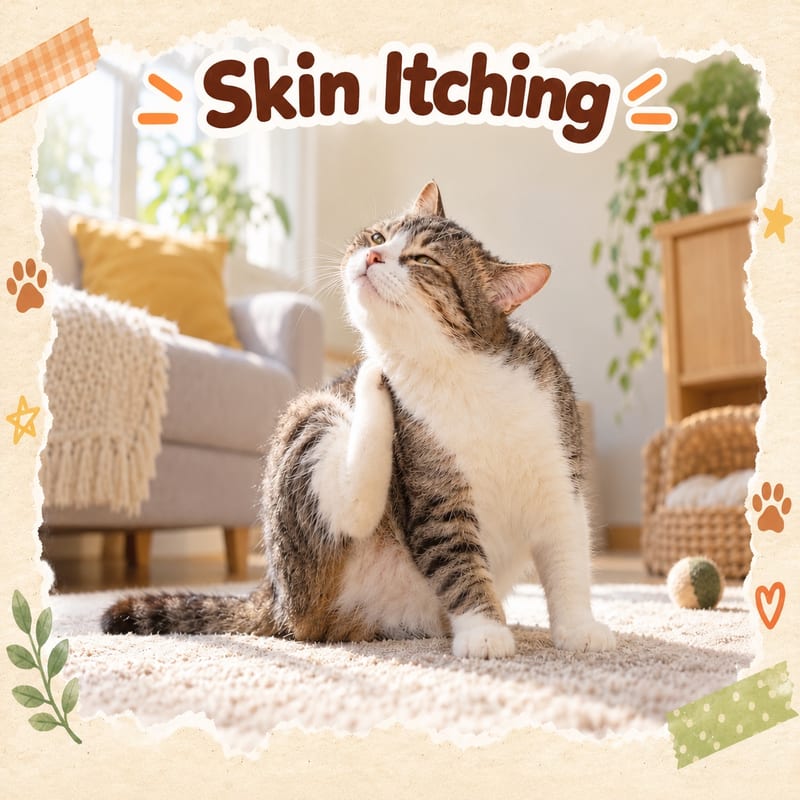
What's different about cats compared with dogs: cats show itching very subtly — often not frantic scratching but "over-grooming": licking until the local hair thins and breaks. Owners think they're just being clean, but actually the skin is so itchy they can't stop licking.
Why is it so common in Hong Kong? (The wet season effect)
Hong Kong's climate is practically the perfect stage for an eczema script:
- Wet season (February to April) — walls sweat, humidity 90%+, skin never dries properly
- Summer (May to September) — muggy and humid; cats can't sweat and rely on their skin to dissipate heat, so hair follicles get stuffy
- Poor ventilation in small flats — bedding and cat beds stay slightly damp for long periods
- Dust mite and mould paradise — relative humidity above 70% is their breeding ground; dust mites are the number one allergen for feline atopic dermatitis
- Fleas active all year — no winter in the south; flea allergic dermatitis can occur in any season
How does humidity damage the skin? The stratum corneum stays damp and stuffy for long periods → the skin barrier weakens → allergens and bacteria invade more easily → inflammation and itching → scratching and licking break the skin → secondary infection — a whole chain, and Hong Kong's climate supplies every ingredient.
Symptom self-check + common locations
Signals owners most easily spot:
- Itching signals: repeated scratching (especially at night), head shaking and ear scratching, chewing at toes
- Over-grooming: sparse belly hair, a bald patch on the inner thigh (neatly broken hair ends = licked off)
- Skin changes: red rashes, tiny papules/crusts, increased dandruff
- Advanced warning signs: localised hair loss, oozing tissue fluid, thickened crusts, odour
Common locations (dense fur + stuffy + hard to reach):
| Location | Why it's affected |
|---|---|
| Belly/groin | Sleeping on the floor + dense fur + can lick it themselves |
| Armpits | Friction areas + stuffy |
| Inner thighs/groin | Damp stuffiness hotspot |
| Base of tail/lower back | Flea gathering spot (classic flea allergy site) |
| Neck and back | Common site for miliary dermatitis + flea spot |
Self-photo check method: Once a month, part the hair backwards on the belly and armpits and look at the skin in good light — catch red spots, crusts and dandruff early.
Eczema vs ringworm vs allergy: how to tell?
| Eczema/hot spot | Ringworm (fungal) | Allergic dermatitis | |
|---|---|---|---|
| Appearance | Red, swollen, moist, oozing and crusting | Circular hair loss, scales, broken hair ring | Fine red rash/miliary crusts, localised licked bald patches |
| Itchiness | Obviously itchy | May not itch | Persistently itchy |
| Progression | Rapidly expands within days | Slowly enlarges over weeks | Recurring, seasonal |
| Contagious | Not contagious to humans | Contagious to humans and other animals | Not contagious |
| Diagnosis | Clinical examination | UV lamp/fungal culture | Elimination + allergy testing |
Why distinguish? Because ringworm is contagious to humans (especially children) and is managed completely differently — if you see circular hair loss with scales, rule out ringworm first.
When to see a vet + red lines
Red/green triage table:
| Situation | Verdict | Action |
|---|---|---|
| Occasional scratching, skin looks normal | 🟢 Observe | Brush and check + record frequency |
| Localised rash/licked bald patch | 🟡 See vet | Examine within a few days to find the cause |
| Circular hair loss + scales (suspected ringworm) | 🟡 See vet soon | Needs diagnosis; contagious, so isolate and manage |
| Scratching until skin breaks and oozes, moist hot spot | 🔴 See vet | Acute eczema needs medication + prevent scratching |
| Large areas of hair loss/thickened discoloured skin | 🔴 See vet | Chronic problem needs systematic work-up |
| Frantic scratching, scratching until bleeding, affecting sleep and eating | 🔴 Urgent | Put on a cone + see vet immediately |
Bottom line: a cat scratching and licking non-stop won't "stop naturally" — itching only amplifies itself; the longer you delay, the greater the skin damage and the longer the treatment.
Treatment flow + home care
Veterinary treatment (according to diagnosis):
- Anti-itch: antihistamines/anti-itch medication; severe cases may use short-term anti-inflammatory drugs or newer anti-itch medications
- Broken hot spots: shave and clean the wound + topical medication + cone to prevent scratching
- Secondary infection: antibiotics/antifungals
- Underlying allergy: flea treatment, food elimination trial, environmental allergen management
- Confirmed ringworm: systemic treatment + environmental disinfection (risk of transmission to humans)
Five-step home care:
-
Keep dry — keep the dehumidifier running (target humidity 50–60%), wash and sun-dry cat beds regularly
-
Prevent scratching and licking — use a cone or clothing to protect the affected area under veterinary guidance (don't leave a cone on long-term on your own and torment the cat)
-
Brush and check — brush weekly and feel the skin; catch red spots and crusts early
-
Don't apply medication on your own — many human ointments are toxic to cats (some steroids/antiseptics are poisonous if the cat licks them off); topical medication must be prescribed by a veterinarian
-
Nutritional support — Omega-3 fish oil supports the skin barrier (ask your vet for dosage); keep the main diet balanced
Three preventions: moisture, fleas, licking
Moisture prevention (most critical in Hong Kong):
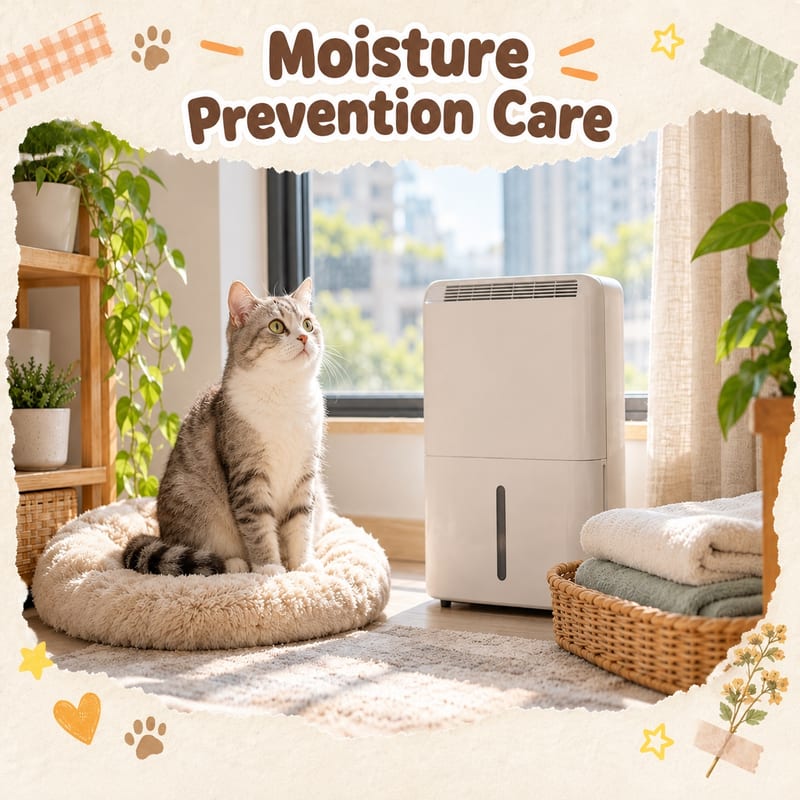
- Use a dehumidifier during the wet season/rainy days, target humidity 50–60%
- Wash cat beds and blankets weekly and dry them thoroughly before giving them back
- Keep the litter box away from damp corners and change all litter regularly
- Ventilation: open windows for cross-breeze during the day, or use a fan to circulate air
Flea prevention (year-round in the south):
- Regularly use veterinarian-approved spot-on treatments (cat-specific! Some ingredients in dog flea products are highly toxic to cats)
- In multi-cat households, treat all cats together — don't miss any
- Vacuum carpets and sofa seams regularly
Licking and scratching prevention (reduce self-harm):
- Play to burn energy and reduce boredom grooming
- Trim nails regularly (greatly reduces scratch severity)
- Intervene early when you see over-grooming signals (localised thinning hair)
This article is for reference only and cannot replace veterinary diagnosis. If you have health concerns, please consult a registered veterinarian.
Further reading

📌 Key points
- ✅ Eczema is not a disease name but an umbrella term for skin inflammation
- ✅ 90% humidity in the wet season + dust mites and fleas = peak flare season
- ✅ Belly, armpits and inner thighs are most commonly affected
- ❌ Don't randomly apply human ointments; some ingredients are toxic if cats lick them
- ❌ Frantic scratching won't "stop naturally"; the longer you delay, the longer the treatment
 Wellness Core full guide →