
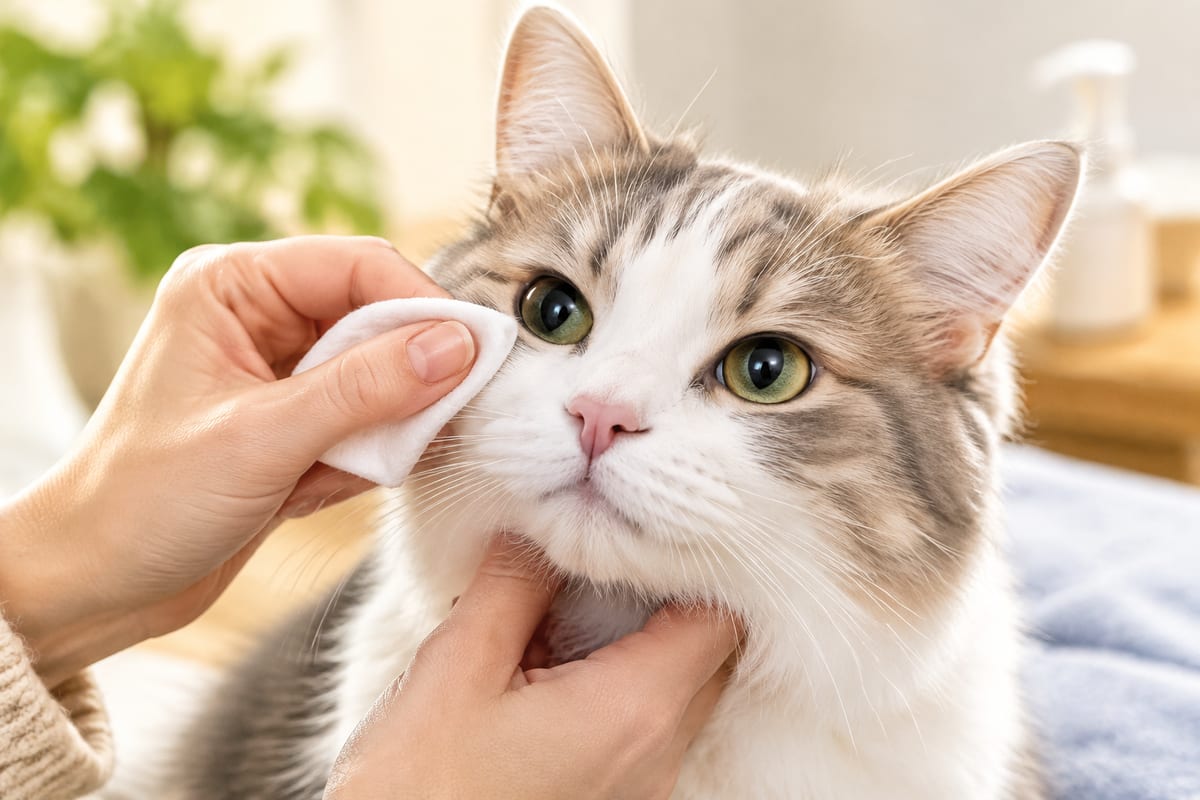
Quick answer: The core of cat eye care is daily observation, cleaning with a warm water cotton cloth, and wiping from the inner corner outward. Flat-faced breeds (Persian, Exotic Shorthair) have a special tear duct structure and need daily tear stain cleaning. Seek veterinary care promptly if you see yellow-green discharge, persistent redness or swelling, or a protruding third eyelid. Conjunctivitis, keratitis and feline viral rhinotracheitis are the three most common eye diseases; timely vaccination and a clean environment are the most effective prevention.
Basic Structure and Function of a Cat's Eyes
A cat's eye structure differs from a human's in several obvious ways. First, cats have a third eyelid (also called the nictitating membrane) at the inner corner of the eye, normally hidden inside the corner; when they are unwell or the eye is irritated, the membrane becomes visible. If the white third eyelid stays visible, that is an important signal to take your cat to the vet.
In addition, a cat's pupils can contract or dilate greatly with changes in light, which gives them excellent vision in dim conditions. However, precisely because a cat's eyes are so finely structured, problems can become serious once they arise, so daily care must never be neglected.
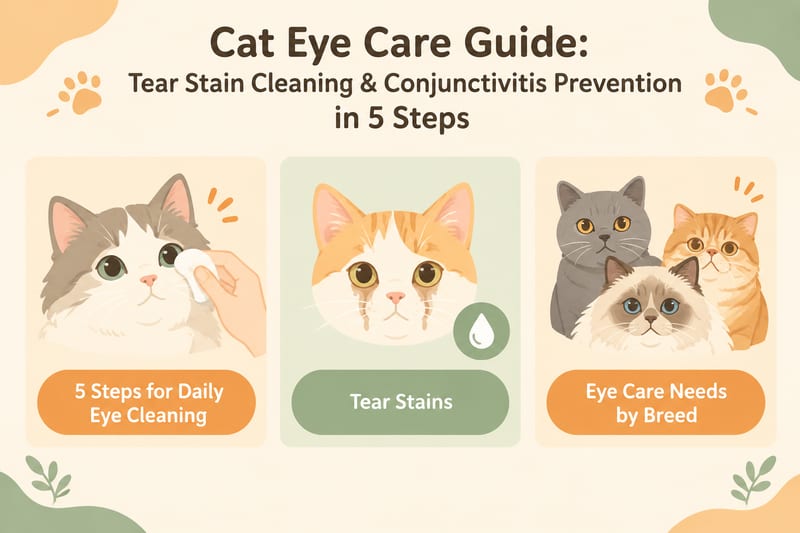
5 Steps for Daily Eye Cleaning
Regularly cleaning your cat's eyes is the most basic care task. Here are the correct cleaning steps:
Step 1: Prepare the tools
Prepare a clean cotton cloth or gauze (avoid gauze with too coarse a texture, which can scratch the eye) and a bowl of warm water. Wet wipes are not recommended because their chemical ingredients may irritate a cat's eyes. Pet-specific eye cleaning solutions are available; choose an alcohol-free, fragrance-free formula for safety.
Step 2: Restrain the cat
Gently hold the cat from behind the head to prevent sudden struggling. If the cat resists strongly, wrap the body in a towel and leave only the head exposed. Building a cleaning habit takes patience; at first you can use treats to help the cat relax.
Step 3: Wipe gently
Soak the cotton cloth in warm water and wring it out slightly, then wipe gently from the inner corner of the eye toward the outer corner. This direction is important to avoid pushing dirt into the tear duct. Use a different cloth for each eye to avoid cross-infection.
Step 4: Deal with crusted discharge
If there is already crusted eye discharge, do not pull it off forcefully! Place the damp cotton cloth gently over it for a few seconds to soften the crust, then wipe it away slowly. Pulling can tear the skin around the eye and even cause inflammation.
Step 5: Observe and record
After cleaning, look carefully at the cat's eyes: is there redness? Is the discharge clear, white or yellow-green? Is the cat rubbing its eyes frequently? This information is very helpful for a later vet visit.
Recommended frequency: Healthy cats need cleaning only 1-2 times per week; flat-faced breeds (such as Persians) may need daily cleaning.
Comparison Table of Common Cat Eye Diseases
| Eye disease | Main symptoms | Common causes | Severity | Management |
|---|---|---|---|---|
| Conjunctivitis | Red, congested eyelids, tearing, increased discharge | Bacterial/viral infection, allergies, foreign objects | Moderate | Vet-prescribed antibiotic eye drops, keep clean |
| Keratitis | Light sensitivity, cloudy eye, heavy tearing | Trauma, infection, dry eye | Relatively high | See a vet immediately; delay may damage vision |
| Feline viral rhinotracheitis | Sneezing, runny nose, increased discharge | Feline herpesvirus infection | Moderate | Supportive care, timely vaccination for prevention |
| Blocked tear duct | Severe tear staining, wet eye corners | Congenital structure in flat-faced breeds, inflammation | Low to moderate | Daily cleaning; vet may flush the duct in severe cases |
| Glaucoma | Swollen eyeball, dilated pupil, pain | Increased intraocular pressure | High | Emergency vet care; may lead to blindness |
Tear Stains: Why Do They Appear and How to Deal with Them?
Tear stains are brownish-red marks below the inner corner of a cat's eye, mainly caused by the following:
Common causes
- Blocked tear duct: Flat-faced breeds have naturally shorter or curved tear ducts, so tears cannot drain properly and overflow the eye
- Diet issues: Artificial colours and preservatives in food may worsen tear stains
- Environmental irritation: Dust, smoke and strong wind can all irritate a cat's eyes and cause tearing
- Eye infection: Conditions such as conjunctivitis increase discharge
How to improve
- Daily cleaning: Gently wipe the stained area with a warm water damp cotton cloth and keep it dry
- Adjust the diet: Choose natural cat food without additives to reduce artificial ingredients
- Keep the environment clean: Clean the cat litter regularly and reduce dust and irritants in the air
- Consult a vet: If staining persists severely or smells, seek veterinary care early
Eye Care Needs by Breed
Because of differences in facial structure, eye care needs vary greatly between breeds:
- Flat-faced breeds (Persian, Exotic Shorthair, Himalayan): shorter tear ducts, need daily tear stain cleaning, higher risk of eye infection
- Normal-faced breeds (British Shorthair, American Shorthair): clean 1-2 times per week and watch for abnormal discharge
- Long-haired breeds (Maine Coon, Ragdoll): hair around the eyes can irritate them, so trim overlong hair around the eyes regularly
- White cats: Some white cats may have congenital hearing or vision problems and need closer monitoring of eye health
Daily Observation Checklist
Spend 1 minute each day checking the following to catch eye problems early:
- Are the eyes clear and bright, without cloudiness or discolouration?
- Is the amount of discharge normal (a small amount of clear or white is normal)?
- Is there frequent pawing or blinking?
- Are the two eyes symmetrical, not one larger than the other?
- Is there redness, swelling, hair loss or crusting around the eyes?
- Is the third eyelid protruding?
Preventing Common Cat Eye Diseases
Conjunctivitis
Conjunctivitis is one of the most common cat eye diseases. Symptoms include redness and congestion of the inner eyelid, tearing and increased discharge; cats rub their eyes constantly because of itching. Causes can be bacterial infection (such as chlamydia), viral infection (such as feline herpesvirus), allergies or foreign objects. Prevention includes regular eye cleaning, avoiding contact with infected cats, and timely vaccination.
Feline viral rhinotracheitis
This is what is commonly called "cat flu", causing sneezing, runny nose and increased eye discharge at the same time. It spreads through sneezes and saliva, so multi-cat households need to pay special attention to isolation and prevention. Timely 3-in-1 or 5-in-1 vaccination is the most effective prevention.
Keratitis
Symptoms of keratitis include light sensitivity, cloudy eyes and heavy tearing. If a cat squints even in bright light, be highly alert. Keratitis needs prompt treatment; delay may damage vision.
Choosing Eye Health Supplements: Ingredients, Timing, Vet Advice
"Which eye health supplement do vets recommend?" is a very common question, but the answer is not a brand name. A vet's approach is to diagnose first (for example dry eye, tear staining, corneal problems, cataracts, retinal degeneration), then decide whether supplementation is needed, which ingredient, and for how long; supplements are supportive in most cases and cannot replace prescription medication or surgery. The table below summarises the direction of action and cautions for common ingredients, so you can discuss them with your vet at follow-up.
| Common ingredient | Direction of action | Commonly found in | Cautions |
|---|---|---|---|
| Omega-3 (EPA/DHA) | Anti-inflammatory, supports tear secretion | Fish oil, algae oil formulas | High doses may affect clotting; tell your vet before surgery |
| Taurine | Essential for cats; deficiency can cause retinal degeneration | Cat formulas | Cats must get it from food; dogs can synthesise it, so formulas are not interchangeable |
| Vitamin A | Vision and corneal health | Multivitamin formulas | Toxic in excess; do not increase the dose yourself |
| Vitamin E | Antioxidant | Multivitamin formulas | Follow the labelled dose when combined with other antioxidants |
| Lutein, zeaxanthin | Concentrate in the retinal macula, antioxidant | Dedicated eye formulas | Research is mostly in humans; pet dosage is decided by the vet |
| Anthocyanins (blueberry, bilberry) | Antioxidant, supports microcirculation | Natural-source formulas | Supportive only; not a treatment |
| Hyaluronic acid | Supports tear film moisture | Dry-eye related formulas | Dry eye must be diagnosed by a vet; do not rely on supplements alone |
How to choose: four checkpoints. First, the label has a full ingredient list and per-capsule dose, not just "proprietary formula"; second, it clearly states the target species (cat, dog or both), because needs for ingredients such as taurine differ; third, it has a batch number and expiry date for traceability; fourth, the claims on the packaging should be conservative—if it claims to "cure cataracts" or "definitely remove all tear stains", pause, because such claims cross the line for supplements.
When to start and how long to give. Generally start after a vet diagnosis alongside existing treatment, then assess after 4 to 8 continuous weeks whether it helps; during this time record three things: tear stain colour and extent, daily discharge amount, and how often the cat rubs its eyes. Only with records can you tell whether the supplement is helping or whether it is just weather, season or environmental change.
Ask first if used with medication. If a cat or dog is also taking prescription medication (such as steroids, antibiotics or intraocular pressure-lowering drugs), tell your vet before starting any supplement, because ingredients may interact. If redness worsens, light sensitivity, cloudy eyes or vision changes appear, do not increase the dose—see your vet immediately.
Do not mix with human products. The doses of human lutein, vitamin A or multivitamins can be several times too high for cats and dogs; some human products also contain xylitol or other additives risky for pets. If supplementing, choose a pet formula that states the target species; how much and how long to give should always follow your vet's instructions. Daily cleaning and observation habits matter just as much; you can start with the Pet Daily Care Guide.
How to Apply Eye Drops Correctly
When a vet prescribes eye drops for a cat, many owners struggle with how to give them. Here are practical tips:
- First clean the discharge around the cat's eyes with warm water
- Hold the cat from behind the head and gently pull down the lower eyelid
- Instil the drops into the inner side of the lower eyelid (do not drop directly onto the eyeball)
- Gently close the cat's eyelid so the drops spread evenly
- For eye ointment, after closing the eye you can gently massage around the eye to help the ointment spread
Tip: If the cat struggles a lot, ask a family member to help restrain it, or use the towel-wrap method. After giving the medication, remember to reward with a treat to build a positive association.
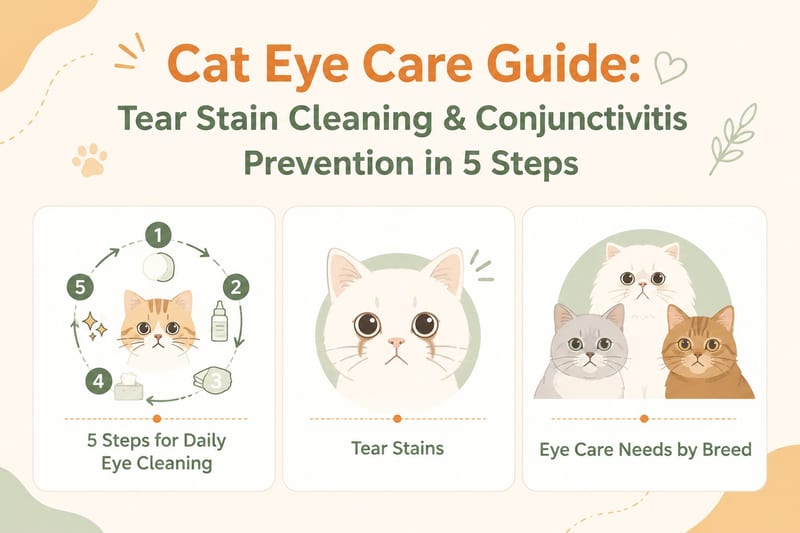
 Feline Natural full guide →
 K9 Natural full guide →