
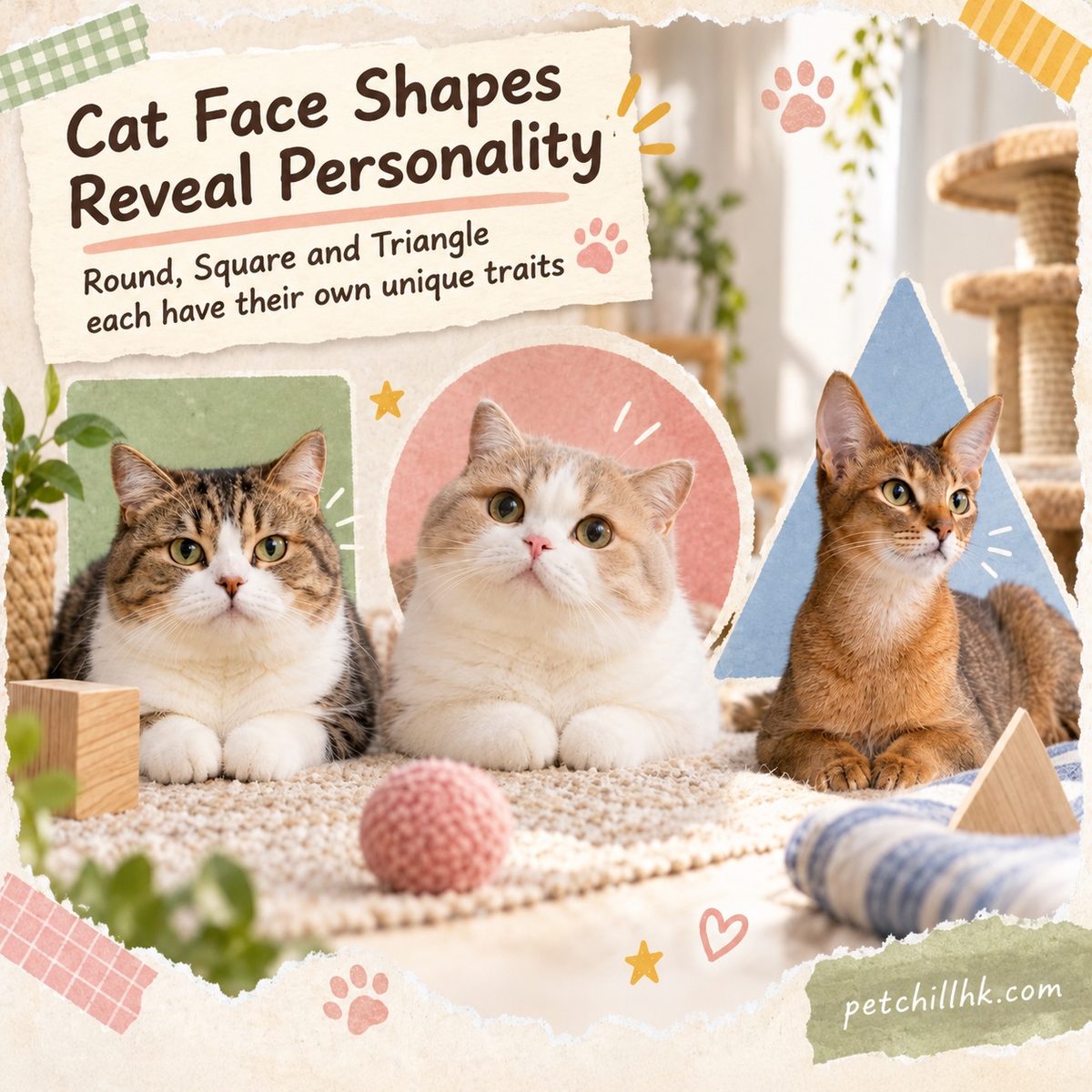
Quick answer: Cats' faces come in three shapes — square, round and triangular — corresponding to three personalities: the "golden retriever", the "pug" and the "shepherd". Square-faced cats are affectionate and clingy, round-faced cats are timid and submissive, and triangular-faced cats are clever and curious. American animal behaviour expert Kit Jenkins spent more than 20 years researching this and confirmed a significant link between face shape and personality.
Are you thinking about adopting a cat but unsure which personality suits you? Or are you already a cat owner who wants to understand your cat better? It turns out that a cat's face shape may hold a personality code. American animal behaviour expert Kit Jenkins spent over 20 years studying the relationship between cat face shapes and personality, and developed an intriguing "face-shape theory". This article takes a closer look.
The three cat face shapes: square, round and triangular
Square-faced cats: the "golden retrievers" of the cat world
Facial features: square face, sturdy and solid build, rectangular body
Representative breeds: Maine Coon, British Shorthair
Personality traits:
- Eager to please their owner
- Openly affectionate, loves to snuggle
- Presses their head against their owner to show affection
- Cheerful and friendly
Best for: households that enjoy a clingy cat and want a cat that approaches them first
Round-faced cats: the "pugs" of the cat world
Facial features: flat face, large eyes, round head, round body
Representative breeds: Persian, Exotic Shorthair
Personality traits:
- Not the most energetic
- Easily startled, timid and submissive
- Shows affection only to family members they fully trust
- Prefers a quiet, stable environment
Best for: quiet households with the patience to build trust
Triangular-faced cats: the "shepherds" of the cat world
Facial features: slender body, sleek coat, large ears, narrow chin
Representative breeds: Siamese, Cornish Rex
Personality traits:
- Full of curiosity
- Clever and agile
- Very vocal, loves to meow
- Brings energy to the household
Best for: households that enjoy interaction and want a lively, active cat
The scientific basis of the face-shape theory
Research background
Kit Jenkins is a project manager at the charity "Smart Pets". She spent more than 20 years studying the behaviour of cats and dogs in animal shelters. The geometric face-shape analysis theory she developed is based on the following facts:
- Feline faces generally fall into three shapes
- A cat's genes and life experiences influence its behaviour
- Body shape also affects personality
Professional recognition
Jenkins shared her "personality theory" with animal shelter staff, animal trainers and animal behaviourists across North America. Animal behaviourists and veterinarians agree that her observations can be a powerful tool to help people find a cat that matches their lifestyle and personality.
How to use the face-shape theory to choose a cat
Step 1: Observe the face shape
When you visit an animal shelter or pet shop, first observe the cat's face shape:
- Square face: square facial outline, prominent chin
- Round face: round face, large round eyes
- Triangular face: slender face, large pointed ears
Step 2: Understand your personality needs
Ask yourself:
- Do you want a cat that approaches you? → choose a square face
- Do you enjoy quiet companionship? → choose a round face
- Do you enjoy lively interaction? → choose a triangular face
Step 3: Consider your living environment
- A small flat suits a quiet round-faced cat
- A family with children suits a friendly square-faced cat
- A single person who enjoys interaction suits a triangular-faced cat
Cat face shape and breed comparison table
| Face shape | Representative breeds | Personality keywords | Best for |
|---|---|---|---|
| Square | Maine Coon, British Shorthair | Affectionate, clingy, friendly | Households that enjoy interaction |
| Round | Persian, Exotic Shorthair | Quiet, timid, gentle | Quiet households |
| Triangular | Siamese, Cornish Rex | Clever, curious, lively | Single people who enjoy interaction |
Tips for adopting a cat
Don't judge by looks alone
Although the face-shape theory offers an interesting reference, every cat is an individual. When choosing a cat, besides face shape, you should:
- Spend time interacting with the cat and observe its true personality
- Consider the cat's age and health
- Learn about the cat's past experiences (especially when adopting)
Adopt, don't shop
Animal shelters have many lovely cats waiting for a warm home. Whether square-faced, round-faced or triangular-faced, every cat has its own charm. Adoption not only gives a cat a home but also brings you a genuine emotional bond.
Practical guide to choosing a cat for a small Hong Kong flat: three face shapes
Living in Hong Kong, an open kitchen plus a bedroom may not even reach 300 sq ft. How can you use the face-shape theory to choose a cat that suits your environment? This checklist will help you sort it out in three minutes.
1. Measure the available space at home
- Large square-faced cats (Maine Coon, British Shorthair): leave at least a 1.2 m stretch of wall for a climbing frame, or buy a floor-to-ceiling cat tree. If space is really tight, choose a smaller but still square-faced domestic cat — same golden-retriever personality.
- Round-faced flat-faced cats (Persian, Exotic Shorthair): they hate stuffiness, so keep the air-conditioning on at 24–26°C, and place several semi-enclosed cat beds so they can hide and feel secure.
- Triangular-faced long-bodied cats (Siamese, Cornish Rex): very active, so use a desk or the top of a wardrobe as a "high walkway" — space-saving and perfect for them to patrol their territory.
2. Noise and neighbour considerations
- Triangular cats are famously loud. If you live in an old tenement building with poor soundproofing, consider a quieter "improved" triangular face — a seal-point British Shorthair cross Siamese, which keeps the cleverness but tones down the meowing.
- Round-faced cats are timid by nature. When there is renovation or children running upstairs, they may hide and not come out to eat. Put out a pheromone diffuser in advance and check with building management about the renovation schedule.
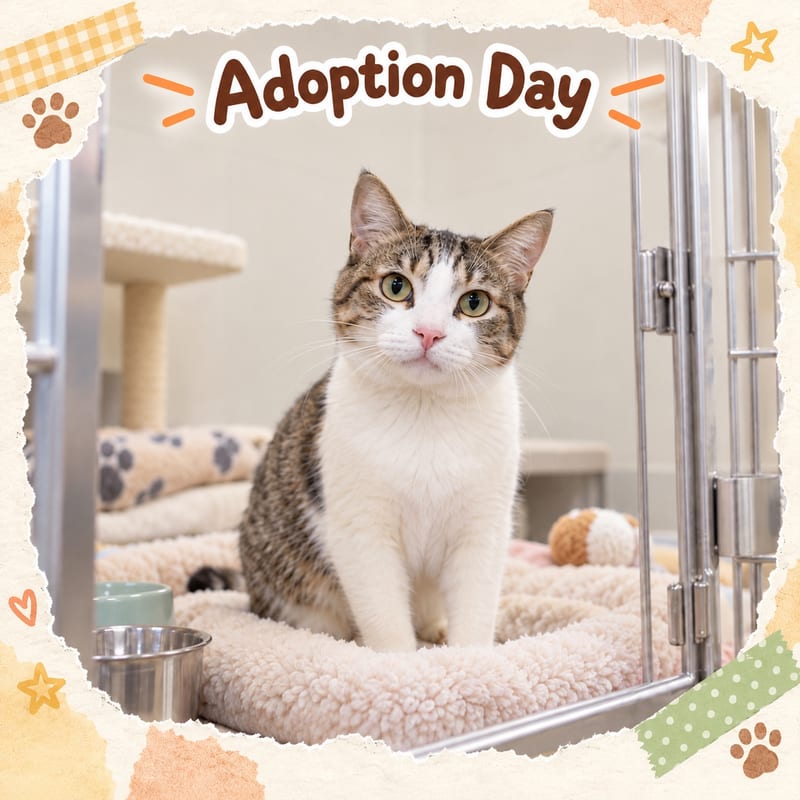
3. Adoption-day practical steps
- Bring a towel and a small toy: drape the towel over the transparent cat carrier to reduce the round-faced cat's fright; use the toy to test the triangular cat's reaction.
- Ask the staff first: has this cat lived indoors before? Has it lived with other cats?
- Three-minute interaction test:
- Square-faced cat: reaches out and head-butts you straight away = pass.
- Round-faced cat: you place the towel nearby and after five minutes it comes out to sniff = pass.
- Triangular-faced cat: chases the toy immediately and meows = pass.
- Before leaving, photograph the cat's information sheet, go home and compare it with the personality keywords in this article, and only sign the papers once you are sure it matches your lifestyle.
4. Three-day adjustment checklist
- Every day, use your phone to record the cat's food portion and number of litter visits. If a triangular cat has not pooped for two days, it may feel insecure because the environment is too quiet — add more interactive toys.
- If a square-faced cat keeps head-butting your legs, it needs more company. Consider taking it for a walk in the pet park downstairs after work (in a backpack) to burn energy.
- If a round-faced cat has hidden for three days and won't come out, place the food bowl near its hiding place and gradually move it back to the living room; don't drag it out.
Remember, Hong Kong is small and crowded. The most important thing is to plan your space and time in advance so that any face shape of cat can live comfortably and you can enjoy having it.
Further reading
📌 Key takeaways
- ✅ Square-faced cats are like golden retrievers — they love to cuddle
- ✅ Round-faced cats are like pugs — they like to quietly keep you company
- ✅ Triangular-faced cats are like shepherds — they need daily interactive play
- ❌ Don't just look at appearance; interact with the cat first
- ❌ A small flat may not suit a large square-faced cat — think about space
 Feline Natural full guide →



