
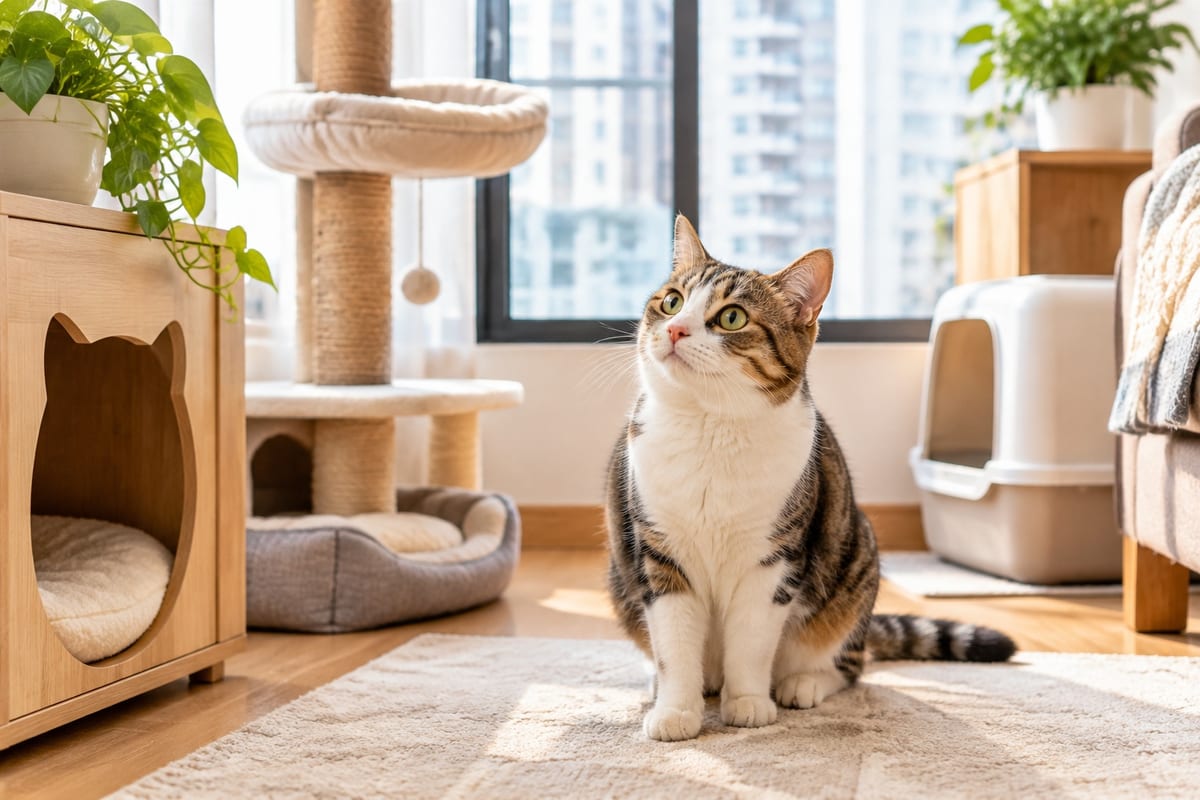
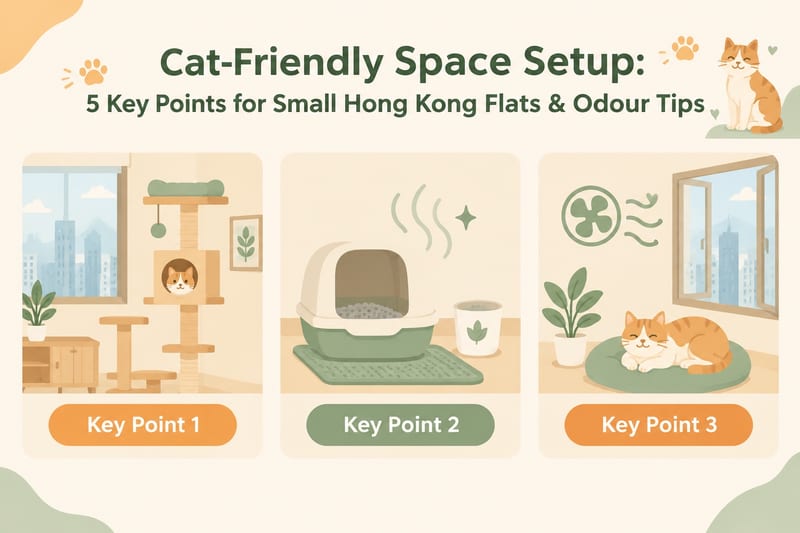
Quick answer: There are 5 key points to creating a cat-friendly space: high vantage points (cat tree at least 1.2 m), scratching areas (vertical + horizontal), window views (must have insect screens), resource distribution (litter trays = number of cats + 1), and hiding spots (cardboard boxes, semi-enclosed cat beds). Even in a small room, making good use of vertical space can help your cat feel secure.
Cats are different from dogs—their living area is almost entirely confined to the home. A completely indoor cat spends over 20 hours a day in the same space, so whether that environment suits them directly affects their physical and mental health.
Cats are naturally clean, extremely sensitive to environmental change, and sometimes timid. If you notice your cat frequently destroying things, scratching the sofa, or hiding away all day, it's very likely because the living environment doesn't meet their instinctive needs.
The good news is that creating a cat-friendly room doesn't require major renovation. Most cat owners can implement the following 5 setup points right away!
Key Point 1: High Vantage Points—Give Your Cat a "King of the Castle" Spot
Cats naturally love to overlook their territory from high places. Observing the whole living space from above makes them feel safe and in control—one of the most effective ways to reduce anxiety in cats.
If you don't have tall cabinets or shelves, a cat tree solves the problem. When choosing one, pay attention to three things:
| Selection Point | Recommendation |
|---|---|
| Height | At least 1.2 m for sufficient viewing range |
| Stability | Base must be heavy enough; it shouldn't wobble when the cat jumps on it |
| Platform size | Top platform must fit an adult cat lying down fully |
For multi-cat households, vertical space is even more important—each cat needs its own high spot to avoid territorial disputes.
Key Point 2: Scratching Areas—Provide Alternatives to Save Your Sofa
Scratching is a natural instinct, not a bad habit. It helps cats remove the outer layer of old nails, stretch muscles, and mark territory with scent glands in their paw pads.
If you don't provide a dedicated scratching area, cats will naturally choose the sofa, curtains, or carpet—materials with similar texture.
Setup suggestions:
- Varied materials: sisal rope, corrugated cardboard, and wood each appeal to different cats
- Prominent location: place where the cat sees it first thing after waking up (they love to stretch and scratch upon waking)
- Both vertical and horizontal: some cats prefer vertical posts, others prefer flat corrugated cardboard
Key Point 3: Window Views—The Indoor Cat's "TV Channel"
Cats follow birds, pedestrians, and vehicles outside with their eyes; this visual stimulation is important for brain health. An environment with no novelty can make cats bored and even lead to stress behaviours like over-grooming.
Creating a window view is simple:
- Place a chair or cat bed by the window
- Add a window-mounted hammock (suction cup type) directly on the glass
- Safety first: windows must have insect screens or restrictors to prevent cats from falling! This is the main cause of countless cat accidents every year.
Key Point 4: Resource Distribution—More Litter Trays and Water Stations Than Cats
This is a detail many cat owners overlook. The American Association of Feline Practitioners (AAFP) care guidelines recommend that the number of resources should exceed the number of cats:
- Litter trays: number = number of cats + 1. Even with one cat, two trays are recommended (two cats need three). This way cats can choose a clean one and a preferred location.
- Water stations: cats are naturally reluctant to drink, so provide plenty of water stations (two for one cat, three for two cats), dispersed around the home to encourage drinking and protect urinary health.
- Separate locations: don't place water bowls next to litter trays—cats instinctively consider contaminated water sources unsafe.
Key Point 5: Hiding Spots—A Safe Refuge for Timid Cats
Guests visiting, thunder, or renovation noise can frighten cats. You need to provide a dark, narrow place to hide, such as:
- Cardboard boxes (free but cats love them)
- Semi-enclosed cat beds
- Natural hiding spots like under the bed or on top of cabinets
Remember: when a cat is hiding, don't force it out. Let it feel safe and it will come out on its own.
How to Set Up a Small Space for a Cat?
Living in a small flat or keeping a cat in just one room? Don't worry—cats need vertical space more than floor area. Key setup points for small-space cat keeping:
- Go vertical: wall shelves, hammocks, tall cat trees—extend activity space from the floor into the air
- Multi-functional furniture: litter tray cabinets (cabinet outside, tray inside), cat trees with hidden spots—one item, multiple uses, saving space
- A window spot is a viewing platform: small rooms usually have one window; add a cat bed by the window for the best view
- Keep pathways clear: leave space between furniture for the cat to patrol; don't block all routes
How to Control Odours When Keeping a Cat in a Room?
Odours are the biggest worry when keeping a cat in a room. These methods can effectively control them:
- Scoop daily: the most basic and effective odour-control method—at least morning and evening
- Choose low-dust clumping litter: quality tofu litter and clay litter vary greatly in odour control; pick one with strong odour control
- Deep clean the litter tray regularly: every 1–2 weeks, completely change the litter and wash the tray
- Ventilation + air purifier: keep the room well ventilated; if needed, add an air purifier with a HEPA filter
- Litter tray location: place in a ventilated but not draughty spot, away from the bed
 Feline Natural full guide →
 K9 Natural full guide →