
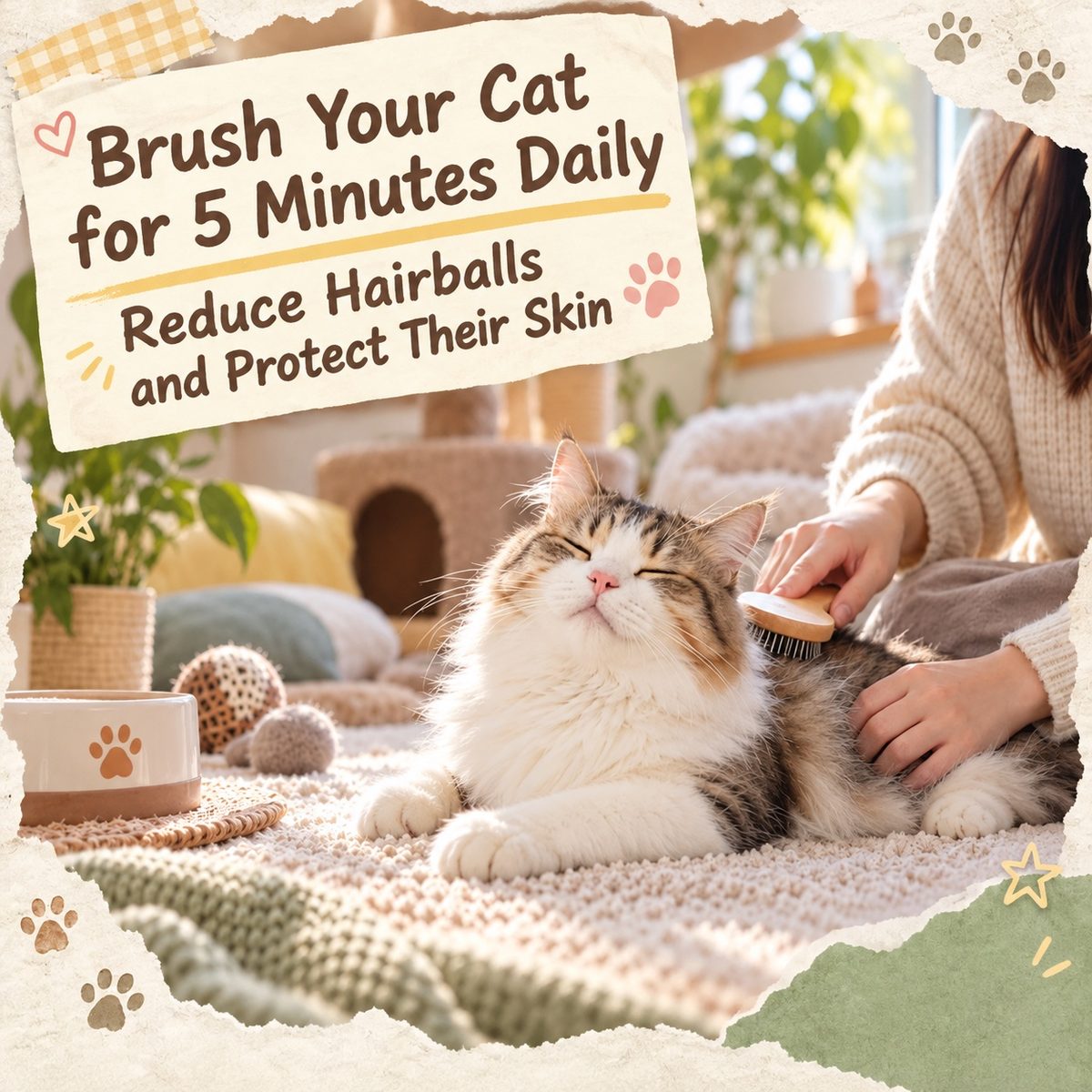
Quick answer: Brush your cat for 5 minutes daily with a slicker brush or comb, following the direction of the fur from the back to the tail, chest to belly, and face to outer ears. This immediately removes loose hair, reduces hairballs, and lets you check for skin parasites. In winter when you don't want to bathe your cat, use a 1:1 dry shampoo of baking soda and cornstarch for spot cleaning. Remember to also check collars, food bowls, nail clippers and other gear for wear and tear.
Do you think your cat is clean enough just because she grooms herself? In fact, licking only deals with surface loose hair and dirt. True deep skin care and coat maintenance require you to spend a few minutes brushing your cat every day. Brushing is not just grooming; it's the first line of defence for your cat's health. Today, the PetChill editorial team shares the correct brushing methods, tool choices and common mistakes to help you build a close grooming routine with your feline boss.
Why do cats need daily brushing?
Many Hong Kong cat owners have a misconception: "Cats don't need brushing; they know how to lick themselves clean." But in reality, the benefits of brushing far exceed your imagination:
Remove loose hair and reduce fur everywhere: Especially during shedding season (spring and autumn), cats shed large amounts of loose hair daily. If not brushed out in time, this loose hair will drift into every corner of the home and may even be swallowed by the cat, forming hairballs.
Massage the skin and boost metabolism: The brushing motion gently massages the cat's skin, improving blood circulation and metabolism, making the coat healthier and shinier.
Prevent hairballs: Cats swallow a lot of hair when grooming daily. If loose hair is not regularly brushed away, the amount swallowed increases significantly, easily forming hairballs that can cause vomiting or even intestinal blockage.
Early detection of skin problems: Brushing is the best time to check your cat's skin condition. You can promptly spot eczema, rashes, fleas, lice, ticks and other issues, especially from early spring to the rainy season when these skin diseases and parasites are most common.
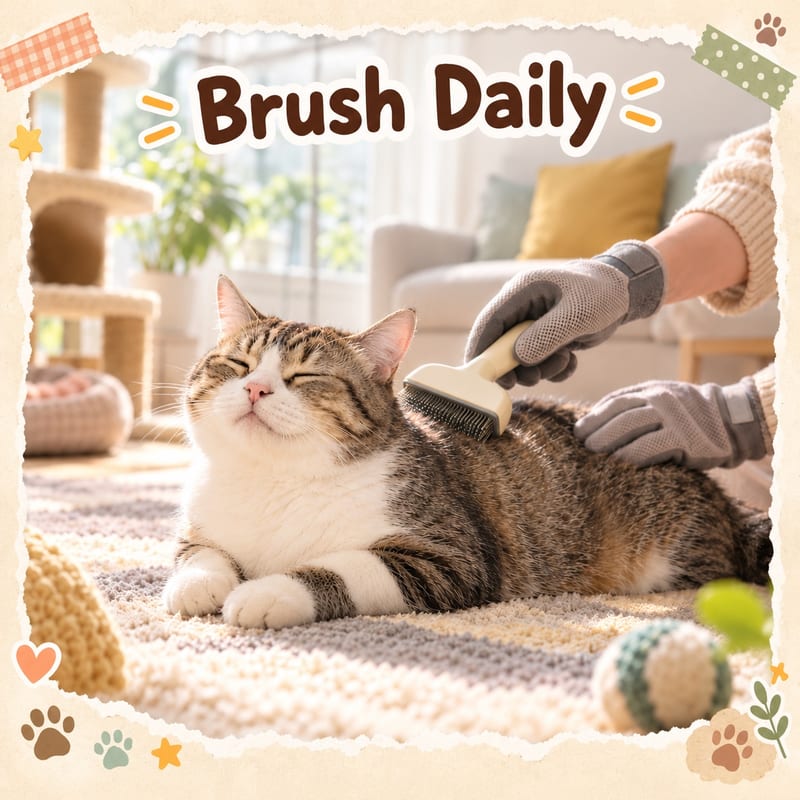
Correct brushing method: by body part
Different body parts have different fur directions, so adjust the brushing direction accordingly:
Back and flanks
Start from the back and gently brush along both sides of the spine towards the base of the tail. For the flanks, brush from the back towards the belly.
Belly
Start from the chest and gently brush towards the hips. The belly is a sensitive area for cats, so use a gentler touch.
Around the face
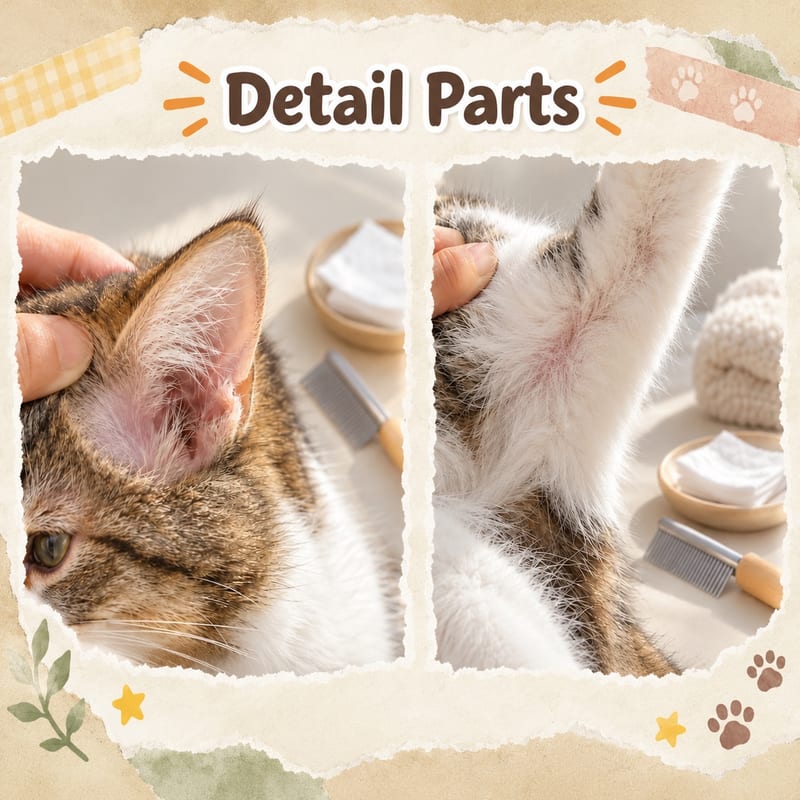
Brush from the centre of the face outwards. If using a flea comb, brush from above the eyes towards the ears; this is where fleas and lice tend to gather, so observe carefully.
Dealing with mats
Long-haired or older cats easily develop mats. As mats grow, it becomes hard to distinguish fur from skin, and cutting directly with scissors can easily injure the skin. The correct method is to place a comb (flea comb) under the mat to protect the skin, then slowly cut above the comb with scissors.
How to choose grooming tools?
The market is flooded with cat grooming tools. Here are the most commonly used types:
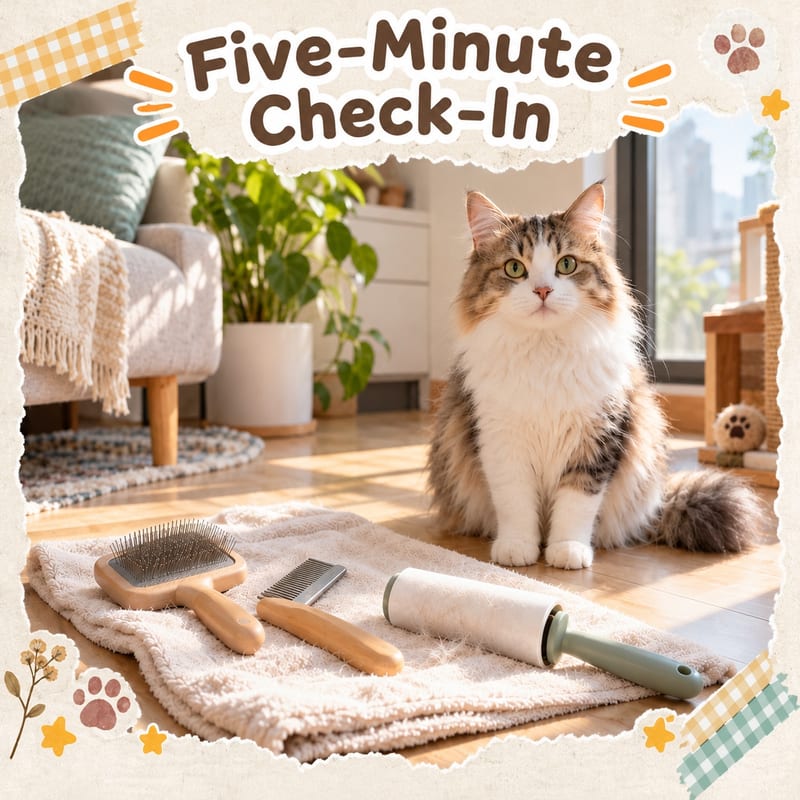
Slicker brush: Suitable for long-haired cats; reaches deep into the undercoat and effectively removes loose hair and minor tangles.
Comb (flea comb): Suitable for all cats, especially for dealing with mats. The denser end can remove small mats and dirt.
Grooming glove: Suitable for cats that dislike brushing; just wear the glove and gently stroke to remove surface loose hair, making the cat think it's just being petted.
Flea comb: Very dense teeth, specifically for checking and removing fleas, lice and other parasites.
| Tool | Suitable for | Area of use | Precautions |
|---|---|---|---|
| Slicker brush | Long-haired cats, undercoat | Back, flanks | Gentle pressure, avoid scratching skin |
| Comb (flea comb) | All cats, mats | Whole body, base of mats | Use under mats to protect skin |
| Grooming glove | Cats that dislike brushing | Surface loose hair | Makes cat think it's being petted, reduces resistance |
| Flea comb | Parasite check | Face, around ears | Dense teeth, carefully check for fleas and lice |
Don't want to bathe in winter? Try dry shampoo!
In winter, many cat owners don't have the heart to bathe their cats because of the cold. You can try a homemade dry shampoo:
Ingredients: 1 part baking soda + 1 part cornstarch, mix 1:1.
How to use: Apply the dry shampoo to soiled areas, gently massage to let it absorb dirt, then wipe off residue with a wrung-out damp towel.
⚠️ Note: If the fur is already wet, do not use dry shampoo, as a chemical reaction may generate heat and cause burns.
Easily overlooked care details
Besides brushing, these care details are often overlooked:
Collar check: Weight changes or muscle growth can make the collar size unsuitable. Regularly check the metal parts of the collar for wear and the skin for friction injuries. Suggest setting a "celebration day" (e.g., your cat's adoption anniversary) to check all cat supplies.
Food bowls and litter box: Check for scratches, stains or damage.
Cat tree and carrier: Check for tilting or damage.
Nail clippers and brushes: Tools themselves need maintenance; clean and replace regularly.
Hong Kong small-flat practical guide: 5-minute brushing routine + when to see a vet
Hong Kong homes are small, so cats have limited space, and loose hair accumulates more easily under beds, in air-conditioning vents and sofa gaps. We recommend the "TV commercial break" after dinner each evening as the golden brushing slot: first spread a towel on the coffee table, place the cat on it facing away from you, and use a slicker brush from the neck and back all the way to the tail for about 30 seconds; then switch to the flanks, 30 seconds each side; then lay the cat on its side and gently comb the belly with a comb for 20 seconds; finally run a flea comb over the face and behind the ears for 10 seconds. The whole process takes less than 5 minutes, and you're done when the commercials end.
When to see a vet immediately: If you notice any of the following while brushing, don't delay — book a vet appointment right away:
- Large patches of rash, flaking or oozing on the skin, possibly eczema or fungal infection.
- Finding fleas, black specks (flea dirt) or ticks attached to the skin; handling them yourself can cause inflammation.
- Mats stuck tight to the skin, hard and lumpy, and the cat won't let you touch due to pain; professional clipping is needed.
- The cat vomits hairballs or loses appetite for two consecutive days; the intestines may be blocked with hair.
Tip: Keep a comb and a grooming glove at home. For cats that dislike brushing, first use the glove to "pretend to pet the head"; once accustomed, switch to the slicker brush. For long-haired cats, you can quickly brush for 30 seconds before brushing teeth each morning; the cumulative effect is just as good. Remember to reward with a small treat immediately after brushing to build a positive association. No matter how fast-paced Hong Kong life is, you can always spare 5 minutes!
Further reading
Hong Kong small-flat practical guide: 5-minute brushing routine + when to see a vet
Hong Kong homes are small, so cats have limited space, and loose hair accumulates more easily under beds, in air-conditioning vents and sofa gaps. We recommend the "TV commercial break" after dinner each evening as the golden brushing slot: first spread a towel on the coffee table, place the cat on it facing away from you, and use a slicker brush from the neck and back all the way to the tail for about 30 seconds; then switch to the flanks, 30 seconds each side; then lay the cat on its side and gently comb the belly with a comb for 20 seconds; finally run a flea comb over the face and behind the ears for 10 seconds. The whole process takes less than 5 minutes, and you're done when the commercials end.
When to see a vet immediately: If you notice any of the following while brushing, don't delay — book a vet appointment right away:
- Large patches of rash, flaking or oozing on the skin, possibly eczema or fungal infection.
- Finding fleas, black specks (flea dirt) or ticks attached to the skin; handling them yourself can cause inflammation.
- Mats stuck tight to the skin, hard and lumpy, and the cat won't let you touch due to pain; professional clipping is needed.
- The cat vomits hairballs or loses appetite for two consecutive days; the intestines may be blocked with hair.
Tip: Keep a comb and a grooming glove at home. For cats that dislike brushing, first use the glove to "pretend to pet the head"; once accustomed, switch to the slicker brush. For long-haired cats, you can quickly brush for 30 seconds before brushing teeth each morning; the cumulative effect is just as good. Remember to reward with a small treat immediately after brushing to build a positive association. No matter how fast-paced Hong Kong life is, you can always spare 5 minutes!
📌 Key summary
- ✅ 5 minutes of daily brushing reduces fur everywhere at home
- ✅ Brushing also massages the skin and promotes blood circulation
- ✅ Brushing is the best time to check for fleas and eczema
- ❌ Never cut mats directly with scissors; always use a comb underneath first
- ❌ Don't use dry shampoo on wet fur; it can generate heat and cause burns