🤖 AI Summary
How long can a cat be left home alone? It depends on age and health. A healthy adult cat can be left alone for 8 to 12 hours—kittens (under 4 months) at most 2 to 4 hours, and 6-month-old kittens at most 8 hours. Senior cats and cats with health issues need more frequent care. If you need to be away for more than 24 hours, arrange a pet sitter and cat boarding. Automatic feeders and water fountains can help, but they cannot fully replace human care.
• A healthy adult cat can be left alone for 8 to 12 hours
• Kittens (under 4 months) at most 2 to 4 hours
• More than 24 hours: arrange a pet sitter and cat boarding
Quick answer: How long can a cat be left home alone? It depends on age and health. A healthy adult cat can be left alone for 8 to 12 hours—kittens (under 4 months) at most 2 to 4 hours, and 6-month-old kittens at most 8 hours. Senior cats and cats with health issues need more frequent care. If you need to be away for more than 24 hours, arrange a pet sitter and cat boarding. Automatic feeders and water fountains can help, but they cannot fully replace human care.
Table of Contents
-
How long can a cat be left home alone? Age limits chart
-
Limits for kittens left home alone
-
Limits for adult cats left home alone
-
Limits for senior cats left home alone
-
Risks of automatic feeders and water fountains
-
Preparation for leaving a cat home alone
-
FAQ
How long can a cat be left home alone? Age limits chart
How long can a cat be left home alone? It depends on age and health.
Age limits chart:
| Age | Limit | Notes |
|---|---|---|
| Kittens (0–4 months) | 2–4 hours | Need frequent feeding and care |
| Kittens (4–6 months) | 4–6 hours | Need scheduled feeding and care |
| Kittens (over 6 months) | 8 hours | Can be left alone for 8 hours |
| Adult cats (1–7 years) | 8–12 hours | Healthy adult cats can be left alone for 8 to 12 hours |
| Senior cats (over 7 years) | 4–8 hours | Need more frequent care |
| Cats with health issues | Depends on condition | Need more frequent care |
Things to note:
- The above are general recommendations—every cat is different
- If your cat has health issues, take them to a veterinarian for a check-up
- If your cat has separation anxiety, take them to a veterinarian for a check-up
Limits for kittens left home alone
Limits for kittens left home alone:
| Age | Limit | Reason |
|---|---|---|
| 0–4 months | 2–4 hours | Need frequent feeding and care |
| 4–6 months | 4–6 hours | Need scheduled feeding and care |
| Over 6 months | 8 hours | Can be left alone for 8 hours |
Risks of leaving kittens home alone:
- Kittens need frequent feeding—kittens have small stomachs and need frequent feeding
- Kittens need care—kittens need human care and companionship
- Kittens are prone to injury—kittens are easily injured and prone to eating inappropriate items
Preparation for leaving kittens home alone:
- Provide plenty of food and water—use automatic feeders and water fountains
- Provide a safe environment—remove dangerous items and provide a safe space
- Provide toys—provide toys and scratching posts
Limits for adult cats left home alone
Limits for adult cats left home alone:
| Situation | Limit | Notes |
|---|---|---|
| Healthy adult cat | 8–12 hours | Can be left alone for 8 to 12 hours |
| Cat with health issues | Depends on condition | Need more frequent care |
| Cat with separation anxiety | 4–8 hours | Need more frequent care |
Risks of leaving adult cats home alone:
- Adult cats may get bored—adult cats need mental stimulation
- Adult cats may get anxious—adult cats can experience separation anxiety
- Adult cats may destroy furniture—adult cats may damage furniture
Preparation for leaving adult cats home alone:
- Provide plenty of food and water—use automatic feeders and water fountains
- Provide mental stimulation—provide toys, scratching posts, and a cat window perch
- Provide a safe environment—remove dangerous items and provide a safe space
Limits for senior cats left home alone
Limits for senior cats left home alone:
| Situation | Limit | Notes |
|---|---|---|
| Healthy senior cat | 4–8 hours | Need more frequent care |
| Senior cat with health issues | Depends on condition | Need more frequent care |
Risks of leaving senior cats home alone:
- Senior cats need more frequent care—senior cats' health is unstable
- Senior cats are prone to health problems—senior cats are prone to kidney disease, diabetes, and arthritis
- Senior cats need scheduled medication—senior cats may need medication at set times
Preparation for leaving senior cats home alone:
- Provide plenty of food and water—use automatic feeders and water fountains
- Provide medication—if the senior cat needs scheduled medication
- Provide a safe environment—remove dangerous items and provide a safe space
Risks of automatic feeders and water fountains
Automatic feeders and water fountains can help, but they cannot fully replace human care.
Risks of automatic feeders and water fountains:
| Risk | Description | Solution |
|---|---|---|
| Malfunction | Automatic feeders and water fountains may malfunction | Regular checks and backup plan |
| Food spoilage | Food in automatic feeders may spoil | Use dry food and replace regularly |
| Water spoilage | Water in fountains may spoil | Replace and clean regularly |
| Cat doesn't know how to use | Cat may not know how to use automatic feeders and water fountains | Train in advance and observe |
Notes on automatic feeders and water fountains:
- Regular checks—regularly check that automatic feeders and water fountains are working properly
- Backup plan—prepare a backup plan (e.g., pet sitter and cat boarding)
- Train in advance—train your cat to use automatic feeders and water fountains in advance
Preparation for leaving a cat home alone
Preparation for leaving a cat home alone:
| Preparation | How to do it | Notes |
|---|---|---|
| Provide plenty of food and water | Use automatic feeders and water fountains | Regular checks and backup plan |
| Provide a safe environment | Remove dangerous items and provide a safe space | Remove cables, remove medication, remove dangerous items |
| Provide mental stimulation | Provide toys, scratching posts, and a cat window perch | Provide mental stimulation and prevent boredom |
| Provide a litter box | Provide a clean litter box | Clean daily and replace regularly |
| Arrange a pet sitter | If you need to be away for more than 24 hours, arrange a pet sitter | A pet sitter can help care for your cat |
Notes on leaving a cat home alone:
- Do not leave for more than 24 hours—if you need to be away for more than 24 hours, arrange a pet sitter and cat boarding
- Regular checks—regularly check that automatic feeders and water fountains are working properly
- Observe your cat—observe your cat's behaviour and health
Practical checklist for small Hong Kong flats: caring for your cat around work
Hong Kong homes are small and cats have limited space. To keep them safe and give yourself peace of mind, follow this checklist.
5 minutes before leaving
- Put all cables, medication, and small items in drawers to prevent chewing or accidental ingestion.
- Check that window grilles are secure, especially for village house residents, to prevent cats from jumping out.
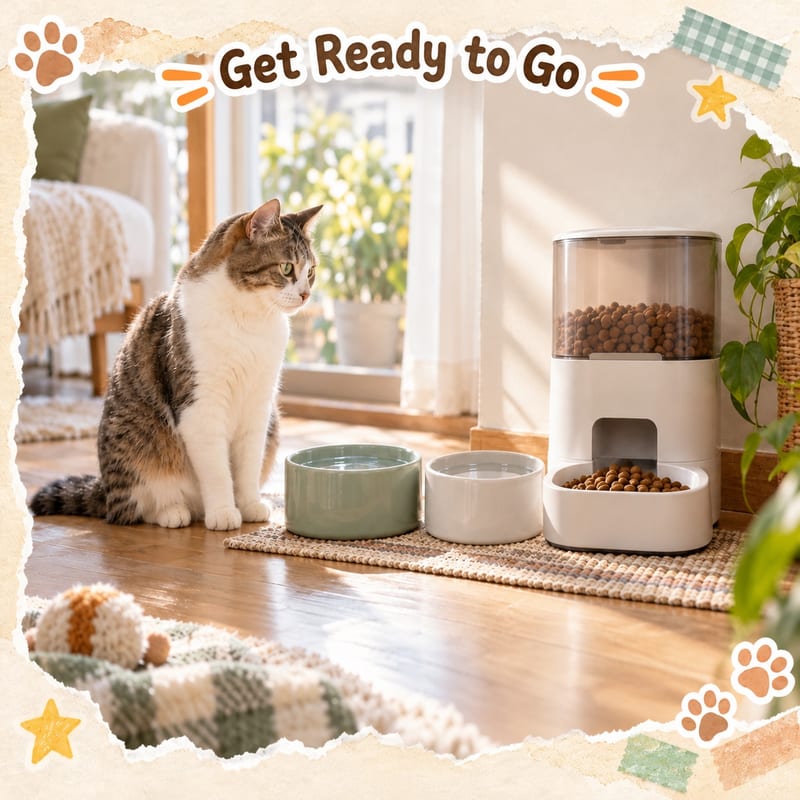
- Fill automatic feeders and water fountains, and press the test button to confirm they dispense food and water properly.
- Set out an extra bowl of dry food and a bowl of water as backup in case the machine fails.
- Scoop the litter box once so your cat won't hold in pee or poop because it's too dirty.
When you get home from work
- First check the remaining amount in the automatic feeder to see if your cat has wolfed down all the food.
- Check the litter box—if there's no "output" at all or noticeably less, watch for constipation or urinary blockage.
- Interact with your cat for 10 minutes—use a wand toy or laser pointer to get them running and make up for the day's lack of mental stimulation.
- Observe your cat's behaviour: if they meow constantly, hide, or have a sudden change in appetite, it could be separation anxiety or illness. If no improvement the next day, book a vet appointment.
Working late / overnight trips
- More than 12 hours: immediately WhatsApp a trusted friend or pet sitter to visit and check on the cat, with photo updates.
- More than 24 hours: book a cat hotel or pet sitter directly. Don't think "just leave extra food for a couple of days"—cats need someone to check their physical condition.
Special version for senior/sick cats
- Write daily medication times on a memo stuck to the fridge so the sitter can follow it.
- Prepare a syringe for water so the sitter can hydrate the cat if needed.
- Stick the vet's card behind the front door so the sitter can grab it in an emergency.
Follow these steps and even in a 200 sq ft flat, your cat can be safe and happy while waiting for you to come home.
Related product recommendations
New pet owners need to prepare basic equipment and complete food all at once. Here are related products available at PetChill:
- Nutriplan Cat Food Nutrition Plan Kitten Formula 1.5kg (64353) - Limited-time offer (Nutriplan Nutrition Plan) — nutritional formula for kittens
- Hills Cat Food Life Stage Series Kitten Formula Chicken 540g (609888) (Hills) — nutritional formula for kittens
Want to see more: Nutriplan Nutrition Plan Brand Guide
Product prices and latest offers are subject to the product page; this article is for reference only.
Further reading
📌 Key summary
- ✅ Adult cats can be left alone for at most 8–12 hours
- ✅ Kittens under 4 months: limit 2–4 hours
- ✅ More than 24 hours: arrange a pet sitter or boarding
- ❌ Automatic feeders cannot fully replace humans
- ❌ Senior and sick cats need more frequent care
 Nutriplan full guide →