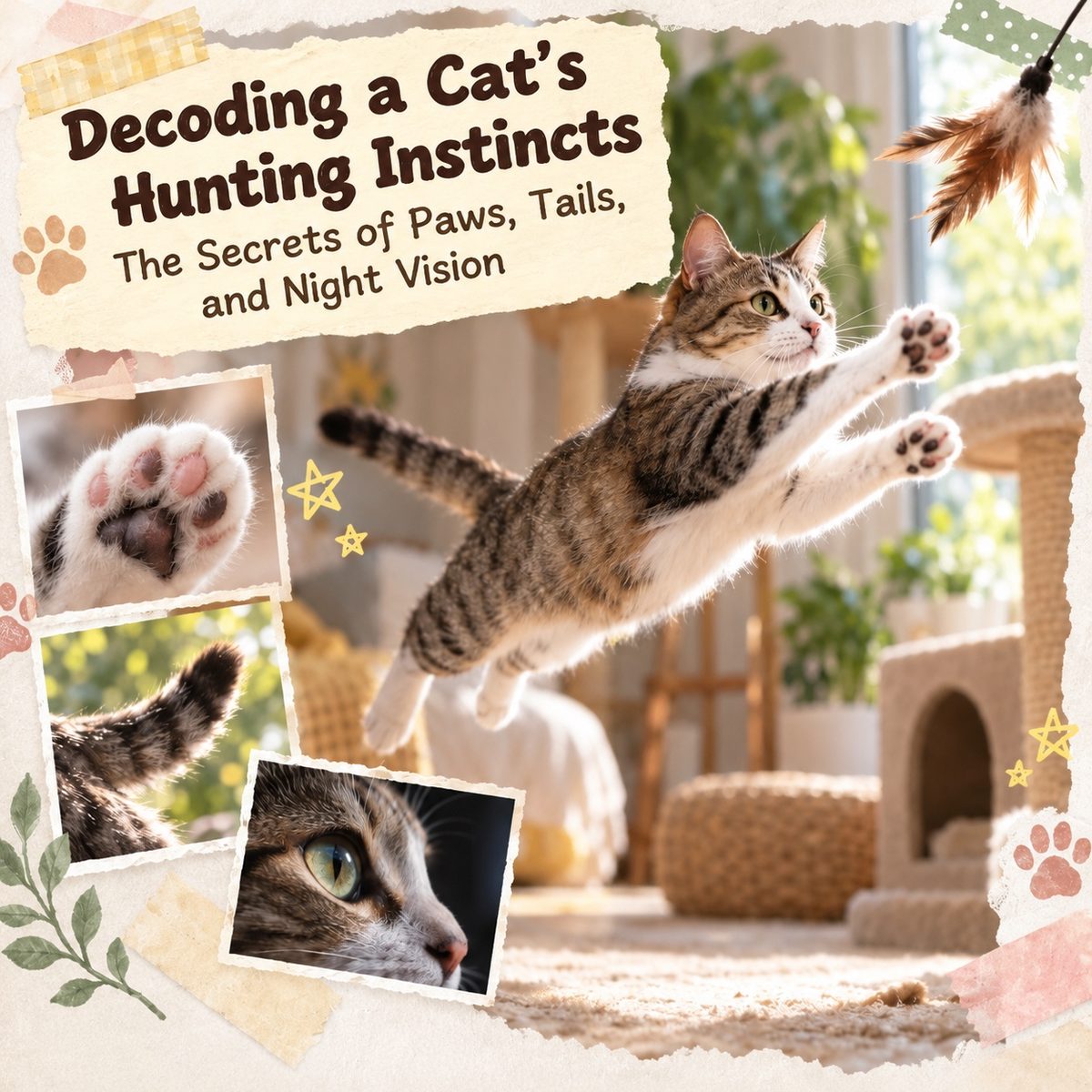
Quick answer: Cats can jump so well thanks to three hunting tools: paw pads for shock absorption, a tail for balance, and night vision with ultra-wide field of view. These let them instantly judge distances, approach prey silently, and land safely from heights.
Have you ever watched your cat suddenly leap from the floor to the top of a bookcase, moving so fast you can hardly react? Or seen its eyes flash mysterious golden light in a dim corridor at night? Every seemingly effortless move hides millions of years of evolved hunting instinct. Today, let's uncover the 3 secret weapons of a cat's body so you can better understand your home's 'little hunter'.
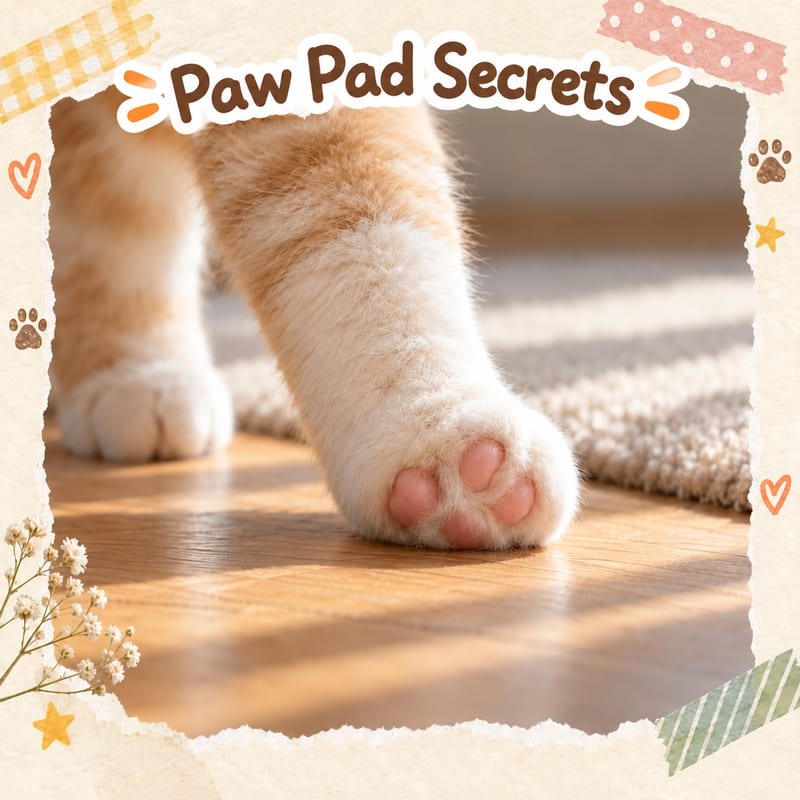
Secret Weapon 1: Paw Pads – Built-in Shock Absorbers + Silencers
A cat's paw pads are more than just cute; they are an essential part of a cat's hunting gear.
Shock absorption: When a cat jumps down from a height, the paw pads absorb the impact of landing, protecting joints and bones. Research shows that cats can safely land from a height equivalent to 5 times their own body height, and paw pads are key to this.
Silencing effect: The soft texture of paw pads makes a cat's walk almost completely silent. This is crucial for hunting in the wild—mice, birds, and other prey have keen hearing, and cats must approach silently to succeed.
Vibration sensing: Paw pads are packed with nerve endings that can detect the slightest vibrations in the ground, helping cats sense nearby movement.
Secret Weapon 2: Tail – Aerial Balance Pole
A cat's tail is not just for expressing emotions; it is also a precision balance organ.
Aerial rotation: When a cat falls from a height, it automatically triggers the 'righting reflex', rapidly twisting its body in the air to ensure it lands on all fours. This process takes only 0.125 to 0.5 seconds, and the tail is key to controlling the direction of rotation.
Turning balance: When running at high speed, the tail works with the hind legs to help the cat maintain balance during sharp turns and avoid falling.
Tightrope mode: When walking on narrow fences or windowsills, the tail swings side to side like a balance pole to prevent falls.
Secret Weapon 3: Super Senses – Night Vision + Sharp Hearing
A cat's sensory system is the core equipment that makes it a top hunter.
Night vision: Cats have a reflective layer behind the retina called the 'tapetum lucidum', which reflects weak light back into the eye, allowing photoreceptor cells to receive it a second time. As a result, cats need only 1/6 of the light humans need to see clearly. The glowing eyes you see at night are actually the tapetum lucidum reflecting light.
Ultra-wide field of view: When a cat looks straight ahead, its visual field angle reaches 285 degrees (humans only 210 degrees), and its binocular stereoscopic vision range is 130 degrees, allowing precise judgment of prey distance.
Super hearing: Cat ears can hear sounds up to 70,000 Hz (human upper limit is about 18,000 Hz). A mouse's squeak is like a loudspeaker to a cat. A cat's outer ears can also rotate independently 180 degrees to accurately locate sound sources.
Smart whiskers: A cat's whiskers are highly sensitive touch organs that can detect air currents and tiny obstacles, helping them navigate in the dark and catch prey.
| Secret Weapon | Hunting Function | Daily Care Tips |
|---|---|---|
| Paw pads | Shock absorption, silencing, vibration sensing | Regularly check for cuts; keep floors free of sharp objects |
| Tail | Aerial balance, turning stability | Do not pull the tail; avoid injury that affects balance |
| Super senses | Night vision, wide field of view, sharp hearing | Provide high vantage points; leave a dim light at night to reduce collisions |
How Do Cats' Hunting Instincts Affect Daily Life?
Understanding your cat's hunting instincts can help you care for it better:
- Provide vertical space: Cats naturally love high vantage points. Set up cat trees or windowsill resting spots to satisfy their climbing urges.
- Interactive play: Use wand toys to mimic prey movement and play for 10-15 minutes daily to burn off excess energy.
- Safe environment: Cats have amazing jumping ability, so windows and balconies must be fitted with protective screens to prevent accidental falls.
- Toy selection: Toys that rustle or have feathers best stimulate hunting instincts.
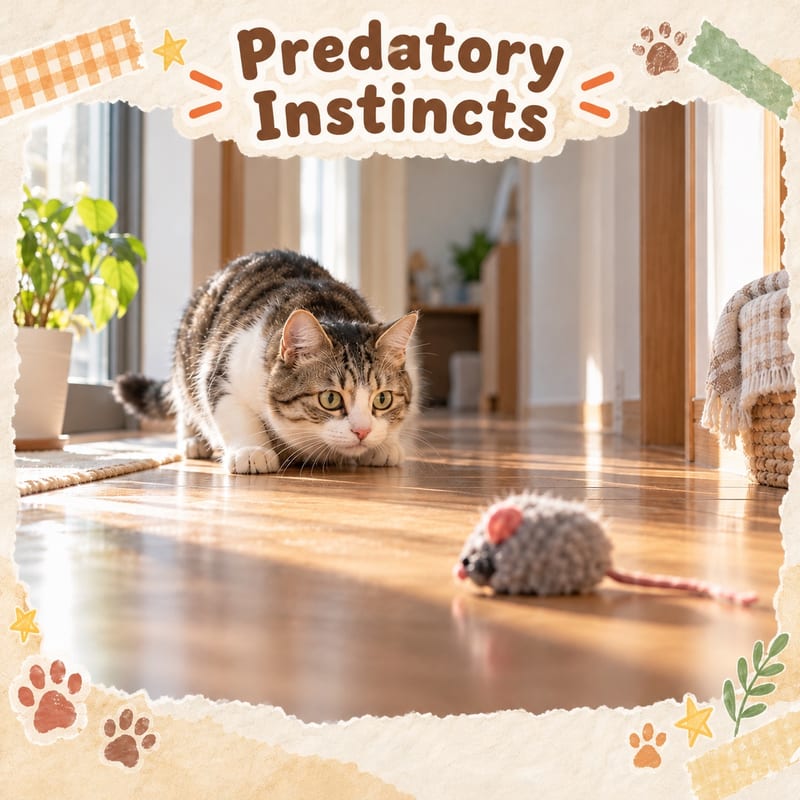
Hong Kong Small Flat Practical Guide: 3 Steps to Create an Indoor Hunting Ground
Living small in Hong Kong doesn't mean you have to suppress your cat's hunting nature. With smart use of vertical space and simple props, even 300 sq ft can become a hunting ground.
1. Maximise vertical space
- Add a suction-cup cat bed to the windowsill—instantly a birdwatching lookout.
- Put a non-slip mat on top of the bookcase and add a catnip toy; jumping up becomes 'highland patrol'.
- Install step ladders on the side of the wardrobe, with 30-40 cm between steps, matching a cat's jumping rhythm.
2. Daily 15-minute 'energy burn' routine
- Before leaving in the morning: 3 minutes of 'corridor sprints' with a wand toy, mimicking chasing mice.
- When you get home from work: toss a rustling ball into a cardboard box tunnel for your cat to ambush.
- Before bed: turn off the main light and leave a night light, play 'shadow hunt'—shine a flashlight on the wall to create light spots, satisfying night vision hunting.
3. Anti-fall safety checklist
- If window openings are >10 cm, install reinforced screen mesh; do not use ordinary nylon mesh as cat claws can tear it easily.
- Add horizontal bars to balcony doors with gaps <8 cm to prevent squeezing through.
- Regularly check cat tree screws; Hong Kong's humidity causes rust, so tighten every 3 months.
Remember, hunting instinct is not destruction; it is energy that needs channelling. As long as you provide enough 'prey' and a safe environment, your cat will happily be your home's 'mini cheetah'.
Further Reading
Hong Kong Small Flat Practical Guide: 3 Steps to Create an Indoor Hunting Ground
Living small in Hong Kong doesn't mean you have to suppress your cat's hunting nature. With smart use of vertical space and simple props, even 300 sq ft can become a hunting ground.
1. Maximise vertical space
- Add a suction-cup cat bed to the windowsill—instantly a birdwatching lookout.
- Put a non-slip mat on top of the bookcase and add a catnip toy; jumping up becomes 'highland patrol'.
- Install step ladders on the side of the wardrobe, with 30-40 cm between steps, matching a cat's jumping rhythm.
2. Daily 15-minute 'energy burn' routine
- Before leaving in the morning: 3 minutes of 'corridor sprints' with a wand toy, mimicking chasing mice.
- When you get home from work: toss a rustling ball into a cardboard box tunnel for your cat to ambush.
- Before bed: turn off the main light and leave a night light, play 'shadow hunt'—shine a flashlight on the wall to create light spots, satisfying night vision hunting.
3. Anti-fall safety checklist
- If window openings are >10 cm, install reinforced screen mesh; do not use ordinary nylon mesh as cat claws can tear it easily.
- Add horizontal bars to balcony doors with gaps <8 cm to prevent squeezing through.
- Regularly check cat tree screws; Hong Kong's humidity causes rust, so tighten every 3 months.
Remember, hunting instinct is not destruction; it is energy that needs channelling. As long as you provide enough 'prey' and a safe environment, your cat will happily be your home's 'mini cheetah'.