
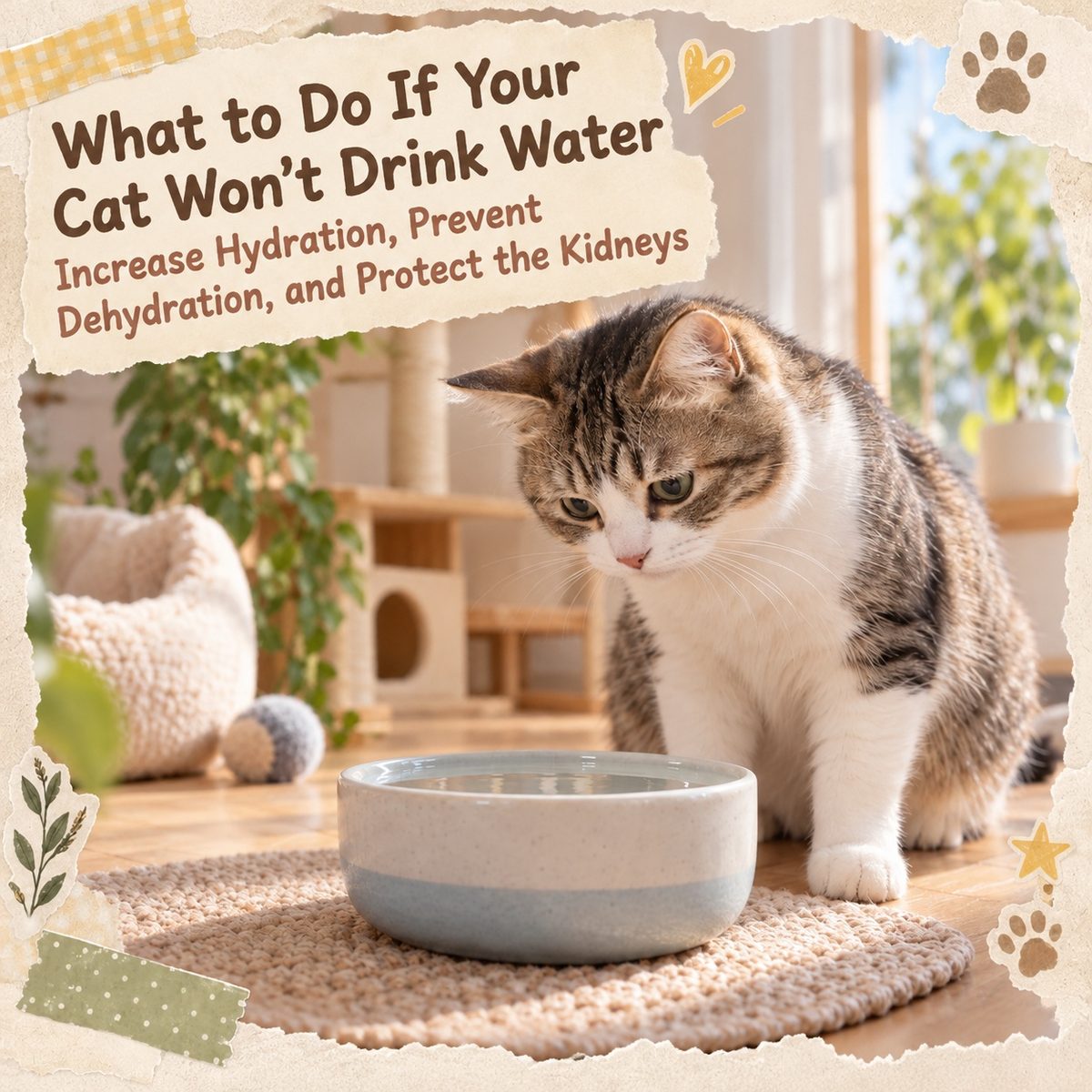
Quick answer: The recommended daily water intake for cats is about "body weight (kg) × 40-60ml". A 4kg cat needs about 160-240ml of water per day. Cats naturally have a low thirst drive, and long-term insufficient drinking can lead to dehydration, urinary stones and chronic kidney disease — kidney disease is one of the most common causes of death in Hong Kong cats. The most effective ways to increase water intake include: switching to wet food, using a running water fountain, setting up multiple drinking stations at home, keeping water bowls clean, and using wide, shallow bowls.
Have you noticed your cat barely touches the water bowl all day? Many Hong Kong cat owners assume "it's normal for cats not to drink", but in fact, insufficient water intake is the number one hidden driver of kidney disease in cats. According to veterinary clinical statistics, chronic kidney disease (CKD) is one of the most common causes of death in senior cats, affecting over 30% of cats aged 10 and above, and dehydration can rapidly worsen symptoms. This article breaks down the science of feline hydration, dehydration warning signs, and 7 practical methods commonly used by vets to help your cat drink more and stay clear of kidney disease.
Why don't cats like to drink water?
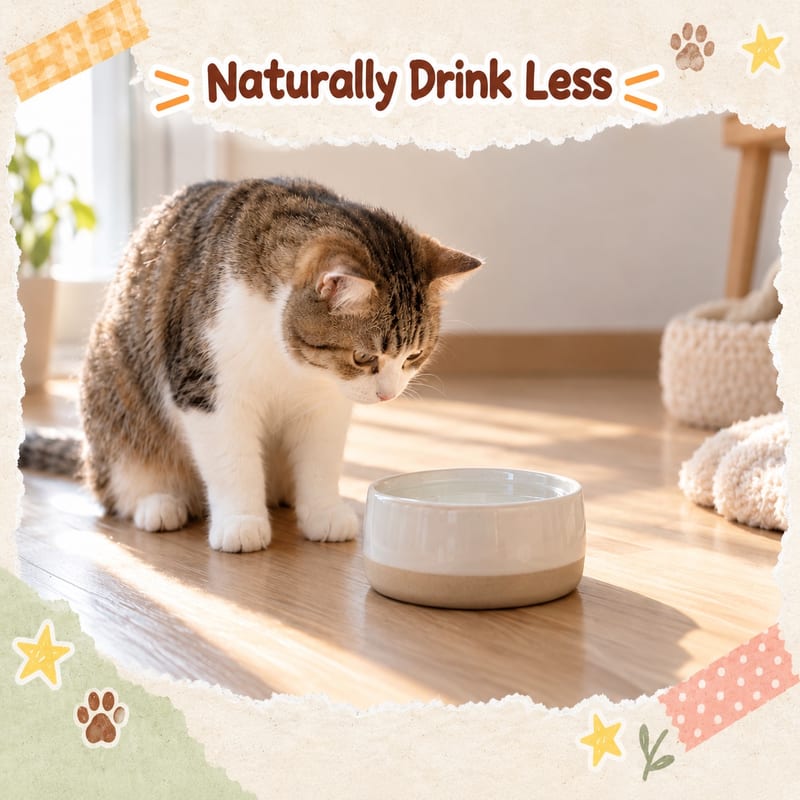
Cats' ancestors came from desert regions, and their bodies evolved super-efficient water recycling — their kidneys can concentrate urine to the extreme, wasting as little water as possible. So a cat's "thirst drive" is naturally much weaker than a dog's or a human's; often the body is already short of water but the cat won't actively go drink.
In the wild, cats mainly got water from prey (mice, birds) — prey contains about 70% water, so it was "drinking while eating". But if a domestic cat eats only dry food long-term (only about 10% water), daily water intake will fall far short of the target.
How much water does a cat need per day?
| Cat weight | Daily total water need | Roughly equivalent to |
|---|---|---|
| 3kg | 120-180ml | Half a carton drink |
| 4kg | 160-240ml | About one carton drink |
| 5kg | 200-300ml | One small bowl |
| 6kg | 240-360ml | One regular cup |
Note: This is "total water", including water in food. If your cat eats wet food (about 75-80% water), the extra drinking water needed is much less; if on all dry food, almost all of it must come from drinking.
What are the signs of dehydration? 3 at-home self-checks
Early dehydration in cats shows no obvious symptoms, and by the time you notice, it's often quite serious. Here are 3 methods you can use at home for a quick check:
1. Skin tent test
Gently lift the skin between your cat's shoulder blades or at the back of the neck, then let go and watch: healthy cat skin snaps back immediately; if it returns slowly (more than 1-2 seconds) or even stays up, that's a clear dehydration warning sign.
2. Gum moisture
Touch your cat's gums with a finger: normal gums should be moist, slippery and pink. If the gums are dry, sticky or pale, the body is short of water.
3. Sunken eyes and demeanour
A dehydrated cat's eyes look sunken and dull, the cat is lethargic with reduced appetite, and the coat becomes dry and lacklustre.
⚠️ If 2 or more of the above 3 checks are abnormal, take your cat to a veterinarian as soon as possible — don't try to handle it yourself.
Dehydration and kidney disease: why you can't ignore it
The kidneys have two main functions: filtering waste from the blood and excreting it; and reabsorbing water and minerals the body needs. When a cat drinks too little long-term, the kidneys have to "work overtime" concentrating urine, and over time kidney function gradually declines.
Declining kidney function leads to waste buildup in the body, which can develop into uraemia in severe cases; and cats with kidney disease lose large amounts of water through urine, making dehydration worse and creating a vicious cycle. So the first line of defence against kidney disease is making sure your cat drinks enough water every day.
7 ways to get your cat to drink more
Tip 1: Switch to wet food — the most direct effect
Wet food (canned, fresh pouches) contains about 75-80% water, so one meal already equals more than half a cup of water. If your cat accepts it, replacing some dry food with wet food is the most effective way to hydrate.
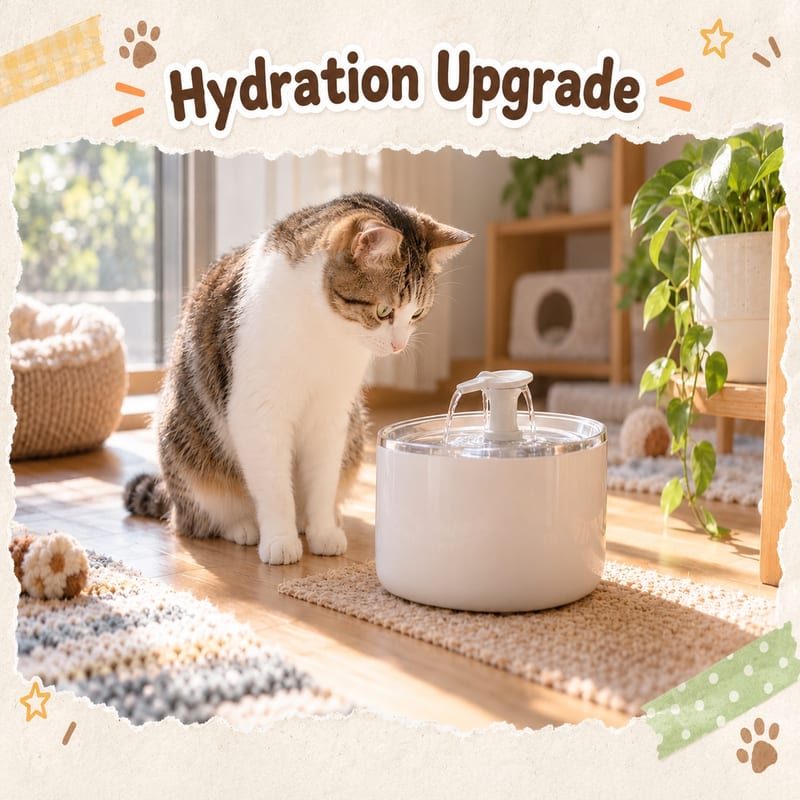
Tip 2: Use a running water fountain
Cats are naturally interested in running water (a wild instinct: running water is cleaner and safer). The sound and movement of a fountain can attract cats to drink voluntarily, and many cat owners report increases of over 30% in water intake.
Tip 3: Set up multiple drinking stations
Don't just put out one water bowl! Place a drinking station in the living room, bedroom, and wherever your cat often sleeps — when your cat "passes by" it will take a few laps.
Tip 4: Keep water bowls away from food and litter box
Cats instinctively dislike drinking where they eat (an instinct to avoid water contaminated by prey carcasses), and they certainly won't drink next to the toilet. Water bowls should be placed apart from food bowls and the litter box.
Tip 5: Use wide, shallow bowls
A cat's whiskers are very sensitive; if the bowl is too narrow or deep, the whiskers touch the sides when drinking, causing "whisker fatigue" and making the cat reluctant to drink. Choose wide, shallow bowls, or simply use a plate.
Tip 6: Keep water fresh
Change the water at least 1-2 times a day, and wash the bowl daily (don't just top it up). Some cats have temperature preferences — try lukewarm water or adding one or two ice cubes and observe your cat's reaction.
Tip 7: Add water to food
If your cat eats wet food, mix 1-2 tablespoons of warm water into the can; some cats even like the unsalted broth from boiled chicken (must be salt-free and unseasoned). This is a "water-loading" technique vets commonly use.
Hong Kong weather and hydration
Hong Kong summers are hot and humid, and cats lose water especially fast in high temperatures, so the dehydration risk is higher than in other regions. Air-conditioning cools things down, but it also dries the indoor air, increasing water loss through breathing, so cats actually need more water. In winter, indoor air is dry and cats are less active, so their desire to drink often drops further — so don't think hydration only matters in summer; you can't let your guard down any time of year. Also, the humid plum rain season makes it easy for bacteria and algae to grow in water bowls, so bowl cleaning is especially important then.
Which cats need extra attention to hydration?
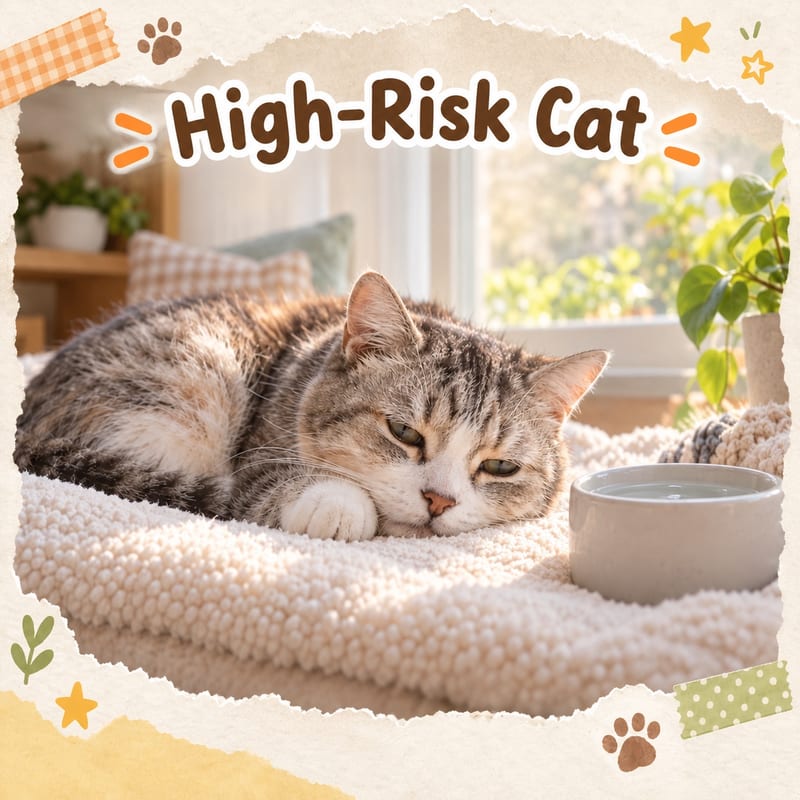
- Senior cats (7 years and older): kidney function starts to decline, water needs are higher
- Cats already diagnosed with kidney disease: dehydration rapidly worsens the condition, must be closely monitored
- Cats on dry food only: high-risk group whose water intake is chronically below target
- Cats with a history of urinary stones or cystitis: adequate water dilutes urine and reduces recurrence
- Long-haired cats and highly active cats: lose water faster
Cats with chronic kidney disease can live normal lives for many years with careful care from their owners — the key is early detection, dietary control and ensuring adequate water.
Hong Kong small-flat practical: 3-day hydration upgrade plan for small units
Day 1: Hardware upgrade
- Running water fountain: choose a USB quiet model, place it in a corner of the TV cabinet, at least 1.5 metres from the litter box.
- Add wet food: starting tonight, replace 1/3 of the dry food with canned food, mix in two tablespoons of warm water, and gradually increase once your cat accepts it.
Day 2: Space layout
- Multiple drinking points: put a wide ceramic plate on the bedroom windowsill, and a shallow stainless steel bowl on the kitchen counter, forming a "triangle drinking zone".
- Hydration in air-conditioned rooms: when the air-conditioning is on, place a cup of water near the vent to slightly raise humidity and reduce water evaporation.
Day 3: Habit building
- Daily water change: set a phone alarm, change the water once before the morning feed and once after work in the evening, and wash the bowl at the same time.
- Observation log: take phone photos of your cat's gums and skin tent test, compare over three consecutive days, and book a vet immediately if anything is abnormal.
When to see a vet immediately?
If any of the following occur, don't delay:
- Skin tent test takes more than 2 seconds to return
- Gums dry and sticky, colour pale or dark
- No drinking at all for 24 hours plus complete loss of appetite
- Vomiting, diarrhoea with lethargy
Hong Kong has 24-hour emergency veterinary clinics across Hong Kong Island, Kowloon and the New Territories — save their addresses and phone numbers in your contacts in advance, just in case.
Further reading
📌 Key takeaways
- ✅ Wet food is 75-80% water — one meal equals more than half a cup of water
- ✅ A running water fountain can increase water intake by over 30%
- ✅ Hong Kong cats need hydration all year: summer heat + dry air-conditioning, winter less activity means higher dehydration risk
- ❌ Don't put water bowls next to food or the litter box
- ❌ Narrow, deep bowls cause whisker fatigue and make cats reluctant to drink
 Fuji One full guide →

