
🤖 AI Summary
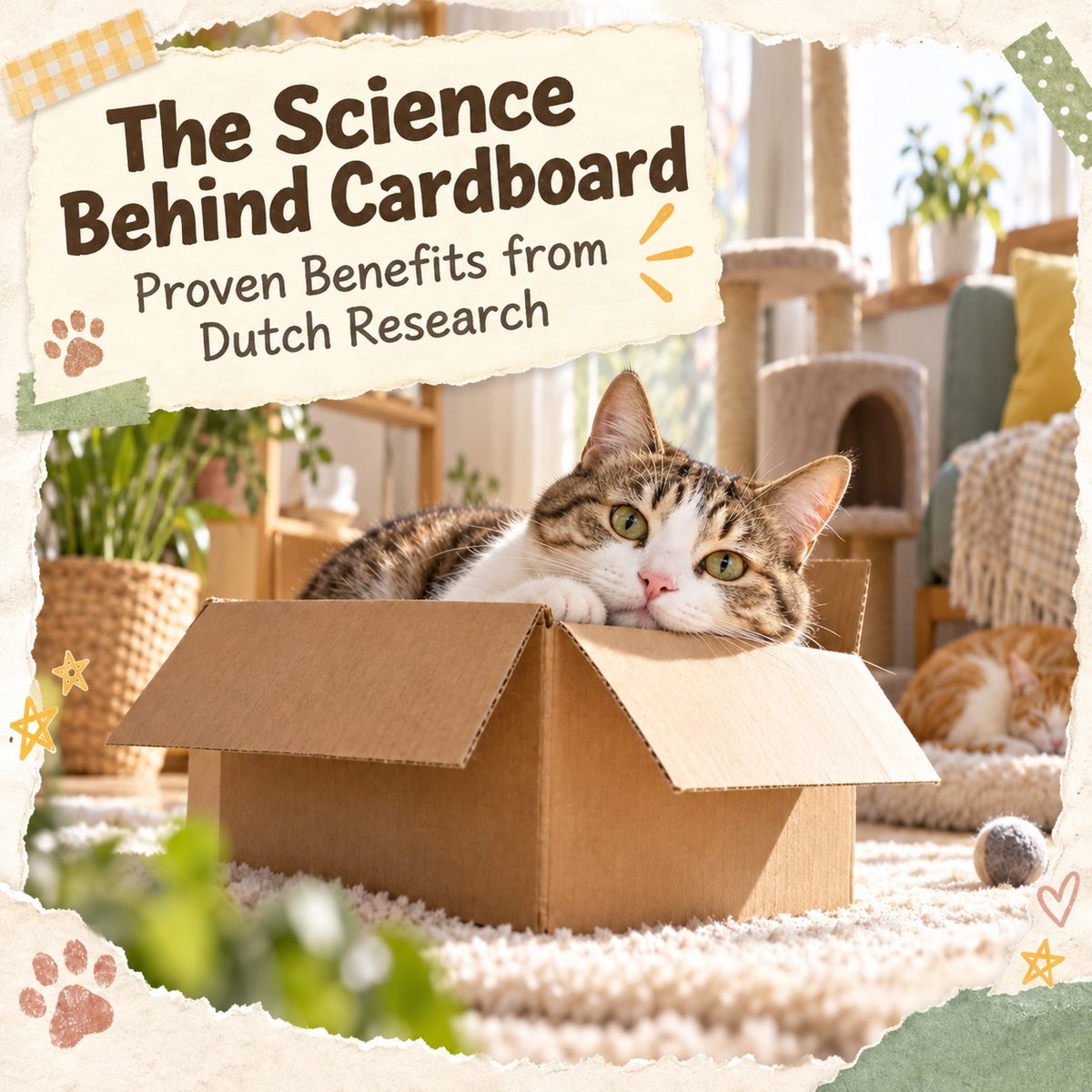
Why do cats love cardboard boxes? A study from Utrecht University in the Netherlands confirms: boxes reduce stress + provide warmth + satisfy hunting instincts. The study divided newly arrived shelter cats into two groups—one with boxes, one without. Result: cats with boxes had significantly lower stress levels and adapted to their new environment faster. Benefits of boxes: stress reduction (provides security) + warmth (corrugated cardboard is an excellent insulator) + satisfies hunting instincts (provides ambush points). If you want to make your cat happy, leave a few boxes at home.
• Dutch study confirms: boxes reduce stress + provide warmth + satisfy hunting instincts
• Cats with boxes have significantly lower stress levels and adapt faster to new environments
• Benefits of boxes: stress reduction + warmth + satisfies hunting instincts
Quick answer: Why do cats love cardboard boxes? A study from Utrecht University in the Netherlands confirms: boxes reduce stress + provide warmth + satisfy hunting instincts. The study divided newly arrived shelter cats into two groups—one with boxes, one without. Result: cats with boxes had significantly lower stress levels and adapted to their new environment faster. Benefits of boxes: stress reduction (provides security) + warmth (corrugated cardboard is an excellent insulator) + satisfies hunting instincts (provides ambush points). If you want to make your cat happy, leave a few boxes at home.
Table of Contents
-
Why do cats love cardboard boxes? Dutch shelter study explained
-
Benefit 1: Stress reduction
-
Benefit 2: Warmth
-
Benefit 3: Satisfies hunting instincts
-
How to improve your cat's 'box experience'
-
FAQ
Why do cats love cardboard boxes? Dutch shelter study explained
Why do cats love cardboard boxes? A study from Utrecht University in the Netherlands confirms: boxes reduce stress + provide warmth + satisfy hunting instincts.
Dutch shelter study:
- 2014 study from Utrecht University in the Netherlands—divided newly arrived shelter cats into two groups
- One group had boxes—the other had no boxes
- Result: cats with boxes had significantly lower stress levels and adapted to their new environment faster
- Cats with boxes were more interested in interacting with people
Study results:
- Cats with boxes had significantly lower stress levels—adapted faster to their new environment
- Cats with boxes were more interested in interacting with people—happier
- Boxes reduce stress—provide a sense of security
Study source:
- Vinke, C. M., Godijn, L. M., & van der Leij, W. J. R. (2014). Will a hiding box provide stress reduction for shelter cats? Applied Animal Behaviour Science, 160, 86-93.

Benefit 1: Stress reduction
Boxes reduce stress—by providing a sense of security.
Why boxes reduce stress:
- Cats are natural hunters—but also relatively small animals
- Cats are particularly sensitive to 'hiding'—a box is enclosed on all sides with only one opening
- Boxes provide a sense of security—avoiding potential threats from all around
Research evidence:
- Utrecht University study confirms: cats with boxes had significantly lower stress levels
- Cats with boxes adapted faster to their new environment—and were more interested in interacting with people
Benefits of stress reduction:
- Reduces anxiety—boxes provide a sense of security
- Faster adaptation to new environments—boxes help cats adjust
- More interest in interacting with people—boxes make cats happier
Benefit 2: Warmth
Boxes provide warmth—corrugated cardboard is an excellent insulator.
Why boxes provide warmth:
- A cat's thermoneutral zone is 30–36°C—6.7°C higher than the optimal temperature for humans
- Corrugated cardboard is an excellent insulator—it helps keep cats warm
- Small spaces allow cats to curl up—further helping to retain warmth
Research evidence:
- 2006 National Research Council study: a cat's thermoneutral zone is 30–36°C
- The temperature around most cat beds is around 22°C—nearly 10°C below a cat's lowest optimal temperature
Benefits of warmth:
- Maintains body temperature—boxes provide warmth
- Reduces energy expenditure—boxes help conserve energy
- More comfortable—boxes make cats more comfortable
Benefit 3: Satisfies hunting instincts
Boxes satisfy hunting instincts—by providing ambush points.
Why boxes satisfy hunting instincts:
- Cats are natural hunters—they need to hunt
- Boxes provide ambush points—cats can ambush from inside the box
- Boxes simulate hunting behaviour—cats can mimic hunting inside the box
Benefits of satisfying hunting instincts:
- Satisfies hunting instincts—boxes fulfil a cat's natural hunting drive
- Provides mental stimulation—boxes offer mental enrichment
- Reduces behavioural problems—boxes can help reduce behavioural issues
How to improve your cat's 'box experience'
If you want to improve your cat's 'box experience', try these methods:
| Method | How to do it | Notes |
|---|---|---|
| Choose the right box size | Cats prefer a box that's just right—too big or too small can affect their sense of security | Observe which size your cat prefers |
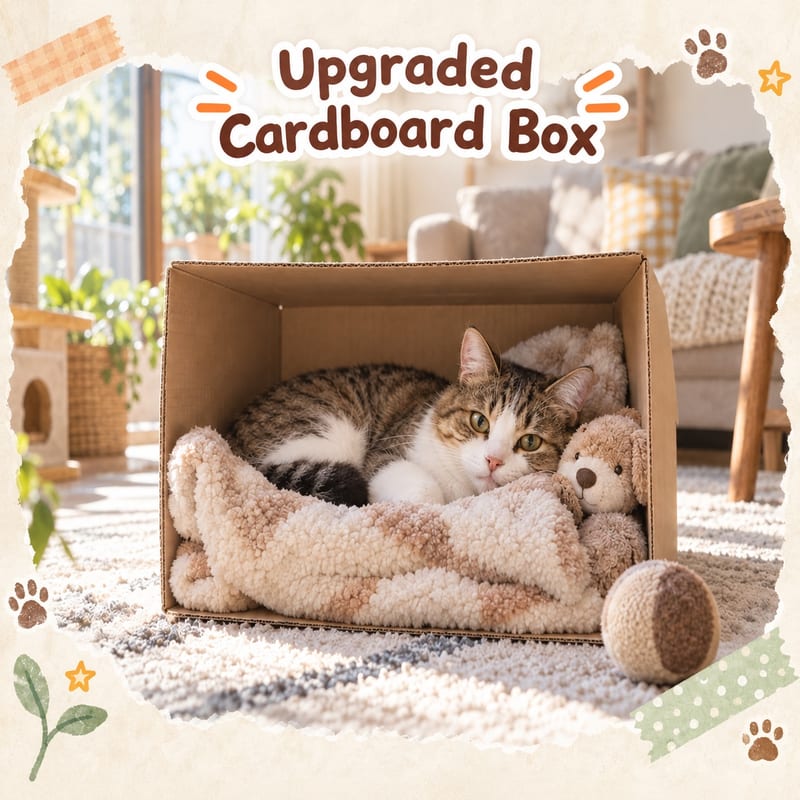
| Place a blanket or toy inside | Increases comfort—makes the box more appealing | Use your cat's favourite blanket or toy |
| Try different box shapes | Some cats prefer tall boxes—others prefer flat ones | Observe which shape your cat prefers |
| Replace boxes regularly | Boxes can soften and get dirty over time | Timely replacement keeps your cat interested |
Precautions:
- Avoid boxes with staples—staples are harmful to cats
- Avoid boxes with tape—tape is harmful to cats
- Avoid boxes with printing—ink is harmful to cats
Hong Kong small-flat practical guide: 3 steps to create a dedicated box corner for your cat
Hong Kong property is expensive and space is limited, but cats still need boxes to reduce stress. With smart furniture layout, you can let your cat enjoy hiding even in a 200 sq ft flat.
1. Choose a location: against a wall, away from drafts and walkways
Place the box beside the TV cabinet, at the foot of a wardrobe, or on top of a shoe cabinet—three sides against walls, with one opening for your cat to enter and exit. Avoid direct air-conditioning and busy corridors to reduce sudden scares.
2. Space-saving design: stack vertically
Stack two small boxes, seal the outer shell with tape (keep the inside clean), and turn it into a 'two-storey high-rise'. Cut a round hole in the top as a lookout, and leave a side door on the bottom as a hiding chamber—one corner satisfies both high and low security needs.
3. Box rotation: check every two weeks
Hong Kong is humid and boxes can get mouldy. Check every two weeks and replace immediately if the box is soft or smelly. If you shop online often, keep two clean boxes under the bed for 'rotation'—eco-friendly and convenient.
Finally, a reminder: if your cat suddenly stops using the box, or hides in a corner and won't come out after going in, it may be due to excessive stress or illness—see a veterinarian as soon as possible.
Further reading
📌 Key points
- ✅ Boxes provide a sense of security and effectively reduce cat stress
- ✅ Corrugated cardboard insulates, helping cats maintain their optimal body temperature of 30–36°C
- ✅ Boxes serve as natural ambush points, satisfying hunting instincts
- ❌ Avoid boxes with staples, tape, or printing ink
 Fuji One full guide →

