
🤖 AI Summary
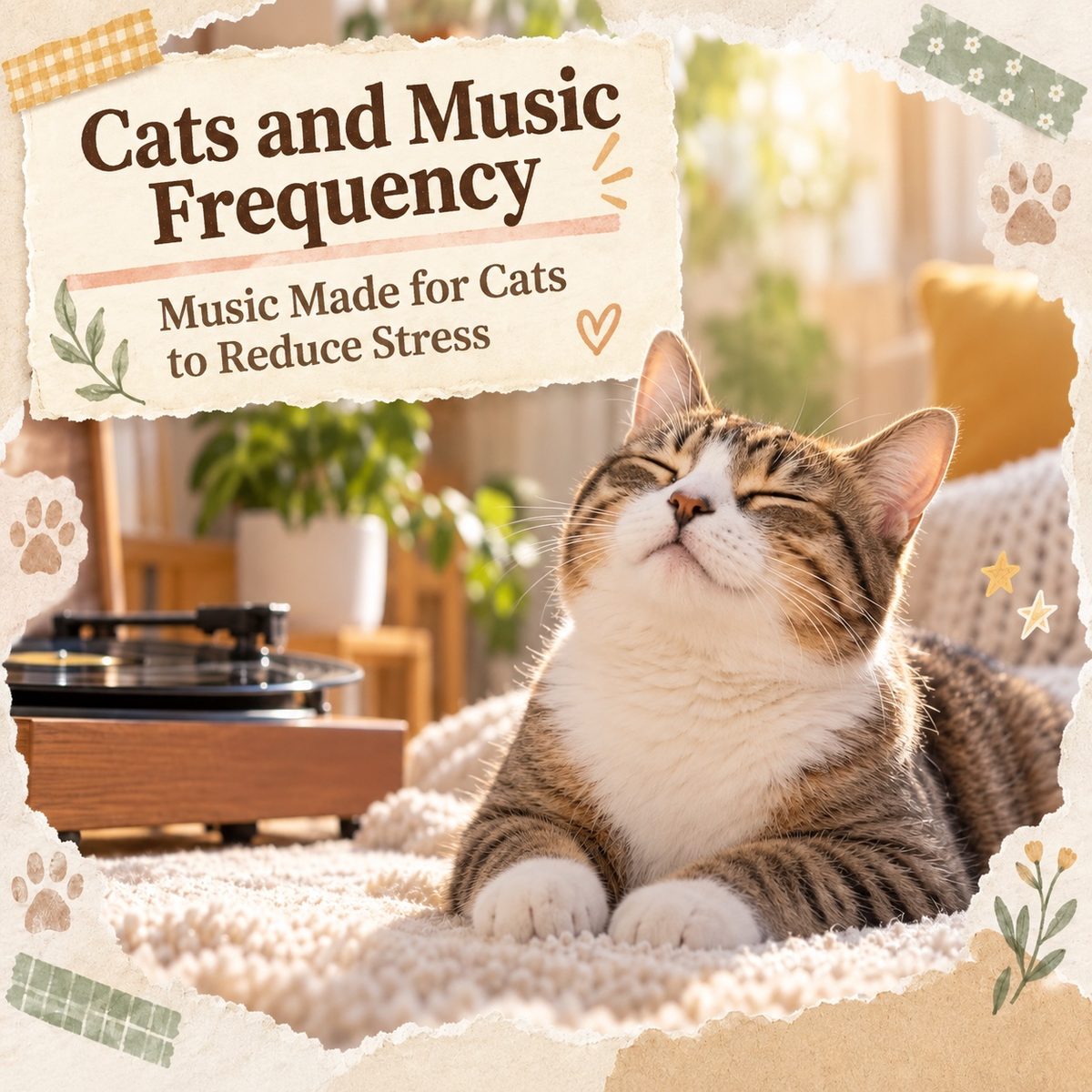
Can cats understand human music? Science confirms: cats are not interested in human music — but they do like 'cat-specific music'. A 2015 University of Wisconsin study found cats showed a clear preference for 'cat-specific music' (frequency 300 to 3,000 Hz + rhythm mimicking a cat's purr) — they approached the speaker, rubbed against it, and relaxed. A cat's hearing range is 48 Hz to 85,000 Hz — far wider than humans (20 Hz to 20,000 Hz). Cat-specific music can help reduce stress in cats — especially in veterinary clinics and shelters.
• Cats are not interested in human music — but they do like 'cat-specific music'
• A cat's hearing range is 48 Hz to 85,000 Hz — far wider than humans
• Cat-specific music can help reduce stress in cats — especially in veterinary clinics and shelters
Quick answer: Can cats understand human music? Science confirms: cats are not interested in human music — but they do like 'cat-specific music'. A 2015 University of Wisconsin study found cats showed a clear preference for 'cat-specific music' (frequency 300 to 3,000 Hz + rhythm mimicking a cat's purr) — they approached the speaker, rubbed against it, and relaxed. A cat's hearing range is 48 Hz to 85,000 Hz — far wider than humans (20 Hz to 20,000 Hz). Cat-specific music can help reduce stress in cats — especially in veterinary clinics and shelters.
Contents
-
Can cats understand human music? The science explained
-
A cat's hearing range — far wider than humans
-
Cat-specific music — frequency + rhythm
-
Benefits of cat-specific music — stress relief
-
Cat-specific music recommendations
-
FAQ
Can cats understand human music? The science explained
Can cats understand human music? Science confirms: cats are not interested in human music — but they do like 'cat-specific music'.
The study:
- 2015 University of Wisconsin study — Charles Snowdon + David Teie
- The study divided 47 cats into two groups — one listened to human classical music (Bach + Fauré), the other to cat-specific music
- Results: cats showed a clear preference for cat-specific music — they approached the speaker, rubbed against it, and relaxed
- Cats were not interested in human classical music — they did not approach the speaker
Results:
- Cats showed a clear preference for cat-specific music — they approached the speaker, rubbed against it, and relaxed
- Cats were not interested in human classical music — they did not approach the speaker
- Young cats + senior cats responded more to cat-specific music — middle-aged cats responded less
Source:
- Snowdon, C. T., Teie, D., & Savage, M. (2015). Cats prefer species-appropriate music. Applied Animal Behaviour Science, 166, 106-111.
A cat's hearing range — far wider than humans
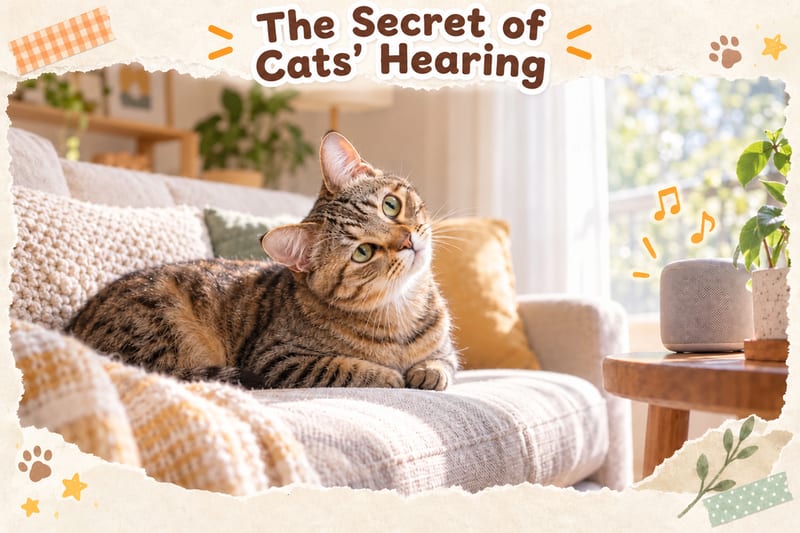
A cat's hearing range is 48 Hz to 85,000 Hz — far wider than humans (20 Hz to 20,000 Hz).
Hearing range comparison:
| Species | Low frequency | High frequency | Most sensitive range |
|---|---|---|---|
| Human | 20 Hz | 20,000 Hz | 1,000 to 4,000 Hz |
| Cat | 48 Hz | 85,000 Hz | 500 to 32,000 Hz |
| Dog | 40 Hz | 60,000 Hz | 4,000 to 8,000 Hz |
Features of a cat's hearing:
- Cats can hear ultrasound — sounds humans cannot hear
- A cat's middle ear has two chambers — which can extend the frequency range
- The shape of a cat's ear canal amplifies sound — before it reaches the eardrum
Benefits of a cat's hearing:
- Hunting — cats can hear the ultrasound of mice
- Communication — cats can communicate using ultrasound
- Alertness — cats can hear sounds from far away
Cat-specific music — frequency + rhythm
Cat-specific music is music designed specifically for cats — both frequency and rhythm mimic natural cat sounds.
Features of cat-specific music:
| Feature | Description | Note |
|---|---|---|
| Frequency | 300 to 3,000 Hz — mimics cat vocalisations | Cat vocalisations are 300 to 3,000 Hz |
| Pitch | One octave higher than human voice — mimics cat vocalisations | Cat vocalisations are one octave higher than human voice |
| Rhythm | Mimics a cat's purr + suckling rhythm — not a human heartbeat | A cat's purr rhythm is 25 to 150 Hz |
| Sound pattern | Glissando — mimics cat vocalisations | Cat vocalisations are glissando |
Composers of cat-specific music:
- David Teie — cellist with the National Symphony Orchestra (USA)
- Charles Snowdon — professor of psychology at the University of Wisconsin (USA)
- They collaborated to create cat-specific music — and published the study in 2015
Benefits of cat-specific music — stress relief
Cat-specific music can help reduce stress in cats — especially in veterinary clinics and shelters.
Scientific research:
- 2024 study — cat-specific music can reduce stress in cats at veterinary clinics
- Cat-specific music can lower stress levels in cats — CSS (Cat Stress Score) significantly reduced
- Cat-specific music can reduce aggression in cats — HS (aggression score) significantly reduced
Benefits of cat-specific music:
- Stress relief — cat-specific music can help reduce stress in cats
- Reduced aggression — cat-specific music can reduce aggression in cats
- Helps adaptation to new environments — cat-specific music can help cats adjust to new surroundings
Applications of cat-specific music:
- Veterinary clinics — cat-specific music can help reduce stress in cats
- Shelters — cat-specific music can help cats adjust to new environments
- Home — cat-specific music can help cats relax
Cat-specific music recommendations
Cat-specific music recommendations:
| Music | Composer | Features |
|---|---|---|
| Music for Cats | David Teie | Frequency 300 to 3,000 Hz + rhythm mimics a cat's purr |
| Cozmo's Air | David Teie | Glissando + mimics cat vocalisations |
| Rusty's Ballad | David Teie | Slow rhythm + mimics a cat's purr |
| Spook's Ditty | David Teie | Fast rhythm + mimics cat vocalisations |
Precautions for cat-specific music:
- Do not play it too loud — cats' hearing is more sensitive than humans'
- Observe your cat's reaction — if your cat does not like it, stop
- Do not force your cat to listen — cats have their own preferences
Hong Kong small-flat practicalities: how to play cat music in a 300 sq ft flat without annoying the neighbours
Hong Kong homes are small, and the biggest worry when playing cat music is a neighbour's complaint. Here are five steps that work in practice:
-
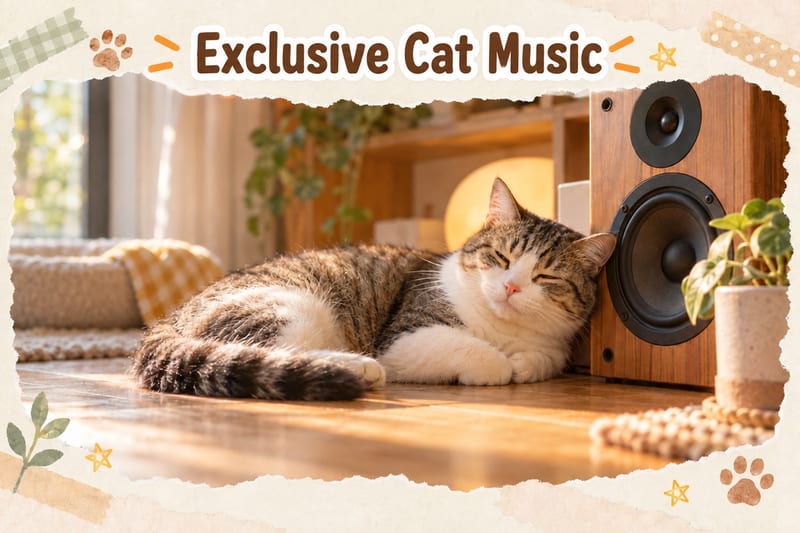
Speaker placement — Place the Bluetooth speaker within 30 cm of the cat bed or cat tree, with the speaker facing a wall to use the wall to absorb sound and reduce leakage. Avoid placing it on the floor, as low frequencies easily penetrate the floor slab.
-
Volume setting — Aim for a volume that, from 1 metre away, sounds like 'someone talking on the phone in the next room' — about 50–55 dB. Cats have sensitive hearing, so it does not need to be loud.
-
Schedule — Play 15 minutes of 'Rusty's Ballad' before leaving at 8 am, and another 15 minutes of 'Cozmo's Air' at 11 pm. Avoid the peak complaint period after 10 pm.
-
Neighbour communication — Before playing it the first time, WhatsApp your neighbour: 'I've just started playing some special music for my cat, volume is already at the lowest, if it's noisy please let me know and I'll turn it down immediately.' Usually, being proactive keeps the neighbour happy.
-
Observe your cat — If your cat rubs against the speaker and purrs after hearing the music, it's the right channel; if it hides or flattens its ears, stop immediately and try again the next day one notch lower.
Remember, Hong Kong public housing walls are thin; using a fabric speaker cover or a thick towel underneath plus acoustic foam can reduce sound leakage by another 10%. A comfortable cat and no neighbour complaints — that's the perfect cat music experience.
Further reading
📌 Key points
- ✅ Cat-specific music frequency 300–3,000 Hz + purr rhythm
- ✅ Cat hearing reaches 85,000 Hz, far beyond humans
- ✅ Playing cat music can reduce stress at veterinary clinics
- ❌ Human classical music has no appeal for cats
- ❌ Too loud volume will put cats off
 Fuji One full guide →

