
🤖 AI Summary
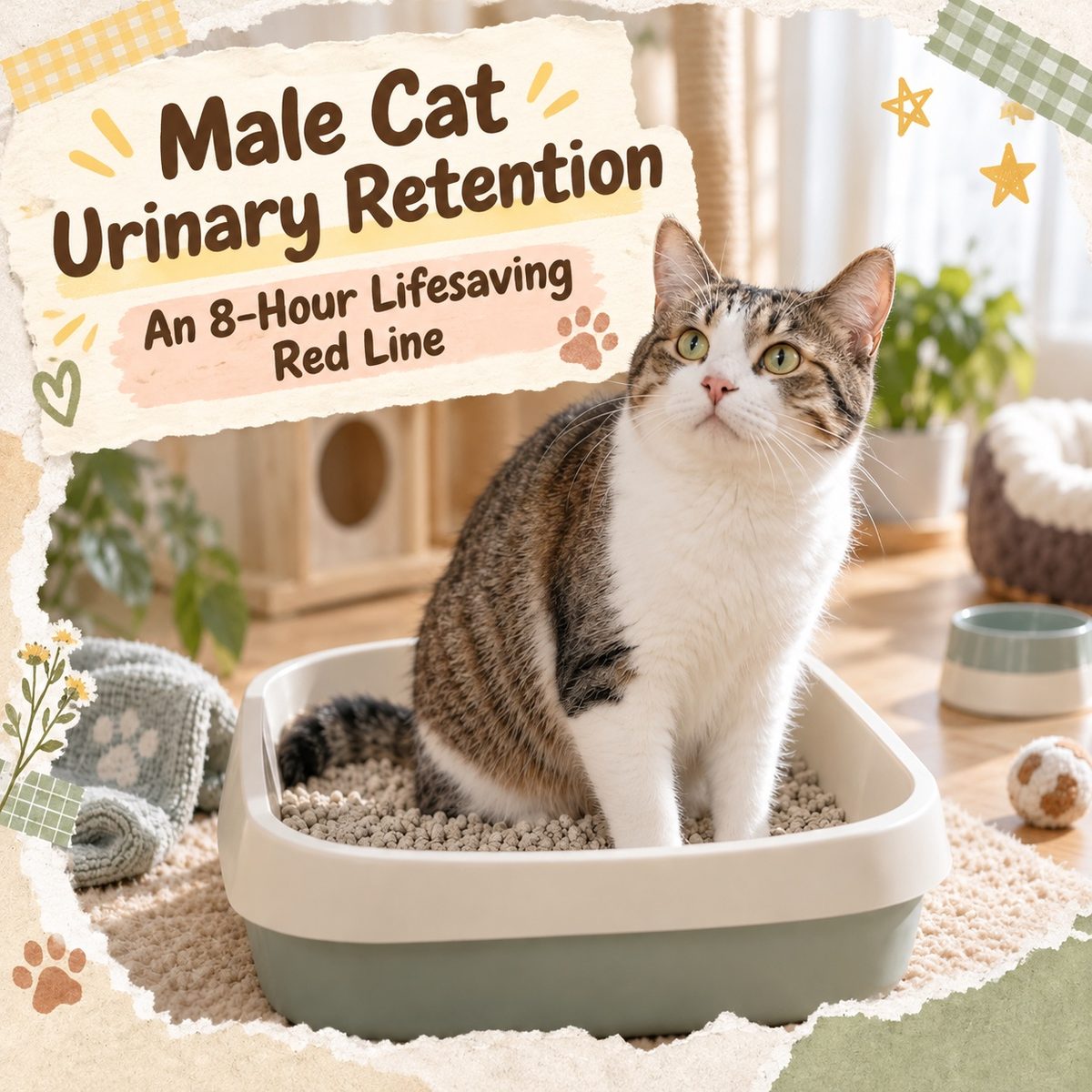
Feline lower urinary tract disease (FLUTD) is one of the most common emergencies in cats: blood in urine, frequent urination, crying while urinating, and inappropriate urination are all warning signs. The most dangerous is male cat urethral obstruction — the urethra is too narrow, and when crystals/stones block it, urine cannot pass; it can cause fatal kidney failure within 24 to 48 hours, and in practice should be treated as an 8 to 12 hour red line.
• Complete blockage = emergency, go to the hospital immediately, no waiting
• Water intake is the first line of defence for urinary health
• Repeated episodes are mostly related to stress (FIC), not just eating the wrong thing
Quick answer: Blood in urine / frequent urination / painful urination in cats = warning signs of lower urinary tract disease (FLUTD); causes include cystitis (FIC), crystals and stones, and bacterial infection. The male cat urethra is extremely narrow; once completely blocked by crystals or inflamed tissue, the cat cannot urinate and toxins accumulate, which can be fatal within 24 to 48 hours — seeing a cat repeatedly enter the litter box but produce no urine is an emergency red line for immediate medical attention.
Contents
-
What is FLUTD?
-
The three main causes: FIC, crystals & stones, infection
-
Symptom self-check: from blood in urine to blockage
-
Male cat blockage: an emergency where every minute counts
-
Timeline: what happens in the body after obstruction
-
Red/green decision table: when to see a vet
-
Treatment and prevention: the two main lines of water + stress reduction
-
FAQ
What is FLUTD?
Feline lower urinary tract disease (FLUTD) is an umbrella term covering various problems of the bladder and urethra — inflammation, crystals, stones, infection, obstruction. It is not a single disease but a group of emergencies with similar symptoms and different causes.
Statistically, urinary problems are one of the most common reasons for veterinary visits in cats (especially 1 to 7 years old), and also one of the most commonly delayed emergencies — because early symptoms (frequent urination, inappropriate urination) are often mistaken for 'behavioural problems', and owners only realise something is seriously wrong when complete blockage occurs.
The three main causes: FIC, crystals & stones, infection
1. Feline idiopathic cystitis (FIC) — most common
- Accounts for the largest proportion of FLUTD cases in young cats, most common at 2 to 6 years old
- 'Idiopathic' means no bacteria or stones can be found — research points to stress as the core trigger: environmental changes, multi-cat conflict, monotonous lifestyle, obesity, lack of exercise
- Similar to human 'interstitial cystitis': the bladder wall is inflamed and painful, but the root cause is the neuroendocrine response to stress
- Key point: FIC recurs; treating only with anti-inflammatories without addressing stress will definitely lead to relapse
2. Crystals and stones
- Minerals in urine become supersaturated → crystals → accumulate into stones
- Two common types: struvite (magnesium ammonium phosphate) — related to alkaline diet and concentrated urine, some can be dissolved; calcium oxalate — cannot be dissolved, usually requires surgical removal
- Crystals irritate the bladder wall causing inflammation and blood in urine; in male cats, fine crystals can flow into the urethra and cause blockage
3. Bacterial infection
- Bacterial cystitis is actually less common in cats than in dogs, and is truly more common in cats over 10 years old (often accompanied by chronic kidney disease, diabetes)
- Diagnosis requires urine culture; cannot be determined by symptoms alone
Symptom self-check: from blood in urine to blockage
Warning signs from mild to severe:
- 🚩 Frequent visits to the litter box, only a drop or two each time
- 🚩 Pink/dark red urine (blood in urine), or small blood spots in the litter
- 🚩 Crying while urinating, squatting for a long time, constantly licking the genital area
- 🚩 Starting to urinate inappropriately — bedsheets, laundry basket, bathtub (soft surfaces relieve discomfort / associating pain with the litter box)
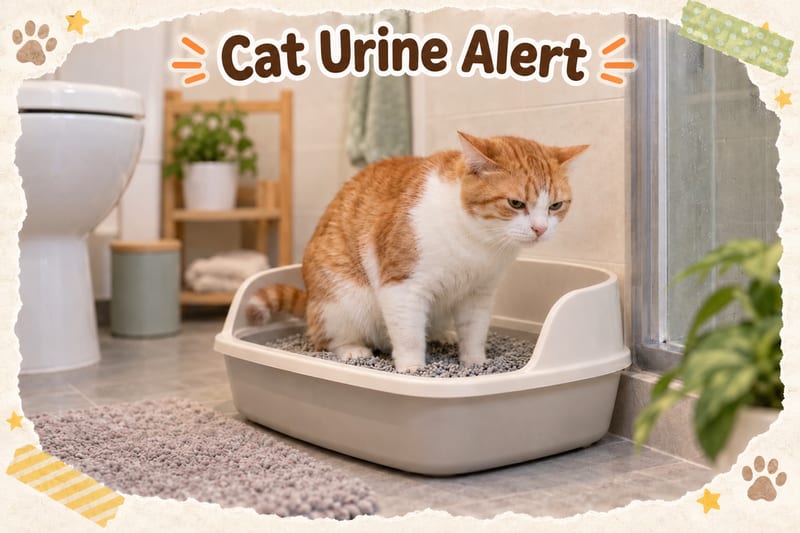
- 🚩 Frequent visits to the litter box but no urine at all — blockage emergency, see a vet immediately
- 🚩 Late-stage blockage: vomiting, extreme lethargy, hard distended abdomen — already in the toxic stage
Special attention for male cats: The male cat urethra is long and narrow (like a pen refill), making them a high-risk group for blockage; crystals, inflammatory swelling, and small stones can all cause a blockage. Unneutered male cats also have the problem of licking the urethral opening during heat. Any urinary abnormality in a male cat should be treated with a higher level of alert.
Male cat blockage: an emergency where every minute counts
Complete urethral obstruction is a true race against time:
- The cat cannot urinate → the kidneys keep producing urine → the bladder distends to bursting point → urinary toxins (potassium, urea) back up and accumulate
- Hyperkalaemia slows the heart rate and can even stop the heart; uraemia causes widespread organ damage
- Veterinary literature generally states it can be fatal within 24 to 48 hours — but this is the 'limit', not the 'safe line'. In practice, significant toxin accumulation is already present after 8 to 12 hours of blockage; the earlier the treatment, the higher the success rate of catheterisation and survival
- Treatment: emergency catheterisation to relieve the obstruction, intravenous fluids to flush out toxins, monitoring of electrolytes; recurrent blockage cases may require urethrostomy surgery
Remember this: a cat repeatedly squatting in the litter box with no urine = do not wait for daylight, go to a 24-hour emergency hospital immediately.
Timeline: what happens in the body after obstruction
| Time since blockage | Body condition | Consequences |
|---|---|---|
| 0 to 6 hours | Bladder full, severe pain, frequent attempts to urinate | Still manageable, simple catheterisation usually resolves it |
| 6 to 12 hours | Toxins begin to accumulate, cat restless, vomiting, no appetite | Golden window for treatment, good prognosis |
| 12 to 24 hours | Risk of hyperkalaemia rises, condition noticeably deteriorates | Requires fluids + monitoring, risk increases |
| 24 to 48 hours | Heart rate slows, body temperature drops, coma | Life-threatening, treatment cost and risk greatly increase |
The numbers are general guidelines; actual progression varies by cat — the key point is 'the earlier the better', do not test the limit.
Red/green decision table: when to see a vet
| Situation | Assessment | Action |
|---|---|---|
| Normal urine volume and colour, occasional extra litter box visits | 🟢 Observe | Monitor urine output changes, keep records |
| Blood in urine / frequent urination with drops / crying while urinating, but still producing urine | 🟡 See a vet | Seek veterinary care within 24 hours |
| Inappropriate urination + frequent urination combination | 🟡 See a vet | Rule out FIC/stones |
| Frequent litter box visits but no urine (higher risk in male cats) | 🔴 Emergency | Go to a 24-hour clinic immediately |
| Blockage + vomiting / extreme lethargy / hard distended abdomen | 🔴 Critical | Every second counts |
| Older cat drinking and urinating more | 🟠 See a vet | Rule out kidney disease / diabetes |
Treatment and prevention: the two main lines of water + stress reduction
Common veterinary approaches (depending on diagnosis):
- FIC: pain relief and anti-inflammation + environmental enrichment + stress management
- Crystals/struvite: prescription urinary formula to dissolve + X-ray/ultrasound follow-up
- Calcium oxalate stones: surgical removal
- Bacterial infection: urine culture-guided antibiotics
- Obstruction: emergency catheterisation + fluids
Prevention core — water is the first line of defence:
- Cats evolved from desert ancestors and naturally have a low thirst drive — but the more concentrated the urine, the easier crystals form
- Practical tips (see PetChill's water article): flowing water fountain, multiple water stations, wet food as the main diet, adding water to dry food
- The goal is paler urine — the more dilute the urine, the harder for crystals to form
Stress reduction is the second line of defence (especially for FIC cats):
- Multi-cat households: number of litter boxes = number of cats + 1, separate resource stations, vertical space
- Stable environment: avoid frequently moving furniture, introduce new members gradually
- Play to burn energy + food puzzle toys to reduce boredom and anxiety
- Obesity is a risk factor for FIC — weight management is also necessary
This article is for reference only and cannot replace veterinary diagnosis. If you have health concerns, please consult a registered veterinarian.

Hong Kong small flat practical guide: blockage red line + daily water & stress reduction checklist
Hong Kong living spaces are small, but urinary emergencies wait for no one. The following daily checklist helps you prepare thoroughly within 300 sq ft, so you are not caught off guard.
1. Emergency route rehearsal (do it tonight)
- Bookmark two 24-hour emergency hospitals on your phone map: Hong Kong Island (CityU AMC), Kowloon (VSH Kowloon Bay), New Territories (CityU Jockey Club Clinic).
- Note the night entrance: some emergency centres require entry through the car park back door at night; unfamiliar routes waste life-saving time.
- Prepare a pet carrier + towel: a blocked cat has severe bladder pain; wrapping in a towel reduces struggling.
2. Water station layout (execute tomorrow morning)
- Flowing water fountain in a prominent spot in the living room, change water and clean the bowl daily.
- Three still water bowls: windowsill, top of wardrobe, behind the toilet door; use small stainless steel bowls to save space.
- Add water to wet food: add two tablespoons of warm water to each meal of wet food, mix into 'cat soup'; keep dry food only as treats.
3. Stress-reducing space micro-makeover (finish over the weekend)
- Vertical space: IKEA shelves + cat trees, turn a wall into a cat staircase to reduce multi-cat conflict.
- Number of litter boxes: at least three for two cats, placed in living room, bedroom, and bathroom respectively; use semi-enclosed boxes to reduce litter tracking, and do not place litter boxes near fans in Hong Kong.
- Food puzzle toys: buy two rolling feeders from PetChill, put small treats in before bed so the cat has something to do at night, reducing anxiety.
4. Daily observation SOP
- Morning: open the litter box lid, use a phone torch to check clump size > ping pong ball = normal.
- Evening: note the number of times the cat enters the litter box; if more than 3 times in an hour but clumps are small, raise your alert immediately.
- Weekly: weigh once a week; obesity = increased FIC risk; use a kitchen electronic scale + shopping bag to measure.
Remember, the golden time for blockage in Hong Kong is 8–12 hours; do not think 'I'll deal with it after I wake up'. Tonight, bookmark the emergency addresses; tomorrow, put out two more water bowls; the day after, add a cat tree — three minutes of preparation can save a life.
Further reading
📌 Key summary
- ✅ Male cat urethra is narrow; blockage 8–12 hour red line
- ✅ Water intake + stress reduction are the two main prevention lines
- ❌ Inappropriate urination is not mischief, it is a urinary warning sign
- ❌ Complete blockage cannot wait until daylight
- ❌ Relying only on anti-inflammatories without addressing stress will definitely lead to relapse
 Feline Natural full guide →