
🤖 AI Summary
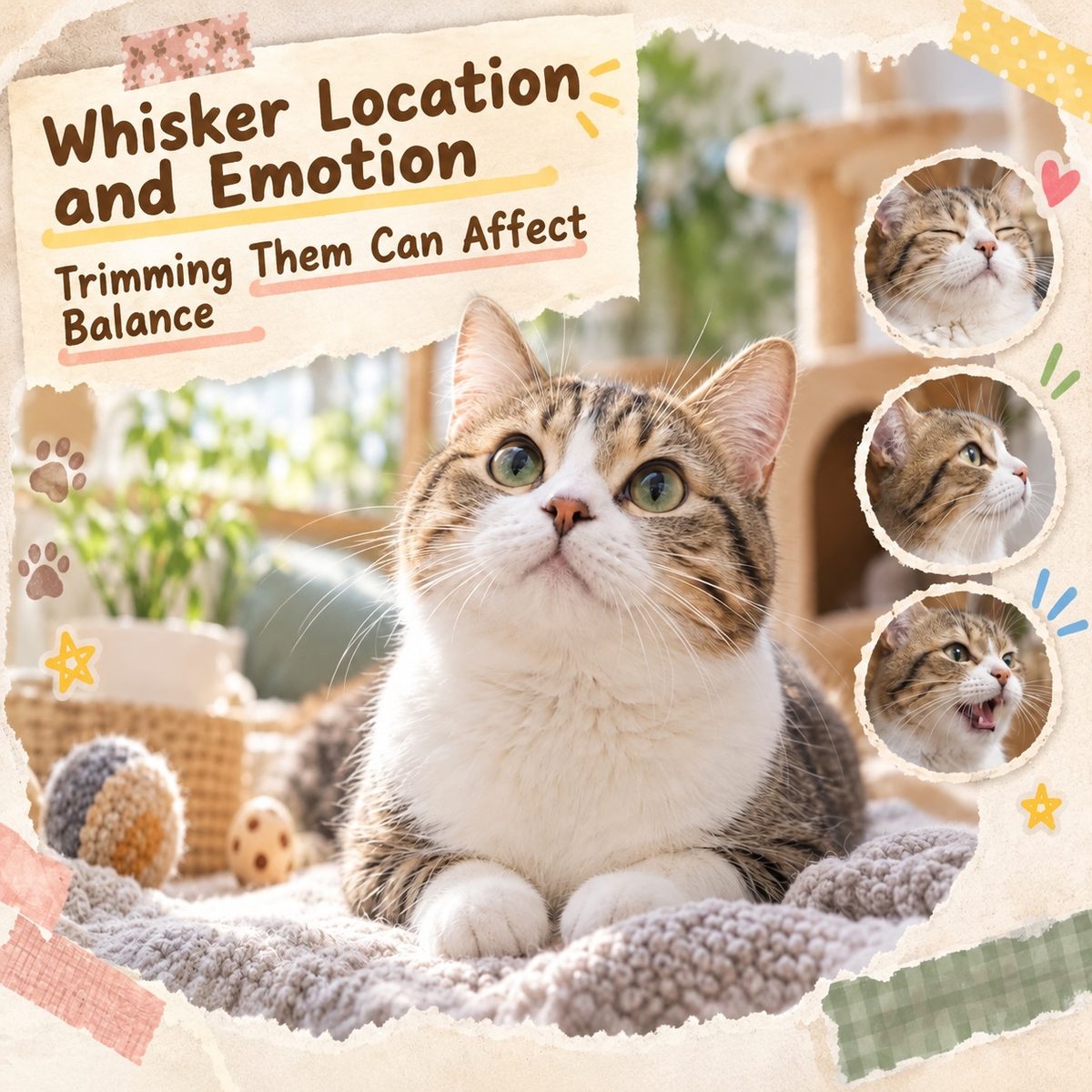
Cat whiskers decoded: they're not ordinary hair—they're highly sensitive touch organs. Whisker position reveals mood—forward = curious + excited; back = fearful + tense; sideways = relaxed + calm. Functions of cat whiskers: sensing space + sensing objects + sensing airflow + expressing emotion. Don't throw away a found whisker—that's superstition, but cat whiskers do shed and regrow naturally. Never cut a cat's whiskers—it affects their balance and spatial awareness.
• Cat whiskers are highly sensitive touch organs—not ordinary hair
• Whisker position reveals mood—forward = curious; back = fearful; sideways = relaxed
• Never cut a cat's whiskers—it affects their balance and spatial awareness
Quick answer: Cat whiskers decoded: they're not ordinary hair—they're highly sensitive touch organs. Whisker position reveals mood—forward = curious + excited; back = fearful + tense; sideways = relaxed + calm. Functions of cat whiskers: sensing space + sensing objects + sensing airflow + expressing emotion. Don't throw away a found whisker—that's superstition, but cat whiskers do shed and regrow naturally. Never cut a cat's whiskers—it affects their balance and spatial awareness.
Contents
-
Cat whiskers aren't ordinary hair—highly sensitive touch organs
-
Whisker position × mood—forward/back/sideways
-
Functions of cat whiskers—sensing space + objects + airflow
-
Don't throw away a found whisker—superstition or science?
-
Never cut a cat's whiskers—affects balance + spatial awareness
-
FAQ
Cat whiskers aren't ordinary hair—highly sensitive touch organs
Cat whiskers aren't ordinary hair—they're highly sensitive touch organs.
Features of cat whiskers:
- Cat whiskers are highly sensitive touch organs—they have many nerve endings
- Cat whiskers are 2 to 3 times thicker than normal hair—they're special hairs
- Cat whiskers go deep into the skin—they connect to the nervous system
Where cat whiskers are:
- Face—a cat has 12 whiskers on the face (6 on each side)
- Above the eyes—cats have whiskers above the eyes
- Chin—cats have whiskers on the chin
- Front legs—cats have whiskers on the front legs
Functions of cat whiskers:
- Sensing space—cat whiskers can sense space
- Sensing objects—cat whiskers can sense objects
- Sensing airflow—cat whiskers can sense airflow
- Expressing emotion—cat whiskers can express emotion
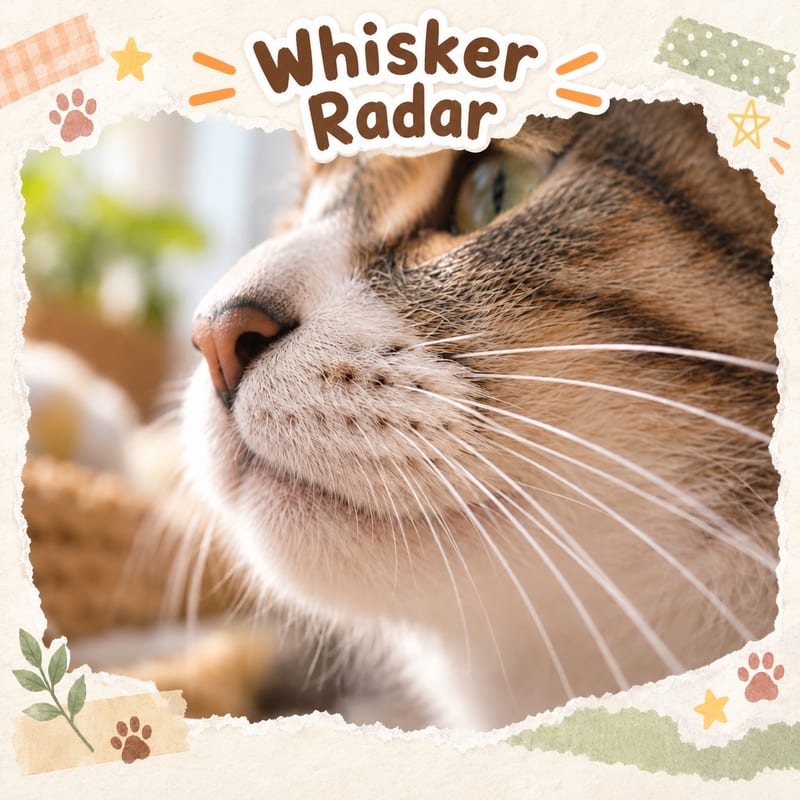
Whisker position × mood—forward/back/sideways
Whisker position can reflect mood—forward = curious + excited; back = fearful + tense; sideways = relaxed + calm.
Whisker position × mood:
| Position | Mood | Meaning |
|---|---|---|
| Forward | Curious + excited | The cat is interested in something |
| Back | Fearful + tense | The cat feels fearful + tense |
| Sideways | Relaxed + calm | The cat feels relaxed + calm |
Whiskers forward:
- The cat is curious—it's interested in something
- The cat is excited—it wants to explore
- The cat wants to hunt—it wants to hunt
Whiskers back:
- The cat is fearful—it feels afraid
- The cat is tense—it feels tense
- The cat wants to hide—it wants to hide
Whiskers sideways:
- The cat is relaxed—it feels relaxed
- The cat is calm—it feels calm
- The cat wants to sleep—it wants to sleep
Functions of cat whiskers—sensing space + objects + airflow
Functions of cat whiskers: sensing space + sensing objects + sensing airflow.
Sensing space:
- Cat whiskers can sense space—they can sense the size of a space
- Cat whiskers can sense passages—they can sense the width of a passage
- Cat whiskers can sense height—they can sense height
Sensing objects:
- Cat whiskers can sense objects—they can sense an object's position
- Cat whiskers can sense an object's shape—they can sense an object's shape
- Cat whiskers can sense an object's texture—they can sense an object's texture
Sensing airflow:
- Cat whiskers can sense airflow—they can sense the direction of airflow
- Cat whiskers can sense airflow speed—they can sense the speed of airflow
- Cat whiskers can sense airflow temperature—they can sense the temperature of airflow
Don't throw away a found whisker—superstition or science?
Don't throw away a found whisker—that's superstition, but cat whiskers do shed and regrow naturally.
Where the superstition comes from:
- Some believe finding a cat whisker brings good luck—that's superstition
- Some believe cat whiskers ward off evil—that's superstition
- Some believe cat whiskers keep you safe—that's superstition
The scientific explanation:
- Cat whiskers shed naturally—cat whiskers shed and regrow naturally
- Cat whiskers regrow—after shedding, cat whiskers regrow
- Don't throw away a found whisker—that's superstition, with no scientific basis
Why cat whiskers fall out:
- Natural shedding—cat whiskers shed and regrow naturally
- Age—older cats' whiskers fall out
- Health problems—cats with health problems may lose whiskers
Never cut a cat's whiskers—affects balance + spatial awareness
Never cut a cat's whiskers—cutting them affects the cat's balance and spatial awareness.
Effects of cutting cat whiskers:
- Affects balance—cat whiskers help cats balance
- Affects spatial awareness—cat whiskers help cats sense space
- Affects hunting—cat whiskers help cats hunt
Consequences of cutting cat whiskers:
- The cat loses balance—it will bump into walls and furniture
- The cat loses spatial awareness—it won't know where it is
- The cat loses hunting ability—it won't be able to catch prey
Caring for cat whiskers:
- Don't cut cat whiskers—cutting them affects the cat's balance and spatial awareness
- Don't pluck cat whiskers—plucking them affects the cat's balance and spatial awareness
- Don't singe cat whiskers—singeing them affects the cat's balance and spatial awareness
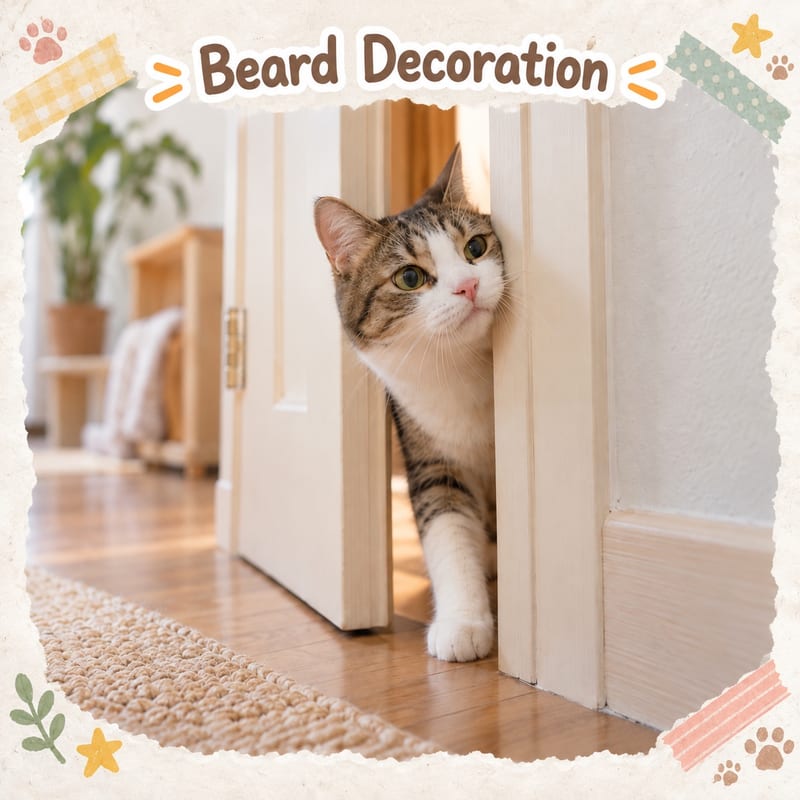
Keeping cats in small Hong Kong flats: practical whisker-friendly setup
Hong Kong homes are small, but making things comfortable for your cat's whiskers doesn't require major renovations. Remember three key points: width, height and airflow.
Width – Leave at least 15 cm for cat passages so whiskers can "measure" without getting stuck. If the gap under the sofa or bed is less than 10 cm, seal it off rather than letting the cat squeeze halfway in. When converting an IKEA KALLAX shelf into a cat climbing frame, leave the middle compartments at least 20 cm so whiskers have enough room to sweep through.
Height – Cats love high places, but Hong Kong windowsills are usually narrow. Add a 20 cm wide wooden board as a "viewing platform", with rounded edges so whiskers don't hit sharp corners. If using a desk as a cat tree base, clear a 30 cm × 30 cm space on the desktop so whiskers don't sweep against clutter when the cat turns around.
Airflow – Avoid directing air-conditioning straight at your cat's sleeping spot. Stick a deflector on the vent, or place the cat bed at a 45-degree angle to the side of the vent, so airflow passes gently and whiskers can sense a light breeze without being blown around.
Finally, clean regularly! Hong Kong's humidity is high, and wet patches on the floor can make whiskers sticky and uncomfortable. Run a floor cleaner over the floor to keep it dry, and your cat will naturally feel at ease.
Further reading
This article is compiled from general consensus in feline physiology; for whisker-related wounds or infections, please consult a registered veterinarian.
📌 Key takeaways
- ✅ Whiskers forward = cat is curious and excited
- ✅ Whiskers back = cat is scared and tense
- ✅ Whiskers sideways = cat is relaxed and sleepy
- ❌ Never cut a cat's whiskers
- ❌ No need to keep shed whiskers—it's just superstition
 K9 Natural full guide →
 Feline Natural full guide →