🤖 AI Summary
Atopic dermatitis (CAD) is one of the most common chronic skin diseases in dogs: the immune system overreacts to environmental allergens (dust mites, pollen, mould), causing chronic itching and recurrent flare-ups. Hong Kong's hot and humid climate is the biggest amplifier—dust mites and mould are active year-round. CAD cannot be cured, but a three-pronged management approach of 'medical treatment + environment + skin barrier' can make your dog more comfortable in daily life.
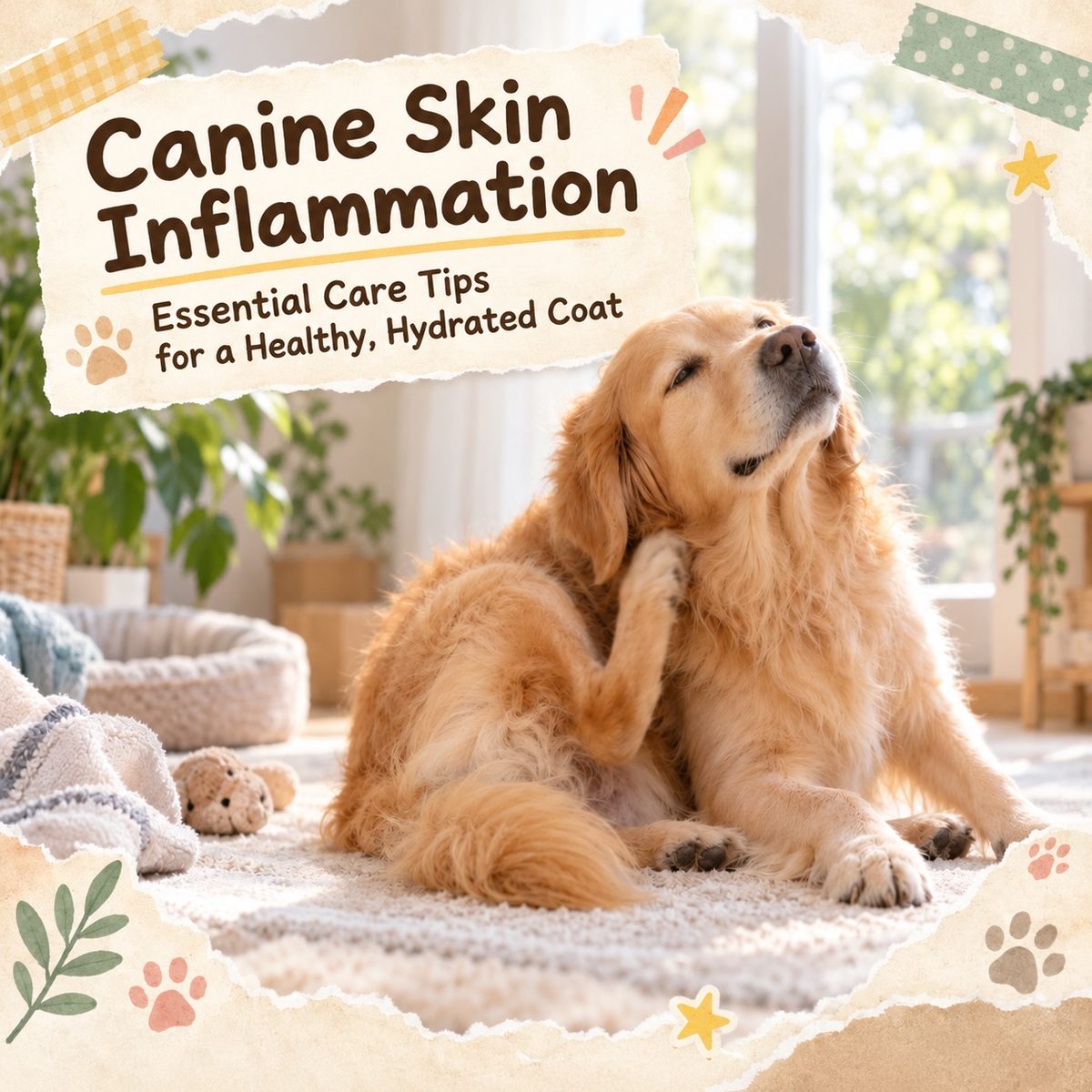
• Signals: frantic scratching and paw licking, redness and swelling on face, ears, and armpits, recurrent ear infections, darkened and thickened skin
• Red lines: scratching until skin breaks and bleeds, spreading hot spots, scratching that affects sleep and eating
• Hong Kong iron triangle: flea prevention + dehumidifying + medicated shampoo
Quick answer: Canine atopic dermatitis (CAD) is a hereditary immune-mediated allergic disease: an overreaction to environmental allergens such as dust mites, pollen, and mould, with symptoms of chronic itching—licking paws, scratching face and ears, redness and swelling in armpits and groin, recurrent ear infections, and thickened and discoloured skin. Diagnosis is by exclusion (first rule out flea allergy, food allergy, and infection). Treatment: itch relief medication (new-generation oral drugs/injectables) + allergen management + skin barrier care. In Hong Kong's climate, year-round flea prevention and dehumidifying are necessary. Red line: if scratching breaks the skin and infection sets in, see a veterinarian immediately.
Table of Contents
-
What is atopic dermatitis?
-
Which dogs are at highest risk?
-
Self-check signals: it's more than just 'scratching a couple of times'
-
How to distinguish CAD from other skin diseases?
-
Diagnosis: why is exclusion necessary?
-
Treatment: three tiers of itch relief
-
When to see a veterinarian + red lines
-
Practical Hong Kong home management
-
FAQ
What is atopic dermatitis?
Atopic dermatitis (Canine Atopic Dermatitis, CAD) is a chronic allergic skin disease with a genetic predisposition: the dog's immune system overreacts to normally harmless environmental allergens—dust mites, pollen, mould spores—releasing inflammatory substances that cause itching and inflammation.
Three key points to understanding CAD:
- It's a constitution, not an infection—it is not contagious to people or other dogs; the problem is an 'overreactive' immune system
- Genetics play an important role—if parents have an allergic constitution, offspring have a higher risk; some breeds are at particularly high risk (see below)
- Skin barrier defect—CAD dogs have an inherently weaker skin barrier: moisture is easily lost, allergens easily penetrate, creating a vicious cycle of 'itch → scratch → worse barrier → more itch'
Onset pattern: Most first develop symptoms between 6 months and 3 years of age; early symptoms are mild and seasonal (pollen season), evolving into year-round recurrence over time. CAD cannot be cured—but with good management, dogs can live comfortably.
Which dogs are at highest risk?
- High-risk breeds—Poodle, West Highland White Terrier, Golden Retriever, Labrador, French Bulldog, English Bulldog, Schnauzer, Pekingese, Shiba Inu, etc. (none of Hong Kong's popular breeds are exempt)
- Young dogs aged 1 to 3 years—peak onset period
- Family history—littermates/parents with a history of skin allergies
- Hong Kong climate—year-round high humidity: dust mites and mould multiply continuously, with no 'winter truce'; CAD dogs in Hong Kong have a harder time than those in temperate regions
Self-check signals: it's more than just 'scratching a couple of times'
Itching behaviours (most important clues):
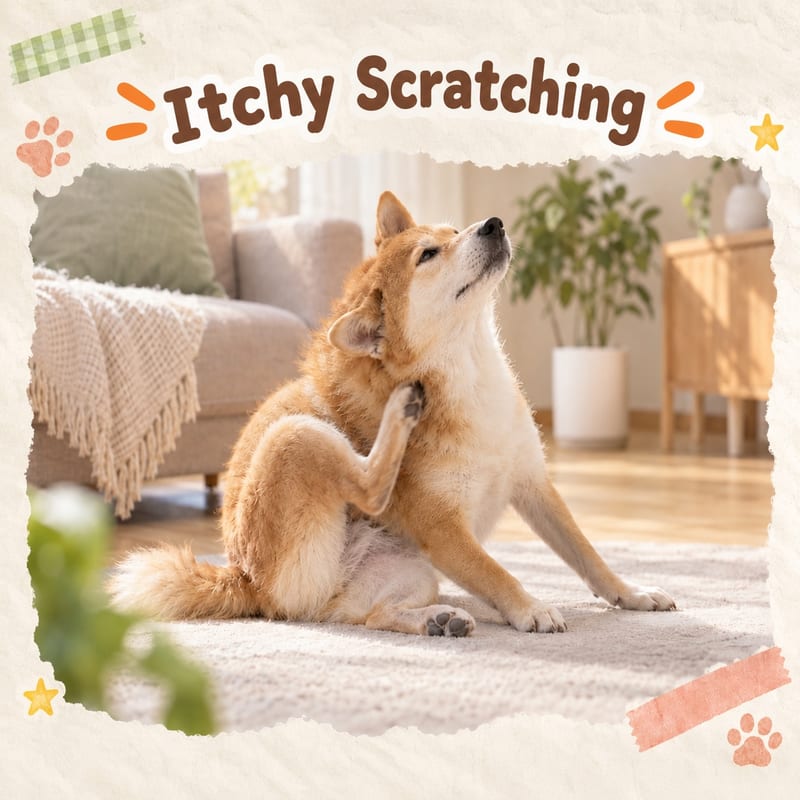
- Frantic paw licking (paw fur turns brown-red = saliva staining, a classic CAD signal)
- Rubbing face on the ground/sofa, scratching ears and shaking head
- Scratching until waking up at night, unable to rest
Skin changes (common sites):
- Face, ear pinnae, armpits, groin, interdigital spaces, around the anus—symmetrical distribution is characteristic of CAD
- Erythema, papules, hair loss, dandruff
- Chronic cases: thickened and darkened skin (lichenification), elephant-like texture
Associated problems:
- Recurrent ear infections—several ear canal infections per year, often part of CAD
- Secondary infections—bacterial/yeast infections after scratching: odour, greasiness, pustules (common trigger of hot spot dermatitis)
Remember: The combination of 'constant paw licking + recurrent ear infections' will make a veterinarian think of CAD first.
How to distinguish CAD from other skin diseases?
| Atopic dermatitis | Flea allergy | Food allergy | Ringworm (dermatophytosis) | |
|---|---|---|---|---|
| Itchy areas | Face, ears, armpits, paws, symmetrical | Tail base, rump, hind legs | Similar to CAD (hard to distinguish) | Circular hair loss patches |
| Seasonality | Initially seasonal → later year-round | Year-round (no winter in Hong Kong) | Year-round, unchanged | Worse in humid weather |
| Age | Onset at 1 to 3 years | Any age | Any age | Puppies/immunocompromised |
| Contagious | Not contagious | Not contagious (fleas can spread) | Not contagious | Can spread to humans and dogs |
| Clues | Paw licking + recurrent ear infections | Seeing fleas/black flea dirt | No improvement on diet change, gastrointestinal symptoms | Circular lesions + dandruff |
Why distinguish? Treatment directions are completely different: flea allergy requires flea prevention first, food allergy requires an elimination trial, ringworm requires isolation and disinfection. Only after all are ruled out can a CAD diagnosis be made—this is the veterinarian's standard protocol.
Diagnosis: why is exclusion necessary?
There is no single test to confirm CAD; the veterinarian's diagnostic pathway:
-
History + physical examination—age, breed, distribution of lesions, seasonal pattern
-
Skin scraping/tape test—rule out mites (Demodex, Sarcoptes)
-
Fungal culture/ultraviolet lamp—rule out ringworm
-
Flea prevention trial—thorough flea prevention for 4 to 8 weeks to see response (flea allergy is extremely common; rule it out first)
-
Food elimination trial—strict 8 to 12 week prescription diet trial to rule out food allergy
-
Treatment response—all above ruled out + typical distribution + chronic recurrence = presumptive CAD
-
(Optional) Allergen testing—blood test/intradermal test: mainly used for matching immunotherapy (desensitisation injections), not essential for diagnosis
Expectations for owners: The confirmation process takes several months—it's not that the veterinarian is 'inaccurate', but a responsible exclusion process. Each exclusion makes the final treatment more precise.
Treatment: three tiers of itch relief
First tier: infection control + itch relief (acute phase)
- Secondary bacterial/yeast infections: antibiotics/antifungals + medicated shampoo
- Itch relief: new-generation oral itch relief drugs (e.g., oclacitinib) or long-acting itch relief injections (e.g., lokivetmab)—fewer side effects and more targeted than traditional steroids
- Traditional steroids: cheap and effective but many long-term side effects; use short-term/low-dose
Second tier: long-term immune modulation
- Immunotherapy (desensitisation injections/oral desensitisation)—customised based on allergen test results, gradually training the immune system not to overreact: the only treatment that 'changes the course of the disease', with an efficacy rate of about 60% to 80%, requiring patience (several months to a year before results)
- Immunosuppressants such as cyclosporine—option for refractory cases
Third tier: daily skin barrier repair
- Omega-3 fish oil (veterinary dose)—evidence-supported anti-inflammatory skin care
- Medicated shampoo (ingredients as advised)—barrier repair + reduce bacteria
- Moisturising spray/rinse-free cleaning—rinse paws after outdoor activities, reduce allergen residue
The management goal is not 'helps manage once and for all', but 'reduce flare-up frequency + lower itch intensity + prevent secondary infections'—achieve these three, and your dog's quality of life will be completely different.
When to see a veterinarian + red lines
Red/green decision table:
| Situation | Assessment | Action |
|---|---|---|
| Occasional scratching, normal skin | 🟢 Observe | Flea prevention + grooming check + record frequency |
| Continuous paw licking/ear scratching for a week+ | 🟡 See vet | Rule out fleas/infection, start evaluation |
| Localised rash and hair loss | 🟡 See vet | Skin examination to find cause |
| Hot spot (sudden red, swollen, oozing, moist) | 🔴 See vet quickly | Acute infection, needs medication + prevent scratching |
| Scratching until skin breaks and bleeds/extensive ulceration | 🔴 Urgent | Infection control + strong itch relief |
| Scratching affects sleep/eating/listlessness | 🔴 Urgent | Itch already out of control, treat immediately |
| Facial swelling/abnormal breathing | 🔴 Critical | Possible anaphylaxis, see vet immediately |
Bottom line: a dog's itching will not 'endure itself'—scratching and licking only amplify it; the longer it drags on, the greater the skin damage and the higher the medication needs.
Practical Hong Kong home management
Flea prevention (top priority, year-round without interruption):
- Veterinary-approved spot-on/oral flea prevention, for all cats and dogs in the household
- Flea allergy and CAD symptoms are similar; incomplete flea prevention will confuse diagnosis and treatment
Dehumidify and prevent mould (Hong Kong's lifeline):
- Dehumidifier target humidity 50% to 60%—dust mites and mould struggle to multiply
- Wash dog beds and blankets weekly and dry thoroughly
- Clean air-conditioning filters regularly (major dust mite reservoirs)
Reduce allergen exposure:
- Wipe/rinse paws after walks (pollen + road pollutants)
- Groom after outdoor activities (remove pollen)
- Vacuum regularly (HEPA filter); sofas/mattresses are dust mite bases
Daily skin barrier care:
- Do not bathe too frequently (once every 2 to 4 weeks, medicated shampoo as advised)—over-bathing damages the barrier
- Long-term Omega-3 supplementation
- Trim nails to reduce scratch damage
This article is for reference only and cannot replace veterinary diagnosis. If you have health concerns, please consult a registered veterinarian.

Further reading
📌 Key takeaways
- ✅ Paw licking + recurrent ear infections = typical CAD warning signs
- ✅ Flea prevention + dehumidifying + medicated shampoo = Hong Kong iron triangle
- ❌ Cannot rely on endurance; itching only creates a vicious cycle
- ❌ Over-bathing damages the skin barrier
- ✅ Desensitisation injections are the only option that can change the course of the disease
- ❌ No single test can confirm CAD
 Royal Canin full guide →