
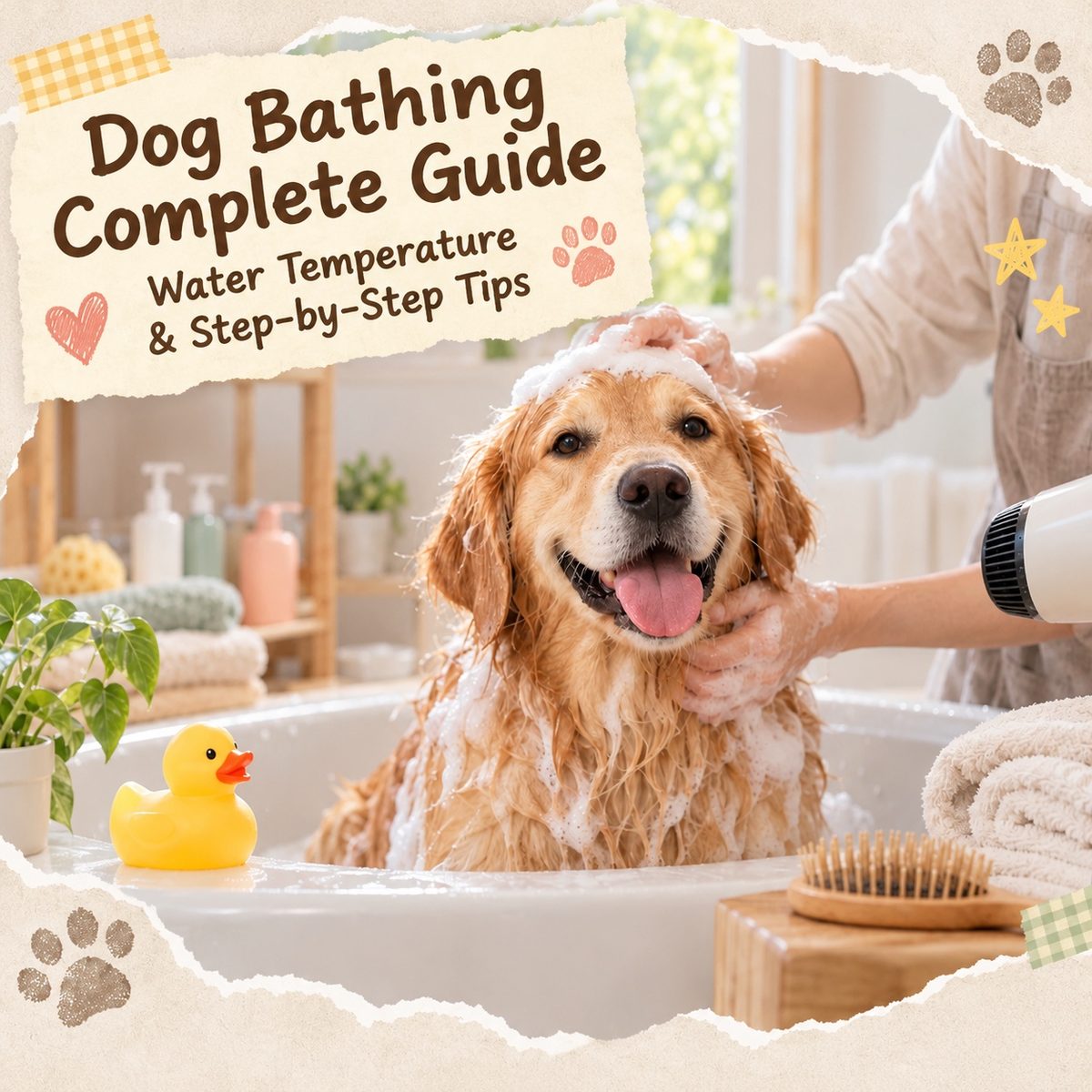
Quick answer: Remember 36°C water, bathe at most once every 10 days, follow the 10-step process from brushing to blow-drying, use pet-specific shampoo throughout, and blow-dry at a 20-30 cm distance in the direction of the coat. Your dog will be comfortable and clean.
Have you ever tried to bathe your dog only for it to turn into a battle, with the bathroom becoming a war zone? 😅 Actually, as long as you master the right steps, bathing can become an intimate time for you and your pet. Today we've put together a super detailed dog bathing guide, covering everything from water temperature control to blow-drying techniques, all in one go!
Before Bathing: 3 Things You Must Have
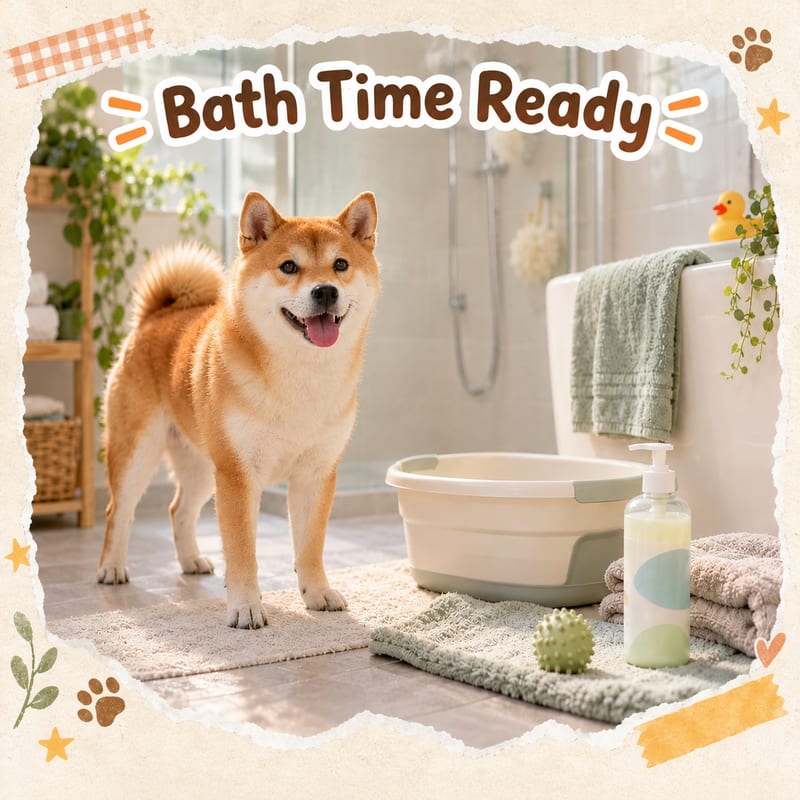
Before bathing your dog, prepare the following items to avoid scrambling mid-way:
- Pet-specific shampoo: Never use human shampoo! Human shampoo is acidic (around pH 5.5), while a dog's skin is close to neutral (around pH 6.5-7.5). Using the wrong product disrupts the skin's acid-base balance, leading to dryness, itching and even inflammation.
- Absorbent towels × 2: one for wiping, one spare.
- Cotton balls: to plug the ears and prevent water from entering, avoiding ear canal infections.
Also, it's a good idea to put a non-slip mat in the bathroom so your dog feels secure and doesn't slip.
Water Temperature: 36-37°C is Ideal
Many owners test the water with their palm, but the skin on the palm is thicker and can't feel subtle temperature differences. The correct way is to test with the inner side of your elbow—it should feel warm but not hot.
In summer, keep the water at around 36°C; in winter, you can raise it slightly to 37-38°C. Water that's too hot irritates the skin and washes away natural oils; water that's too cold makes dogs chilly and reluctant to bathe.
The 10 Major Steps of Dog Bathing
Step 1: Brush the coat first
Always brush before bathing! If the coat is matted, the knots will tighten even more when wet and become impossible to comb out. Use a slicker brush or comb to gently brush the whole body, paying special attention to behind the ears, armpits, belly and other areas prone to matting.
Step 2: Plug the ears
Gently place cotton balls at the entrance of the ear canals to prevent water from entering. Moist ear canals easily breed bacteria and cause ear infections.
Step 3: Start rinsing from the feet
Don't start by pouring water on the head! Start with warm water from the paws and slowly work upwards, letting your dog get used to the water temperature and the feeling of being wet. Suddenly pouring water on the head will scare your dog and make it even more resistant to baths in the future.
Step 4: Apply shampoo
Take an appropriate amount of pet shampoo, lather it in your hands, and apply from the neck downwards. Gently massage the skin so the foam reaches the roots of the coat to clean dirt. Avoid the eye area and mouth/nose.
Step 5: Clean key areas
Pay special attention to these areas:
- Belly: easily gets urine and dirt on it
- Between the paw pads: traps sand and foreign objects
- Around the anus: needs gentle wiping
- Chin: food residue easily remains after meals
Step 6: Rinse thoroughly
This step is the most important! Shampoo residue is a common cause of skin problems. Rinse from the head downwards, making sure every corner is completely free of foam. You can rinse for an extra 2-3 minutes; better to rinse longer than leave residue.
Step 7: Clean the ears
After rinsing the body, remove the ear plugs, use a pet-specific ear drop, squeeze it into the ear canal, gently massage the base of the ear for about 30 seconds, then let your dog shake its head to expel excess liquid, and finally wipe away dirt from the outer ear with a cotton ball. Never use cotton swabs deep in the ear canal, as this can easily damage the eardrum.
Step 8: Initial drying
Wrap your dog in an absorbent towel and gently press to absorb water. Don't rub hard; wet hair is more fragile and vigorous rubbing can cause breakage. Have a spare dry towel ready.
Step 9: Correct blow-drying method
Blow-drying is the step most people get wrong!
- Speed: start with the lowest speed, then gradually increase once your dog is used to the sound.
- Distance: keep a 20-30 cm distance; too close can burn the skin.
- Direction: blow in the direction of the coat, from head to tail, to avoid matting.
- Temperature: use warm air (not hot), keep moving and don't hold it in one spot.
If your dog is really scared of the hair dryer, use a highly absorbent quick-dry towel to rub dry repeatedly, then let it dry naturally in a warm, well-ventilated place. But note that in winter you must dry completely, otherwise your dog can catch a cold.
Step 10: Reward and finish
After drying, remember to reward your dog! Give a favourite treat or praise it for being good, to build a positive bathing experience. Next time your dog won't resist bathing as much.
| Step | Key reminder |
|---|---|
| 1. Brush | Brush before bathing to prevent matting |
| 2. Plug ears | Gently plug ear canals with cotton balls to keep water out |
| 3. Rinse | Start from paws, gradually move up |
| 4. Lather | Pet shampoo, avoid eyes, mouth and nose |
| 5. Focused wash | Belly, between paws, anus, chin |
| 6. Rinse | Rinse thoroughly, no foam residue |
| 7. Clean ears | Ear drops + massage + shake head + wipe outer ear |
| 8. Dry body | Press with absorbent towel, don't rub hard |
| 9. Blow-dry | Low speed, 20-30 cm, with the coat, warm air |
| 10. Reward | Treats + praise, build a positive experience |
Bathing Frequency: At Most Once Every 10 Days
Many owners think dogs need frequent baths to be clean, but bathing too often destroys the natural oil barrier on the skin, making it dry and itchy. Generally, it's recommended to bathe at most once every 10 days; if your dog isn't too dirty, once every 2-3 weeks is fine.
In winter, you can extend to once every 14-21 days. On a daily basis, you can wipe the body with a damp towel or use a dry shampoo spray for simple cleaning.
Special Situations
Puppy's first bath
Puppies are more sensitive to water and sounds. It's best to start with a basin of warm water and let them get used to it slowly. You can try wiping with a damp towel first, and once trust is built, then start rinsing. Keep bath time as short as possible, ideally within 5 minutes.
Just after vaccination
Don't bathe your dog within 1-2 weeks after vaccination, because immunity is lower during this period and bathing can easily lead to chills or infection.
Skin wounds
If your dog has skin wounds or has just had surgery, wait until the wounds are completely healed before bathing. In the meantime, you can wipe other parts of the body with a damp towel.
Practical Tips for Hong Kong's Small Flats: What If the Bathroom Is Small and There's No Bathtub?
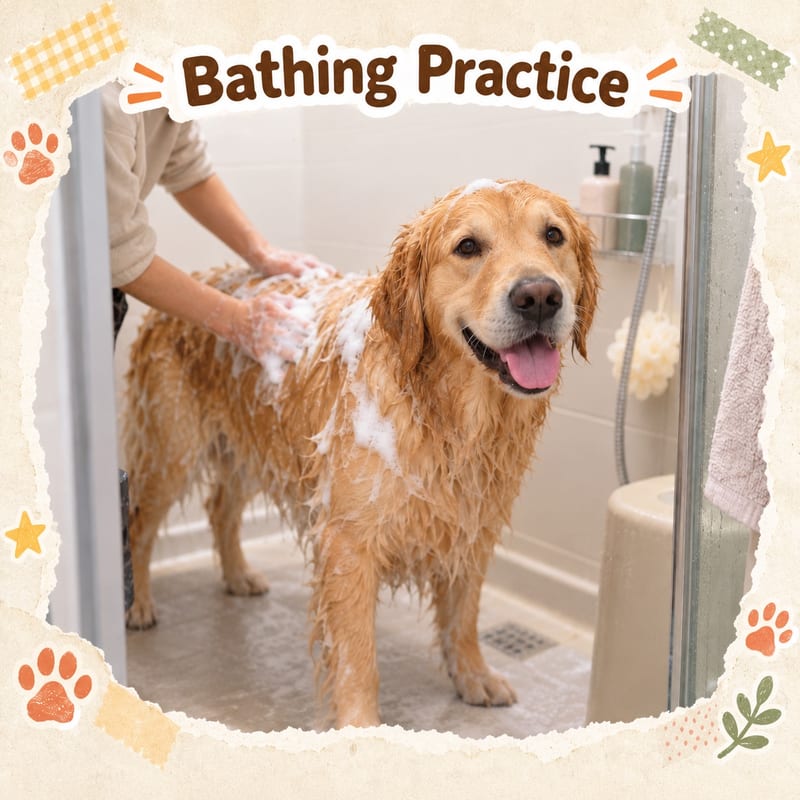
Hong Kong bathrooms are generally small and many homes don't have a bathtub. Actually, a shower stall works just fine.
Tool placement: Put a non-slip mat in the shower stall to prevent slipping and reduce noise. Detach the shower head and use the hose to rinse directly for more flexible water control. Place shampoo and towels within reach outside the stall to avoid bending over and letting your dog escape.
Water temperature test: The bathroom water heater is usually set to 40-42°C. After turning on the water, let it run for 10 seconds, then test with the inner side of your elbow; it should feel warm but not hot. If you have an instant heater, remember to reduce the flow so the temperature stabilises.
Blow-drying space: Keep the exhaust fan on for ventilation. If your dog is scared of the hair dryer, you can wrap it in a quick-dry towel and carry it to the living room to blow-dry from a distance with a heater. In winter, turn on the bathroom heat lamp and leave the shower door slightly ajar so your dog can see you and feel less anxious.
Clean-up tips: After washing the dog, the floor is slippery. Use a squeegee to push the water dry immediately to prevent family members from slipping. For long-haired dogs, you can stick tape around the shower stall beforehand so that flying hair during blow-drying sticks to the tape, making clean-up easier.
Further Reading
📌 Key Summary
- ✅ Water temperature 36-37°C, test with the inner side of your elbow for accuracy
- ✅ Brush before bathing to prevent tighter matting when wet
- ✅ Blow-dry with low speed first then higher, 20-30 cm distance, in the direction of the coat
- ❌ Don't use human shampoo; the wrong pH can cause dry, itchy skin
- ❌ Don't pour water directly on the head; start from the paws to let your dog adjust
- ❌ Don't bathe within 1-2 weeks after vaccination; risk of chills and infection
This article is compiled from breed consensus and clinical care guidelines; individual dogs vary greatly. For health issues, please consult a registered veterinarian first.