
🤖 AI Summary
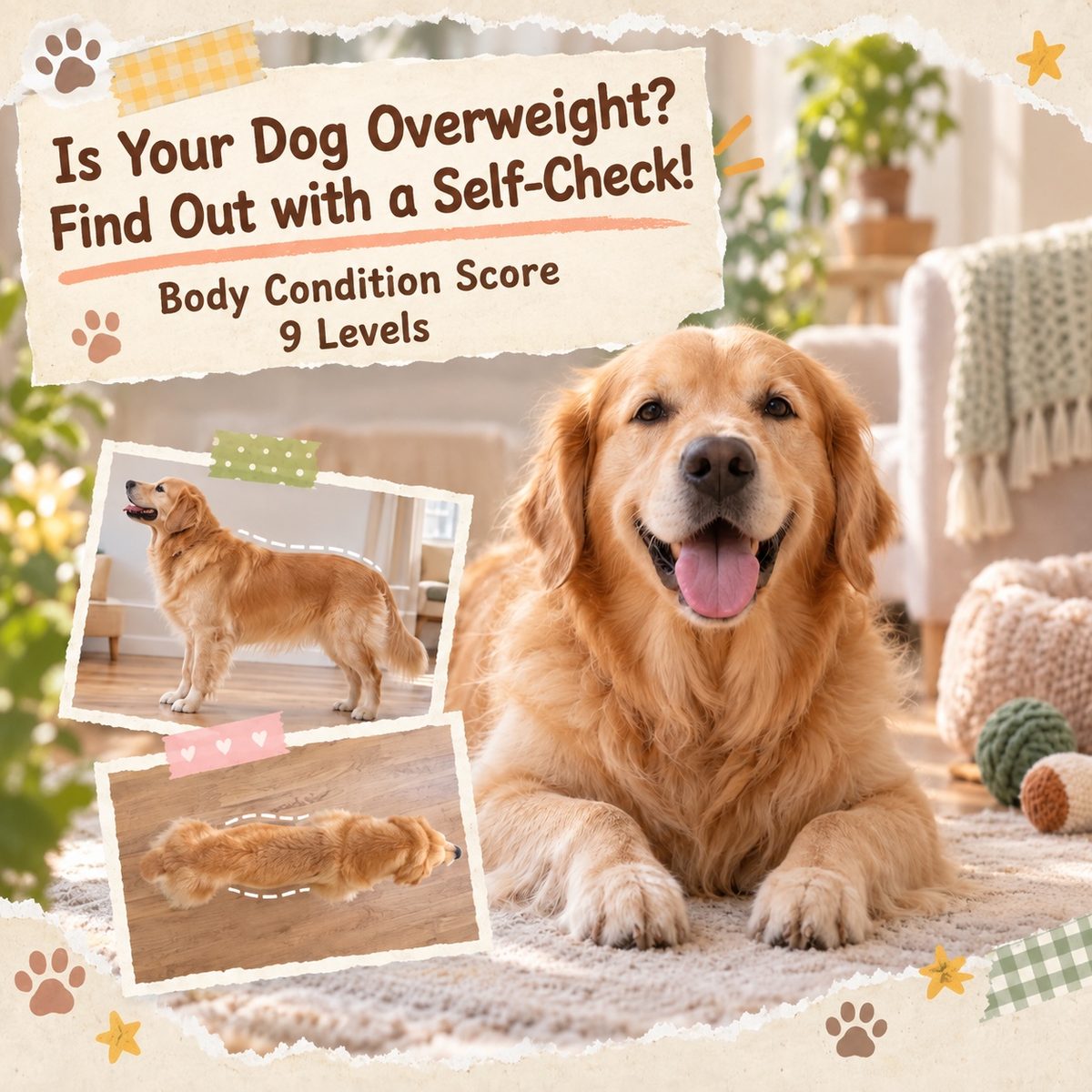
Is your dog overweight? Don't rely on looks alone—use the BCS (Body Condition Score) self-check chart. BCS is an internationally recognised dog body condition scoring system—9 levels: 1 is thinnest + 9 is fattest. Ideal body condition is level 4 to 5—you can feel the ribs + there is a waist + the abdomen is tucked up. If your dog's BCS is level 6 to 9, they are overweight + obese—they need to lose weight. Weight loss methods: portion control + scheduled, measured meals + more exercise + choose low-calorie dog food. No physical punishment—physical punishment makes dogs fearful + distrustful of the owner.
• BCS is an internationally recognised dog body condition scoring system—9 levels
• Ideal body condition is level 4 to 5—you can feel the ribs + there is a waist + the abdomen is tucked up
• Weight loss methods: portion control + scheduled, measured meals + more exercise + choose low-calorie dog food
Quick answer: Is your dog overweight? Don't rely on looks alone—use the BCS (Body Condition Score) self-check chart. BCS is an internationally recognised dog body condition scoring system—9 levels: 1 is thinnest + 9 is fattest. Ideal body condition is level 4 to 5—you can feel the ribs + there is a waist + the abdomen is tucked up. If your dog's BCS is level 6 to 9, they are overweight + obese—they need to lose weight. Weight loss methods: portion control + scheduled, measured meals + more exercise + choose low-calorie dog food. No physical punishment—physical punishment makes dogs fearful + distrustful of the owner.
Table of Contents
-
What is BCS? BCS Body Condition Score Self-Check Chart
-
BCS 9-Level Scoring Criteria
-
How to Self-Check Your Dog's BCS
-
Risks of Dog Obesity
-
Dog Weight Loss Methods
-
FAQ
What is BCS? BCS Body Condition Score Self-Check Chart
BCS (Body Condition Score) is an internationally recognised dog body condition scoring system—9 levels: 1 is thinnest + 9 is fattest.
History of BCS:
- BCS was developed by Purina Research in the US—it is an internationally recognised dog body condition scoring system
- BCS has 9 levels—1 is thinnest + 9 is fattest
- Ideal body condition is level 4 to 5—you can feel the ribs + there is a waist + the abdomen is tucked up
Benefits of BCS:
- Objective—don't rely on looks alone
- Scientific—it is an internationally recognised scoring system
- Easy to use—you can self-check at home
BCS 9-Level Scoring Criteria:
| Level | Body Condition | Features |
|---|---|---|
| Level 1 | Extremely thin | Ribs + spine + pelvis clearly protruding + no fat |
| Level 2 | Very thin | Ribs + spine + pelvis easily felt + very little fat |
| Level 3 | Thin | Ribs easily felt + a little fat + has a waist |
| Level 4 | Ideal | Ribs can be felt + has a waist + abdomen tucked up |
| Level 5 | Ideal | Ribs can be felt + has a waist + abdomen tucked up |
| Level 6 | Overweight | Ribs hard to feel + slight waist + abdomen not tucked up |
| Level 7 | Obese | Ribs cannot be felt + no waist + abdomen protruding |
| Level 8 | Very obese | Ribs cannot be felt + no waist + abdomen clearly protruding |
| Level 9 | Extremely obese | Ribs cannot be felt + no waist + abdomen severely protruding |

BCS 9-Level Scoring Criteria
BCS 9-Level Scoring Criteria:
Level 1: Extremely thin
- Ribs + spine + pelvis clearly protruding
- No fat—bones visible
- Needs to gain weight—take to veterinarian for check-up
Level 2: Very thin
- Ribs + spine + pelvis easily felt
- Very little fat—bones can be felt
- Needs to gain weight—take to veterinarian for check-up
Level 3: Thin
- Ribs easily felt
- A little fat—has a waist
- Needs to gain weight—increase portions
Level 4: Ideal
- Ribs can be felt
- Has a waist + abdomen tucked up
- Ideal body condition—keep it up
Level 5: Ideal
- Ribs can be felt
- Has a waist + abdomen tucked up
- Ideal body condition—keep it up
Level 6: Overweight
- Ribs hard to feel
- Slight waist + abdomen not tucked up
- Needs to lose weight—portion control
Level 7: Obese
- Ribs cannot be felt
- No waist + abdomen protruding
- Needs to lose weight—portion control + more exercise
Level 8: Very obese
- Ribs cannot be felt
- No waist + abdomen clearly protruding
- Needs to lose weight—take to veterinarian for check-up
Level 9: Extremely obese
- Ribs cannot be felt
- No waist + abdomen severely protruding
- Needs to lose weight—take to veterinarian for check-up
How to Self-Check Your Dog's BCS
How to self-check your dog's BCS:
| Step | Action | Notes |
|---|---|---|
| Step 1: Feel the ribs | Feel the dog's ribs with your hand—can you feel them? | If ribs can be felt + a little fat = level 4 to 5 |
| Step 2: Look at the waist | Look from above—does the dog have a waist? | If there is a waist = level 4 to 5 |
| Step 3: Look at the abdomen | Look from the side—is the dog's abdomen tucked up? | If abdomen is tucked up = level 4 to 5 |
| Step 4: Score | Score based on the above three steps | 1 is thinnest + 9 is fattest |
Precautions for self-checking BCS:
- Self-check when the dog is relaxed—not right after a meal
- Touch gently—don't press hard
- Observe the dog's overall body condition—don't focus on just one part
Risks of Dog Obesity
Risks of dog obesity:
| Risk | Description | Impact |
|---|---|---|
| Joint problems | Obesity increases joint burden | Arthritis + hip dysplasia |
| Heart disease | Obesity increases heart burden | Heart disease + hypertension |
| Diabetes | Obesity increases diabetes risk | Diabetes + insulin resistance |
| Breathing problems | Obesity increases breathing burden | Difficulty breathing + tracheal collapse |
| Shortened lifespan | Obesity shortens lifespan | Shortens lifespan by 2 to 3 years |
Hong Kong veterinary cost reference:
- Arthritis treatment: HKD 500 to 2,000 per visit
- Heart disease medication: HKD 500 to 1,500 per month
- Diabetes medication: HKD 500 to 1,000 per month
- Joint supplements: HKD 300 to 500 per month
Dog Weight Loss Methods
Dog weight loss methods:
| Method | Action | Notes |
|---|---|---|
| Portion control | Feed according to weight + activity level—no free feeding | Use a kitchen scale + follow the suggested portion on the dog food packaging |
| Scheduled, measured meals | 2 meals per day—no free feeding | Dogs will eat non-stop |
| Choose low-calorie dog food | Choose high-fibre + low-fat dog food | Check the label: fat should not exceed 15% |
| Treat control | Treats should not exceed 10% of daily calories | Replace high-calorie treats with vegetables (carrots, cucumber) |
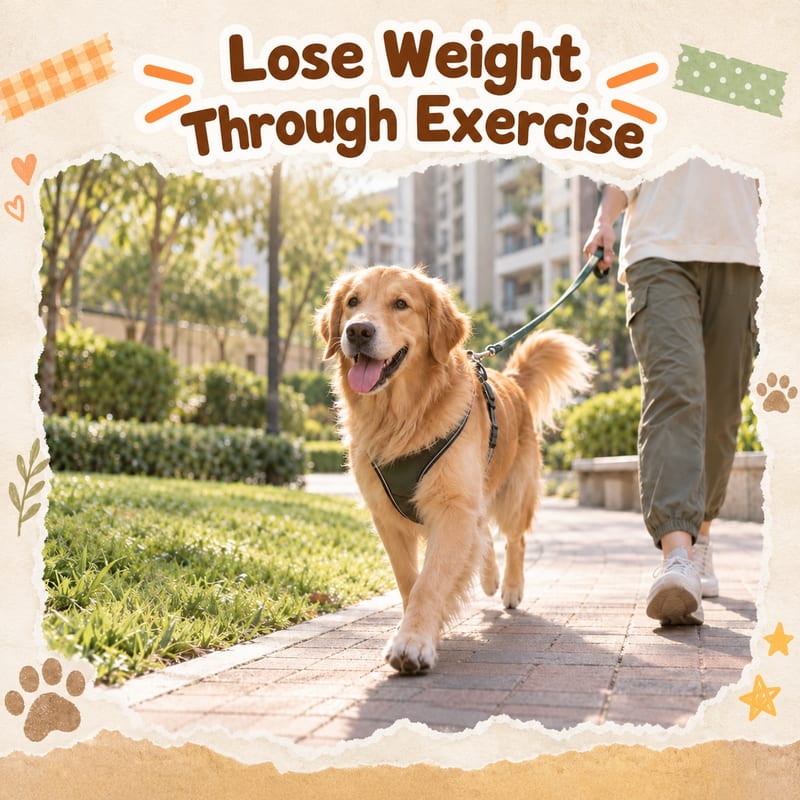
| Increase exercise | At least 30 minutes to 1 hour of exercise daily | Walking + swimming + playing ball |
| Regular weighing | Weigh monthly—record weight changes | If weight drops, keep it up |
Precautions for dog weight loss:
- Don't rush—dog weight loss should be gradual
- No physical punishment—physical punishment makes dogs fearful + distrustful of the owner
- Be patient + persistent—dog weight loss takes time
Dog weight loss goals:
- Lose 1 to 2% of body weight per week—do not exceed 2%
- Target BCS is level 4 to 5—you can feel the ribs + there is a waist + the abdomen is tucked up
Hong Kong Small Flat Practical Guide: A Dog Weight Loss Schedule That Works Even in a Small Unit
Hong Kong homes are small, but weight loss is still doable! Below is a seven-day cycle schedule that fully uses the principles mentioned in the article: "portion control + scheduled, measured meals + more exercise". No extra equipment needed—it works even in a 300 sq ft unit.
Daily Schedule
- 07:30 After waking up, first feel the ribs + look at the waistline. A 30-second BCS quick check to remind yourself of today's goal.
- 08:00 Breakfast: accurately measure dog food with a kitchen scale, fat ≤15% formula, start with 10% less than the packaging suggestion. Remove the bowl after eating—no free feeding.
- 08:15 Indoor warm-up: slow walking back and forth in the hallway for 3 minutes + sit-down-stand on the spot 10 times as a warm-up.
- 12:30 Feel the ribs again before lunch—make it a habit.
- 19:00 Dinner: same portion as breakfast. Remove the bowl immediately after eating.
- 19:30 Main exercise time:
- Fetch in the hallway for 10 minutes (use a soft sponge ball, not noisy for neighbours)
- Stair climbing 5 floors × 2 rounds (owner runs along, take the lift back home)
- If it rains, switch to "treat-finding game": hide carrot pieces in 5 spots in the living room, encourage the dog to find them with their nose, burning calories.
- 22:00 Weigh-in before bed: record weight, review the trend once a week.
Weekend Extra
- Saturday morning: take to a nearby pet park (e.g., Quarry Bay, Lai Chi Kok) for a 30-minute walk, get some sun and socialise.
- Sunday: join the estate clubhouse pool "dog swimming session" (if available); swimming for 15 minutes burns as much as running for 1 hour.
Shopping List (Available at Hong Kong Supermarkets/Pet Shops)
- Low-calorie dog food: fat ≤15%, fibre ≥8%
- Kitchen electronic scale: around a hundred dollars, available at ParknShop/Wellcome
- Carrots, cucumber: replace high-calorie treats
- Soft sponge ball: under $20 at pet shops
When to See a Doctor?
- Weight has not dropped at all for two consecutive weeks
- BCS remains level 8–9, abdomen clearly sagging
- Panting, limping, or sudden loss of appetite
Just follow the above schedule, and even the smallest Hong Kong flat can help your dog healthily slim down to a nice figure!
Further Reading
📌 Key Summary
- ✅ Level 4–5 is ideal: ribs can be felt + has a waist + abdomen tucked up
- ✅ Weight loss relies on portion control, scheduled feeding, low-calorie food, and more exercise
- ❌ Physical punishment only makes dogs fearful, zero help for weight loss
- ❌ Don't self-check right after a full meal—the data will be off
- ✅ Weigh monthly + record; lose at most 1–2% of body weight per week