
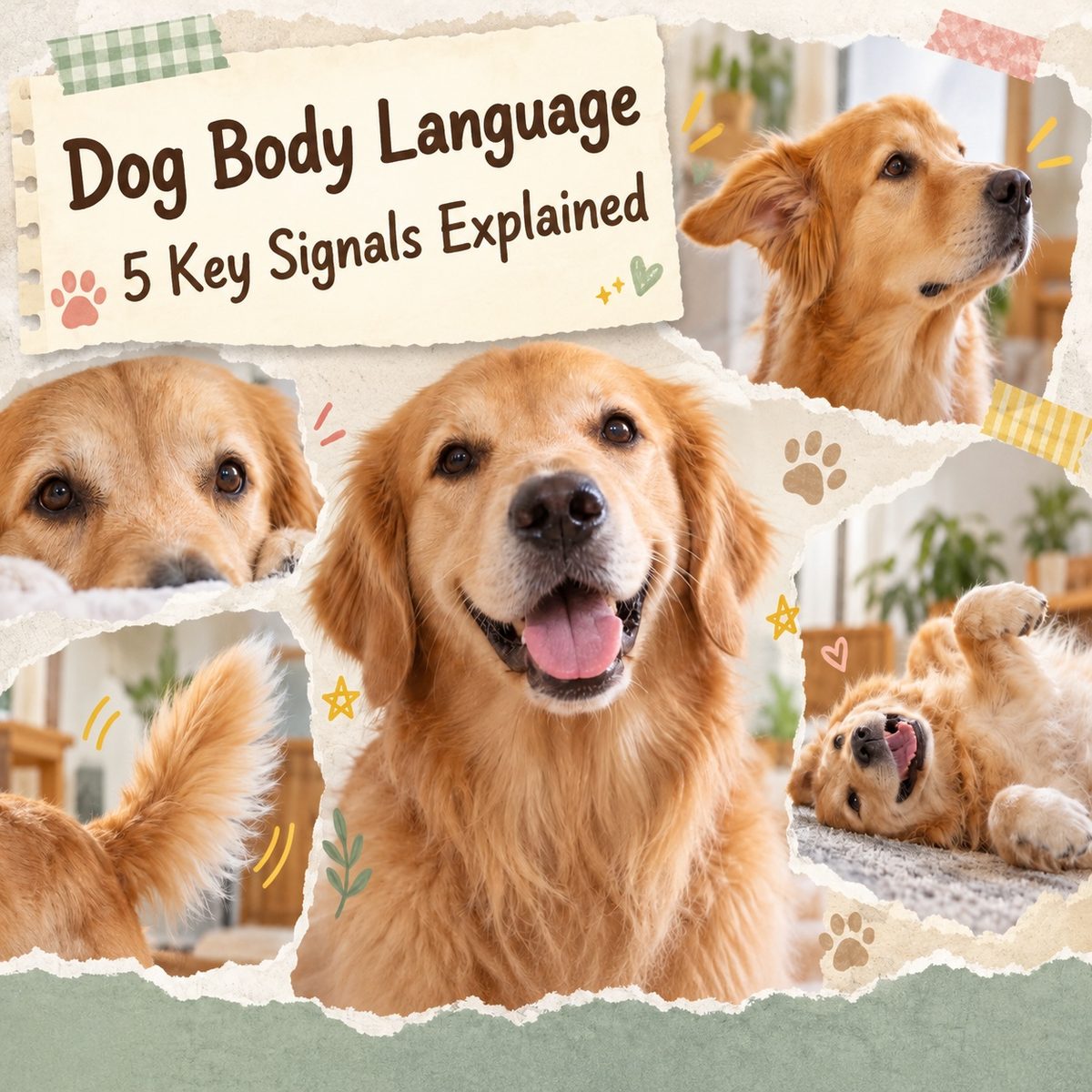
Quick answer: Dogs communicate their mood through five key signals: ears, tail, eyes, facial expressions, and overall posture. Ears upright = alert, pinned back = afraid; tail high and wagging = excited, tucked = fearful; avoiding eye contact = submissive, staring = challenging; raised eyebrows = friendly, baring teeth = threatening; front legs down = play invitation, curled up = panic.
Why learn dog body language?
Dogs can't speak, but they 'talk' with their bodies every day. According to animal behaviour research, over 70% of a dog's communication relies on body language, including ear position, tail wagging, eye direction, facial muscles, and overall posture. Understanding these signals not only strengthens your bond with your dog but also helps you spot discomfort or stress early and prevent accidental bites.
Dog body language is actually more intuitive than human language—they don't 'hide' emotions; all feelings are faithfully reflected in their body movements. As long as you observe carefully, you can easily read your dog's mind.
 5 key signals: read your dog's mood
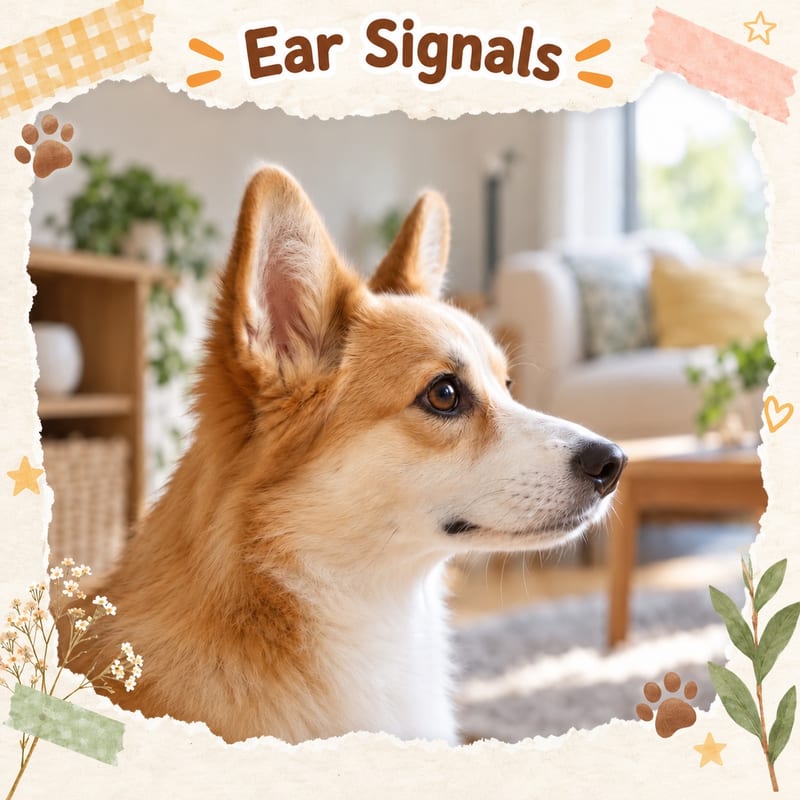
Signal 1: Ears—the emotional antenna
A dog's ears are very flexible and can turn with sounds, and ear position is an important indicator of mood:
Both ears upright and erect: alert, focused, or curious, fully concentrating on the environment
Both ears pinned back flat: afraid, submissive, or nervous—your dog is feeling uneasy
One ear forward, one back: confused or hesitant, 'in two minds'
Ears naturally relaxed: calm and secure—the most comfortable state for a dog
Note that ear shapes vary by breed (drop-eared, prick-eared, semi-drop). Interpretation should consider breed characteristics. For example, a French Bulldog's ears, even when 'erect', won't be as pronounced as a German Shepherd's.
Signal 2: Tail—the emotional barometer
The tail is one of the most obvious tools for expressing emotion, but many people only know 'wagging tail = happy'. In fact, the way a tail wags has rich meanings:
Held high and wagging fast: extremely excited, happy—typical when greeting you home
Slow, stiff wagging: alert or assessing the situation, possibly preparing to attack
Tail hanging down: danger or unease—pay attention to the surroundings
Tail tucked between the legs: extreme fear or submission—usually when defeated or startled
Tail extended straight: typical posture when a hound catches a scent
Interestingly, research shows dogs are more sensitive to your tone than your words. Even if you say 'bad dog' in a friendly tone, they may wag their tail happily; conversely, saying 'good dog' in a harsh tone may make them tuck their tail.
Signal 3: Eyes—the window to the soul
Changes in a dog's eyes are important clues to their inner state:
Bright, shining eyes: happy, full of energy
Avoiding eye contact: submissive or avoiding conflict—this is how dogs say 'I'm not a threat'
Staring directly: a challenge in the dog world; constricted pupils indicate dominant aggression, while showing the whites of the eyes indicates fear-based aggression
Raised eyelids, slight head tilt: surprised or listening intently to you
Important reminder: Do not stare into a dog's eyes for long periods—to dogs this is a challenge signal and may trigger aggression. When meeting a strange dog, make brief eye contact with a soft gaze and then naturally look away.
Signal 4: Facial expressions—the secret of the 'raised eyebrow'
Although dogs don't have real eyebrows, muscle changes on their forehead can express a range of emotions:
Eyebrows raised: surprise, joy, and friendliness
Eyebrows furrowed: displeased or confused
Eyebrows drawn down and together: focused or trying to solve a problem
Inner eyebrows pushed up, outer eyebrows drooping: afraid and submissive
Lips are also important indicators: when a dog curls its lips back and shows its canine teeth, it indicates aggressive intent; but some dogs also bare teeth when very excited, so judge in combination with other signals. A wrinkled nose, bared teeth, and raised hackles are clear threat signals meaning 'stay away'.
Signal 5: Posture—the overall expression
A dog's full-body posture directly reflects its current state:
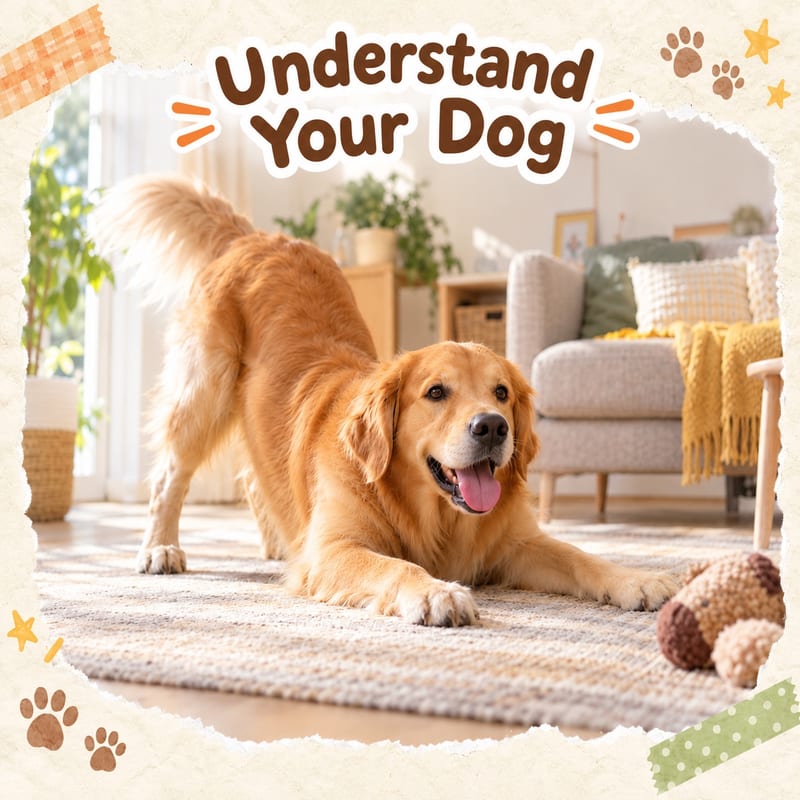
Front legs down, rear up, tail wagging: the classic 'play invitation' posture, meaning 'come play with me!'
Lying relaxed, front paws spread, mouth open: having fun, happy in body and mind
Curled up in a ball, tail tucked tight: extremely afraid or cold—needs your comfort
Body stiff, hair standing up: highly alert, may attack at any moment
Turning away but glancing at you: 'complaining' that you're ignoring them
Frequently Asked Questions (FAQ)
Q: Does a wagging tail always mean a dog is happy?
A: Not necessarily. The speed, range, and height of the wag all have different meanings. Fast, wide wags usually indicate excitement, but slow, stiff wags may signal alertness. It's best to judge together with ear position, eyes, and overall posture.
Q: Why shouldn't you look a strange dog straight in the eyes?
A: In the dog world, direct eye contact represents a challenge and threat. A strange dog may interpret your stare as an attack signal, triggering defensive or dominant aggression. The correct approach is to make brief eye contact with a soft gaze and then naturally look away, helping the dog feel safe.
Q: Does a tucked tail always mean fear?
A: A tucked tail mainly indicates fear or submission, but it can also be a sign of physical discomfort. If your dog frequently tucks their tail along with loss of appetite and low energy, take them to a veterinarian as soon as possible.
Q: Do different breeds have different body language?
A: The basic meanings of body language are the same, but the way they are expressed varies by breed. For example, drop-eared dogs (like Labradors) cannot raise their ears as obviously as prick-eared dogs (like Shiba Inus), so you need to judge based on breed characteristics. Tail shape and length also affect visibility.
Q: How can I train myself to read my dog's body language?
A: The best way is to spend 5-10 minutes each day observing your dog's reactions in different situations and noting changes in their ears, tail, eyes, and posture. Combine this with treats and positive reinforcement—when you correctly respond to your dog's needs, they will communicate with clearer signals.
 PetChill's Reminder
Reading your dog's body language is a must for every dog owner. Remember, every movement has meaning. Observe more, learn more, and you'll become your dog's best 'interpreter'. Next time you see a change in your dog's ears, tail, or eyes, pause and think about what they're trying to tell you—your dog will surely appreciate the effort!
Hong Kong small-flat practical tips: see the 5 signals clearly even in a small unit
Living small in Hong Kong doesn't mean giving up observation. Here are practical tips for units under 300 sq ft:
1. Set up an 'observation triangle'
- Place a low stool at the end of the corridor. When you sit down, your dog's ears and tail height are at eye level as they walk past, making it easy to see ear movements.
- Leave 1 metre of space next to the sofa so when your dog does the 'play invitation' with front down and rear up, they won't bump into the coffee table.
2. Use your phone's slow motion
- Use 240fps slow motion to film the 3 seconds your dog greets you at the door, then review frame by frame to see tail wag speed and range, distinguishing 'truly happy' from 'forced smile'.
- Before turning off the lights at night, use a torch with side lighting to film your dog's eyes. Dilated pupils mean panic; constricted pupils may indicate alertness.
3. MTR/market speed-reading method
- Before going out, observe in the lift lobby: ears pinned back + tail slightly down = already nervous. Do a 30-second 'sit and wait for treat' to calm them before boarding.
- When walking through the market, if your dog suddenly wrinkles its nose or raises its hackles, immediately turn into a quiet alley to avoid a head-on conflict.
4. When to stop and see a vet
- Not eating for two consecutive meals + tail tucked + hiding in crate: possible gastrointestinal discomfort—go to a nearby 24-hour emergency vet.
- Holding up one leg + licking the same spot: check the paw for glass fragments. Hong Kong streets have lots of construction debris—don't delay.
Remember, in Hong Kong's small spaces, your dog's body language is actually easier to catch. Just spend 5 minutes a day observing from a fixed spot, and you too can become a dog language expert.
| Signal area | Relaxed/happy | Nervous/afraid | Aggressive/alert |
|---|---|---|---|
| Ears | Naturally forward or to the side | Pinned back flat | Erect and tilted forward |
| Tail | Level, gentle wag | Tucked between legs | Held high, stiff wag |
| Eyes | Soft, blinking | Avoiding contact | Staring, showing whites |
| Face | Eyebrows raised, mouth relaxed | Inner brows down, nose wrinkled | Teeth bared, nose wrinkled, hackles up |
| Posture | Front legs down, rear up | Curled up, head lowered | Body stiff, hackles raised |
Further reading
📌 Key takeaways
- ✅ Observe combinations of the five signals—don't judge mood by tail wagging alone
- ✅ Drop-eared and prick-eared dogs express differently; adjust interpretation by breed
- ✅ Spend 5–10 minutes daily recording your dog's reactions to strengthen communication
- ❌ Avoid prolonged direct eye contact with strange dogs—it can be seen as provocation
- ❌ Don't assume a tucked tail always means fear—it could be a sign of physical discomfort
 K9 Natural full guide →
 Feline Natural full guide →
 Fuji One full guide →

