
🤖 AI Summary
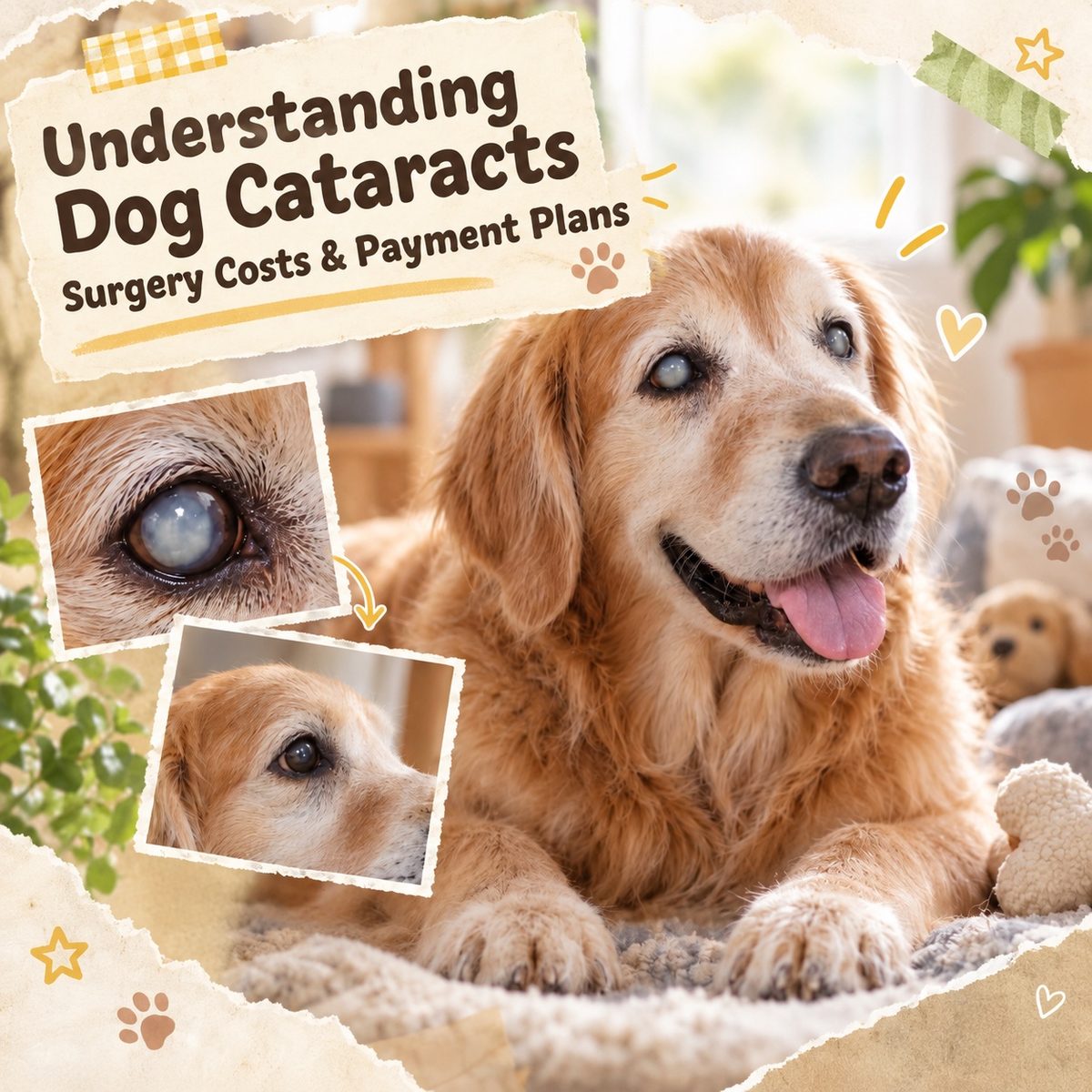
Dogs are one of the species most prone to cataracts worldwide: lens protein degenerates and becomes opaque, it's irreversible and keeps worsening, and surgery (phacoemulsification + artificial lens) is the only way to restore vision. Many owners misunderstand: a blue, hazy pupil in an old dog is often just 'nuclear sclerosis' — normal ageing, no treatment needed. Left untreated for too long, cataracts cause lens-induced uveitis and glaucoma, which hurt more than they affect vision.
• Staging: incipient → immature (golden window for surgery) → mature → hypermature
• Hong Kong surgery cost: about HK$20,000 to 35,000 per eye (for reference only)
• Red line: eye suddenly turns white + red and painful = immediate ophthalmology emergency
Quick answer: Dog cataracts are lens opacity (causes include heredity/diabetes/ageing/uveitis), irreversible and progressive; the key distinction: nuclear sclerosis is an ageing change that doesn't affect vision, while cataracts keep worsening and lead to blindness. Four stages: incipient → immature (best time for surgery) → mature → hypermature (high complication risk). Diagnosis relies on slit-lamp examination + electroretinogram (ERG); surgery (phacoemulsification + artificial lens) is the only way to restore vision, about HK$20,000 to 35,000 per eye in Hong Kong (for reference only). Diabetic dogs must have regular eye checks.
Contents
-
What is a cataract? How is it different from nuclear sclerosis?
-
Causes: heredity is the main one
-
The four stages + the golden window for surgery
-
Symptom self-check
-
Diagnosis: why so many pre-op tests?
-
Treatment: the truth about medication vs surgery
-
Hong Kong surgery costs + process
-
When to see a vet + red lines
-
Post-op care + prevention
-
FAQ
What is a cataract? How is it different from nuclear sclerosis?
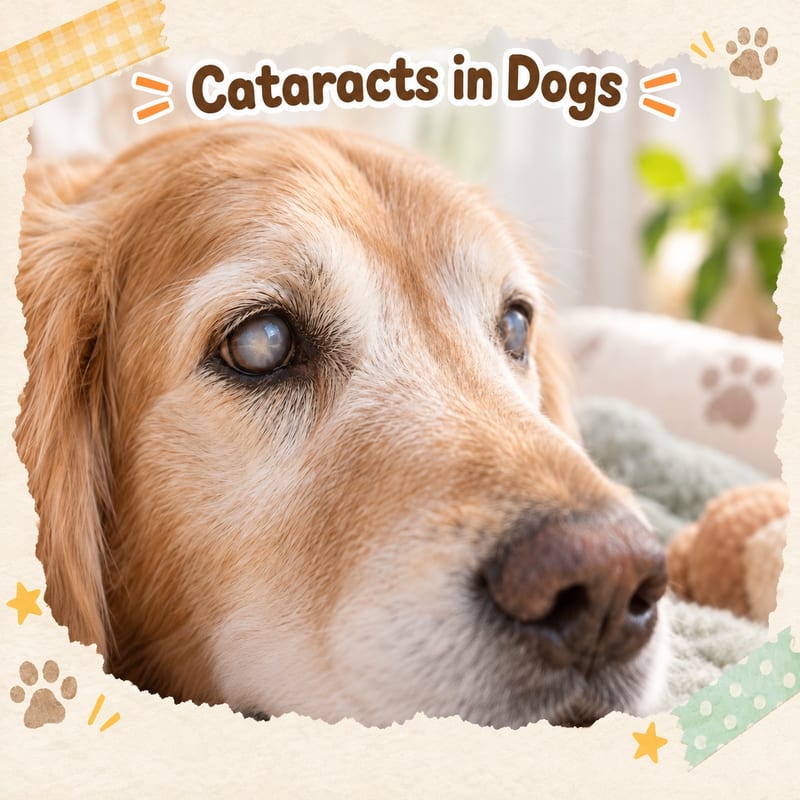
A cataract is when the lens of the eye — the normally transparent 'lens' — undergoes protein degeneration and becomes opaque, so light can't reach the retina, and vision declines until blindness.
The lesson most owners get confused: nuclear sclerosis is not a cataract:
| Cataract | Nuclear sclerosis | |
|---|---|---|
| What it is | Lens protein degeneration (disease) | Normal compaction of lens fibres (ageing) |
| Appearance | White/blue-white/pearly opacity, can cover a large part of the pupil | Faint blue-grey haze in the centre |
| Vision | Affected: blurring → blindness progression | Basically unaffected (focusing ability slightly reduced) |
| Progression | Keeps worsening | Very slow, stable |
| Needs treatment | Ophthalmology assessment + possibly surgery | No treatment needed |
Simply put: a faint blue haze deep in an old dog's pupil = mostly nuclear sclerosis, no need to panic; solid white opacity/getting whiter = cataract direction, needs examination. Ultimately the vet's slit-lamp examination decides.
Causes: heredity is the main one
- Hereditary (most common) — many breeds are predisposed (Poodle, Schnauzer, Cocker Spaniel, Golden Retriever, Labrador, Husky, etc.), and onset can be very early (before 6 years old); 'cataracts are not just an old-dog thing'
- Diabetes (the most important preventable cause) — high blood sugar causes abnormal lens metabolism, and the vast majority of diabetic dogs develop cataracts within months to a year; controlling blood sugar + regular eye checks is key
- Senile — degenerative changes over 10 years old
- Secondary — after uveitis, lens dislocation, intraocular inflammation
- Trauma/toxic/nutritional — relatively few
- Congenital — in puppies at birth or within weeks; some accompanied by other eye defects
The four stages + the golden window for surgery
| Stage | Lens state | Vision impact | Significance |
|---|---|---|---|
| Incipient | Small area of opacity | Very little | Hard to see with the naked eye, only found on eye examination |
| Immature | Partial opacity, still has reflection | Moderate: blurring | Golden window for surgery — highest success rate |
| Mature | Fully opaque, no reflection | Greatly impaired/blind | Still operable, higher risk |
| Hypermature | Lens shrinks/liquefies | Blind | Many complications: uveitis/glaucoma/lens dissolution |
Why not delay? Cataracts aren't 'wait until fully white before operating' — the more mature, the higher the risk of intraocular inflammation, lens-induced uveitis and glaucoma, and surgical difficulty and risk rise together while success rate falls. The 'immature stage' is the sweet spot.
Symptom self-check
Eye appearance:
- White/blue-white opacity in the centre of the pupil — starting as a small dot and expanding
- A grey-white 'cooked egg white' look deep in the eye
Behavioural changes (appear earlier):
- More cautious at night, unwilling to walk in dark areas
- Bumping into furniture/door frames, hesitant on stairs
- Can't catch thrown toys
- Easily startled (can't hear or see well, low sense of security)
Warning signs (towards complications):
- Red eye, squinting, tearing, pawing at the eye — possible inflammation/glaucoma
- Eyeball bulging, corneal clouding — signs of acute glaucoma
Diagnosis: why so many pre-op tests?
Cataract surgery isn't 'just do it' — pre-op assessment determines whether the eye 'can be saved':
-
Slit-lamp examination — magnified view of the degree/location/stage of lens opacity
-
Electroretinogram (ERG) — tests retinal function: an eye with retinal degeneration won't see even after surgery (a clear lens is useless)
-
Eye pressure measurement — rules out glaucoma
-
Ultrasound (B-scan) — for eyes too opaque to see through, checks for retinal detachment
-
Systemic assessment — anaesthetic risk (blood tests); control blood sugar first in diabetics
Where the results lead: good retinal function → surgery restores vision; damaged retina → surgery is meaningless (focus on managing inflammation/pain). That's why 'pre-op tests' can't be skipped.
Treatment: the truth about medication vs surgery
- Surgery is the only way to restore vision: phacoemulsification (small incision, breaking up and removing the opaque lens) + implantation of an artificial lens (IOL) — the same principle as human cataract surgery
- Eye drops (in some cases) — there is currently no evidence they can 'dissolve' a cataract; certain drops are used to slow progression/control inflammation, but cannot replace surgery
- Option of not operating: close monitoring (in incipient/immature with no complications) + controlling secondary inflammation — but if inflammation/glaucoma develops during this process, the eye's pain is worse than the vision loss
Surgery outcome data: in the hands of an experienced veterinary ophthalmologist, the success rate is about 80 to 90% — most regain good vision post-op; risks include post-op inflammation, posterior capsular opacity of the artificial lens, retinal detachment (a minority), and glaucoma.
Hong Kong surgery costs + process
Overview of cataract surgery costs in Hong Kong (for reference only; actual quotes from the ophthalmology veterinarian prevail):
| Item | Approximate range (HKD) |
|---|---|
| Full pre-op eye examination (slit lamp/ERG/eye pressure/ultrasound) | 3,000 to 8,000 |
| Cataract surgery (per eye, including anaesthesia + artificial lens) | 20,000 to 35,000 |
| Post-op medication + follow-up (several weeks' course) | 1,500 to 4,000 |
| Both eyes full course (exams + two surgeries + medication) | 45,000 to 80,000+ |
Prices vary with the clinic/animal hospital level, anaesthetic method and type of artificial lens; the above is for reference only.
Pathway of care: general vet suspects → referral to an ophthalmology veterinarian (Hong Kong has specialist eye centres) → pre-op assessment → schedule surgery → intensive post-op follow-up. Cataract surgery is a specialist procedure; choose a team with specialist eye equipment and experience.
When to see a vet + red lines
Red/green guide:
| Situation | Verdict | Action |
|---|---|---|
| Old dog with faint blue haze in the centre of the pupil, normal activity | 🟢 Mostly nuclear sclerosis | Confirm at a routine check-up |
| White dot/opacity in the pupil gradually enlarging | 🟡 Check soon | Ophthalmology assessment for staging |
| Cautious at night/bumping into things/can't catch toys | 🟡 Check soon | Vision assessment |
| Diagnosed with diabetes | 🟡 Check proactively | Ophthalmology baseline + regular follow-up |
| Red eye + squinting + tearing + pawing at the eye | 🔴 See a vet soon | Inflammation/glaucoma, pain management |
| Eye suddenly fully white + eyeball swollen and red + extremely restless | 🔴 Critical | Acute glaucoma/lens dislocation, same-night emergency |
Iron rule: a cataract eye that suddenly turns red and painful = it's no longer about 'white or not', it's an emergency of eye pressure and inflammation.
Post-op care + prevention
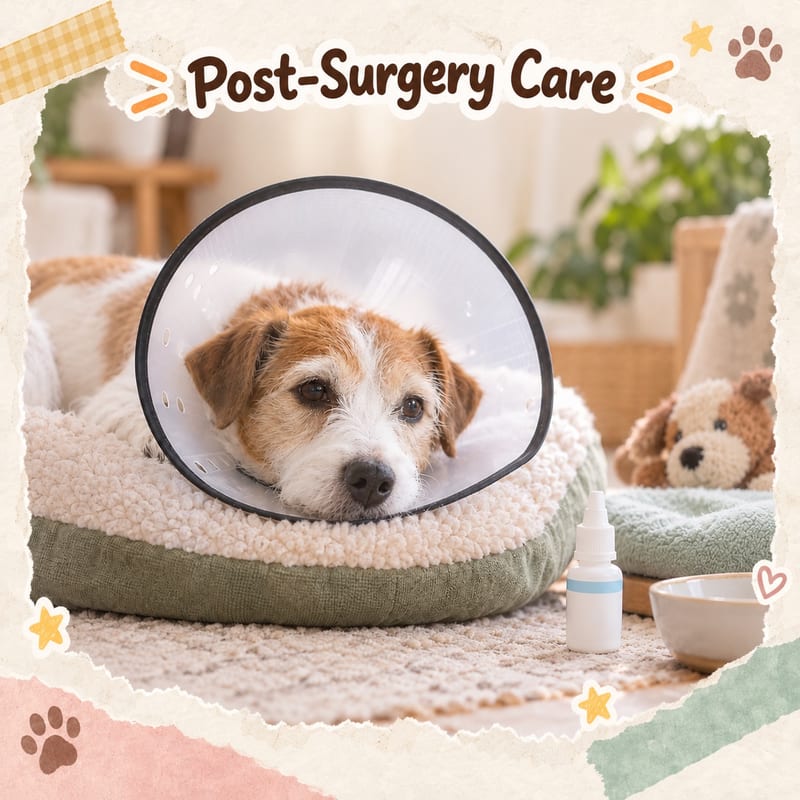
The 2 to 4 weeks after surgery are the critical period:
- Wear a cone (to prevent pawing at the eye) — usually at least 1 to 2 weeks
- Use eye drops on schedule (anti-inflammatory + antibiotic, several times daily, gradually reduced) — missed drops are a common cause of recurrent inflammation
- Avoid strenuous exercise, bathing and getting water in the eye
- Intensive follow-up: 1 day/1 week/2 weeks/1 month post-op + long-term tracking
- Some dogs show clear vision improvement within days to a week — 'seeing the light again' really does happen
Daily eye care:
- Avoid irritants getting into the eyes when washing the face/bathing
- Trim hair around the eyes to reduce irritation
- Protect from wind and sand outdoors (visor for long-nosed breeds/avoid very windy environments)
- Annual check-ups include eye examination; step up from age 7
The limits of prevention, stated plainly: hereditary cataracts can't be prevented, only detected early; what is truly preventable is diabetes-related — weight control + blood sugar management. Evidence for eye supplements (antioxidants etc.) is limited; don't treat them as insurance.
This article is for reference only and cannot replace veterinary diagnosis. If you have health concerns, consult a registered veterinarian.
Further reading
📌 Key takeaways
- ✅ Surgery in the immature stage has the highest success rate
- ✅ Nuclear sclerosis's faint blue haze doesn't affect vision, no need to panic
- ✅ For 2–4 weeks post-op, wear a cone + use drops on time
- ❌ Delaying cataracts risks glaucoma/uveitis
- ❌ Eye drops cannot dissolve cataracts