

🤖 AI Summary
Cherries are a fruit that is not recommended for dogs — the flesh itself is very low in toxicity, but the pit, stem and leaves contain cyanogenic glycosides, which release hydrogen cyanide when chewed. It is very hard to separate the pit completely when a dog eats cherries — chewing the pit = risk of cyanogenic glycoside poisoning. The risks far outweigh the benefits: dogs do not need cherries. If your dog only swallows the flesh without chewing the pit, it is usually not serious; but if the pit is chewed or several cherries are eaten, take your dog to the veterinarian immediately.
• Cherry pits, stems and leaves contain cyanogenic glycosides — chewing releases hydrogen cyanide
• The flesh is very low in toxicity but it is very hard to separate the pit completely
• Not recommended — the risks far outweigh the benefits
Quick answer: Cherries are not recommended for dogs — the flesh itself is very low in toxicity, but the pit, stem and leaves contain cyanogenic glycosides, which release hydrogen cyanide when chewed. It is very hard to separate the pit completely, and chewing the pit = risk of poisoning. If your dog swallows the flesh without chewing the pit, it is usually not serious; but if the pit is chewed or several cherries are eaten, take your dog to the veterinarian immediately. The risks far outweigh the benefits — do not feed.
Contents
-
⚠️ Cherries = not recommended
-
Toxicity mechanism: how cyanogenic glycosides become hydrogen cyanide
-
Flesh vs pit: risk comparison
-
Poisoning symptoms + timeline
-
First-aid SOP for accidental ingestion
-
Prevention strategies
-
FAQ
⚠️ Cherries = not recommended
Cherries are a fruit that is not recommended for dogs — not because the flesh itself is very toxic, but because it is very hard to separate the pit completely. When dogs eat cherries, they can easily chew or swallow the pit, and the pit, stem and leaves contain cyanogenic glycosides, which are a deadly toxin.
ASPCA classification: Cherries are listed as "Toxic to Dogs" — not because of the flesh, but because of the pit, stem and leaves.
Difference from other fruits:
- Cantaloupe, watermelon — the flesh is safe after seeding and peeling, and the owner has full control
- Cherries — the pit is small and hidden in the middle of the flesh, so it is very hard to separate completely; even if a human pits each cherry for the dog, a pit may be missed
Conclusion: The risks far outweigh the benefits — dogs do not need cherries, so do not feed.

Toxicity mechanism: how cyanogenic glycosides become hydrogen cyanide
Cyanogenic glycosides:
Cherry pits, stems and leaves contain cyanogenic glycosides — naturally occurring plant compounds. Cyanogenic glycosides themselves are not toxic, but when they are broken down by digestive enzymes or cell damage (e.g. chewing, crushing), they release hydrogen cyanide (HCN) — that is, cyanide.
Toxicity of hydrogen cyanide:
- Inhibits cellular respiration — cells cannot use oxygen
- Affects all organs, especially the heart, brain and respiratory system
- Acute poisoning can be fatal very quickly
Dose:
- The toxic dose of cyanide varies with the dog's weight — small breeds are at higher risk
- 1 to 2 cherry pits (chewed) can already be risky for a small dog
- Swallowing a whole pit (not chewed) is much lower risk — but do not take the chance
Why cherries are particularly dangerous:
- The pit is small — dogs can easily swallow it
- The flesh clings tightly to the pit — very hard to separate completely
- The cyanogenic glycoside content is relatively high — compared with other fruits (apple seeds, peach pits), cherry pits contain a higher level of cyanogenic glycosides
Flesh vs pit: risk comparison
| Part | Risk | Reason | Consequence |
|---|---|---|---|
| Flesh | ⚠️ Low | Very low cyanogenic glycoside content | Usually not serious (but not recommended) |
| Pit (swallowed whole) | ⚠️ Medium | Cyanogenic glycosides not released + risk of intestinal obstruction | Possible intestinal obstruction (especially small breeds) |
| Pit (chewed) | ❌ High | Cyanogenic glycosides release hydrogen cyanide | Cyanide poisoning |
| Stem | ❌ High | Contains cyanogenic glycosides | Cyanide poisoning |
| Leaves | ❌ High | Contains cyanogenic glycosides | Cyanide poisoning |
| Processed products (dried cherries, cherry jam) | ❌ High | May contain pit fragments + high sugar | Cyanide poisoning + gastrointestinal upset |
Key difference: The flesh itself is very low in toxicity, but it is very hard to separate the pit completely — this is why feeding is not recommended.
Poisoning symptoms + timeline
15 minutes to 1 hour after ingestion:
- May have no obvious symptoms
- Some dogs start drooling
- Breathing may be slightly rapid
1 to 4 hours after ingestion:
- Rapid breathing (cells cannot use oxygen)
- Dilated pupils
- Brick-red gums (a feature of cyanide poisoning — not pale, but abnormally red)
- Fast heart rate
- Restlessness
4 to 12 hours after ingestion (severe poisoning):
- Difficulty breathing
- Muscle spasms
- Shock
- Coma
- Can be fatal
Key point: Cyanide poisoning is acute — symptoms appear very quickly (15 minutes to 4 hours) and worsen rapidly. Do not wait.
First-aid SOP for accidental ingestion
🚨 Dog cherry ingestion first-aid card
Immediate actions:
- Assess the ingestion:
- How many cherries were eaten?
- Was it just the flesh or the whole cherry with the pit?
- Was the pit chewed? (Seeing pit fragments = chewed)
- If the dog swallowed the flesh but did not chew the pit:
- Monitor for 24 hours
- Watch for vomiting, diarrhoea, signs of intestinal obstruction
- Usually not serious — but still keep an eye on it
- If the dog chewed the pit or ate several cherries:
- Take your dog to the veterinarian emergency immediately
- Cyanide poisoning is an emergency — do not wait
- Tell the veterinarian on arrival:
- What was eaten (cherry flesh / with pit / chewed pit)
- How much was eaten
- When it was eaten
- The dog's weight
- The veterinarian may:
- Induce vomiting (within 2 hours of ingestion)
- Activated charcoal (to absorb the toxin)
- Oxygen therapy (to support breathing)
- Cyanide antidote (if available)
- Monitor heart and breathing
- Do not induce vomiting yourself
- Incorrect vomiting methods can cause aspiration
- Cyanide poisoning is time-critical — taking the dog to the veterinarian is the safest option
Hong Kong 24-hour veterinary emergency:
- SPCA (Hong Kong Society for the Prevention of Cruelty to Animals) emergency service
- Night emergency services at veterinary clinics in various districts
Prevention strategies
5 home protection tips:
- Keep cherries where the dog cannot find them
- In the fridge
- In a covered storage box
- On a high shelf
- Be careful when eating cherries
- Pick up any that fall on the floor immediately
- Spit pits where the dog cannot find them
- Lidded food waste bin
- Throw cherry pits into a lidded bin immediately
- Do not let the dog rummage through food waste
- Educate family members
- Everyone must know: do not feed cherries to the dog
- Do not let the dog eat your cherries
- Alternative treats
- Want to give your dog fruit? Choose safe fruits: blueberries, watermelon (seeded and peeled), cantaloupe (seeded and peeled)
- Cherries are not worth the risk
This article is for reference only and cannot replace veterinary diagnosis. If you suspect ingestion, consult a registered veterinarian immediately.
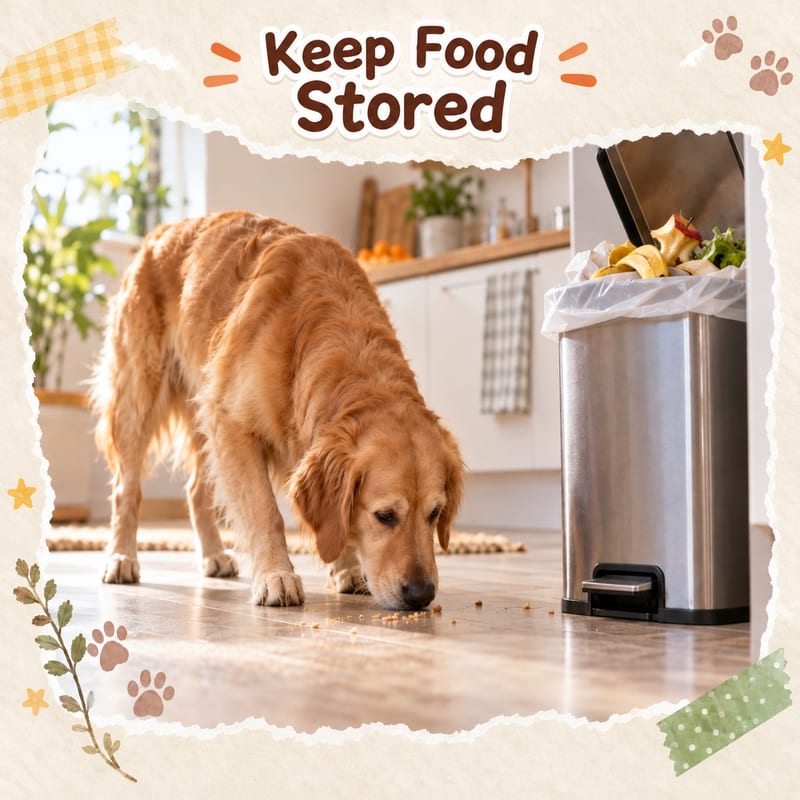
Hong Kong small-flat practicalities: zero-risk placement + emergency route map
Hong Kong homes are small, and the kitchen and living room are often connected. Dogs like to follow people around, so accidents can happen in a moment of inattention. Here is a "zero-risk cherry" practical checklist designed for Hong Kong people — follow it and you won't have to worry every day.
1. Fridge placement method
- Top shelf, furthest in: As soon as you buy cherries, put them on the top shelf, furthest in, in a sealed box. Small dogs cannot jump up, and large dogs cannot find them even if they open the door.
- Sticker reminder: Put a red "NO DOG" sticker on the box to remind family members to close it immediately after opening.
2. Three steps when eating fruit
- Fixed location: Sit at the dining table or bar counter to eat, do not eat while walking around.
- Spit and collect immediately: Wrap pits in a tissue and put them straight into a lidded bin by your feet; the lid should have a foot pedal or lock.
- Floor patrol: After eating, immediately vacuum or wipe the floor with a wet wipe to make sure no pits are missed.
3. 24-hour emergency route map
If your dog does eat a pit, here are the most common emergency veterinary routes in Hong Kong Island, Kowloon and the New Territories. Save them in Google Maps to save time thinking of addresses:
- Hong Kong Island: SPCA Wan Chai headquarters emergency (24 hours) — 5 minutes' walk from MTR Wan Chai Station Exit A3.
- Kowloon: East Kowloon Animal Hospital (Kwun Tong) — 3 minutes' walk from Kwun Tong Station Exit B1, with night duty staff.
- New Territories: CityU Veterinary Medical Centre (Sha Tin) — take minibus 28K from Fo Tan Station Exit C, 5 minutes' ride, 24-hour emergency.
Before leaving, remember to call to confirm there is space, and bring:
- The dog's weight (pounds / kilograms)
- How many cherries were eaten, whether the pit was chewed
- Time of ingestion (hour and minute)
Finally, stick this checklist on the fridge door so the whole family can see it — that is the safest thing for your dog.
Further reading
📌 Key summary
- ✅ The flesh itself is very low in toxicity, but it is hard to remove the pit completely
- ❌ The pit, stem and leaves contain cyanogenic glycosides; chewing releases the toxin
- ✅ If only the flesh is swallowed without chewing the pit, monitor for 24 hours
- ❌ If the pit is chewed or several cherries are eaten, take your dog to emergency immediately
- ✅ Replace cherries with blueberries, watermelon or cantaloupe
- ❌ Do not induce vomiting yourself; leave it to the veterinarian