

Quick answer: Dogs don't destroy things to be naughty—it's due to teething, anxiety, lack of exercise, boredom or natural exploration. By using the five steps of "alternatives + rules + environmental management + exercise + alone-time training", you can gradually correct the behaviour and rebuild a harmonious home.
Fixing Dog Destructive Behaviour: 5 Causes (Chewing Furniture, Digging, Home Destruction) + Training Methods All in One
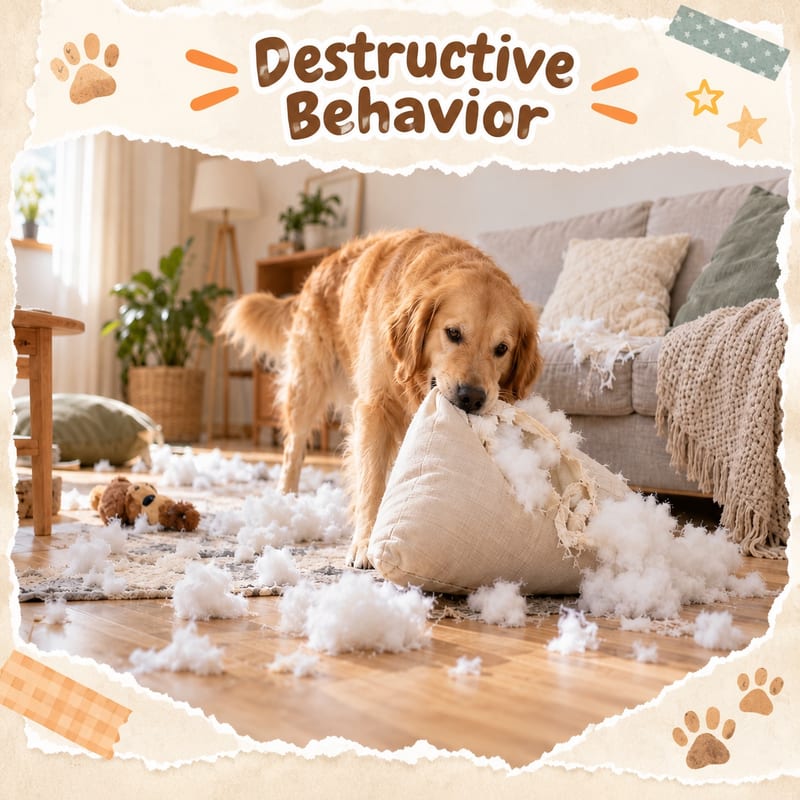
Coming home to find a big hole chewed in the sofa, slippers torn to shreds, or the garden dug up beyond recognition? You're not alone! According to veterinary behaviour research, over 70% of dog owners have faced dog destructive behaviour. In fact, dogs don't destroy things on purpose—there are reasons behind it. This article takes a behavioural science approach to help you understand the 5 major causes and provides proven correction training methods, so you and your furry friend can enjoy a harmonious home life.
5 Common Causes of Dog Destructive Behaviour
- Teething discomfort (most common in puppies)
Puppies go through teething from 3 to 6 months old, when swollen, itchy gums make them very uncomfortable. Chewing is their instinctive way to relieve discomfort, just like human babies biting teething rings. Destruction at this stage is a normal physiological need, but without timely guidance, bad habits may continue into adulthood.
- Separation anxiety
When owners leave home, dogs with separation anxiety feel extremely uneasy and release stress by chewing, scratching doors and tearing things up. This type of destruction usually occurs within the first 30 minutes after the owner leaves, and is accompanied by barking, inappropriate elimination and other behaviours. Research shows that about 20% to 40% of dogs have separation anxiety to varying degrees.
- Lack of exercise
Dogs are born to expend physical and mental energy. If daily exercise is insufficient, excess energy turns into "home destruction". Especially medium-to-large breeds and working dogs such as Labradors and Border Collies need at least 1 to 2 hours of moderate-to-high intensity exercise daily.
- Boredom and lack of stimulation
Dogs are social animals and need mental stimulation and interaction. Left alone for long periods without toys or puzzle games, they will "find their own fun"—and your furniture and shoes are often the first targets.
- Exploratory instinct
Dogs learn about the world through smell and mouth. Puppies and newly homed dogs explore every object by chewing—this is nature, not naughtiness. Understanding this helps you respond with the right attitude.
 Correcting Destructive Behaviour: 5-Step Training Method
Step 1: Provide suitable alternatives
Prepare a variety of chew toys with different textures (rubber Kong, rope knots, antlers, etc.) so your dog has "allowed to chew" options. When you're present, if you catch them chewing furniture, immediately replace it with a toy, and praise immediately when they chew the toy.
Step 2: Establish "no chewing" rules
When you catch your dog chewing something they shouldn't, say "no" in a firm but not high-pitched voice, then guide them to the correct toy. Reward with a treat after a successful redirection. Remember: punish the behaviour only, never hit or scold the dog.
Step 3: Environmental management
When you can't supervise your dog, put valuables away and set up a safe area for them. A laundry room, pen or crate are good choices—place toys and chew bones inside so they have a safe space to be alone.
Step 4: Increase exercise
Take your dog for at least 30 minutes to 1 hour of walking daily, and add interactive games like running and fetch. After exercise, dogs are more tired and destructive behaviour naturally decreases. In hot Hong Kong weather, choose early morning or evening cooler times to go out.
Step 5: Gradual alone-time training
For dogs with separation anxiety, train alone-time skills gradually. Start by leaving the room for a few seconds, then slowly extend the time. Keep departures and returns calm—don't overdo goodbyes or excited greetings—so the dog learns that "owner leaving is normal".
Special handling for digging behaviour
Dogs dig to hide food, regulate body temperature, search for underground scents, or simply for fun. If you have a yard, set up a designated "sandpit" area and guide your dog to dig there. Also ensure enough interactive play and exercise daily, and digging behaviour will greatly reduce.
FAQ
Q: Is it useful to punish a dog after it has chewed something?
A: It is completely useless. Dogs cannot link "chewing something hours ago" with "being scolded now". Punishment must happen at the moment the behaviour occurs to be effective. Post-event punishment only makes your dog fear you, not understand what it did wrong.
Q: How long does the puppy teething period last?
A: Puppy teething starts around 3 months old and by 6 to 7 months all baby teeth are replaced by permanent teeth. Providing plenty of chew toys during this time is very important; you can also freeze toys for them to chew—the cool sensation helps soothe gum discomfort.
Q: Does destructive behaviour in dogs require a vet visit?
A: If the destructive behaviour appears suddenly and is accompanied by other abnormalities (such as decreased appetite, excessive licking, increased aggression), take your dog for a health check first to rule out pain or illness. Persistent severe destructive behaviour can also be addressed with a professional animal behaviourist.
Q: Are bitter sprays effective for stopping dogs from chewing furniture?
A: Bitter sprays (such as apple bitter) can be a short-term aid but should not be relied on alone. Some dogs adapt to the bitter taste, while others simply switch to chewing other unsprayed items. The fundamental solution is still training + exercise + environmental management working together.
Q: Can neutering reduce destructive behaviour?
A: Neutering may reduce some destructive behaviours linked to sexual drive (such as marking territory), but it has little effect on destruction caused by boredom, anxiety or teething. Neutering should not be seen as the only solution to behavioural problems.
 PetChill's Reminder
Your dog's destructive behaviour is their way of "talking"—telling you they're uncomfortable, unhappy or need more attention. Rather than getting angry and punishing, first understand the cause and use love and patience to guide them to learn the right behaviour. Remember, every successful training session builds trust between you and your furry friend. At PetChill HK, we believe in putting pets first and loving them with heart—every pooper scooper can become the best dog trainer!
Hong Kong Small Flat Practical Checklist: Five-Step Action Plan
Hong Kong homes are small, but you can still follow the five steps. This checklist helps turn theory into daily practice:
1. Suitable alternatives
- With limited space, choose wall-mountable rope toys or small rubber Kongs—space-saving and easy to store.
- Rotate toys in batches, swapping every three days to keep them fresh and reduce chewing furniture out of boredom.
2. Establish rules
- When using the "no" command at home, all family members must be consistent—avoid different standards.
- After successful redirection, immediately reward with "good boy" + a small treat; choose low-calorie freeze-dried treats to avoid weight gain.
3. Environmental management
- If no garden, use the laundry room or bathroom as a safe area—place non-slip mats, water bowl and toys, and turn on the exhaust fan before leaving to keep it ventilated.
- Put valuables in high cabinets or clear plastic boxes; clear boxes let you see at a glance and not forget to tidy up.
4. Increase exercise
- Go to Shek O dog beach or Fei Ngo Shan hiking trails at 6:30 am or after 8:00 pm to avoid midday heat.
- On rainy days, go to pet-friendly malls (such as AIRSIDE in Kai Tak) and walk the stairs indoors—15 floors round trip is enough to burn energy.
- Back home, play fetch with a rolled-up towel in the corridor—10 minutes and done.
5. Gradual alone-time training
- Start by leaving the living room for 30 seconds, gradually extend to taking the lift downstairs to buy something for 5 minutes.
- Use an IP CAM to monitor; when your dog is calm, immediately dispense treats via a phone app to build the association "owner leaves = good things happen".
When to see a vet? If your dog suddenly chews frantically and also shows decreased appetite, constant licking of the same spot, or greatly increased aggression, book a vet immediately to rule out pain or endocrine problems. For 24-hour emergency in Hong Kong, you can go to CityU Veterinary Medical Centre or Kowloon Animal Hospital.
| Cause of destruction | Immediate response | Long-term strategy |
|---|---|---|
| Teething discomfort | Frozen chew toys, immediate replacement | Continue providing different textured toys until 7 months old |
| Separation anxiety | Keep departures low-key, ignore on return | Gradually extend alone time, use puzzle toys |
| Lack of exercise | Run and fetch in early morning or evening | 30–60 minutes moderate-to-high intensity exercise daily |
| Boredom | Add interactive games immediately | Rotate snuffle mats, Kongs, puzzle toys |
| Exploratory instinct | Interrupt with "no" command, redirect to toy | Set up safe area, put valuables away |
 Fuji One full guide →

