

🤖 AI Summary
Dogs really do dream! Scientific research confirms that dogs have REM (rapid eye movement) sleep, just like humans. When dogs dream, you may see twitching, barking, tail wagging, and running motions. The content of their dreams may be their daily experiences, such as playing, eating, and walking. Small dogs dream more frequently than large dogs, and puppies dream more frequently than adult dogs. If you want to observe your dog dreaming, watch for their REM sleep stage, which usually starts about 20 minutes after they fall asleep.
• Dogs really do dream—scientific research confirms REM sleep
• Signs of dog dreaming: twitching, barking, tail wagging, running motions
• Small dogs dream more frequently than large dogs—puppies dream more frequently than adult dogs
Quick answer: Dogs really do dream! Scientific research confirms that dogs have REM (rapid eye movement) sleep, just like humans. When dogs dream, you may see twitching, barking, tail wagging, and running motions. The content of their dreams may be their daily experiences, such as playing, eating, and walking. Small dogs dream more frequently than large dogs, and puppies dream more frequently than adult dogs.
Table of Contents
-
Do dogs really dream? Scientific research explained
-
Signs of dog dreaming
-
What dogs dream about
-
Which dogs dream more frequently?
-
How to observe dog dreaming
-
Common questions about dog dreaming
-
FAQ
Do dogs really dream? Scientific research explained
Dogs really do dream! Scientific research confirms that dogs have REM (rapid eye movement) sleep, just like humans.
What is REM sleep?
- REM (Rapid Eye Movement) is a stage of sleep.
- Humans dream during REM sleep—and so do dogs.
- REM sleep is characterised by rapid eye movements, active brain waves, and muscle relaxation.
Scientific research:
- 2001 MIT study: Rats' brain waves during REM sleep are similar to when they are awake—proving that rats dream.
- 2017 Hungarian study: Dogs' brain waves during REM sleep are similar to when they are awake—proving that dogs dream.
- Dogs' REM sleep accounts for 10 to 12% of total sleep time—humans' REM sleep accounts for 20 to 25% of total sleep time.
Dog sleep cycle:
| Stage | Characteristics | Time |
|---|---|---|
| Light sleep | Easily woken—slow eye movements | 0 to 20 minutes after falling asleep |
| Deep sleep | Not easily woken—eyes still | 20 to 40 minutes after falling asleep |
| REM sleep | Dreaming—rapid eye movements | Starts 40 minutes after falling asleep |
Dog sleep duration:
- Adult dogs: 12 to 14 hours per day
- Puppies: 18 to 20 hours per day
- Senior dogs: 14 to 18 hours per day

Signs of dog dreaming
When dogs dream, you may see these signs:
| Sign | Description | Possible dream |
|---|---|---|
| Twitching | Limb twitching—running motions | Chasing something/running |
| Barking | Making sounds—barking/whining | Playing with other dogs/alert |
| Tail wagging | Tail wagging—happy expression | Playing with owner/eating |
| Running motions | Legs running—chasing something | Chasing a ball/chasing other dogs |
| Lip movement | Lips moving—eating motions | Eating |
Common signs of dog dreaming:
- Twitching: limb twitching—running motions
- Barking: making sounds—barking/whining
- Tail wagging: tail wagging—happy expression
- Running motions: legs running—chasing something
- Lip movement: lips moving—eating motions
What dogs dream about
The content of dogs' dreams may be their daily experiences—such as playing, eating, and walking.
Scientific research:
- The content of dogs' dreams may be their daily experiences—such as playing, eating, and walking.
- The content of dogs' dreams may be their emotions—such as happiness, fear, and excitement.
- The content of dogs' dreams may be their memories—such as playing with their owner or with other dogs.
Common dream content for dogs:
- Play: playing with owner + playing with other dogs + chasing balls
- Food: eating + eating treats
- Walks: walking + chasing something
- Emotions: happiness + fear + excitement
Is the content of dogs' dreams related to their daily experiences?
- Yes—scientific research confirms that the content of dogs' dreams may be their daily experiences.
- For example: if a dog went to the dog park today, their dream content might be playing with other dogs.
- For example: if a dog ate a tasty treat today, their dream content might be eating treats.
Which dogs dream more frequently?
Small dogs dream more frequently than large dogs—and puppies dream more frequently than adult dogs.
Scientific research:
- Small dogs dream more frequently than large dogs—small dogs have shorter REM sleep cycles.
- Puppies dream more frequently than adult dogs—puppies' REM sleep accounts for 20 to 30% of total sleep time.
- Senior dogs dream more frequently than adult dogs—senior dogs have poorer sleep quality.
Dog dreaming frequency:
| Type | REM sleep cycle | Dream frequency |
|---|---|---|
| Small dogs | 10 minutes | Dream every 10 minutes |
| Large dogs | 20 minutes | Dream every 20 minutes |
| Puppies | 5 minutes | Dream every 5 minutes |
| Senior dogs | 15 minutes | Dream every 15 minutes |
Why do small dogs dream more frequently than large dogs?
- Small dogs have shorter REM sleep cycles—so they dream more frequently.
- Small dogs have faster metabolisms—so their sleep cycles are shorter.
- Small dogs have smaller brains—so their REM sleep cycles are shorter.
How to observe dog dreaming
If you want to observe your dog dreaming, watch for their REM sleep stage—which usually starts about 20 minutes after they fall asleep.
Methods to observe dog dreaming:
| Method | How to do it | Notes |
|---|---|---|
| Watch the eyes | Rapid eye movements—a sign of REM sleep | You can gently lift your dog's eyelid to observe |
| Watch the limbs | Limb twitching—running motions | A common sign of dreaming |
| Listen for sounds | Making sounds—barking/whining | A common sign of dreaming |
| Watch the tail | Tail wagging—happy expression | A common sign of dreaming |
Precautions when observing dog dreaming:
- Do not disturb your dog—do not disturb them while they are dreaming.
- Do not wake your dog—do not wake them while they are dreaming.
- Watch for your dog's safety—they may move while dreaming, so ensure their safety.
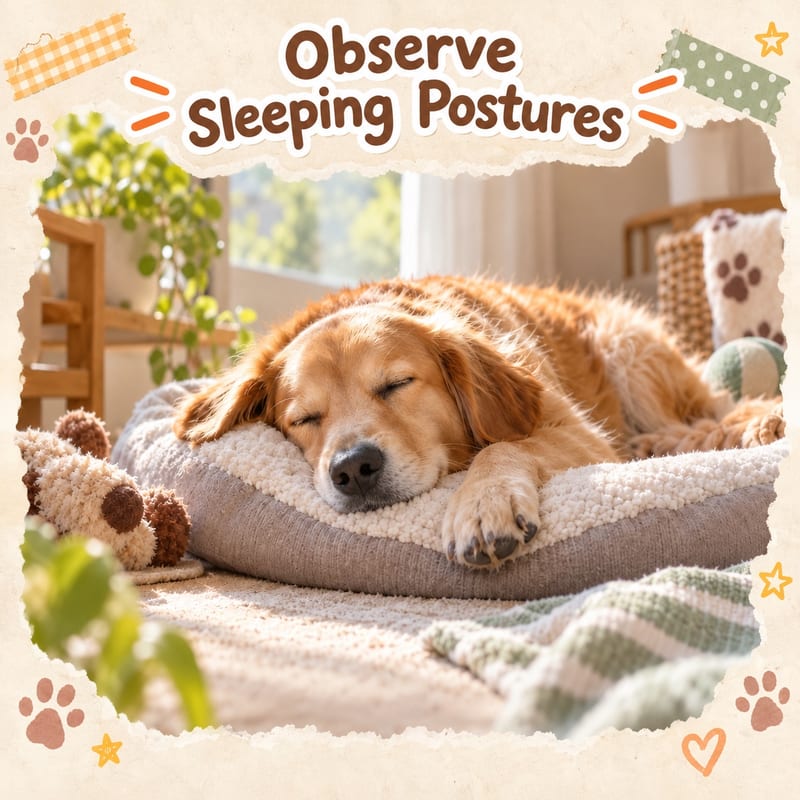
Practical tips for Hong Kong small flats: observing dog dreams in a 300 sq ft unit
Hong Kong living spaces are small, and dogs often sleep in a corner of the living room, under the sofa, or beside the bed. To observe their dreams in a limited space, you can do the following:
1. Choose a spot for the mat Place the dog mat beside the TV cabinet or under the dining table—these spots have less foot traffic, making it easier for the dog to fall asleep. Remember to leave a 30 cm passage for yourself to crouch down and observe, without blocking the way.
2. Adjust the lighting At night, use a night light with soft, non-glaring light so you can see eye movements without waking the dog. You can use a phone flashlight with a tissue to soften the light and avoid shining it directly.
3. Silent mode The whole family agrees: within 30 minutes of the dog falling asleep, do not turn the TV up loud or drag chairs. Soundproofing between floors in Hong Kong is poor, and if the dog is startled, they won't be able to dream.
4. Safety barriers Place soft cushions or low stools around the dog mat to prevent the dog from bumping into glass coffee tables or cabinet corners while dreaming. Hong Kong furniture has many right angles, so adding corner protectors is safest.
5. Video backup Use a phone tripod fixed high up pointing downwards to record. If the dog shows abnormal twitching while dreaming, the video can be used as a reference for the veterinarian. Remember to turn off the shutter sound.
When to see a vet? If your dog twitches for more than 2 minutes while dreaming, stops breathing, or remains tired after waking, go to a 24-hour veterinary clinic immediately. On Hong Kong Island, you can go to North Point emergency vet; in Kowloon, there are night clinics in Prince Edward and Mong Kok; in the New Territories, Tai Wai has overnight service. Bring the video you recorded to save time and money.
Further reading
📌 Key points
- ✅ Dogs have REM sleep and really do dream
- ✅ While dreaming, they may twitch, bark, wag their tails, and run
- ✅ Small dogs and puppies dream more frequently
- ❌ Never wake a dog while they are dreaming
- ❌ Do not disturb a dreaming dog