
🤖 AI Summary
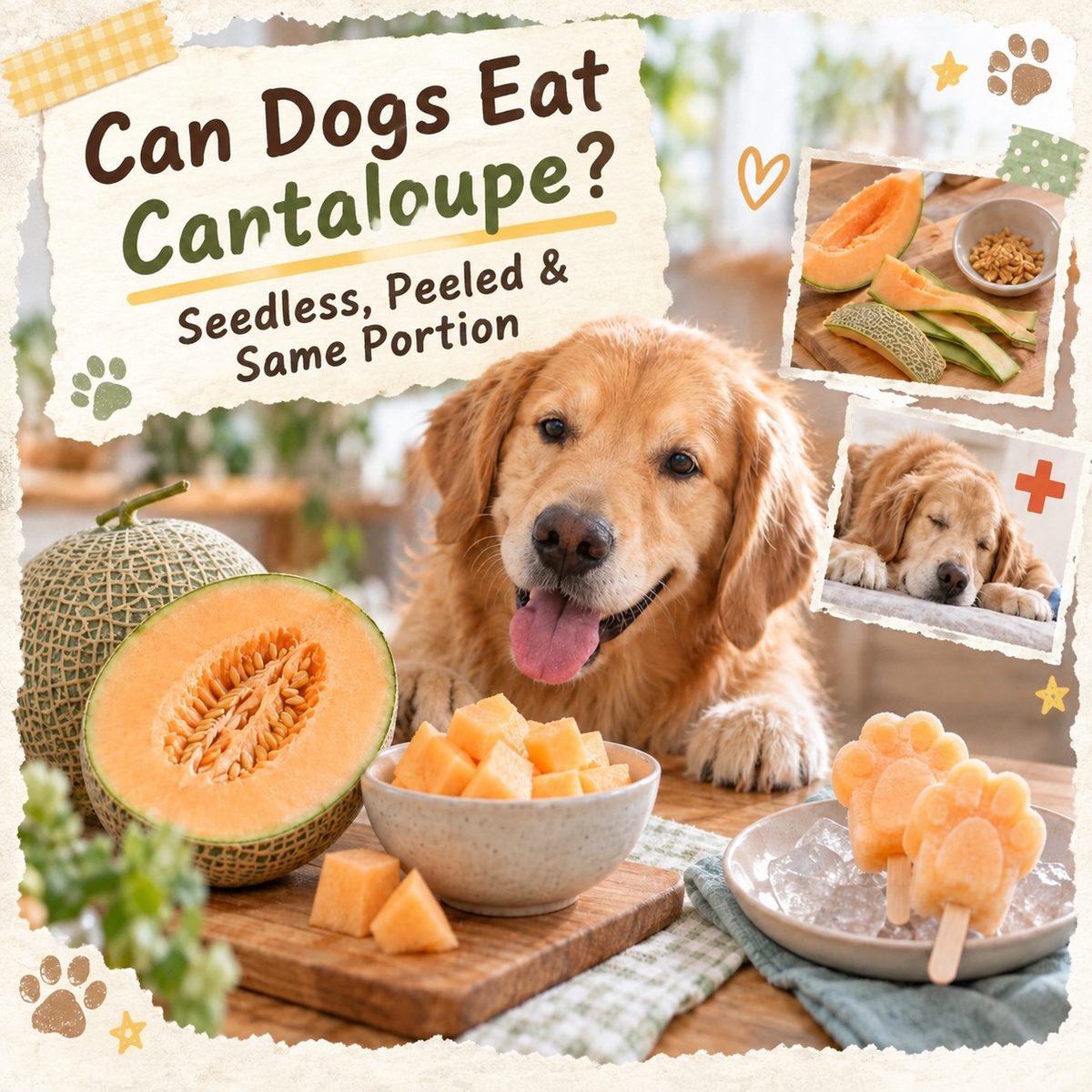
Cantaloupe is a safe fruit for dogs — after removing seeds and peel and cutting into small cubes, it can be given occasionally as a treat. Cantaloupe is rich in vitamins A, C and potassium, and has high water content; making ice pops in summer is a good cooling choice for dogs. But note: it's a high-sugar fruit, so diabetic/obese dogs need portion control or should avoid it; cantaloupe peel is not edible (gastrointestinal irritation + obstruction risk); seeds must be completely removed (intestinal obstruction). The upper limit is ≤10% of daily total calories.
• Cantaloupe flesh = safe, just remove seeds and peel and cut into cubes
• Cantaloupe peel + seeds = not edible (intestinal obstruction)
• High sugar — diabetic/obese dogs should be cautious or avoid
Quick answer: Cantaloupe is a safe fruit for dogs — remove seeds and peel, cut into 1-2cm cubes, and keep to ≤10% of daily total calories. Nutritional highlights: vitamin A (eye health), vitamin C (antioxidant), potassium (muscle function), high water content (hydration). Avoid: cantaloupe peel (coarse fiber irritates the gut + intestinal obstruction), seeds (block the intestines), high sugar (caution or avoid for diabetic/obese/pancreatitis dogs). Available year-round at Hong Kong supermarkets ParknShop/Wellcome, about HKD 20-40 each. Making ice pops in summer is a top cooling choice for dogs.
Table of Contents
-
✅ Yes, they can eat it! But pay attention to which parts
-
Nutritional benefits
-
⚠️ Risky parts table
-
Safe feeding SOP
-
Portion quick-reference table
-
HKD ice pop recipe
-
Emergency card for accidental ingestion
-
FAQ
✅ Yes, they can eat it! But pay attention to which parts
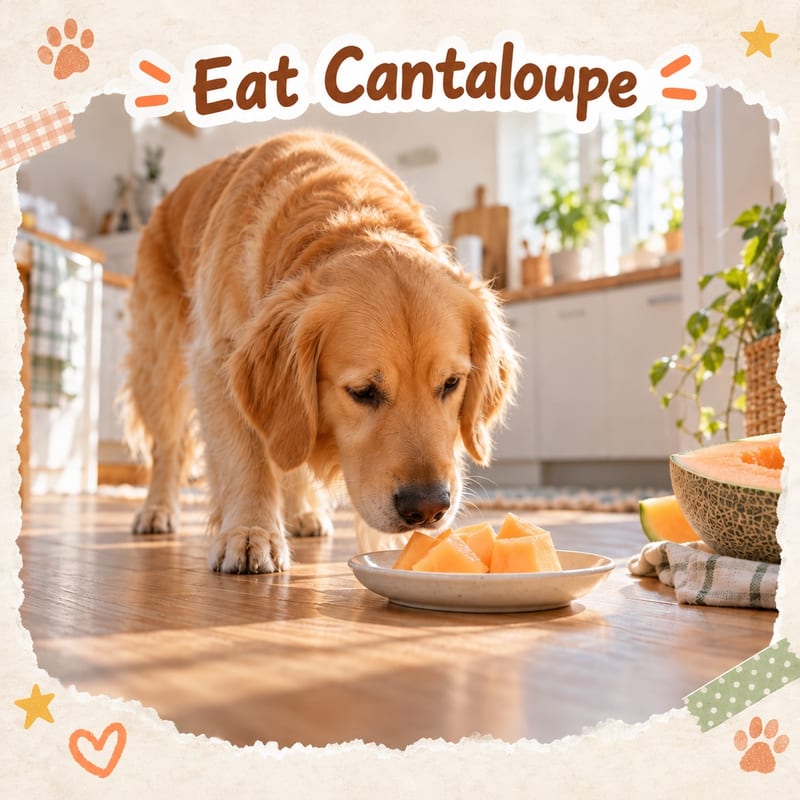
Cantaloupe is an ASPCA-certified safe fruit for dogs. But "safe" is conditional — only the flesh, and it must be prepared correctly:
- Flesh ✅: remove seeds and peel, cut into small cubes — safe, nutritious, and most dogs like it
- Peel ❌: coarse fiber can irritate the gut causing vomiting and diarrhea; the hard rind risks intestinal obstruction (especially in small dogs)
- Seeds ❌: can block the intestines — higher risk in small dogs
Remember in one sentence: The flesh is edible; the peel and seeds are not.
Nutritional benefits
| Nutrient | Content per 100g cantaloupe | Benefits for dogs |
|---|---|---|
| Water | About 90% | Natural hydration, good choice in summer |
| Vitamin A | About 169 μg RAE | Eye health, skin health, immunity |
| Vitamin C | About 36.7 mg | Antioxidant, immune support |
| Potassium | About 267 mg | Muscle function, heart health |
| Dietary fiber | About 0.9 g | Aids digestion (small amount) |
| Calories | About 34 kcal | Low-calorie treat (but watch the high sugar) |
Highlights: Cantaloupe is a high-water + low-calorie combo — as a summer treat it's not too heavy and can help hydrate your dog. Its vitamin A content is relatively high among fruits, which helps skin and coat.
But note: Nutritional benefits don't mean feeding more — 99% of a cat or dog's nutritional needs should come from their main meals (quality food/fresh food); fruit is just an occasional taste.
⚠️ Risky parts table
| Part | Risk | Reason | Consequence |
|---|---|---|---|
| Peel | ❌ Not edible | Coarse fiber hard to digest + pesticide residue | Vomiting, diarrhea, intestinal obstruction |
| Seeds | ❌ Not edible | Block the intestines | Intestinal obstruction (especially high risk in small dogs) |
| Flesh (excess) | ⚠️ Control portion | High sugar | Obesity, diarrhea, blood sugar fluctuations |
| Processed products (canned cantaloupe) | ❌ Not edible | Soaked in syrup = high sugar | Obesity, gastrointestinal upset |
High-risk dog groups (caution or avoid):
- Diabetic dogs — high sugar can spike blood glucose
- Obese dogs — extra sugar worsens weight problems
- History of pancreatitis — high-sugar high-fat foods are triggers
- Dogs with sensitive stomachs — new foods may cause diarrhea
Safe feeding SOP
Five-step safety method:
-
Selection: Choose a ripe but not overripe cantaloupe — avoid ones with cracks or soft spots
-
Washing: Rub the outer skin under running water for at least 30 seconds (wash before cutting — the knife can carry bacteria from the peel into the flesh)
-
Preparation: Cut open → completely scoop out seeds and the pulp around them → peel off all skin (at least 5mm thick)
-
Cubing: Cut into 1-2cm cubes — smaller for small dogs
-
Feeding: Serve in a bowl → first time give only a fingertip-sized piece → observe for 24 hours for any gastrointestinal reaction
Forbidden processed products: Candied cantaloupe, canned cantaloupe (syrup), cantaloupe juice (sugar concentrated, no fiber), cantaloupe ice cream (lactose + sugar).
Portion quick-reference table
| Dog weight | Daily cantaloupe limit | Cubed portion | Frequency |
|---|---|---|---|
| 5kg (small dog) | ≤15 kcal | 2-3 small cubes | 2-3 times per week |
| 10kg (medium dog) | ≤30 kcal | 5-6 small cubes | 2-3 times per week |
| 20kg (large dog) | ≤50 kcal | 8-10 small cubes | 2-3 times per week |
| 30kg+ (extra large) | ≤70 kcal | 10-15 small cubes | 2-3 times per week |
Calculation logic: Dog daily calorie needs (5kg about 300 kcal, 10kg about 500 kcal, 20kg about 800 kcal, 30kg about 1,000 kcal), fruit treats ≤10%. Cantaloupe is about 34 kcal per 100g.
Portion upper limit is ≤10% of daily total calories: No need to feed daily; 2-3 times per week is a good treat frequency.
HKD ice pop recipe
Summer cooling gadget for dogs — cantaloupe ice pops, zero additives, super simple:
Ingredients:
- Cantaloupe flesh 200g (seeds and peel removed)
- Drinking water 50ml (to adjust consistency)
- Ice pop molds (or ice cube tray)
Method:
-
Cut cantaloupe flesh into small pieces → put in blender
-
Add 50ml water → blend into a puree
-
Pour into ice pop molds → freeze for at least 4 hours
-
Unmold and feed — 1-2 small ice pops at a time
Variations:
- Cantaloupe + sugar-free yogurt (1:1) = creamier
- Cantaloupe + blueberries = two-tone ice pops
- Cantaloupe puree straight into ice cube tray = individual treat ice cubes
Note: Ice pops are only treats, not a meal replacement; for dogs with sensitive stomachs, try a small amount first.
Emergency card for accidental ingestion
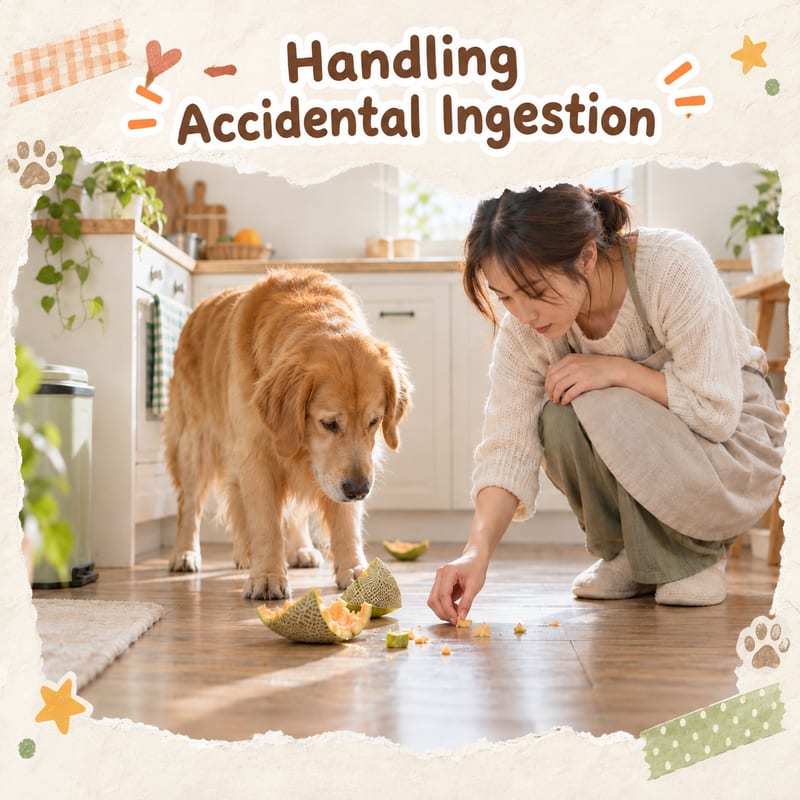
🚨 Dog accidental ingestion of cantaloupe peel/seeds emergency card
Symptoms (within hours to 24 hours after eating):
- Repeated vomiting (may see peel/seed remnants)
- Diarrhea, abdominal pain (arched back, won't let you touch belly)
- Sharp drop in appetite, lethargy
- Difficulty defecating or no bowel movement (sign of intestinal obstruction)
Immediate actions:
-
Record the time of ingestion + estimate the amount (how much peel/how many seeds)
-
If only a small amount of flesh was eaten → observe for 24 hours, usually no problem
-
If peel or seeds were eaten → take to veterinarian for assessment (especially small dogs)
-
If repeated vomiting/no bowel movement → take to emergency immediately (intestinal obstruction can be serious)
-
Do not induce vomiting yourself — incorrect methods can cause aspiration
Prevention: When cutting cantaloupe, discard peel and seeds immediately into a covered bin — don't leave them where the dog can find them.
This article is for reference only and cannot replace veterinary diagnosis. If you suspect ingestion, consult a registered veterinarian immediately.
Hong Kong small-unit practicalities: 3 kitchen steps to prevent accidental ingestion
Hong Kong kitchens are small, and after cutting cantaloupe it's easy for something to happen "in a turn". Here is a 3-step anti-ingestion process designed for tiny homes, no extra tools needed, done immediately after use.
1️⃣ Disposable "double-bag method"
- Before cutting, prepare two supermarket plastic bags: one for peel, one for seeds.
- After cutting, immediately tie each bag separately and take directly to the building's refuse room; don't leave them at home overnight.
2️⃣ Chopping board "isolation zones"
- Use a clean bowl as the "safe flesh zone" and put cut cubes straight in;
- On the other side of the board, place a "danger zone" bowl specifically for peel and seeds, avoiding cross-contamination in the rush.
3️⃣ Freezer quick-freeze shelf
- Keep ice pop molds on the top shelf of the freezer, higher than the dog's head, to prevent clever dogs from opening the door and stealing;
- Only unmold the needed portion each time, put the rest back immediately to avoid melting into sugary water and attracting ants.
Tip: If you have a domestic helper or family member helping, write "Don't feed peel/seeds to the dog" on a whiteboard sticker and put it on the fridge door — visual reminders are most practical.
Further reading
📌 Key summary
- ✅ Flesh is safe; remove seeds and peel and cut into cubes before feeding
- ✅ Vitamins A, C + potassium + water, hydration in summer
- ❌ Peel and seeds absolutely not edible, easy intestinal obstruction
- ❌ High sugar, diabetic/obese dogs should avoid
- ✅ Ice pop recipe is simple, zero additives for cooling
 K9 Natural full guide →
 Feline Natural full guide →