
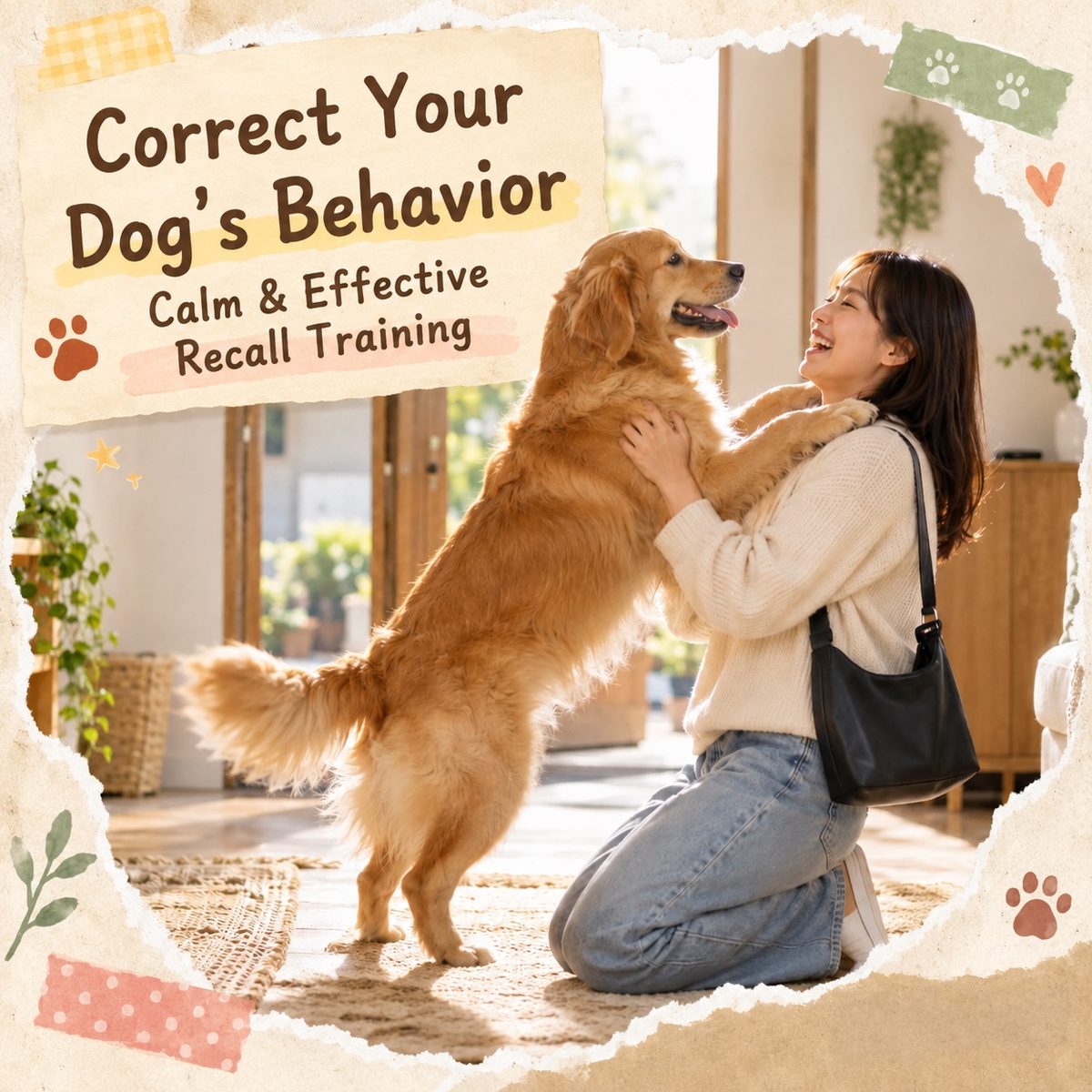
Quick answer: Dogs jump up due to social instinct, attention-seeking, excitement overload, and lack of training. First teach a solid 'sit', then ignore jumping, reward four paws on the floor, and practise with simulated visitors and outdoor scenarios for 10-15 minutes daily to teach calm greetings.
Does your dog get excited and jump up whenever they see someone? This behaviour, though well-intentioned, can frighten or even injure children, the elderly, or people afraid of dogs. Today PetChill analyses the 4 main causes of jumping up and provides a proven 5-step correction training method to help your dog learn calm greetings!
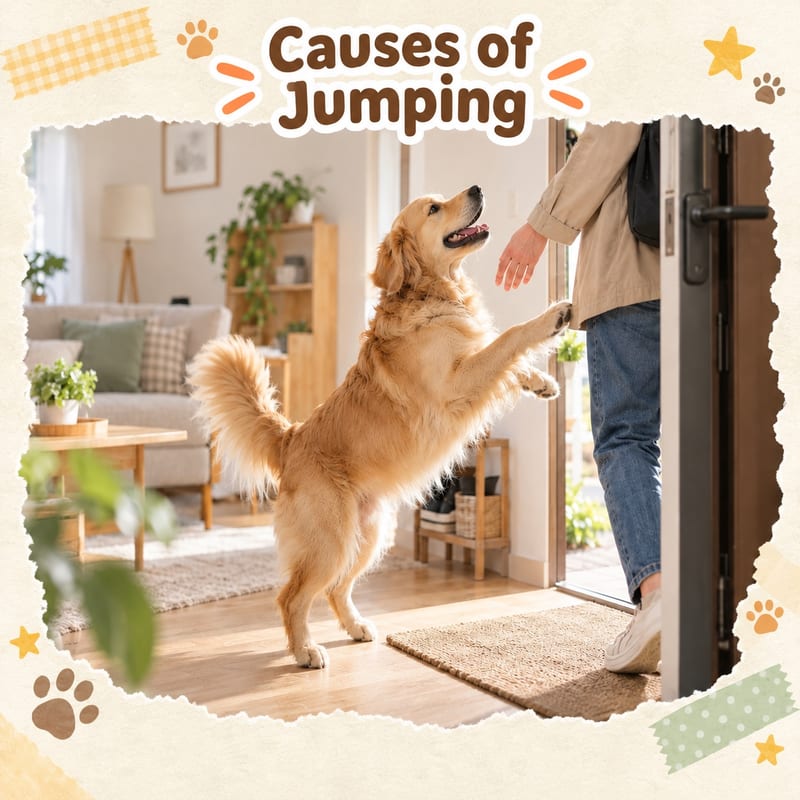
Why do dogs jump up? 4 common causes
1. Natural social instinct
Dogs are used to interacting with peers by jumping from puppyhood. In the dog world, jumping towards another's face is a way to express affection and seek attention. When your dog jumps on you, they're saying: 'Hi! I missed you!'
2. Seeking attention and interaction
Every time a dog jumps up, if we react—whether by pushing away, talking, or petting—it's a 'reward' for the dog. This reinforces the behaviour as an effective way to get attention.
3. Excitement hard to control
When extremely excited, such as when the owner comes home or guests visit, adrenaline surges and the dog finds it hard to control their body. Jumping is often a natural reaction to emotional outburst.
4. Lack of basic obedience training
Dogs without systematic training don't know basic commands like 'sit' or 'wait'. When excited, they can only express themselves instinctively—by jumping up.
5-step correction training method
Step 1: Establish the 'sit' command
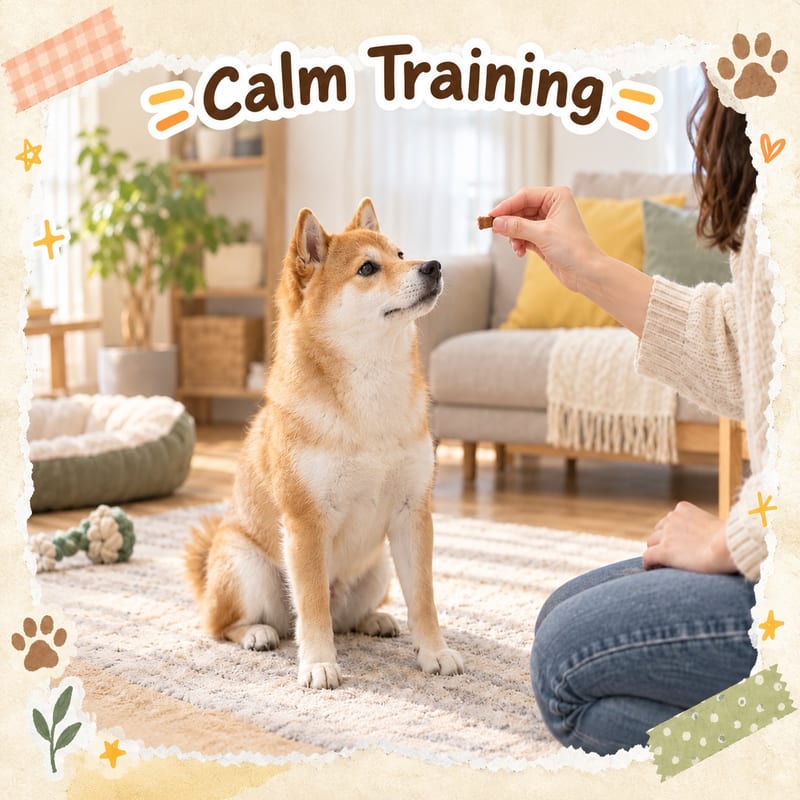
Before correcting jumping, your dog must first learn a solid 'sit'. Whenever the dog is about to jump, immediately give the 'sit' command. When they sit obediently, immediately reward with a treat and verbal praise.
Step 2: Ignore the bad behaviour
When the dog jumps up, completely ignore them—don't push, don't speak, no eye contact. You can turn away with arms crossed so they understand jumping gets 'zero returns'.
Step 3: Reinforce calm greetings
Train family and friends to cooperate: only pet and give attention when the dog has all four paws on the floor or is sitting. As soon as the dog starts jumping, everyone stops interacting and turns away.
Step 4: Simulate visitor scenarios
Ask a friend to ring the doorbell to simulate a guest. Before opening the door, have the dog practise lying down at a distance from the door. After the guest enters and a few minutes pass, when the dog is calm, let them meet the guest.
Step 5: Meeting people outdoors
When walking your dog, if someone approaches, promptly bring the dog close to you. Train the dog to stay focused on you as the person passes; reward good behaviour. Remember, not everyone likes dogs—even a friendly jump can frighten a passer-by.
| Training step | Owner action | Dog response | Immediate reward |
|---|---|---|---|
| 1. Establish sit | Give 'sit' command | Bottom on floor | Treat + praise |
| 2. Ignore jumping | Turn away, arms crossed | Four paws on floor | No attention |
| 3. Calm greeting | Guest only pets when dog sits | Maintains sit | Petting + talking |
| 4. Simulate visit | Friend rings bell → lie down at distance first | Calm | Treat before meeting guest |
| 5. Outdoor encounters | Shorten leash, keep at side | Focus on owner | Reward after passer-by |
Practical tips
-
Collar and short leash method: Attach a short leash to the collar and have the dog sit beside you when visitors come.
-
Keep home greetings brief: Don't be overly enthusiastic when you come home; a brief greeting is enough.
-
Guest cooperation is key: Ask visitors not to speak to or acknowledge the dog.
-
Patient repetition: Behaviour correction takes time; 10-15 minutes daily works best.
-
Never use violence: Training aims to make the dog uncomfortable, not to abuse; actions must be moderate.
Hong Kong small-unit practical checklist: doorway, lift, park in three steps
Hong Kong homes are small, corridors short, lifts crowded, and parks busy—training environments are more challenging. Here's how to break the five steps into three scenarios you can start today.
1. Doorway corridor 'sit calmly to greet'
- Equipment: collar + 30 cm short leash, high-value treats (freeze-dried chicken).
- Process:
- A family member simulates a visitor ringing the bell; you tell the dog to 'sit' and step on the leash end to secure it.
- If the dog gets up and jumps at the door, immediately turn and face the wall, completely ignoring; as soon as they sit again, give a treat.
- Repeat 3-5 times until the dog stays sitting after the bell rings, then open the door.
- Tip: Hong Kong doorbells are loud; start with a phone ring as a 'lower volume version' and gradually increase volume.
2. In the lift 'stay by your feet, no jumping'
- Equipment: front-clip harness + short leash, treats in pocket.
- Process:
- Before entering the lift, ask the dog to 'sit' in a corner of the lobby and wait 5 seconds to cool down before entering.
- Inside the lift, step on the short leash so the dog can only stand or sit by your feet.
- If someone enters and the dog wants to jump, immediately block with your body and use treats to guide them to look at you; reward after 3 seconds of focus.
- Note: Lifts are small; don't let the dog face strangers directly to avoid eye pressure.
3. Park path 'no lunging at passers-by'
- Equipment: adjustable leash (1.2 m mode), treat pouch.
- Process:
- When you see someone approaching from afar, shorten the leash to 1.2 m early so the dog can only walk on your left.
- Use the 'watch me' command (point to your nose) to redirect attention; reward when the dog looks at you for 2 seconds.
- After the person passes, loosen the leash then reward, reinforcing 'passing by = good things happen'.
- Advanced: After 3 successes, shorten the distance by half a step next time, progressing gradually.
Spend 10-15 minutes daily, practising each of the three scenarios 2-3 times. After a week, you'll notice a significant drop in jumping impulses. Remember, Hong Kong's pace is fast, but owners need to slow down and be patient for the fastest results.
Further reading
When to see a veterinarian or behaviour therapist?
In Hong Kong, if you've followed the five steps for two weeks and your dog still loses control when jumping, or shows escalating behaviours like growling or nipping at clothes, don't delay—seek professional help immediately.
Veterinary check
- If jumping is accompanied by drooling, dilated pupils, or rapid heartbeat, it could be hyperthyroidism or another endocrine issue; start with a basic blood test at the vet.
- Bring favourite treats for injections or blood draws to associate the clinic with good things and reduce future stress.
Behaviour therapist
- Hong Kong has several licensed dog behaviour centres that can assess home layouts and redesign 'doorway buffer zones' for small flats.
- If the dog overreacts to strangers, therapists use 'systematic desensitisation' to gradually increase distance from passers-by, then slowly decrease it, marking calm behaviour with treats throughout.
Referral process
- Ask your family vet for a referral letter; some pet insurance covers behaviour consultation fees.
- When booking, specify it's a 'jumping up' issue; centres usually arrange a one-hour initial assessment. Owners should film short videos of the dog's jumping behaviour to help therapists create a personalised plan.
Remember, seeking help early isn't failure—it's the fastest way to get your dog back on track.
📌 Key takeaways
- ✅ First establish a solid 'sit' command, then correct jumping
- ✅ Completely ignore jumping—zero returns
- ✅ Practise with simulated doorbell visits; calm first, then greet
- ❌ Pushing away or talking reinforces jumping
- ❌ Don't let guests interact with the dog immediately upon entering
- ❌ Physical force only makes the dog more anxious
 K9 Natural full guide →
 Feline Natural full guide →