

Quick answer: To get your dog to cooperate during nail trimming, remember to soften the nails first, trim only the front 1/3 each time, then file smooth; combine with early paw-touch training, trim at a height to reduce distraction, and spread it over several days to make your pet less afraid of nail trims.
Why do dogs need regular nail trims?
Have you noticed a clicking sound when your dog walks on wooden floors? That's actually a warning sign of overgrown nails! If a dog's nails are too long, it not only affects their gait but can also cause nails to split, leading to local infection, and even scratch furniture and carpets. Large dogs that exercise regularly on rough surfaces can naturally wear down their nails, but small toy breeds aren't so lucky—their nails grow fast and wear down little, so they need regular trimming from their owners.
According to veterinarians, the ideal nail length is when the nails do not touch the ground. When you hear clicking sounds or see nails curving and catching the ground, it's time to trim your pet's nails!
 Correct method for trimming dog nails
Preparation
First, you need a dedicated nail clipper. There are two common types: scissors-style and guillotine-style. Scissors-style is suitable for thicker, harder nails, while guillotine-style is better for small dogs. Also prepare styptic powder (in case you cut the quick), a file, and treats as rewards.
Three trimming principles
Trim after bathing when nails are soft: After a bath, a dog's nails become softer, making trimming easier and reducing the risk of splitting. This is the most practical tip!
Trim only 1/3: Each nail has blood vessels and nerves at the base; cutting too much or too deep can cause bleeding and pain. Generally, trimming about 1/3 of the front part of the nail is sufficient.
File smooth: After trimming, use a file to smooth the edges to prevent sharp edges from scratching you or your pet.
Post-trim check
After trimming, carefully check each toe for bleeding or damage. If you find any damage, apply iodine to disinfect immediately. Also, keep the hair around the paw pads trimmed short to prevent your pet from slipping.
What is a "dewclaw" and how to handle it?
Dogs' thumbs have degenerated, and they have a "dewclaw" on the inner side slightly above the paw. Dewclaws are purely vestigial and have no real function; they can hinder walking or cause self-injury. Experts recommend having dewclaws removed by a veterinarian within 2 to 3 weeks of birth; just one stitch can prevent future problems. If discovered in an adult dog, you can also consult a veterinarian about removal surgery.
5 tips to make dogs less afraid of nail trims
Many dogs run away at the sight of nail clippers. Actually, with early training, nail trimming can become easy! Here are 5 practical tips:
Early paw-touch training: When your dog is young, frequently touch their paws intentionally, gently massage the toes, and get them used to having their feet handled.
Show tools early: Show the nail clippers to your dog early on, even place them nearby, so they don't seem scary.
Trim at a height: When trimming nails, it's best to place the dog on a grooming table, tabletop, or washing machine—a high place reduces distraction and fidgeting.
Spread over several days: Don't rush! For dogs not used to nail trims, don't expect to finish in 3 minutes. Don't trim for too long at once; you can spread it over several days.
Ask a stranger for help: If your dog is not aggressive toward strangers, try asking a stranger or groomer to help trim; sometimes dogs behave better for strangers.
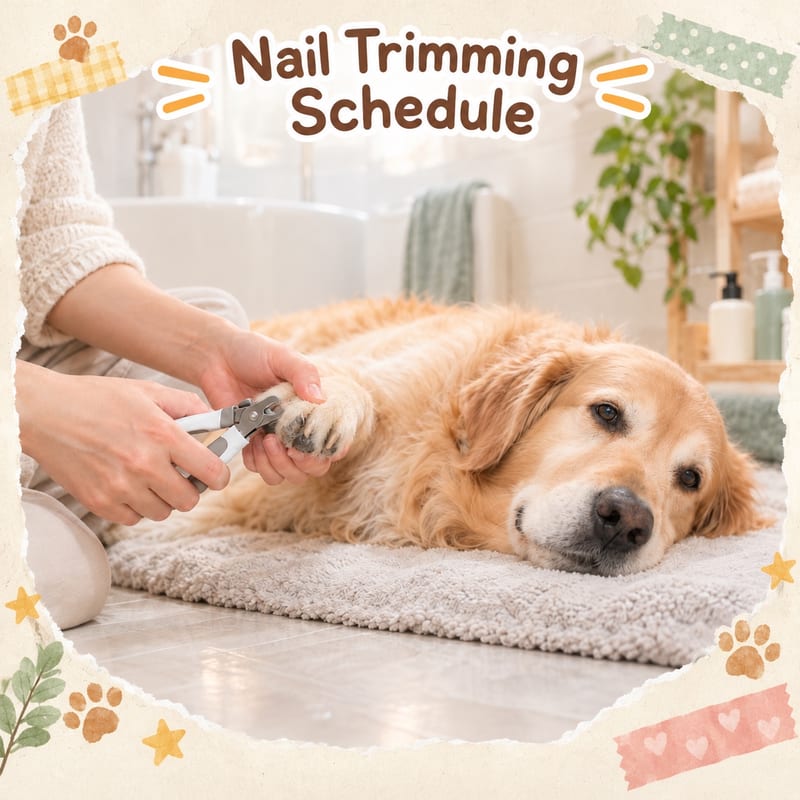 Frequency and precautions for nail trimming
Generally, it's recommended to trim your dog's nails every 2 to 4 weeks. If you often walk your dog on concrete or rough surfaces, the nails wear down more, so you can extend to every 4 weeks. Conversely, if your dog is mostly indoors, you may need to trim every 2 weeks.
Also, regularly giving your dog bones can satisfy their chewing desire and help clean teeth and strengthen gums—a double benefit!
FAQ
Q: What if I cut the quick?
A: If you accidentally cut the quick and it bleeds, don't panic. Immediately apply styptic powder to the wound and press for about 30 seconds; if you don't have styptic powder, you can use flour or cornstarch instead. Then apply iodine to disinfect. If bleeding continues for more than 5 minutes, take your dog to the veterinarian immediately.
Q: How do I know when to trim the nails?
A: When you hear a clicking sound as your dog walks, or the nails are curved and catching the ground, it's time to trim. The normal length is when the dog stands on a flat surface and the nails do not touch the ground.
Q: How do I trim black nails?
A: Black nails make it harder to see the quick, so trim only a tiny bit at a time (about 1-2mm) and then check the cross-section. When you see a pink dot in the center of the cross-section, you are close to the quick and should stop trimming. If you're not confident, ask a veterinarian or professional groomer for help.
Q: When should I start trimming a puppy's nails?
A: Puppies should have their dewclaws removed by a veterinarian at 2 to 3 weeks of age. For routine nail trimming, you can start around 8 weeks old, but the focus is not on how much you trim, but on getting them used to having their paws touched and seeing the tools, building a foundation for future trims.
Q: What happens if I don't trim the nails?
A: Overgrown nails can alter your dog's gait and may lead to joint problems over time. Long nails are also prone to splitting and infection, and can scratch owners and furniture. In severe cases, nails can grow back into the paw pads, causing severe pain.
PetChill's Reminder: Nail trimming is a routine care every dog owner faces; with the right method and patient training, your pet will gradually get used to it! If your dog is really resistant, don't force it—seek help from a professional groomer or veterinarian.
Hong Kong Small Flat Practical Checklist: Trim Neatly Even in a 300 sq ft Unit
Living small in Hong Kong doesn't mean you can't trim your dog's nails. Here are practical tips designed for Hongkongers, using only the tools and methods mentioned in this article—no need to buy large equipment.
1. Turn the bathroom into a temporary grooming table
Before starting, give your dog a bath, and trim right at the edge of the bathtub while the nails are soft. The bathtub edge is the right height, the dog stands inside without slipping, and you don't have to bend over. After trimming, immediately turn on the shower to wash away clippings—clean and tidy.
2. Top of the washing machine = mobile high spot
If the bathroom is too small, place the dog on top of the washing machine. Remember to lay a towel for grip and place a few small treats to distract. The washing machine height is moderate, and the dog can look out the window, not looking around.
3. Styptic powder substitute
Hong Kong pharmacies may not have pet-specific styptic powder readily available; you can use kitchen staples like cornstarch or tapioca starch, pressing on the wound for 30 seconds to stop bleeding. Then disinfect with household iodine.
4. Trim different areas on different days
In small units, the biggest fear is the dog struggling and bumping into furniture. It's recommended to trim front paws today and back paws tomorrow, finishing in 5 minutes each time. Keep the nail clipper and file on the shoe cabinet for easy access, so you don't have to haul out a big box of tools each time.
5. When to go to the vet
If after cutting the quick you press with cornstarch for 5 minutes and bleeding hasn't stopped, or the dog is limping because a nail has grown into the paw pad, take a taxi to the nearest 24-hour veterinary clinic immediately. On Hong Kong Island, you can go to Happy Valley, Kowloon City, or Mong Kok for night consultations; travel time is generally within 15 minutes.
Remember, Hong Kong's humid weather means you should dry your dog's paws after trimming to prevent inflammation between the toes. By making good use of existing space at home, you can easily trim nails even in a small flat!
| Tool/Step | Purpose/Precautions |
|---|---|
| Scissors-style nail clipper | Suitable for thick, hard nails |
| Guillotine-style nail clipper | Suitable for small dogs |
| Styptic powder/flour | Stops bleeding if quick is cut |
| File | Smooths edges after trimming |
| Treat rewards | Build positive associations |
| High place (grooming table/washing machine) | Reduces distraction and fidgeting |
| Check every 2-4 weeks | Indoor dogs every 2 weeks; can extend to 4 weeks if often walking on concrete |
Further reading
📌 Key takeaways
- ✅ After bathing, nails become soft, making trimming easier and less prone to splitting
- ✅ Trim only the front 1/3 of the nail to avoid cutting the quick
- ✅ Dewclaws have no function; removal within 2-3 weeks of birth is simplest
- ❌ Don't trim all at once; spread over several days to reduce stress
- ❌ Waiting until you hear clicking sounds means the nails are already too long