
🤖 AI Summary
Dogs don't pee indoors on purpose — there are 5 major causes: not neutered + marking behaviour, anxiety + stress, health problems, lack of training, and senior incontinence. To solve indoor peeing, find the cause and treat it accordingly. If the indoor peeing is due to health problems (e.g. cystitis, diabetes, kidney disease), take your dog to the vet. If it's due to behavioural problems (e.g. not neutered + marking behaviour, anxiety + stress, lack of training), use positive training + environmental management.
• Dogs don't pee indoors on purpose — there are 5 major causes
• Find the cause and treat it accordingly — health problems require a vet visit
• Positive training + environmental management — never punish physically
Quick answer: Dogs don't pee indoors on purpose — there are 5 major causes: not neutered + marking behaviour, anxiety + stress, health problems, lack of training, and senior incontinence. To solve indoor peeing, find the cause and treat it accordingly. If the indoor peeing is due to health problems (e.g. cystitis, diabetes, kidney disease), take your dog to the vet. If it's due to behavioural problems (e.g. not neutered + marking behaviour, anxiety + stress, lack of training), use positive training + environmental management.
Table of Contents
-
Dogs don't pee indoors on purpose — 5 major causes
-
Cause 1: Not neutered + marking behaviour
-
Cause 2: Anxiety + stress
-
Cause 3: Health problems
-
Cause 4: Lack of training
-
Cause 5: Senior incontinence
-
How to solve indoor peeing
-
FAQ
Dogs don't pee indoors on purpose — 5 major causes
Dogs don't pee indoors on purpose — there are 5 major causes.
The 5 major causes:
| Cause | Description | Solution |
|---|---|---|
| Not neutered + marking behaviour | Unneutered male dogs use urine to mark territory | Neutering + positive training |
| Anxiety + stress | Anxiety + stress can cause indoor peeing | Identify the source of anxiety + positive training |
| Health problems | Cystitis + diabetes + kidney disease can cause indoor peeing | Take your dog to the vet |
| Lack of training | Puppies + new dogs not yet trained will pee indoors | Positive training + take your dog out at regular times |
| Senior incontinence | Weakened bladder muscles in senior dogs cause incontinence | Take your dog to the vet + use pee pads |
Take note:
- Dogs don't pee indoors on purpose — find the cause and treat it accordingly
- If the indoor peeing is due to health problems, take your dog to the vet
- If the indoor peeing is due to behavioural problems, use positive training + environmental management
Cause 1: Not neutered + marking behaviour
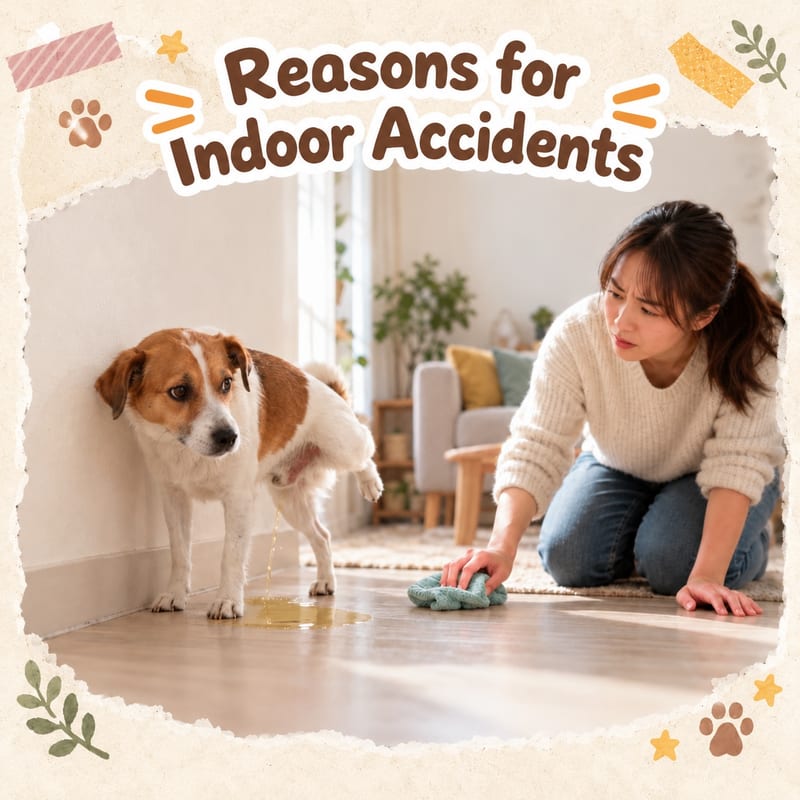
Unneutered male dogs use urine to mark territory — it's a dog's instinct.
Characteristics:
- Unneutered male dogs use urine to mark territory — it's a dog's instinct
- Marking usually occurs on vertical surfaces — e.g. walls, sofas, doors
- Marking usually involves a small amount of urine — not a large amount
Solutions:
- Neutering — neutering can reduce marking behaviour
- Positive training — teach your dog to urinate in a designated spot
- Environmental management — use pee pads + clean regularly
Hong Kong vet fee reference:
- Male dog neutering: HKD 2,000 to 5,000
- Female dog neutering: HKD 3,000 to 8,000
Cause 2: Anxiety + stress
Anxiety + stress can cause indoor peeing — it's an emotional response.
Characteristics:
- Anxiety + stress can cause indoor peeing — it's an emotional response
- Common causes of anxiety + stress: separation anxiety, moving house, new family member, new pet
- Anxiety + stress-related indoor peeing usually involves a large amount of urine — not a small amount
Solutions:
- Identify the source of anxiety — observe your dog's behaviour
- Positive training — teach your dog to relax + adapt to the new environment
- Environmental management — provide a safe space + avoid frightening experiences
Common sources of anxiety:
- Separation anxiety — owner leaving the house
- Moving house — new environment
- New family member — new baby/new pet
- Loud noises — thunder/fireworks
Cause 3: Health problems
Cystitis + diabetes + kidney disease can cause indoor peeing — these are health problems.
Common health problems:
| Disease | Symptoms | Treatment |
|---|---|---|
| Cystitis | Frequent urination + difficulty urinating + blood in urine | Antibiotics + vet treatment |
| Diabetes | Excessive drinking and urination + weight loss + fatigue | Insulin + special diet |
| Kidney disease | Excessive drinking and urination + loss of appetite + fatigue | Medication + special diet |
| Urinary tract infection | Frequent urination + difficulty urinating + blood in urine | Antibiotics + vet treatment |
| Bladder stones | Difficulty urinating + blood in urine + abdominal pain | Surgery + medication |
Solutions:
- Take your dog to the vet — if the indoor peeing is due to health problems
- Medication — follow vet instructions
- Special diet — follow vet instructions
Hong Kong vet fee reference:
- Cystitis treatment: HKD 500 to 2,000
- Diabetes medication: HKD 500 to 1,000/month
- Kidney disease medication: HKD 500 to 1,500/month
- Bladder stone surgery: HKD 10,000 to 30,000
Cause 4: Lack of training
Puppies + new dogs not yet trained will pee indoors — it's a lack of training.
Characteristics:
- Puppies + new dogs not yet trained will pee indoors — it's a lack of training
- Puppies have weaker bladder control — they need to be taken out at regular times
- New dogs haven't adapted to the new environment — they need time to adjust
Solutions:
- Positive training — teach your dog to urinate in a designated spot
- Take your dog out at regular times — every 2 to 3 hours
- Reward — reward your dog when they urinate in the designated spot
Positive training methods:
- Take your dog out at regular times — every 2 to 3 hours
- Reward — reward your dog when they urinate in the designated spot
- Never punish physically — physical punishment makes dogs fearful
Cause 5: Senior incontinence
Weakened bladder muscles in senior dogs cause incontinence — it's senior incontinence.
Characteristics:
- Weakened bladder muscles in senior dogs cause incontinence — it's senior incontinence
- Senior incontinence is usually involuntary — the dog doesn't know they're doing it
- Senior incontinence usually involves a small amount of urine — not a large amount
Solutions:
- Take your dog to the vet — if the incontinence is due to health problems
- Use pee pads — prevent your dog from peeing around the house
- Take your dog out at regular times — every 2 to 3 hours
Common causes of senior incontinence:
- Weakened bladder muscles — weakened bladder muscles in senior dogs
- Neurological problems — neurological problems in senior dogs
- Hormonal problems — hormonal problems in senior dogs
How to solve indoor peeing
To solve indoor peeing, find the cause and treat it accordingly.
Steps to solve indoor peeing:
| Step | Action | Notes |
|---|---|---|
| Step 1: Observe | Observe your dog's behaviour + peeing patterns | Record time + location + situation |
| Step 2: Find the cause | Identify the cause of the indoor peeing | Is it a health problem or a behavioural problem? |
| Step 3: Treat accordingly | Treat accordingly — health problems require a vet, behavioural problems require positive training | Never punish physically |
| Step 4: Environmental management | Environmental management — use pee pads + clean regularly | Prevent your dog from peeing around the house |
| Step 5: Patience + consistency | Patience + consistency — solving indoor peeing takes time | Don't give up |
Positive training methods:
- Reward — reward your dog when they urinate in the designated spot
- Never punish physically — physical punishment makes dogs fearful
- Take your dog out at regular times — every 2 to 3 hours
Environmental management methods:
- Use pee pads — prevent your dog from peeing around the house
- Clean regularly — use an enzymatic cleaner to clean urine stains
- Avoid frightening experiences — avoid startling your dog
Hong Kong practical guide: How small flats + busy Hongkongers can see results in 7 days
Hong Kong homes are small and busy. To solve indoor peeing, the key is "observe → zone → schedule → reward → clean".
Day 1–2: Record patterns
Use your phone to note your dog's water intake, food intake, and urination times and locations. After one night you'll see whether it's "health-related urgency" or "behavioural marking".
Day 3–4: Zone management
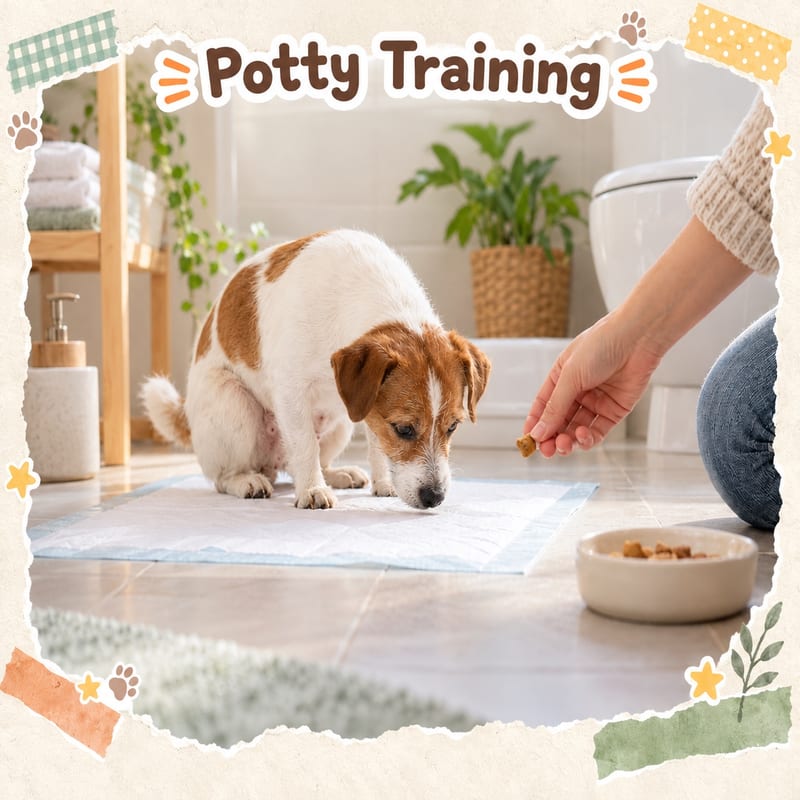
Even a 300 sq ft flat is enough: place a playpen + pee pads in a corner of the living room, and lay plastic mats outside the playpen to prevent slipping. Before your dog learns, use a leash to limit their range and reduce chances of "ambushing" wall corners.
Day 5–6: Scheduled walks
For Hongkongers working 8am to 8pm, set "three time slots":
- 7:30am: 10 minutes before leaving, go downstairs or to the pet toilet downstairs
- 12:30pm: ask family/pet sitter to take the dog out once
- 7:30pm: immediately go to the designated spot after getting home Reward immediately after each successful toilet trip with a treat + verbal praise "Good!", rewarding within 3 seconds is most effective.
Day 7: Cleaning up
Hong Kong is humid; lingering urine odour will encourage your dog to mark again. Use an enzymatic cleaner (available at pet shops), spray thoroughly, wait 10 minutes, then wipe, and finally run a dehumidifier for 30 minutes to eliminate residual odour.
When to see a vet?
If you see blood in the urine for two consecutive days, your dog constantly licking their genital area, or sudden loss of toilet training despite being trained, book a vet immediately; don't wait for the weekend. A walk-in at a Hong Kong daytime clinic including basic urine test is about HKD 400–600; get results first before continuing training with peace of mind.
Further reading
📌 Key takeaways
- ✅ First observe the peeing pattern to distinguish health or behavioural problems
- ✅ Take your dog to the vet immediately for health problems; don't delay
- ✅ Positive training + environmental management; never punish physically
- ❌ Physical punishment only makes dogs more fearful and pee more indoors
- ❌ Don't just scold; find the real cause