
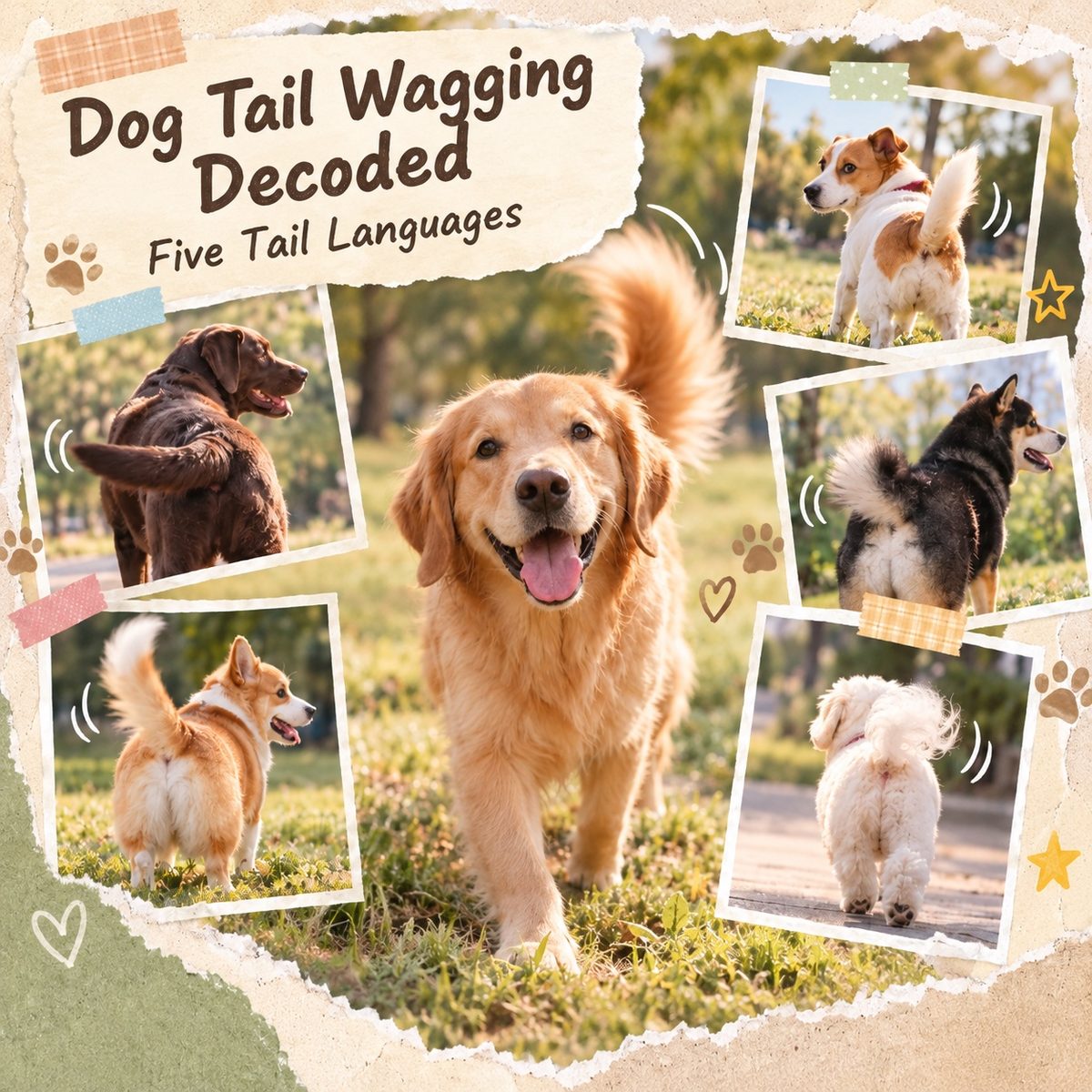
🤖 AI Summary
A dog's tail wag doesn't always mean happiness — a dog's tail is their 'language' and can express different emotions. There are 5 tail-wagging languages: happy + excited, nervous + anxious, alert + warning, submissive + fearful, friendly + curious. Note: the direction, speed and height of the wag all matter — wagging to the right means happy, to the left means nervous. To understand a dog's emotions, observe their tail language plus other body language (ears, posture, eyes).
• A dog's tail wag doesn't always mean happiness — there are 5 tail-wagging languages
• Wagging to the right means happy, to the left means nervous
• Observe tail language plus other body language (ears, posture, eyes)
Quick answer: A dog's tail wag doesn't always mean happiness — a dog's tail is their 'language' and can express different emotions. There are 5 tail-wagging languages: happy + excited, nervous + anxious, alert + warning, submissive + fearful, friendly + curious. Note: the direction, speed and height of the wag all matter — wagging to the right means happy, to the left means nervous. To understand a dog's emotions, observe their tail language plus other body language (ears, posture, eyes).
Table of Contents
-
A dog's tail wag doesn't always mean happiness — 5 tail-wagging languages
-
Tail language 1: Happy + excited
-
Tail language 2: Nervous + anxious
-
Tail language 3: Alert + warning
-
Tail language 4: Submissive + fearful
-
Tail language 5: Friendly + curious
-
What the direction, speed and height of the wag mean
-
How to observe a dog's tail language
-
FAQ
A dog's tail wag doesn't always mean happiness — 5 tail-wagging languages
A dog's tail wag doesn't always mean happiness — a dog's tail is their 'language' and can express different emotions.
Scientific research:
- A dog's tail is their 'language' — it can express different emotions
- The direction, speed and height of the wag all matter — wagging to the right means happy, to the left means nervous
- Observe the dog's tail language plus other body language (ears, posture, eyes)
The 5 tail-wagging languages:
| Language | Emotion | Characteristics |
|---|---|---|
| Happy + excited | Happy + excited | Tail raised + fast wagging + wagging to the right |
| Nervous + anxious | Nervous + anxious | Tail lowered + slow wagging + wagging to the left |
| Alert + warning | Alert + warning | Tail stiff + raised + motionless |
| Submissive + fearful | Submissive + fearful | Tail tucked between hind legs + motionless |
| Friendly + curious | Friendly + curious | Tail horizontal + medium-speed wagging |
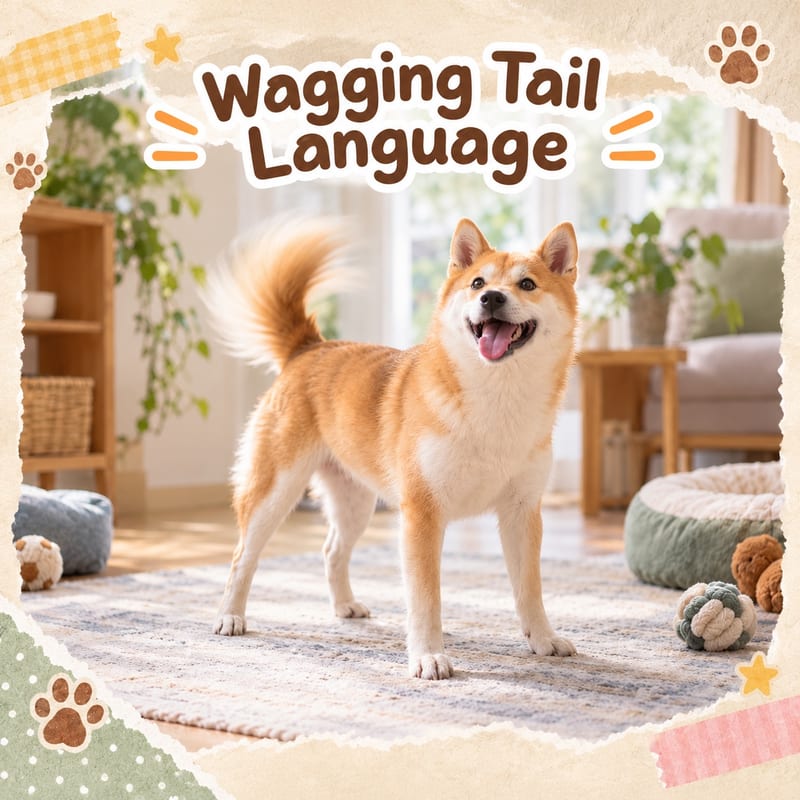
Tail language 1: Happy + excited
When a dog is happy + excited, their tail is raised + wags fast + wags to the right.
Characteristics:
- Tail raised — higher than the back
- Fast wagging — faster than 2 times per second
- Wagging to the right — wagging to the right means happy
Other body language:
- Ears forward — happy + excited
- Soft eyes — happy + excited
- Relaxed posture — happy + excited
Common situations:
- Seeing the owner come home — happy + excited
- Seeing treats — happy + excited
- Seeing other dogs — happy + excited
Tail language 2: Nervous + anxious
When a dog is nervous + anxious, their tail is lowered + wags slowly + wags to the left.
Characteristics:
- Tail lowered — lower than the back
- Slow wagging — slower than 1 time per second
- Wagging to the left — wagging to the left means nervous
Other body language:
- Ears back — nervous + anxious
- Shifty eyes — nervous + anxious
- Tense posture — nervous + anxious
Common situations:
- Going to the veterinarian — nervous + anxious
- Seeing strangers — nervous + anxious
- Hearing loud noises — nervous + anxious
Tail language 3: Alert + warning
When a dog is alert + warning, their tail is stiff + raised + motionless.
Characteristics:
- Tail stiff — motionless
- Raised — higher than the back
- Motionless — alert + warning
Other body language:
- Ears forward — alert + warning
- Sharp eyes — alert + warning
- Stiff posture — alert + warning
Common situations:
- Seeing strangers — alert + warning
- Hearing unfamiliar sounds — alert + warning
- Protecting the owner — alert + warning
Tail language 4: Submissive + fearful
When a dog is submissive + fearful, their tail tucks between the hind legs + stays motionless.
Characteristics:
- Tail tucked between hind legs — submissive + fearful
- Motionless — submissive + fearful
Other body language:
- Ears back — submissive + fearful
- Shifty eyes — submissive + fearful
- Lowered posture — submissive + fearful
Common situations:
- Being scolded — submissive + fearful
- Seeing a big dog — submissive + fearful
- Going to an unfamiliar environment — submissive + fearful
Tail language 5: Friendly + curious
When a dog is friendly + curious, their tail is horizontal + wags at medium speed.
Characteristics:
- Tail horizontal — level with the back
- Medium-speed wagging — 1 to 2 times per second
Other body language:
- Ears forward — friendly + curious
- Soft eyes — friendly + curious
- Relaxed posture — friendly + curious
Common situations:
- Seeing a new toy — friendly + curious
- Seeing a new place — friendly + curious
- Seeing something new — friendly + curious
What the direction, speed and height of the wag mean
The direction, speed and height of a dog's wag all matter:
| Feature | Meaning | Example |
|---|---|---|
| Wagging to the right | Happy + excited | Seeing the owner come home |
| Wagging to the left | Nervous + anxious | Going to the veterinarian |
| Fast wagging | Happy + excited | Seeing treats |
| Slow wagging | Nervous + anxious | Seeing strangers |
| Raised | Happy + alert | Seeing other dogs |
| Lowered | Nervous + fearful | Being scolded |
| Tucked between hind legs | Submissive + fearful | Seeing a big dog |
Scientific research:
- 2007 Italian study: dogs wag to the right when happy, to the left when nervous
- 2013 Italian study: dogs observe other dogs' wagging direction — wagging to the right is friendly, to the left is alert
How to observe a dog's tail language
To understand a dog's emotions, observe their tail language plus other body language (ears, posture, eyes).
Methods for observing a dog's tail language:
| Method | How | Note |
|---|---|---|
| Observe the tail | Observe the tail's direction + speed + height | Wagging to the right means happy, to the left means nervous |
| Observe the ears | Observe the ears' direction | Ears forward means happy + alert, ears back means nervous + fearful |
| Observe the posture | Observe whether the posture is relaxed/tense | Relaxed posture means happy, tense posture means nervous |
| Observe the eyes | Observe whether the eyes are soft/sharp | Soft eyes mean happy, sharp eyes mean alert |
Notes on observing a dog's tail language:
- Look at the whole picture — don't just watch the tail
- Consider the context — different contexts have different meanings
- Consider the dog's personality — different dogs have different personalities
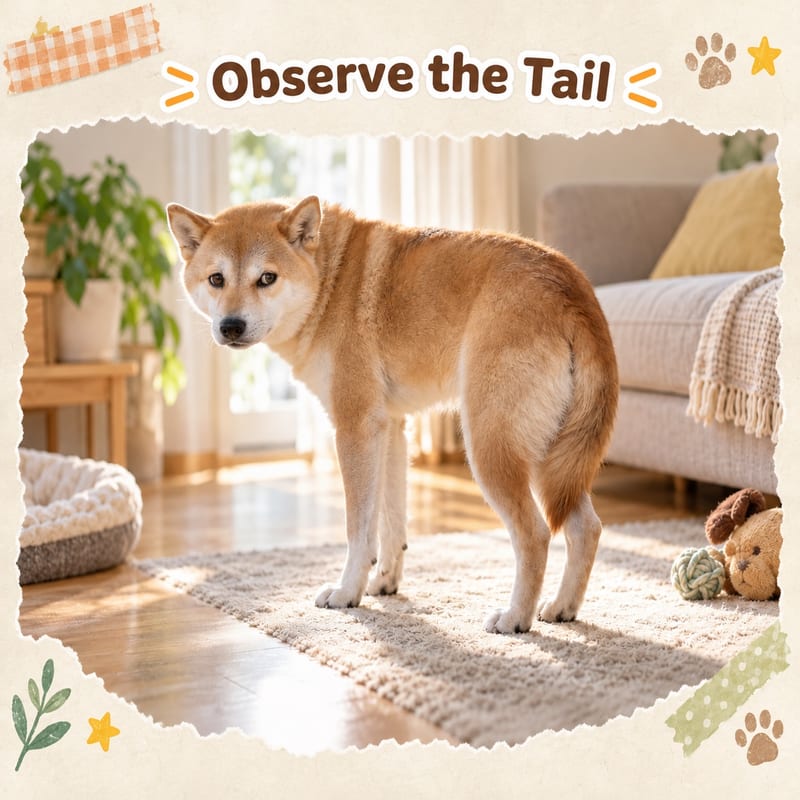
Hong Kong small-flat practicalities: small units, busy street views — how to read tails accurately?
Hong Kong homes are small, dogs have limited space, and tails often bump into furniture, making it easy for owners to misunderstand. Here is a 'three-step tail-watching method' and 'two-scenario checklist' to help you read accurately in a 200 sq ft flat, in the lift, or on a cha chaan teng terrace.
Three-step tail-watching method
- First freeze: stop for 3 seconds and look at the dog's whole body, not just stare at the tail.
- Then break it down: tail height (high / horizontal / low / tucked), wagging direction (right / left / none), speed (fast / medium / slow / still).
- Read together: simultaneously check ear direction, soft/sharp eyes, and whether the limbs are relaxed or tense.
Scenario checklist
Inside the lift
- Tail tucked under hind legs + ears back: immediately shorten the lead, use your body to block strangers' view, and comfort the dog only after leaving the lift.
- Tail horizontal slow wag + shifty eyes: the dog is nervous about the metal floor or sounds; crouch down and speak softly, then reward once on the ground.
Cha chaan teng terrace
- Tail raised fast right wag: the dog is excited by the street view, but the terrace is crowded and noisy; shorten the stay to avoid overstimulation.
- Tail stiff, raised and motionless: the dog may have seen food at the next table and is on alert; best to lead the dog away immediately to avoid conflict.
Tips for small units
- Stick bump guards on furniture edges to reduce tail bumping and tucking, so you can see the natural wagging range more easily.
- Use a 'sit in place' cue so the dog shows tail language in a fixed position, making it easier for you to observe.
- If a dog tucks its tail long-term and doesn't relax even at home in a quiet environment, take them to a veterinarian to rule out pain or emotional issues.
Remember, Hong Kong's environment is cramped and a dog's tail language may be limited by space, but ears, eyes and posture will still tell the truth. Practise the three-step method and you won't misread your dog's mood in any scenario.
Further reading
📌 Key takeaways
- ✅ Wagging to the right + raised = happy excited
- ✅ Tail tucked under hind legs = submissive fearful
- ❌ Assuming a dog is always happy just because it wags
- ❌ Only looking at the tail and not the ears or eyes
- ✅ Observe the whole body language for accuracy