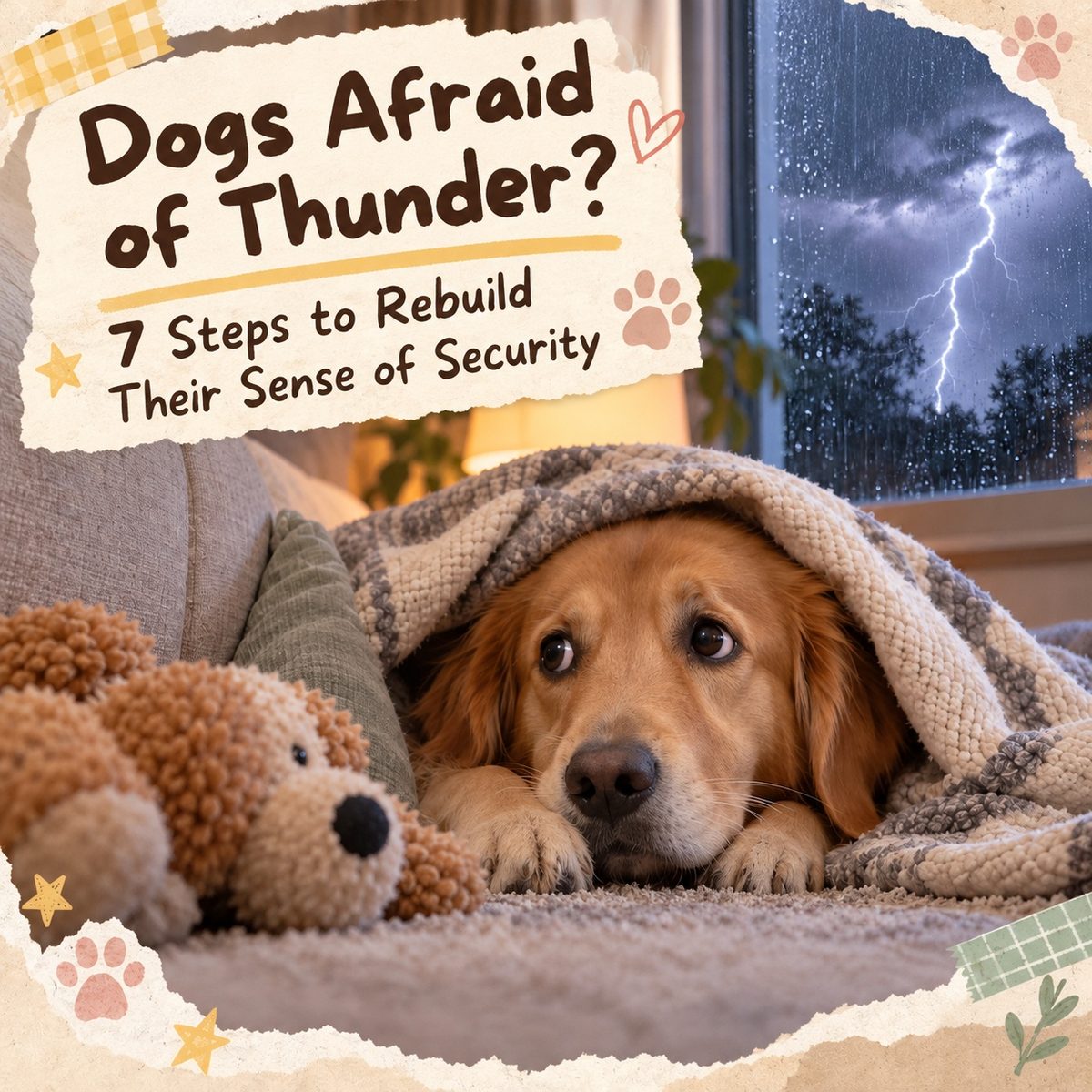
Quick answer: When a dog is afraid of thunder, the key is for the owner to stay calm first, stop "comfort-based rewarding," and then use seven steps including creating a safe haven, sound desensitization, and the whole family acting happy to help your pet re-associate "thunder = good things" and gradually overcome fear.
Every thunderstorm season, many dog owners face the same problem: their dog trembles, barks frantically, or even hides under the bed at the sound of thunder. Did you know? Research shows that over 30% of dogs have varying degrees of fear response to thunder, and the wrong "comfort" approach may actually deepen the fear. This article, from the perspective of canine behavior science, breaks down the real reasons dogs fear thunder and provides a 7-step correction method reviewed by veterinary behavior experts to help your pet rebuild a sense of security.
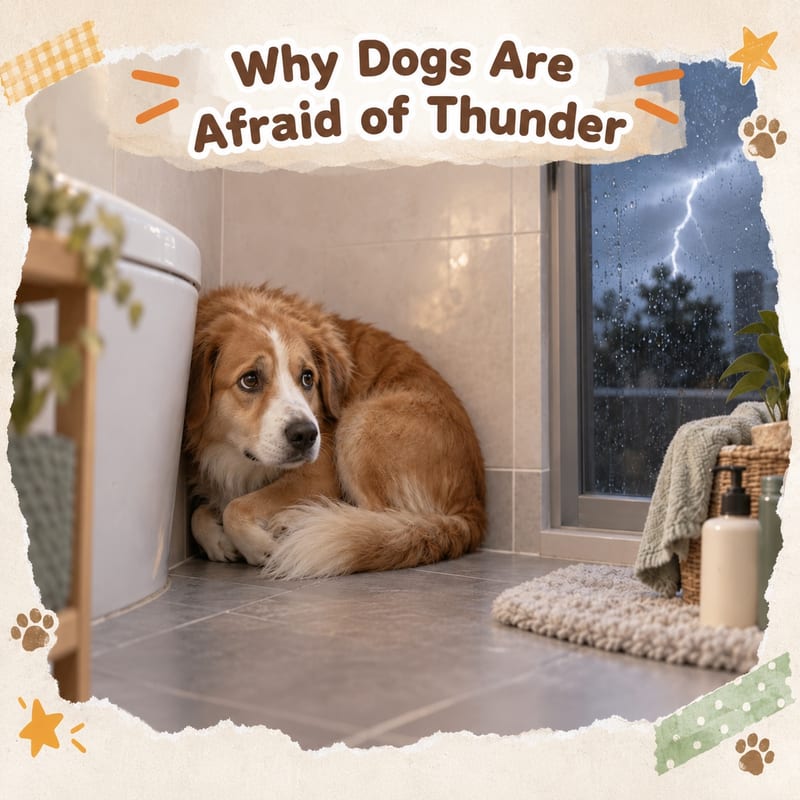
Why are dogs afraid of thunder? 5 key causes
Cause 1: The owner's wrong "comfort" actually rewards fearful behavior
When your dog trembles at thunder, you rush over, pick it up, stroke it, and speak softly to comfort it—this seemingly loving gesture is actually the main culprit behind thunder phobia. From the dog's perspective, your panicked reaction and hugging tell it "this is really scary." Worse, when you pet a trembling dog, you are actually rewarding the trembling behavior, reinforcing fear instead of reducing it.
Cause 2: Dogs' "social referencing" learning mechanism
Canine behavior research shows that the dog-owner relationship is similar to a child's attachment to its mother. Dogs observe their owner's emotional reactions to decide how to respond to unfamiliar stimuli. This is called "social referencing." When thunder rumbles, if the owner acts as if nothing is happening, the dog learns "this is no big deal"; conversely, if the owner appears nervous, the dog concludes thunder is dangerous.
Cause 3: The multiple sensory stimuli of thunder
Thunder is not just "loud noise." It comes with low-frequency vibrations, bright flashes of lightning, changes in air pressure, and even the special smell of rain, all of which stimulate a dog's keen senses. A dog's hearing is about 4 times more sensitive than humans and can detect higher frequencies, so thunder is a much stronger stimulus for them.
Cause 4: Missing the golden period for "habituation learning"
In canine behavior science, "habituation" means a dog becomes accustomed to a stimulus through repeated exposure until it no longer reacts. If a dog has the opportunity to experience thunder in a safe environment during puppyhood (the critical socialization period from 3-14 weeks of age), they usually adapt naturally. However, many dogs lack this early experience, leading to fear of thunder in adulthood.
Cause 5: Anticipatory anxiety of fear
Dogs are very good at detecting environmental changes. Thunder is often preceded by darkening skies, pressure changes, and approaching wind and rain, so dogs start feeling uneasy before the thunder actually sounds. This "anticipatory anxiety" makes the fear response appear earlier and makes correction more difficult.
7-step correction method: help your dog stop fearing thunder
Step 1: Create a "safe haven"—crate training
Giving your dog a place it considers absolutely safe is the first step in correcting thunder phobia. This place can be a crate, a specific bed, or a quiet corner. The key is to let the dog enter voluntarily and associate this space with positive experiences. Usually, place its favorite toys and treats there so it feels this is a "happy base."
Step 2: Stop the wrong comforting behavior
When thunder rumbles, resist the urge to pick up your dog. Do not pet the trembling dog, do not speak softly to comfort it, and do not show a worried expression. Your calmness is the best reassurance for your dog. Remember: you are not being cold; you are using behavior to tell it "this really is nothing."
Step 3: Put on a "thunder is happy" family theater
This is the core technique recommended by Dr. Tai Keng-chi: when you sense thunder is coming, the whole family starts "acting." Take out the dog's favorite food and toys, act very happy and excited, but absolutely do not call the dog's name or pay special attention to it. Let the dog observe the link "thunder = whole family is happy" and slowly change its negative perception of thunder.
Step 4: Sound desensitization training
On days without thunderstorms, play recorded thunder sounds, starting at very low volume and gradually increasing. Pair this with the "happy performance" from Step 3 so the dog slowly adapts to thunder in a safe environment. This process requires patience; each session should last only 5-10 minutes, and do not rush.
Step 5: Build a conditioned reflex of "thunder = good things"
Every time thunder sounds (or the recording plays), immediately give your dog a very high-value reward, such as its favorite chicken jerky or cheese cubes. The key is: the reward must be given within 1-2 seconds after the thunder to let the dog's brain build the neural connection "thunder → good things happen."
Step 6: Create a calm environment
During thunderstorm season, prepare some auxiliary tools for your dog: close windows to reduce thunder volume, turn on a white noise machine or soft music to mask thunder, use pheromone sprays (such as Adaptil) to create a reassuring atmosphere. These environmental adjustments help keep the dog's anxiety level lower during correction.
Step 7: Seek professional help
If your dog's thunder phobia is severe enough to affect daily life (e.g., completely refusing food, excessive panting, or even aggression), seek help from a veterinary behavior expert. In some cases, the veterinarian may recommend short-term use of anti-anxiety medication combined with behavior correction training for best results.
| Step | Hong Kong practical tips |
|---|---|
| 1. Safe haven | Use a crate/closet bottom + favorite treats and toys |
| 2. Stop wrong comfort | Owner acts calm, no petting or cuddling |
| 3. Family theater | Before thunder, whole family eats chicken pot, plays tug-of-war |
| 4. Sound desensitization | YouTube thunder recording + Bluetooth speaker, increase volume step by step |
| 5. Conditioned reflex | Immediately give high-value treats when thunder sounds |
| 6. Environmental noise reduction | Close windows + turn on air-conditioning white noise + Adaptil plug-in |
| 7. Seek help | For severe cases, go to Mong Kok/North Point veterinary behavior clinic |
Prevention is better than helps manage: thunder adaptation training for puppies
If you have a puppy, congratulations—now is the golden period to prevent thunder phobia. During the critical socialization period from 3-14 weeks of age, exposing your dog to various sounds (including thunder recordings) in a safe, pleasant environment can greatly reduce the chance of developing fear in adulthood. Remember: prevention is always easier than correction.

Hong Kong small-unit practical checklist: thunder training works even without a big house
Living small in Hong Kong doesn't mean you can't train. Here is a "thunder phobia correction lazy pack" designed for units under 300 sq ft:
1. Location – Use the side of a wardrobe or under the bed as a "safe haven." Put a foldable soft mat there, usually put away, lay it out before thunder, no space taken.
2. Equipment – A phone + Bluetooth speaker is enough for desensitization. Search YouTube for "thunder sounds 1 hour," start at 5% volume, increase by 5% each time, stop when the dog's ears twitch but it's not scared.
3. Schedule – Start only when the Hong Kong Observatory issues a thunderstorm warning. When you get the "Thunderstorm Warning in force" push notification, immediately the whole family enters "happy mode": turn on lights, play background music, tear chicken breast strips. Remember not to call the dog's name; let it come over on its own.
4. Neighbor management – Poor soundproofing? Tell your neighbor in advance: "There will be some thunder recording practice tonight, about 10 minutes, please bear with us." Avoid complaints.
5. When to stop – If the dog is panting heavily, shaking its head, drooling, or bumping into doors, stop training immediately and try again the next day. If it keeps worsening, book a veterinarian with a behavior specialty in North Point or Mong Kok; don't delay.
Further reading
📌 Key takeaways
- ✅ Owner's calmness is the strongest reassurance
- ✅ Create a "safe haven" for the dog to hide voluntarily
- ✅ Whole family acts: thunder = happy party
- ❌ Never pet a trembling dog; it rewards fear
- ❌ Don't start desensitization at high volume all at once
- ✅ For severe cases, see a veterinary behavior expert ASAP
 Royal Canin full guide →