
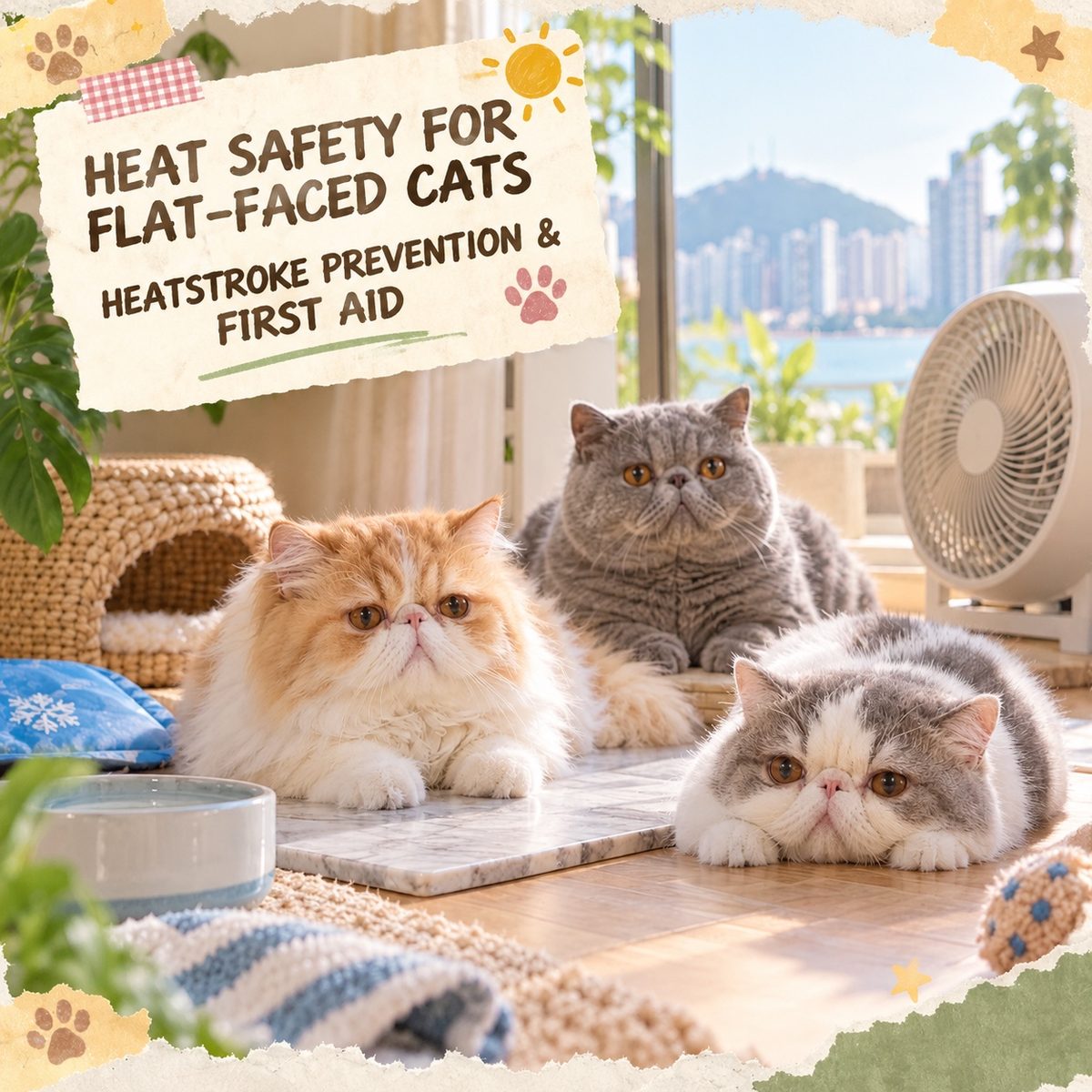
Quick answer: Hong Kong summer is hot and humid. Flat-faced cats have short nasal passages and narrow respiratory tracts, leading to low heat dissipation efficiency and making them extremely prone to heatstroke. Once symptoms such as panting, drooling, or collapse appear, immediately move the cat away from the heat source, cool it with a slightly damp towel, and take it to a veterinarian. Daily measures include keeping indoor temperature at 26-28°C, providing multiple water stations, and avoiding direct sunlight and enclosed spaces. These are the key to saving lives.
Hong Kong summers are hot and humid, with temperatures often soaring above 32°C. For flat-faced cats with inherently short respiratory tracts, every summer is a challenge. If you own a Persian, Exotic Shorthair, Himalayan, or some British Shorthair lines, you must read this article carefully.
🤖 AI Summary
Flat-faced cats (Persian, Exotic Shorthair, some British Shorthairs) have shorter nasal passages and narrower respiratory tracts, resulting in poorer heat dissipation than ordinary cats. Hong Kong's 32°C+ summers make them very susceptible to heatstroke. To prevent heatstroke, maintain indoor ventilation, provide plenty of water, avoid direct sunlight, and watch for symptoms such as panting, drooling, and collapse. If these occur, immediately cool the cat with a damp towel and take it to a veterinarian without delay.
Why are flat-faced cats particularly prone to heatstroke?
Cats mainly dissipate heat through breathing and their paw pads. The skull structure of flat-faced cats makes their nasal passages and respiratory tracts shorter and narrower than those of ordinary cats. This congenital defect directly affects heat dissipation efficiency.
Respiratory problems in flat-faced breeds include:
- Short nasal passages: Air does not have enough time to cool before reaching the lungs.
- Narrow nostrils: High breathing resistance and low heat dissipation efficiency.
- Elongated soft palate: Some flat-faced cats have an elongated soft palate that obstructs the airway, making breathing more difficult.
When the ambient temperature exceeds 30°C, ordinary cats can still barely dissipate heat by panting, but the respiratory structure of flat-faced cats makes it difficult for them to cool down effectively, and their body temperature can quickly rise to dangerous levels.
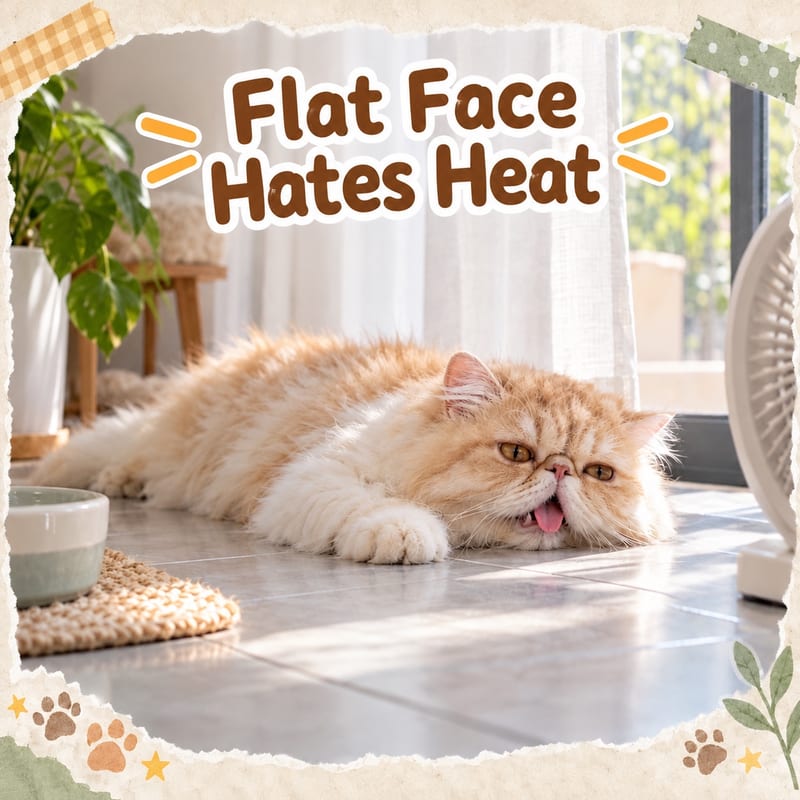
Three major threats to flat-faced cats in Hong Kong summer
1. Hot and humid weather
Hong Kong summers are not only hot but also very humid, with humidity often above 80%. High humidity greatly reduces the efficiency of evaporative cooling in cats, making it difficult for them to cool down even when panting. For flat-faced cats that already have difficulty breathing, this is a double blow.
2. Enclosed indoor environments
Many Hong Kong families keep air-conditioning on all summer, but if the air-conditioning is off or suddenly breaks down, the temperature in an enclosed indoor space can rise faster than outdoors. Especially in west-facing units, indoor temperatures can exceed 35°C in the afternoon.
3. Direct sunlight
Many cats like to lie by the window in the sun, but direct sunlight at midday in summer can cause local temperatures to soar. If a flat-faced cat falls asleep in the sun, it can easily suffer heatstroke without noticing.
Heatstroke symptoms: every second counts
Heatstroke in cats is a rapidly fatal emergency; it can progress from initial symptoms to organ failure in as little as 30 minutes. Below are common symptoms of heatstroke in cats, arranged from mild to severe:
Initial symptoms:
- Panting, open-mouth breathing (cats do not normally do this)
- Drooling, saliva becoming thick and sticky
- Tongue and gums turning red
- Lethargy, reluctance to move
Severe symptoms (take to veterinarian immediately):
- Body temperature above 40°C (normal body temperature 38-39.2°C)
- Vomiting or diarrhoea (may contain blood)
- Unsteady walking, muscle tremors
- Coma, seizures
Emergency steps:
-
Move away from heat source immediately: Move the cat to a cool, ventilated place.
-
Physical cooling: Wrap the cat in a slightly damp towel (do not use ice water, as it constricts blood vessels and actually prevents heat dissipation).
-
Fan the cat: Accelerate evaporative cooling.
-
Provide fresh water: Let the cat drink freely; do not force it.
-
Take to veterinarian immediately: Even if symptoms improve, a veterinary check is essential because heatstroke can cause delayed organ failure.
| Heatstroke symptoms | Emergency steps |
|---|---|
| Panting, open-mouth breathing | Move away from heat source to a cool, ventilated place immediately |
| Thick drool, red tongue | Wrap body in a slightly damp towel to cool down |
| Unsteady walking, muscle tremors | Fan to accelerate evaporative cooling |
| Vomiting, diarrhoea, coma | Provide fresh water and take to veterinarian immediately |
Complete home heatstroke prevention guide
Environmental control
- Keep indoor temperature at 26-28°C: This temperature range is most comfortable for flat-faced cats.
- Use fans to circulate air: Even with air-conditioning on, fans help air circulation.
- Add blackout curtains to windows: Especially west-facing windows, to block direct sunlight.
- Do not confine the cat in a room without air-conditioning: Ensure the cat can freely access air-conditioned areas.
Water management
- Place multiple water bowls: Provide water in different locations to encourage drinking.
- Use a flowing water fountain: Many cats prefer running water, which can increase water intake.
- Add wet food: Wet food contains about 70-80% water and is a good way to hydrate.
- Add ice cubes in moderation: Some cats like to lick ice cubes to cool down.
Daily care
- Avoid going out at midday: If you need to take the cat out (e.g., to the vet), choose morning or evening.
- Never leave the cat in a car: Even with windows open, the temperature inside a car can reach fatal levels within 10 minutes.
- Groom regularly: Help remove dead fur and improve skin heat dissipation.
- Monitor weight: Obese flat-faced cats have a higher risk of heatstroke; control their diet.
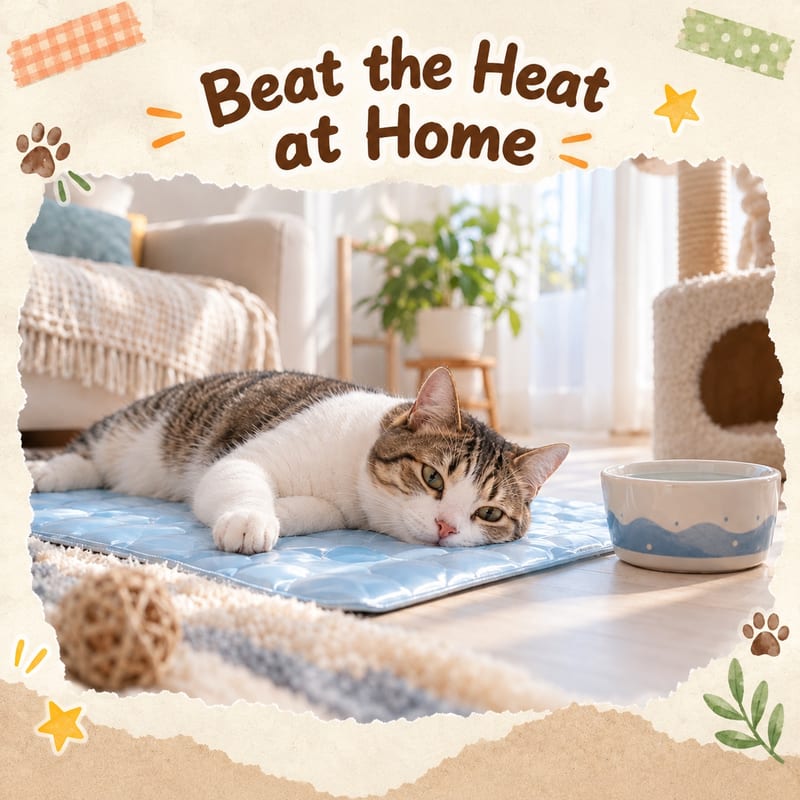
Practical heatstroke prevention checklist for small Hong Kong flats: do it today
Hong Kong homes are small, and when the air-conditioning breaks down, they become ovens. The following checklist helps you set up defences quickly within 500 sq ft.
1. Air-conditioning backup plan
- Install a "temperature cut-off switch" on the window unit; when room temperature >30°C, it automatically trips to remind you to turn on a second fan or portable air cooler.
- Add "reflective heat-insulation film" + blackout curtains to west-facing rooms; this can lower the temperature by 3-4°C in the afternoon.
2. Flowing water station layout
- Place 1 ceramic bowl each in the living room, kitchen, and bathroom; avoid plastic smells that deter cats from drinking.
- Place the water fountain near the air-conditioning outlet to keep the water cool; change the water and wash the filter every morning to prevent bacteria.
3. Cooling corner setup
- Use an IKEA cooling mat ($39 each) on the windowsill where the cat likes to sleep most, and add a small fan blowing towards it.
- Keep "ice towels" in the freezer: put a damp towel in a ziplock bag and freeze for 1 hour; take it out and wrap the cat for 5 minutes—enough for an emergency.
4. When to rush to emergency
- If you see the cat's body temperature >40°C, walking in circles, or vomiting blood, do not hesitate: wrap the cat in a towel and go to a 24-hour emergency veterinarian; open windows and fan directly on the way, do not put the cat in a sealed bag.
5. Daily routine checks
- Groom for 3 minutes every morning to remove undercoat and aid heat dissipation.
- Weigh once; if weight gain >5% within 2 weeks, reduce food immediately—fat cats are more prone to heatstroke.
Follow these steps, and you need not worry no matter how hot the summer gets.
Further reading
Hong Kong 500 sq ft practical: 5 heatstroke prevention steps to do today
Hong Kong homes are small, and when the air-conditioning breaks down, they become ovens. The following 5 steps all use methods mentioned in the article and can be implemented immediately.
1. Air-conditioning backup plan
Install a "temperature cut-off switch" on the window unit; when room temperature >30°C, it automatically trips to remind you to turn on a second fan or portable air cooler, ensuring the indoor temperature does not rise suddenly.
2. Flowing water station layout
Place 1 ceramic bowl each in the living room, kitchen, and bathroom to encourage drinking; place the water fountain near the air-conditioning outlet to keep the water cool; change the water and wash the filter daily to prevent bacteria.
3. Cooling corner setup
Use a cooling mat on the windowsill where the cat likes to sleep most, and add a small fan blowing towards it; keep "ice towels" in the freezer: put a damp towel in a ziplock bag and freeze for 1 hour; take it out and wrap the cat for 5 minutes—enough for an emergency.
4. When to rush to emergency
If you see the cat's body temperature >40°C, walking in circles, or vomiting blood, do not hesitate: wrap the cat in a towel and go to a 24-hour emergency veterinarian; open windows and fan directly on the way, do not put the cat in a sealed bag.
5. Daily routine checks
Groom for 3 minutes every morning to remove undercoat and aid heat dissipation; weigh once; if weight gain >5% within 2 weeks, reduce food immediately—fat cats are more prone to heatstroke. Follow these steps, and you need not worry no matter how hot the summer gets.
📌 Key summary
- ✅ Flat-faced cats have short nasal passages and narrow respiratory tracts, inherently poor at heat dissipation.
- ✅ Hong Kong's 32°C+ high humidity environment makes evaporative cooling ineffective.
- ✅ Heatstroke can be fatal within 30 minutes; act immediately if panting or drooling is seen.
- ❌ Do not use ice water to cool down; it constricts blood vessels and is more dangerous.
- ❌ Never leave the cat in a room without air-conditioning or in a car.