

Quick answer: Hong Kong's humidity stays above 80% for long periods, making sensitive-skin cats like Persians, Exotic Shorthairs, and Scottish Folds most vulnerable. To protect your cat, the key is to keep indoor humidity at 50-60%, brush daily, check skin and ears weekly, and see a veterinarian immediately if you notice hair loss or red patches—do not self-medicate.
🤖 AI summary
Hong Kong's humidity is often above 80%, posing a major challenge for sensitive-skin cat breeds (Persian, Exotic Shorthair, Scottish Fold). Humid environments easily lead to fungal infections (ringworm), eczema, and ear infections. This article explains which breeds are highest risk, how to prevent problems, home dehumidification, and treatment points to help you protect your cat's skin in Hong Kong's humid weather.
Hong Kong's humid weather not only makes people feel stifled but also takes a toll on cats' skin. Especially for breeds naturally prone to skin sensitivity, in environments with over 80% humidity, fungi and bacteria multiply rapidly, making problems very likely.
High-risk breeds at a glance
| Breed | Risk factors | Why rated so |
|---|---|---|
| Persian | Long hair + flat face + skin folds | Dense coat traps moisture, folds harbor dirt |
| Exotic Shorthair | Flat face + skin folds | Facial folds easily harbor fungi |
| Scottish Fold | Folded ears reduce ventilation | Ear canals stay moist and prone to inflammation |
| Long-haired breeds | Heavy coat | Humid air gets trapped in fur |
Common skin problems in humid weather
Ringworm (fungal infection)
The most common skin disease in humid weather. Symptoms: circular hair loss, dandruff, red patches, often on the face, ears, and paws. Ringworm is contagious and can spread to humans and other pets.
Eczema / dermatitis
Red, swollen, itchy skin, hair loss. Humidity weakens the skin barrier, making it easier for allergens to invade.
Otitis externa
Red, swollen ear canals, odor, constant ear scratching. Scottish Folds are at particularly high risk due to folded ears.
Humid weather timeline
Humidity changes by month, and care priorities differ:
- March-May (humid spring): Highest humidity, peak ringworm season. Keep dehumidifier on 24 hours, check cat's skin daily.
- June-September (summer): High temperature and humidity, otitis externa and eczema common. Keep indoor ventilation, place cat bed in cool areas.
- October-December (autumn): Humidity drops, fewer skin problems. Still brush and check regularly.
- January-February (winter): Dry, but indoor heaters can dry and itch skin. Consider appropriate Omega-3 supplementation.
5 prevention tips
-
Keep dehumidifier running—keep indoor humidity at 50-60%, the most effective way to prevent fungi
-
Brush daily—remove dead hair and dandruff, keep skin ventilated
-
Keep cat bed dry—regularly wash cat bed and blankets, use a fan to dry in humid weather
-
Regular checks—check cat's skin and ears weekly, detect problems early
-
Boost immunity—balanced diet and plenty of water, skin health starts from within
What to do if problems arise?
If you notice hair loss, red patches, or constant scratching, do not use medication blindly. Fungal infections require veterinary diagnosis (usually with Wood's lamp or skin scraping microscopy), followed by antifungal medication. Blind medication may worsen the problem. Consult a veterinarian if in doubt.
For a budget idea of vet fees, see Hong Kong Veterinary Fees Guide.
Home environment improvements
Besides a dehumidifier, these home improvements can help sensitive-skin cats:
- Cat bed location: Place in a well-ventilated area, avoid windowsills (most humid during humid spring) or enclosed corners.
- Bedding material: Choose breathable, easy-to-wash materials (e.g., cotton), avoid plush textures (easily trap moisture and fungi).
- Water location: Place water bowl in a cool area, change water daily. Bacteria multiply quickly in water during humid weather, fresh water is important.
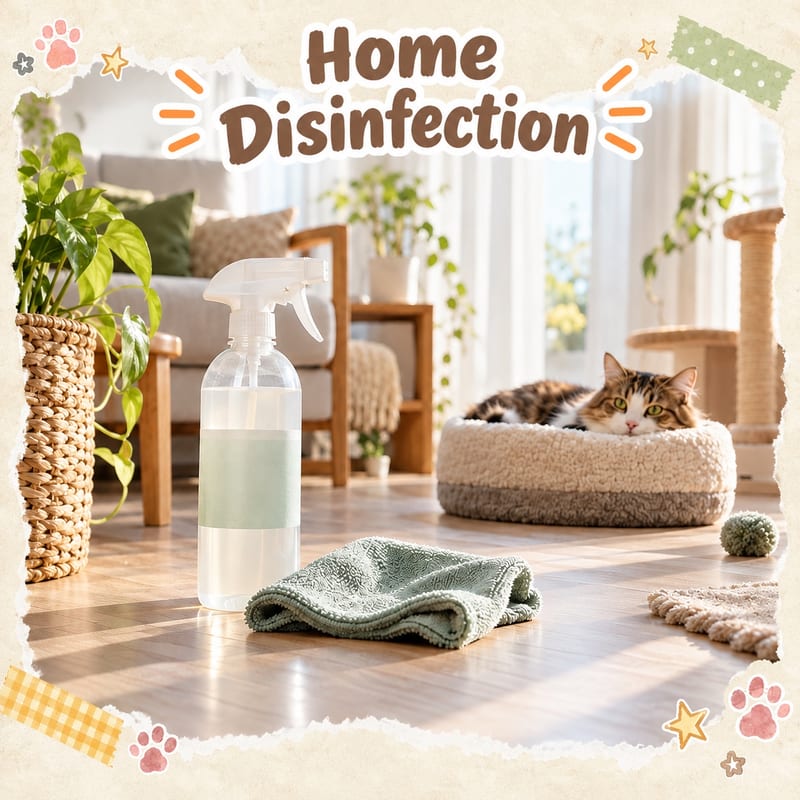
- Regular disinfection: Regularly clean surfaces cats frequently contact (sofa, bed, cat tree) with pet-safe disinfectants.
Home disinfection for ringworm
If your cat is diagnosed with ringworm, home disinfection is as important as treatment:
- Cat supplies: Wash cat bed, blankets, toys with hot water, or sun-dry for over 4 hours.
- Environmental disinfection: Wipe floors and furniture surfaces with diluted bleach (1:32), especially areas the cat frequents.
- Vacuuming: Vacuum daily to remove fungal spores from the environment. Dispose of vacuum bags immediately.
- Isolation: In multi-cat households, temporarily isolate the sick cat to avoid cross-infection.
Treatment usually lasts 4 to 8 weeks, be patient. Keep the cone on during this period to prevent the cat from licking off the ointment.
Hong Kong small flat practical: 30-day skin defense schedule
Living in a 300 sq ft public housing / open-plan unit, you can still care for a sensitive cat. The following 30-day practical schedule breaks the article's advice into 10-minute daily actions, no major renovation needed.
Days 1-7: Gear in place
- Buy a small dehumidifier from Taobao or ParknShop (run 8-10 hours daily, turn on before leaving for work, turn off when back), place within 1 meter of cat bed.
- Add a HK$30 hygrometer, stick on the wall next to cat bed, record humidity daily.
- Buy a steel pin brush, brush for 5 minutes after dinner each night, immediately wipe dead hair with a wet wipe, don't drop on floor.
Days 8-14: Environment tweaks
- Move cat bed from window to center of living room, avoid wall seepage during humid spring.
- Replace mattress with pure cotton old T-shirt, change every two days, dry with fan after washing, save electricity by not using dryer.
- Raise water bowl 10 cm from floor (use two old books), reduce moisture seepage.
Days 15-21: Check + disinfect
- Before brushing teeth each morning, use phone flashlight to check cat's ears, face, belly, take photo if red spots seen.
- On weekends, wipe floor, cat tree, sofa legs with 1:32 diluted bleach, then run dehumidifier for 30 minutes to dry.
- Change vacuum bag, dispose immediately after vacuuming, don't stockpile.
Days 22-30: Observe + follow-up
- If hair loss area expands within 7 days or cat scratches excessively, book vet immediately, don't delay to weekend.
- Bring photos to follow-up appointment for vet comparison.
- Continue daily brushing, isolate other cats during treatment, keep cone on for vet-recommended duration.
When to see a vet?
- Hair loss area diameter >5 mm, pus, cat scratching to bleeding: book immediately.
- Coffee-colored ear discharge + odor: see vet within 48 hours.
- Cross-infection in multi-cat household: check all cats simultaneously.
Remember, small space in Hong Kong is no excuse; 10 minutes of micro-habits daily can minimize skin problems.
Hong Kong small unit practical checklist: 7-day setup for 300 sq ft
Living in a 300 sq ft public housing / open-plan unit, you can achieve the article's "humidity 50-60% + daily brushing + weekly checks" without major renovation. The following 7-day checklist takes 10 minutes daily.
Day 1: Buy gear
- Get a small dehumidifier from ParknShop or Fortress (run 8-10 hours daily, turn on before leaving for work, turn off when back), place within 1 meter of cat bed.
- Add a HK$30 hygrometer, stick on the wall next to cat bed, record humidity daily.
Day 2: Fix brushing spot
- Buy a steel pin brush, brush for 5 minutes after dinner each night, immediately wipe dead hair with a wet wipe, don't drop on floor.
Day 3: Move bed
- Move cat bed from window to center of living room, avoid wall seepage during humid spring.
Day 4: Upgrade mattress
- Replace mattress with pure cotton old T-shirt, change every two days, dry with fan after washing, save electricity by not using dryer.
Day 5: Raise water bowl
- Raise water bowl 10 cm from floor (use two old books), reduce moisture seepage.
Day 6: Weekend deep clean
- Wipe floor, cat tree, sofa legs with 1:32 diluted bleach, then run dehumidifier for 30 minutes to dry.
- Change vacuum bag, dispose immediately after vacuuming, don't stockpile.
Day 7: Check day
- Before brushing teeth each morning, use phone flashlight to check cat's ears, face, belly, take photo if red spots seen.
- If hair loss area expands or cat scratches excessively, book vet immediately, don't delay to weekend.
Remember, small space in Hong Kong is no excuse; 10 minutes of micro-habits daily can minimize skin problems.
📌 Key takeaways
- ✅ Keep dehumidifier running, maintain indoor humidity at 50-60%
- ✅ Brush daily + check skin and ears weekly
- ✅ Place cat bed in ventilated area, wash and sun-dry regularly
- ❌ Don't apply medication blindly when seeing hair loss or red patches
- ❌ Don't place cat bed by window or in enclosed corners during humid spring