
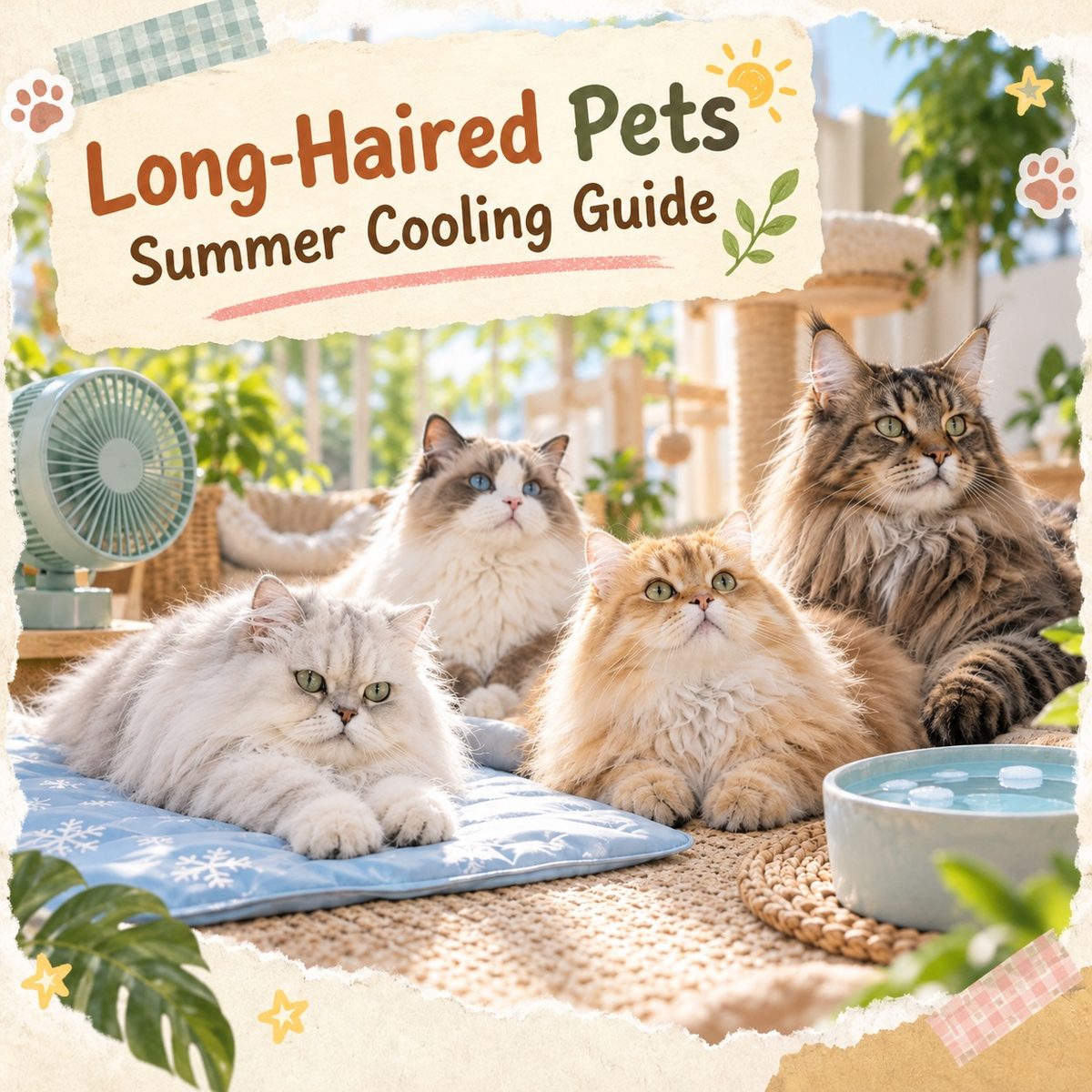
Quick answer: Longhair cats don't need to be shaved in summer. Daily brushing, trimming the fur on paws and belly, keeping indoor temperatures at 26-28°C and placing extra water bowls can effectively help them cool down without damaging their skin.
When summer arrives, many longhair cat owners think: "My cat has so much fur, it must be hot—maybe I should shave it all off?" If you're thinking the same, stop right there! Shaving a cat bald doesn't help it cool down and may actually cause more problems.
🤖 AI Summary
Longhair cats (Persian, Ragdoll, Maine Coon, Chinchilla) don't need to be shaved in summer because their fur provides insulation and sun protection. The right approach is to brush regularly to remove dead fur, trim appropriately, keep the environment cool and provide plenty of water. Shaving bald actually exposes the skin to direct heat and sunburn, and can even affect fur regrowth.
The truth about fur: not warmth, but insulation
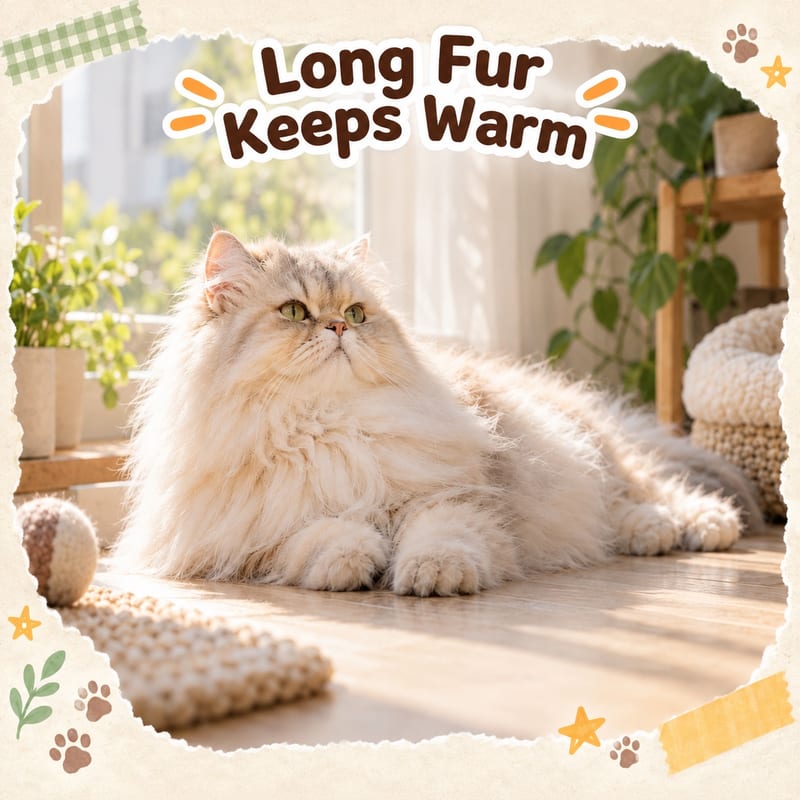
Many people think a cat's fur is only for keeping warm, but its function is actually insulation—it helps retain body heat in winter and blocks external heat in summer. Just like the thick fur of desert animals, a cat's coat forms an insulating layer on the skin surface that slows heat transfer.
The fur structure of longhair cats is even more complex:
- Outer guard hairs: Coarse outer hairs reflect sunlight and heat
- Inner down hairs: Soft undercoat traps air to form an insulating layer
- Air layer between hairs: This is a natural insulating barrier
So shaving a cat bald actually destroys this natural insulation system, exposing the skin directly to sunlight and heat.
Three major risks of shaving bald
1. Sunburn and skin cancer risk
A cat's skin is very thin. Without fur protection, direct sun exposure can easily cause sunburn. Over time, it may even increase the risk of skin cancer, especially in light-coloured or white cats.
2. Fur regrowth problems
After shaving, new fur may not grow back normally. It may become darker, coarser, or even fail to grow in some areas. This is particularly common in senior cats and certain breeds (such as Persians).
3. Psychological stress
Many cats become anxious, reluctant to move, or even hide after being shaved. Fur is not just a warming tool for cats—it's also a source of security.
Proper summer care methods
Regular brushing: 10 minutes daily
Brushing is the most important grooming task for longhair cats in summer. Daily brushing can:
- Remove dead and loose fur, improving air circulation
- Prevent matting and avoid localised overheating
- Stimulate skin blood circulation
- Detect skin problems early
Use a comb to detangle first, then a slicker brush to remove dead undercoat. Pay special attention to the armpits, belly and inner thighs, which are prone to matting.
Appropriate trimming: not shaving bald
If you want to "lighten the load" for your cat, consider spot trimming rather than shaving the whole body:
- Paw pads: Trimming the fur on the paw pads improves heat dissipation from the paws
- Belly fur: Trimming belly fur helps with cooling and reduces the amount of fur swallowed during grooming
- Around the anus: Keeps the area hygienic and prevents faeces from sticking
If you do trim the whole body, leave at least 1-2 cm of length so the skin still has basic protection.
Environmental cooling: a multi-pronged approach
- Keep indoor ventilation: Open windows with fans, or use air-conditioning at 26-28°C
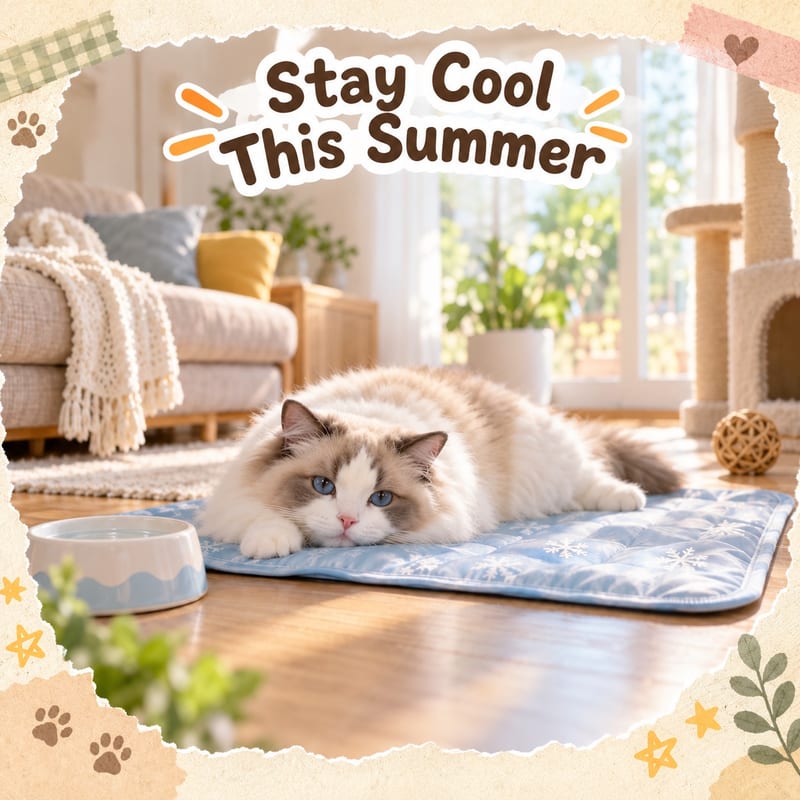
- Provide cool rest areas: Tiled floors, marble surfaces or dedicated cooling mats are good choices
- Avoid direct sunlight: Add blackout curtains at windows, especially west-facing ones
- Increase water intake: Place extra water bowls or use a flowing water fountain
Dietary adjustments
In summer, you can appropriately increase the proportion of wet food, as wet food contains about 70-80% water, which helps with hydration. You can also consider adding a little cat grass or water-rich cat treats to increase fluid intake.
| Care item | Recommended practice | Notes |
|---|---|---|
| Brushing | 10 minutes daily; comb to detangle + slicker brush for dead fur | Focus on armpits, belly, inner thighs |
| Trimming | Trim paw pads, belly, around anus | Leave 1-2 cm; do not shave bald |
| Cooling | Air-conditioning 26-28°C, fans, tiled floors, blackout curtains | Avoid direct sun from west-facing windows |
| Water | Multiple bowls + flowing fountain; increase wet food ratio | Monitor daily water intake |
Practical guide for small Hong Kong flats: 30-minute rapid cooling routine
Hong Kong homes are small and air-conditioning is expensive, but with smart use of space and time, you can cool your cat down in half an hour.
1. Quick brush before work (5 minutes)
While having breakfast, run a comb through quickly to remove loose fur. When you get home, follow up with a slicker brush to prevent matting.
2. Air-conditioning + fan combo (10 minutes)
Set the air-conditioning to 26°C and point a fan at the cat bed to create circulating air. This temperature won't chill the cat and saves electricity. If your home has west-facing windows, close the blackout curtains before turning on the air-conditioning—it makes a big difference.
3. DIY "cool nest" (5 minutes)
Put a cooling mat in the fridge for 15 minutes, then place it on the tiled floor or glass coffee table where your cat likes to sleep. If you don't have a cooling mat, wrap an ice pack in a towel and place it under a plastic tray, then cover with a thin towel to avoid direct cold contact.
4. Water fountain placement (5 minutes)
Place the fountain near the air-conditioning outlet but not directly in the airflow, so the water stays slightly cool. Change the water before work and check the level again after work.
5. Wet food with added water—"double hydration" (5 minutes)
At dinner, mix two tablespoons of room-temperature water into the wet food to make a "meat broth rice". If your cat doesn't like it too watery, try soaking freeze-dried cat grass pieces in water for 3 minutes—the aroma is more appealing.
When to see a vet? If your cat refuses water for two consecutive meals, breathes rapidly with open-mouth panting, or has unusually hot paw pads, take it to the nearest 24-hour veterinarian immediately. Hong Kong summers are hot and humid, and heatstroke can progress quickly—don't delay.
Further reading
📌 Key points
- ✅ Brush daily for 10 minutes to remove dead fur and improve air circulation
- ✅ Spot-trim paw pads and belly fur; do not shave the whole body
- ✅ Keep room temperature at 26-28°C; provide tiled floors or cooling mats
- ✅ Increase wet food and use a flowing water fountain to boost water intake
- ❌ Shaving the whole body causes sunburn, affects fur regrowth and causes psychological stress



