
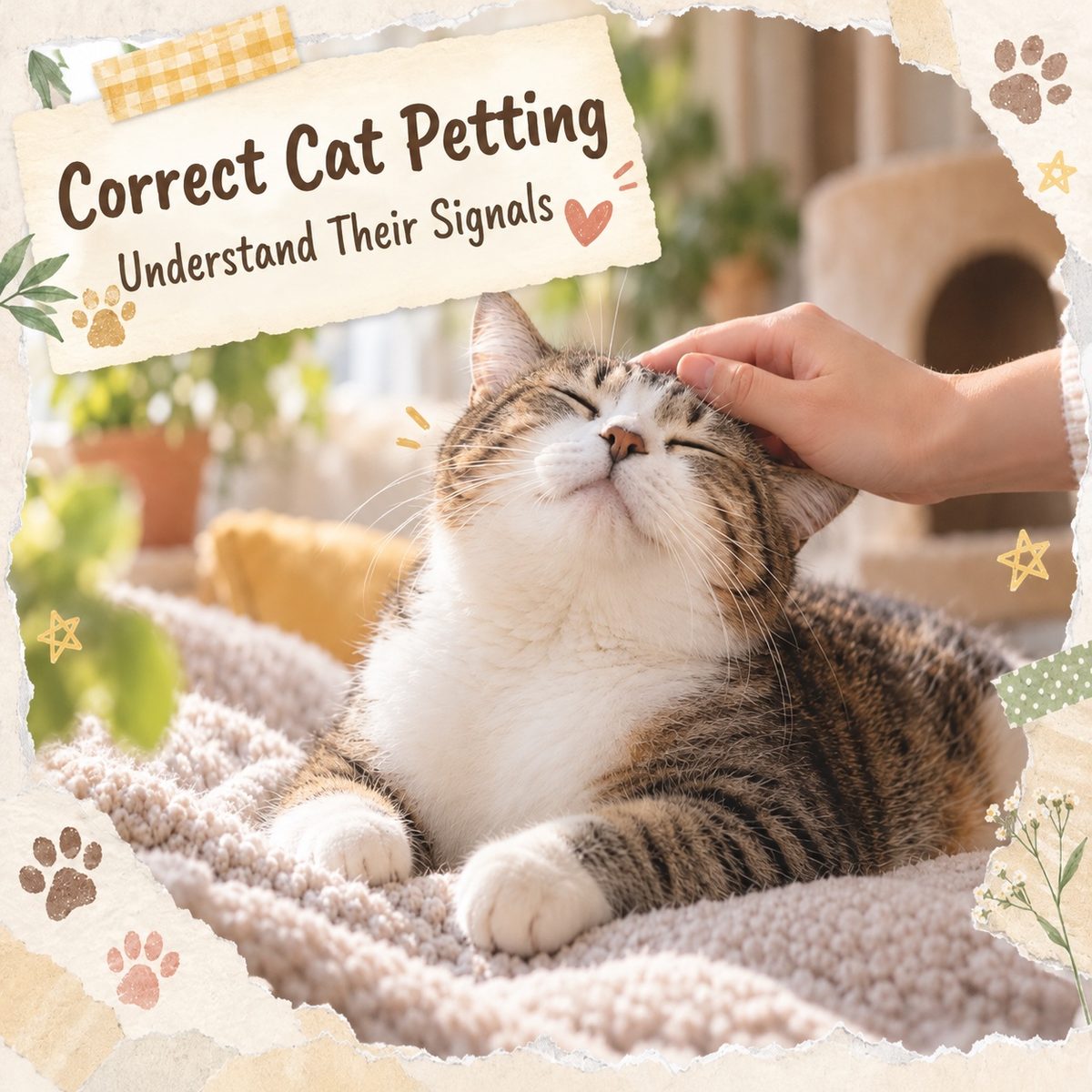
🤖 AI Summary
Why does your cat bite you mid-pet? Most of the time it's not that it hates you — it's that you pet the wrong spot, pet too long, or ignored its warning signals. This article teaches you the 3 steps of petting (greet → test → interact) + 5 major no-go zones (belly/tail/limbs/against the fur/petting too long), plus the 4 stop signals that mean your cat has had enough.
• Green-light spots: chin, cheeks, behind the ears, top of the head
• Getting bitten halfway through = petting-induced aggression, and it can be improved
• Let the cat lead: pet only when it comes to you, and pause every 3 to 5 strokes
Quick answer: The first step in petting a cat is to crouch down and offer your hand for it to sniff (greeting); the second step is to gently test with a touch on the chin/cheeks; the third step is to stroke with the fur along the head, neck and back while watching its reaction. Avoid the five major danger zones: belly, tail, limbs, against the fur, and petting too long. If you see tail flicking, airplane ears, skin twitching, or it turning to stare at your hand, stop immediately.
Contents
-
Why does petting a cat need to be learned?
-
The 3 steps of petting: from greeting to maximum affection
-
Green-light/red-light map: where you can and can't pet
-
The 5 major no-go zones explained one by one
-
The 4 major stop signals that mean your cat has had enough
-
FAQ
Why does petting a cat need to be learned?
Cats are different from dogs: dogs beg for pets, cats tolerate them. Cats are solitary hunters, and their tolerance for physical contact has innate limits — pet them right and they purr, knead and melt into a puddle; pet the wrong spot or overdo it, and at best they walk away, at worst they turn and bite.
Getting bitten halfway through actually has a formal name: petting-induced aggression. The cause is usually overstimulation — petting the same spot for too long, so the cat's tolerance goes from "this feels nice" to "I can't take it anymore", even though it gave you body-language warnings long before (tail flicking, airplane ears, skin twitching) that you simply didn't see. So the core of petting etiquette isn't technique, it's communication: ask for consent before you make a move, and keep reading the signals throughout.
The 3 steps of petting: from greeting to maximum affection
Step 1: Greet — crouch, reach out, let it sniff
Don't walk up and swoop down on its head from above (in cat language that posture equals a threat). The right way: crouch or sit down, extend a finger and hold it a few inches in front of the cat's nose, and let it sniff you on its own terms. After sniffing there are 3 possible reactions: rubbing against you = permission to pet; ignoring you = wait a bit or try another time; shrinking away/airplane ears = not today, try next time.
Step 2: Test — start with the "golden spots"
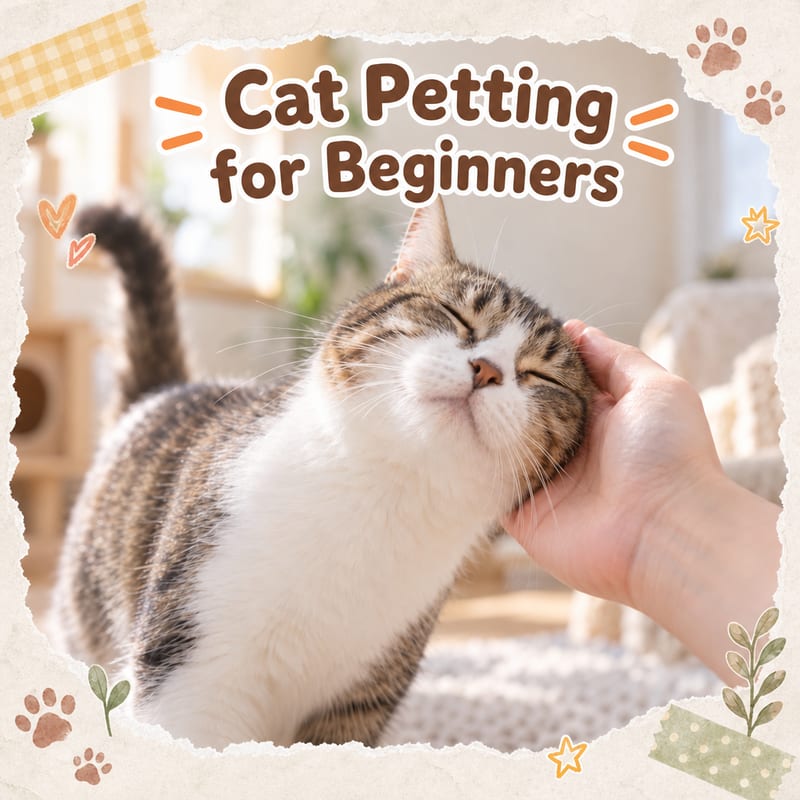
Once approved, always start with the safest spots: chin, cheeks, behind the ears. These are the scent-gland areas cats rub against each other, so petting there is like helping them "check in and leave their scent", and acceptance is highest. Gentle, slow, with the fur, two or three strokes then stop, and see the reaction before deciding the next move.
Step 3: Interact — stroke along the fur and stop proactively
If it presses into your hand, purrs, squints = affection rising, you can stroke from the top of the head down the neck and back, then back up to the head in a loop. The winning key is stopping proactively: after 3 to 5 strokes, stop and pause. Stop suddenly mid-pet and the cat will come and head-butt your hand for more — that's the role reversal complete, from "you begging to pet" to "it begging to be petted". With long-term practice, your cat will define your hand as a "source of happiness" and come to you for it.
Green-light/red-light map: where you can and can't pet
| Area | Light | Explanation |
|---|---|---|
| Chin | 🟢 Green | Scent-gland area; after petting it will automatically lift its chin for more |
| Cheeks/sides of face | 🟢 Green | Where it normally rubs against walls and furniture |
| Behind ears/top of head | 🟢 Green | Most cats' favourite; they'll squint with enjoyment |
| Neck/back | 🟡 Varies by cat | Gentle stroking with the fur is usually OK; near the tail base watch for overstimulation |
| Above tail base | 🟡 Varies by cat | Especially sensitive for females in heat; gentle touch may be accepted at other times |
| Belly | 🔴 Red | A cat's most vulnerable area; protecting the internal organs is instinct |
| Tail | 🔴 Red | Densely packed with nerves; very few cats like it touched |
| Limbs/paws | 🔴 Red | Claws are weapons; most cats won't allow them touched |
Every cat's map is different: some social butterflies allow petting all over, some only allow the head. Go by their reaction, not by someone else's cat.
The 5 major no-go zones explained one by one
No-go 1: Belly — "showing the belly doesn't mean wanting a rub"
A cat lying down and exposing its belly is a sign of extreme trust, but not an invitation — under the belly are all the internal organs, and protecting the abdomen is an instinct written into feline genes. Reach in and you'll most likely get a grab and a bite. When you see a belly, just admire it; unless your cat is one of the rare exceptions that allows belly rubs, keep your hands to yourself.
No-go 2: Tail — a nerve-dense area
The tail is an extension of the spine, densely packed with nerves; touching it, pulling it, or sitting on it will make a cat uncomfortable or even in pain. Children especially need to be taught: the tail is not a toy. Respecting the tail is the foundation of long-term trust.
No-go 3: Limbs and paws
Claws are a cat's weapons and escape tools; having its paws controlled = security gone. Even nail clipping should be gradual; randomly grabbing a paw to pet will only make it wary of your hands.
No-go 4: Stroking against the fur
Stroking from tail to head, against the direction of the fur scales, feels to a cat like having your hand brushed backwards — very uncomfortable. Always stroke with the fur (head to tail direction), gently, so stroking the back isn't the same as vigorous rubbing.
No-go 5: Petting too long, overdoing it
The number-one cause of petting-induced aggression. Cats are very sensitive to "how long they're petted", especially repeated petting of the same spot. The solution is the "stop proactively" from Step 3: 3-5 strokes then pause, so every petting session ends before their tolerance limit.
The 4 major stop signals that mean your cat has had enough
If any of the following appear during petting, stop immediately:
- ⚠️ Tail starts flicking/thumping the ground — the most direct signal that irritation is rising
- ⚠️ Airplane ears/ears pressed back — an impatient warning
- ⚠️ Skin twitching, back fur rippling — overstimulated, already enduring
- ⚠️ Turning to stare at your hand/suddenly going quiet and stopping purring — a strike could come next second
Stopping immediately when you get the signal won't hurt the relationship; the faster you stop, the more your cat will think "this person can read the mood" and the more willing it will be to come to you next time.

Hong Kong small-flat practicalities: how to let the cat lead the petting in a tiny unit
Hong Kong living is cramped, and neither cat nor human has much room to retreat, so "space management" is key.
1. Create "safe distance"
- Leave a "cat corridor" between the sofa and the coffee table so the cat can walk around and leave. When petting, you sit on the sofa and the cat stands on the floor, so it can slip away immediately if it doesn't like it.
- Put a cardboard box under the bed as a "safe haven" so the cat has somewhere to calm down after being petted. Remember to leave a gap between the box opening and the wall; don't seal it completely.
2. Schedule: fit the Hong Kong work rhythm
- Before leaving for work in the morning: don't pet; leave ten minutes for the cat to patrol on its own.
- When you get home from work: change clothes and wash hands first, let your scent settle, then crouch down to greet. Because you've been on the MTR all day picking up smells, the cat needs to re-confirm you.
- Half an hour before bed: the best time for interaction. Dim the lights, play slow-tempo instrumental music, use the three-step petting, then turn off the lights and stop, letting the cat choose where to sleep.
3. "Stop signals" for small flats
- With little room for tail flicking, the tail can easily swipe your face — stop as soon as you see it.
- Airplane ears + dilated pupils may be because car headlights flashed through the window, not necessarily about you, but still stop.
- If the cat jumps onto the windowsill and turns its back to you, that means "enough for today" — don't follow.
4. Coordination in multi-person households
- Put a note on the fridge saying "how many times petted today" to avoid three people taking turns and overdoing it.
- During the children's after-school time, designate a parent to do the three steps first, then let the kids have a turn, to reduce the cat's emotional ups and downs.
Remember: Hong Kong spaces are small and cats have few escape routes; only if you let them lead will they feel safe being friends with you in this little world.
Further reading
📌 Key points
- ✅ Greet + test + stop proactively: three steps to build trust
- ✅ Green-light spots: chin, cheeks, behind the ears, top of the head
- ❌ Showing the belly ≠ wanting a rub; touching the belly usually gets you a bite
- ❌ Stroking against the fur, pulling the tail, grabbing the paws are all high-risk moves
- ❌ Petting too long easily triggers petting-induced aggression
This article is compiled from breed consensus and clinical care guidelines; individual cats and dogs vary greatly; for health problems please consult a registered veterinarian first.