
🤖 AI Summary
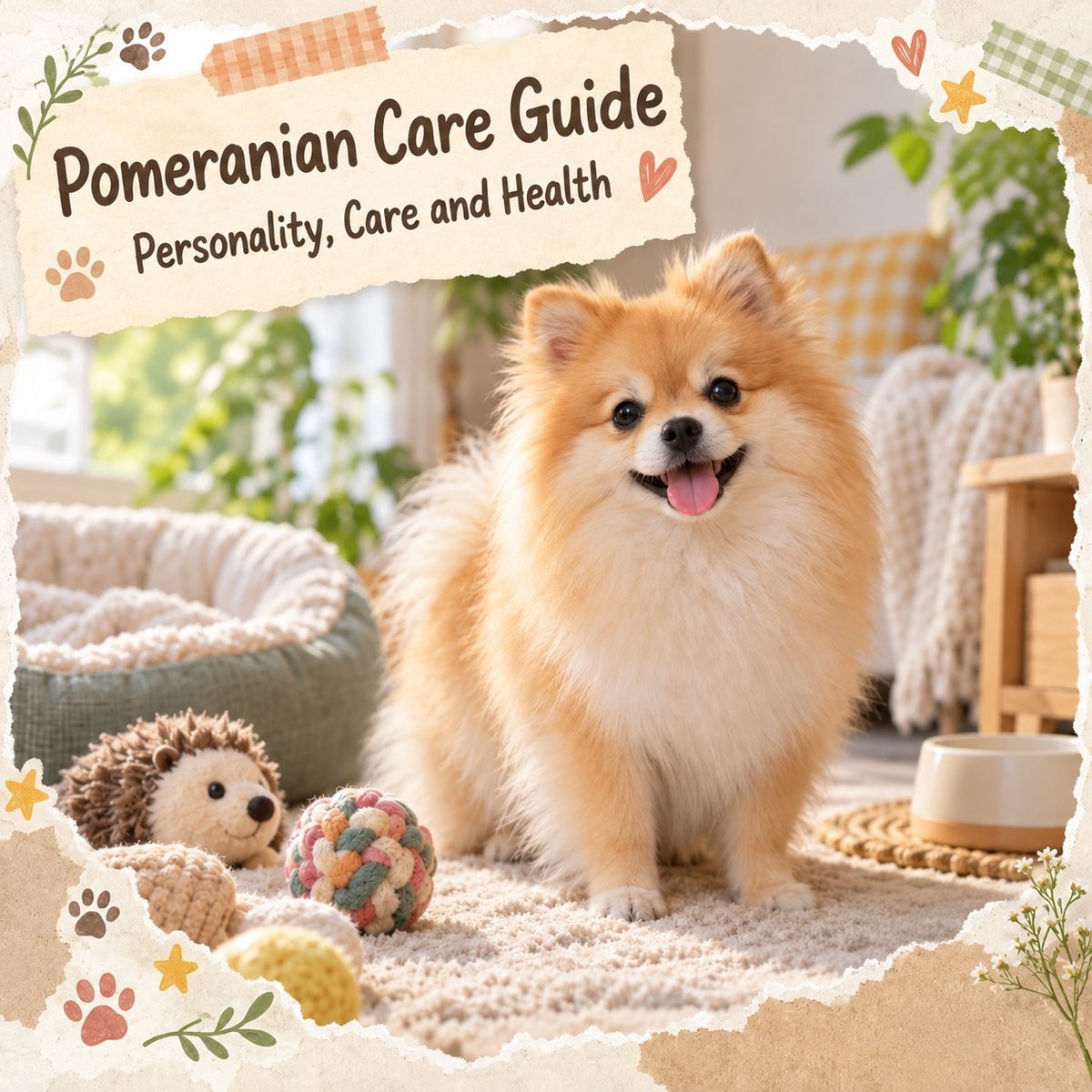
The Pomeranian is a German breed—one of the most popular small dogs worldwide. Pomeranians are lively, smart and have a bit of a 'little boss' personality—they don't know they're small and will challenge big dogs. Keeping a Pomeranian in Hong Kong requires attention to: their double coat needs regular grooming (daily brushing + regular trimming) + they are prone to tracheal collapse (avoid collars) + they are prone to patellar luxation (avoid jumping on and off furniture). Pomeranians live 12–16 years and cost around HKD 8,000–20,000 in Hong Kong.
• One of the most popular small breeds worldwide—lively + smart + a bit of a 'little boss' personality
• Keeping a Pomeranian in Hong Kong: double coat needs regular grooming + tracheal collapse + patellar luxation
• Lifespan 12–16 years, Hong Kong price HKD 8,000–20,000
Quick answer: The Pomeranian is a German breed—one of the most popular small dogs worldwide. Pomeranians are lively, smart and have a bit of a 'little boss' personality—they don't know they're small and will challenge big dogs. Keeping a Pomeranian in Hong Kong requires attention to: their double coat needs regular grooming (daily brushing + regular trimming) + they are prone to tracheal collapse (avoid collars) + they are prone to patellar luxation (avoid jumping on and off furniture). Pomeranians live 12–16 years and cost around HKD 8,000–20,000 in Hong Kong.
Table of Contents
-
Pomeranian breed background
-
Pomeranian temperament traits
-
Common health problems in Pomeranians
-
Things to note when keeping a Pomeranian in Hong Kong
-
Pomeranian care costs
-
Pomeranian training tips
-
Pomeranian grooming and care
-
FAQ
What is a Pomeranian? Key points in 30 seconds
The Pomeranian is a toy breed originating from Pomerania in Germany, named for its squirrel-like appearance and profuse coat; it is one of the most popular small dogs worldwide. What Hong Kong people call 'squirrel dog', 'Pomeranian' or 'Pom' all refer to the same breed. Pomeranians are cute and small, but their personality is typically 'little boss'—they don't know they're small and will challenge big dogs. The table below shows the specs Hong Kong owners most often look up.
| Item | Pomeranian |
|---|---|
| Origin | Pomerania, Germany |
| Average lifespan | 12–16 years |
| Weight | 1.5–3.5 kg (height 18–30 cm) |
| Coat | Double coat, long straight outer layer, soft dense undercoat |
| Temperament | Lively, smart, alert, 'little boss' personality |
| Barking tendency | High (very alert; building dwellers must be mindful) |
| Common health problems | Tracheal collapse, patellar luxation, dental problems |
| Hong Kong price | About HK$8,000–20,000 |
| Monthly basic expenses | About HK$900–1,800 |
Three things you must know:
- The double coat must not be shaved — shaving can damage hair follicles so the coat may not grow back; cooling relies on brushing and air-conditioning, not shaving.
- Fragile trachea — switch to a harness (H-style) instead of a collar to avoid pulling on the trachea.
- Small doesn't mean no exercise — at least 30 minutes of walking daily; insufficient exercise leads to barking and furniture destruction.
Pomeranian price and monthly expenses (2026 Hong Kong market)
The entry cost for a Pomeranian is not high, but be aware of two fixed expenses—grooming and medical care. The double coat needs regular trimming, and you should set aside a medical reserve for trachea and knee issues.
| Item | Range | Notes |
|---|---|---|
| Adoption (SPCA/organisation) | HK$0–2,000 | Already neutered, vaccinated, microchipped |
| Pet shop/registered breeder | HK$8,000–20,000 | Coat colour and lineage affect price |
| Vaccines (first year, three shots) | HK$900–1,500 | Annual booster thereafter |
| Neutering | HK$1,800–4,000 | Cheaper for males, more for females |
| Microchipping | HK$150–300 | Register with AFCD at the same time |
| Monthly food | HK$250–500 | Small-breed food, small portions |
| Monthly grooming (amortised) | HK$200–450 | Trim every 6–8 weeks |
| Monthly deworming (amortised) | HK$120–250 | Internal and external |
| Medical reserve (recommended) | HK$250–500 | For trachea, knees, teeth |
| Monthly total | About HK$900–1,800 | Excludes major medical costs |
The most underestimated cost for Pomeranians is teeth. Small breeds have tight teeth spacing, tartar builds up quickly, and a dental scaling (with anaesthesia) costs about HK$1,500–3,000 each time; brushing daily for three minutes can save several scalings in the long run and reduce anaesthesia risk.
Who is a Pomeranian suitable for?
| Owner type | Suitability | Reason |
|---|---|---|
| First-time dog owner | Suitable | Smart and easy to train, small size, small appetite |
| Small flat/public housing | Needs assessment | Takes little space, but barking may disturb neighbours; teach a 'quiet' command |
| Families with children | Needs assessment | Too small and easily injured; teach children to be gentle |
| Retired/at home long hours | Very suitable | Clingy personality needs company; someone home most of the time is ideal |
| Wanting zero grooming costs | Not suitable | Double coat needs regular trimming + daily brushing |
Reverse self-check (three questions):
- Can you accept brushing for 5–10 minutes daily and taking the dog for grooming every 6–8 weeks?
- If your building has average soundproofing, can you spend time training it not to bark excessively?
- Are you willing to switch to a harness instead of a collar and prevent it from jumping on and off the sofa?
If you can't answer two of the three, learn more about the actual care required for a Pomeranian before considering other breeds.
Pomeranian compared with other small breeds
| Breed | Weight | Monthly expenses (HK$) | Barking tendency | Suitable for beginners |
|---|---|---|---|---|
| Pomeranian | 1.5–3.5 kg | 900–1,800 | High | Yes |
| Toy Poodle | 2–3 kg | 1,100–2,000 | Medium | Yes |
| Maltese | 2–4 kg | 1,000–1,800 | Medium | Yes |
| Chihuahua | 1.5–3 kg | 800–1,600 | High | Needs patience |
| Yorkshire Terrier | 2–3 kg | 1,000–1,800 | Medium | Yes |
In one sentence: among small breeds, the Pomeranian's differences are barking tendency and double coat; if you live in a building and want less barking, training effort matters more than breed choice.
Four most common Pomeranian misconceptions
| Misconception | Reality |
|---|---|
| Pomeranians don't need walks; running around at home is enough | At least 30 minutes of walking daily; insufficient exercise leads to barking and furniture destruction |
| Shaving them in summer keeps them cooler | Shaving the double coat can damage hair follicles so it may not grow back; cooling relies on brushing and air-conditioning |
| A normal collar is fine for walking | The trachea is narrow and prone to collapse; switch to a harness and avoid jumping on and off furniture |
| All Pomeranians are the same size, so food portions are easy to guess | Weight can vary by up to double; adjust food amount by individual weight and activity level |
Pomeranian health check schedule: what to do by age
| Age | Recommended items | Approximate cost |
|---|---|---|
| 2–4 months | First-year vaccines (three shots) + deworming | HK$900–1,500 |
| 6 months | Pre-neutering blood test + neutering | HK$2,000–4,000 |
| 1 year | Annual check-up + vaccine booster | HK$500–900 |
| 2–6 years | Annual check-up; check knees and trachea | HK$600–1,200 |
| 7 years and older | Every six months: blood test, dental, heart assessment | HK$1,200–2,200 per visit |
Three daily observations:
- Breathing sounds: honking cough or unusually rapid panting after exercise—check the trachea early.
- Hind legs: skipping or holding up a hind leg may indicate patellar luxation.
- Bad breath and tartar: noticeable bad breath usually means tartar is present; book a dental scaling.
Three budget plans: budget, standard, secure
| Item | Budget | Standard | Secure |
|---|---|---|---|
| Food | HK$250/month | HK$380/month | HK$500/month |
| Grooming (amortised) | HK$200/month | HK$300/month | HK$450/month |
| Deworming | Amortised HK$120/month | HK$180/month | HK$250/month |
| Medical reserve | HK$0 | HK$250/month | HK$500/month |
| Monthly total | About HK$570 | About HK$1,100 | About HK$1,700 |
| Suitable for | Tight budget with cash reserve | Most families | Wanting to avoid sudden large expenses |
First 30 days with a Pomeranian: preparation checklist
The first month at home is a critical adjustment period; Pomeranians are especially sensitive to new environments and strangers, so take it slowly.
| Time | What to do | Approximate cost |
|---|---|---|
| Week 1 | Buy food, bowls, pen, harness, pet carrier, slicker brush | HK$800–2,000 |
| Week 2 | Book vet for first check-up, register medical record | HK$500–900 |
| Week 3 | Set fixed feeding, toileting and walking schedule | HK$0 |
| Week 4 | Pre-vaccine or pre-neutering assessment, start gentle socialisation | HK$900–4,000 |
| Months 2–3 | Complete first-year three shots + deworming, first professional grooming | HK$1,800–3,000 |
| Month 6 | Complete neutering surgery, establish daily teeth-cleaning habit | HK$1,800–4,000 |
The most common mistake in the first month is rewarding barking. Pomeranians are highly alert; if you pick them up every time they bark, it becomes 'bark = reward'. Teach a 'quiet' command from the first week and reward the quiet moment with treats.
Four things you can't delay:
- First vet check-up: don't wait until illness; register a medical record in the first week so emergencies are easier later.
- Toilet training: small dogs have small bladders; take them to the same spot every 2–3 hours and reward immediately when they get it right.
- Harness, not collar: the trachea is prone to collapse; a harness is the safety baseline.
- Limit jumping: add ramps or stairs by the sofa and bed to reduce patellar luxation risk.
Pomeranian breed background
The Pomeranian is a German breed—one of the most popular small dogs worldwide.
Breed history:
- Origin: Pomerania, Germany—one of Germany's oldest breeds
- History: 18th century—introduced to Britain and refined by Queen Victoria
- Name: 'Pomeranian' refers to Pomerania in Germany
- Fame: one of the most popular small breeds worldwide—a representative 'internet-famous dog'
Breed characteristics:
| Feature | Description |
|---|---|
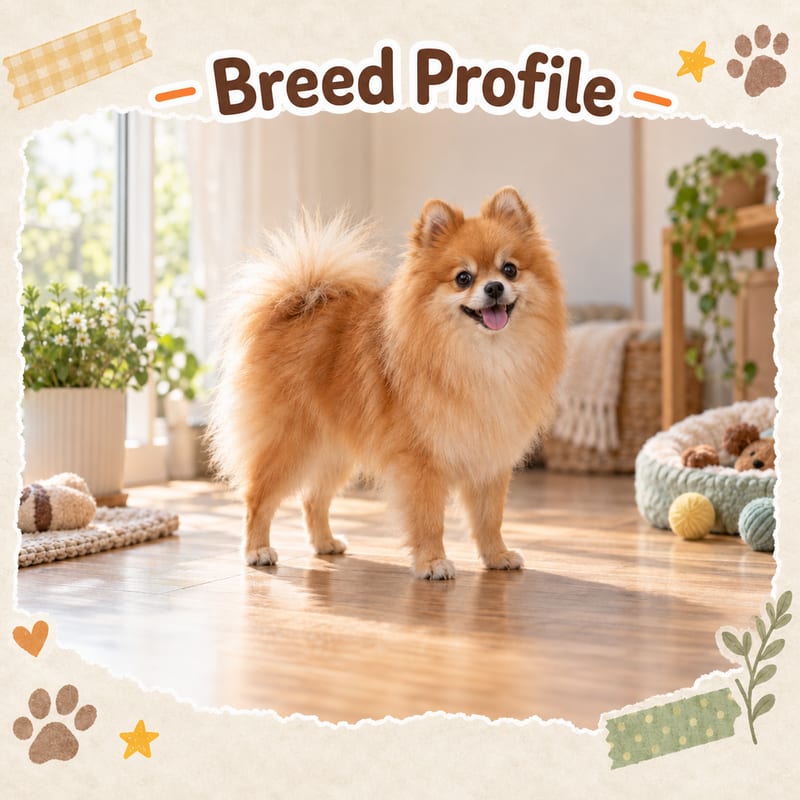
| Size | Toy breed—height 18–30 cm, weight 1.5–3.5 kg |
| Coat colour | Many colours—orange, white, black, chocolate, tricolour, etc. |
| Coat type | Double coat—long outer coat + soft undercoat |
| Lifespan | 12–16 years |
| Temperament | Lively, smart, a bit of a 'little boss' personality |
The Pomeranian's 'little boss' personality:
- Doesn't know it's small—Pomeranians will challenge big dogs
- Loyal to owners—Pomeranians will protect their owners
- Highly alert—Pomeranians will bark as a warning
Pomeranian temperament traits
The Pomeranian's personality is 'little boss'—lively, smart, with a bit of a 'little boss' personality.
Temperament traits:
| Trait | Description | Impact |
|---|---|---|
| Lively | Needs exercise—at least 30 minutes daily | Suitable for owners with time |
| Smart | High intelligence—strong learning ability | Easy to train + suitable as a working dog |
| Loyal | Loyal to owners—will protect them | A good companion dog |
| Alert | Highly alert—will bark as a warning | Needs socialisation training |
| Affectionate | Likes to cling to owners—a 'bag dog' | Suitable for owners who like close contact |
The Pomeranian's 'little boss' traits:
- Doesn't know it's small—Pomeranians will challenge big dogs
- Loyal to owners—Pomeranians will protect their owners
- Highly alert—Pomeranians will bark as a warning
- Likes to cling to owners—Pomeranians are 'bag dogs'
Who it suits:
- People who like small dogs—Pomeranians are one of the smallest breeds worldwide
- People who like close contact—Pomeranians are 'bag dogs'
- People with time—Pomeranians need companionship + grooming
Who it doesn't suit:
- Families with young children—Pomeranians have fragile bones + are easily stressed
- People with no time—Pomeranians need companionship + grooming
Common health problems in Pomeranians
Common health problems in Pomeranians:
| Disease | Symptoms | Treatment | Prevention |
|---|---|---|---|
| Tracheal Collapse | Cough + difficulty breathing + honking sound | Medication + surgery | Avoid collars + use a harness |
| Patellar Luxation | Limping + unwilling to jump | Medication + physiotherapy + surgery | Choose healthy breeding dogs + control weight |
| Alopecia X | Hair loss + skin darkening | Medication + surgery | Choose healthy breeding dogs |
| Heart disease (valvular disease) | Cough + difficulty breathing + fatigue | Medication + surgery | Regular check-ups |
| Eye disease (cataracts/glaucoma) | Red eyes + discharge + vision loss | Medication + surgery | Regular check-ups |
Tracheal collapse:
- Pomeranians have weaker tracheal cartilage—prone to collapse
- Symptoms: cough + difficulty breathing + honking sound
- Prevention: avoid collars + use a harness + control weight
Patellar luxation:
- Pomeranians' kneecaps easily slip out—a hereditary disease
- Symptoms: limping + unwilling to jump
- Prevention: choose healthy breeding dogs + control weight + avoid jumping on and off furniture
Hong Kong veterinary fee reference:
- Tracheal collapse surgery: HKD 20,000–50,000
- Patellar luxation surgery: HKD 15,000–40,000
- Alopecia X treatment: HKD 1,000–5,000 per session
- Heart disease medication: HKD 500–1,500 per month
Things to note when keeping a Pomeranian in Hong Kong
Hong Kong's environment poses some challenges for Pomeranians:
Challenge 1: The Pomeranian's double coat needs regular grooming
- The Pomeranian's double coat needs daily brushing + regular trimming
- Note: brush 5–10 minutes daily + see a professional groomer every 6–8 weeks
Challenge 2: Pomeranian tracheal collapse
- Pomeranians have weaker tracheal cartilage—prone to collapse
- Note: avoid collars + use a harness + control weight
Challenge 3: Pomeranian patellar luxation
- Pomeranians' kneecaps easily slip out—a hereditary disease
- Note: choose healthy breeding dogs + control weight + avoid jumping on and off furniture
Advice for keeping a Pomeranian in Hong Kong:
- Choose healthy breeding dogs—check the parents' health screening reports
- Buy pet insurance—Hong Kong vet fees are high
- Regular check-ups—take your Pomeranian to the vet annually
- Brush daily—prevent matting
- Use a harness—prevent tracheal collapse
Pomeranian care costs
Cost of keeping a Pomeranian in Hong Kong:
| Item | Cost (HKD) | Notes |
|---|---|---|
| Buying a Pomeranian | 8,000–20,000 | Depends on lineage + health checks |
| First check-up + vaccines | 1,000–2,000 | Includes vet check + vaccines |
| Monthly dog food | 300–500 | Pomeranians eat little |
| Monthly grooming | 500–800 | Pomeranians need regular grooming |
| Annual vet check-up | 1,000–2,000 | Includes vaccines + health check |
| Pet insurance | 2,000–5,000/year | Depends on coverage |
| Emergency medical costs | 5,000–50,000+ | Tracheal collapse surgery is expensive |
Total:
- First year: about HKD 12,000–25,000
- Subsequent years: about HKD 8,000–15,000
Money-saving tips:
- Choose healthy breeding dogs—avoid hereditary diseases
- Buy pet insurance—avoid sudden medical costs
- Regular check-ups—prevention is better than helps manage
- Brush yourself—avoid grooming costs
Pomeranian training tips
Key to Pomeranian training: positive training + socialisation
Training tips:
| Point | Method | Notes |
|---|---|---|
| Positive training | Use treats + praise—no physical punishment | Pomeranians respond well to positive training |
| Socialisation | Start young—expose to different people/dogs/environments | Pomeranians need socialisation |
| Basic commands | Sit/down/stay/come—start with basics | Pomeranians have strong learning ability |
| Recall training | Train in a safe environment—Pomeranians are not suited to off-leash | Pomeranians are too small—easily injured |
| Barking control | Teach a 'quiet' command—Pomeranians bark as a warning | Pomeranians are highly alert |
Common Pomeranian training problems:
- Barking: Pomeranians are highly alert—they bark as a warning. Solution: socialisation training + teach a 'quiet' command
- Challenging big dogs: Pomeranians don't know they're small—they will challenge big dogs. Solution: socialisation training + avoid playing with big dogs
- Stress: Pomeranians are sensitive to their environment—easily stressed. Solution: handle gently + introduce new environments slowly
Benefits of positive training:
- Builds trust—Pomeranians will trust their owners more
- Avoids fear—physical punishment makes Pomeranians fearful
- More effective—Pomeranians respond better to positive training
Pomeranian grooming and care
Pomeranian grooming needs to be regular—they have a double coat and need daily brushing + regular trimming.
Grooming and care tips:
| Item | Frequency | Method | Notes |
|---|---|---|---|
| Brushing | 5–10 minutes daily | Slicker brush + comb | Pomeranian double coat—needs daily brushing |
| Trimming | Every 6–8 weeks | Professional groomer | Pomeranian coat needs regular trimming |
| Bathing | 1–2 times per month | Dog shampoo | Don't use human shampoo |
| Nail clipping | Once a month | Dog nail clippers | Don't cut the quick |
| Ear cleaning | Once a week | Dog ear cleaner | Pomeranians have pointed ears—easily accumulate dirt |
| Teeth brushing | 2–3 times per week | Dog toothpaste | Pomeranians are prone to dental problems |
How Hong Kong weather affects Pomeranians:
- Hong Kong summers are hot—Pomeranians' double coat makes them heat-sensitive. Note: avoid midday walks + provide plenty of water + use air-conditioning
- Hong Kong winters are cold—Pomeranians adapt to cold weather. No special warming needed
This article is for reference only and cannot replace veterinary diagnosis. If in doubt, consult a registered veterinarian.

Further reading
📌 Key summary
- ✅ Brush 5–10 minutes daily to prevent matting
- ✅ Harness instead of collar reduces tracheal pressure
- ✅ Control weight + prevent jumping to protect knees
- ❌ Not suitable for families with young children; fragile bones and easily stressed
- ❌ No physical punishment; positive training is the only effective way
 Fuji One full guide →





