
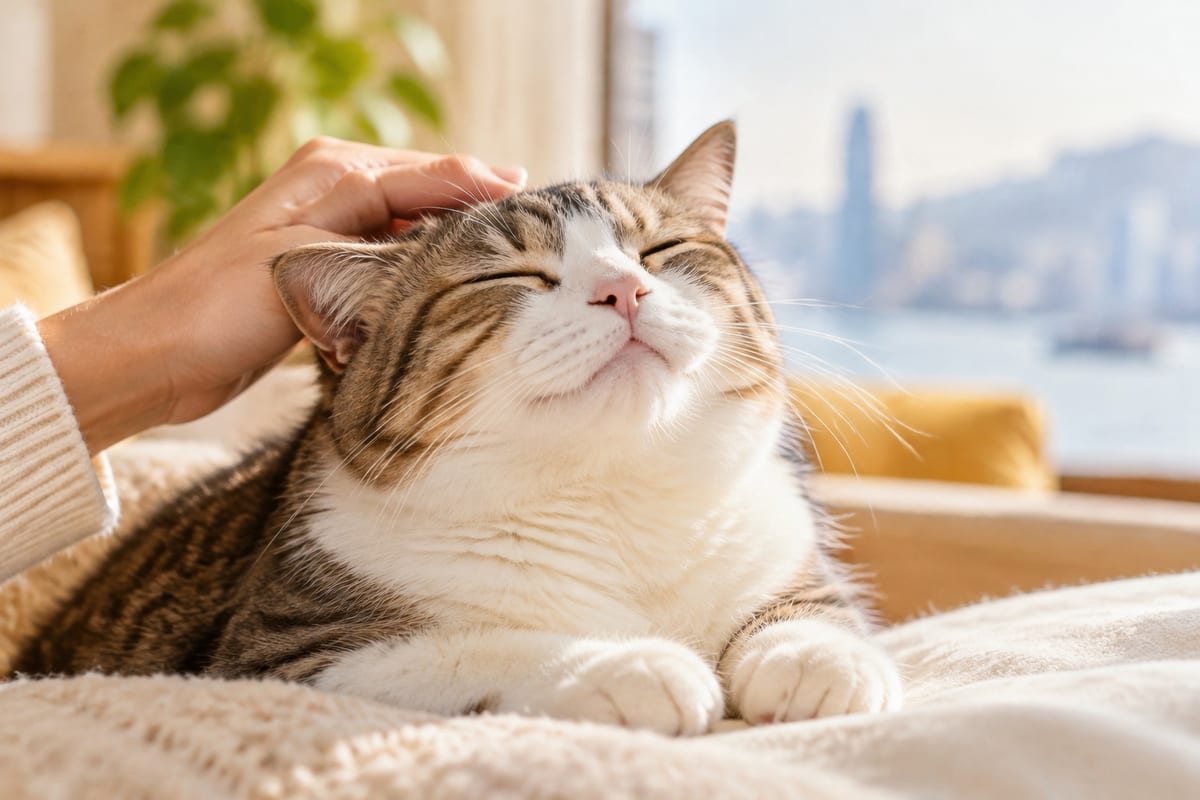
Quick answer: Cats don't purr only when they're happy! Purring is a communication and self-healing tool—cats purr when content, but also when stressed, in pain, or even during labour to soothe themselves. Scientific research shows that purr frequencies range from 25 to 150 Hz, a range proven to help promote bone healing, relieve pain, and stabilise blood pressure.
Does your heart melt every time you hear that "brrrr" sound from your cat? Many people think purring means happiness, but the secret behind a purr is far more amazing than you imagine!
Why do cats purr?
There are two main reasons cats purr:
- Contentment: When you stroke their favourite spots, play with them, or they're resting in a warm place, cats purr to express satisfaction.
- Emotional stability: Purring is also a way for cats to self-soothe, helping them relieve tension and stress.
Interestingly, even in stressful situations like a check-up at the vet clinic, many cats make that "brrrr" sound—it's actually their way of steadying their emotions!
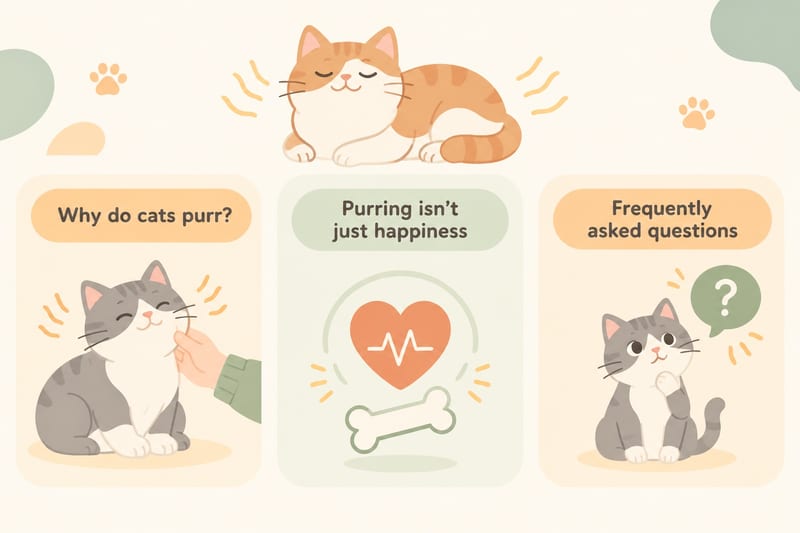
Purring isn't just happiness: 4 common scenarios explained
Many cat owners hear a purr and assume their cat is in a good mood, but you need to judge alongside the situation and body language. Here are the 4 most common purring scenarios:
- Relaxing and resting: Purring softly while lying on the windowsill or your lap, ears naturally forward—this is the most typical sign of contentment.
- Begging for food: Research has found that cats produce a "solicitation purr" mixed with a high-frequency "meow", specially designed to get their owner's attention and say "feed me now".
- Feeling anxious: Purring at the vet clinic, in the car, or when meeting strangers is a sign of self-soothing, similar to humans taking deep breaths to steady themselves.
- Feeling unwell: Cats purr when injured, in pain, or about to give birth. At these times the purr is a self-healing mechanism; pay special attention if accompanied by curling up, hiding, or loss of appetite.
Remember one principle: always read a purr together with the ears, tail, and body posture to accurately judge your cat's true mood.
What's special about the frequency of a purr?
Cats start purring from about 2 weeks old. Scientists have found that the frequency range of a purr is between 25 and 150 Hz.
What's special about this range? It turns out these frequencies have:
- Wound-healing effects
- Muscle tension relief effects
- Blood pressure stabilising effects
- Potential to lower the probability of heart attacks
In other words, a cat's purr isn't just a sound—it's a natural "healing frequency"!
Here's a table matching purr frequencies to their effects:
| Frequency range | Main effect | Practical meaning |
|---|---|---|
| 25-50 Hz | Promotes bone healing, stimulates bone cell growth | Key frequency for self-repair after injury |
| 50-100 Hz | Relieves muscle tension, reduces pain | Relaxes the body, soothes fatigue |
| 100-150 Hz | Stabilises blood pressure, reduces heart rate stress | Helps humans relax and sleep when listening |
What benefits do purrs have for humans?
In recent years, scientists have begun studying the effects of cat purring on human health. They found:
- Listening to cats purr can lower the risk of heart disease in humans.
- Cat owners have a lower probability of heart disease and cerebral infarction than people who keep other animals.
- The vibration frequency of purrs helps relax body and mind and reduce stress hormones.
According to the results of the Second National Health and Nutrition Examination Survey Mortality Follow-up Study (2009) conducted in the United States, cat owners had significantly better cardiovascular health indicators than non-cat owners.
Additionally, the low-frequency vibration of purrs is similar to the "hum" frequency heard during human meditation, so many cat owners report falling asleep more easily when they hear their cat purring at night—which is why more and more people use cat purring videos as sleep-aid white noise.
How to tell a normal purr from a health warning sign?
Most purrs are normal, but there are a few situations to watch out for:
- Purr suddenly becomes harsh, weak, or disappears: If a cat that always purrs suddenly goes quiet, or the sound clearly changes, it could be a respiratory problem or general unwellness.
- Accompanied by breathing noises: If the purr is mixed with "woo-woo" or "cough-cough" sounds, especially during breathing, it could be a problem with the windpipe or nasal cavity—see a veterinarian as soon as possible.
- Short-nosed breeds need extra attention: Persian, Exotic Shorthair, and other short-nosed breeds have narrower airways; if their purr is unusually loud or breathing is laboured, have regular check-ups.
- Judge alongside other symptoms: If purring is accompanied by a runny nose, sneezing, loss of appetite, or low energy, don't just assume it's happiness.
Simple rule: A purr with good energy, normal appetite, and smooth breathing is usually normal; if the sound suddenly changes or is accompanied by other symptoms, consult a veterinarian.
How to make your cat purr more often?
Want your cat to purr happily more often? Try these methods:
Regular interactive play
Spend 15-20 minutes a day playing with your cat, using a wand toy or small toys to stimulate their hunting instinct.
Find the strokes they love
Gently stroke their chin, behind the ears, and the base of the tail—spots they enjoy—and you'll soon hear that "brrrr" sound.
Provide a warm, comfortable environment
Cats love warm places; a sunlit windowsill or a soft cat bed are great spots to get them purring.
Keep a daily routine
Cats like regularity; fixed feeding times and daily habits help them feel secure.
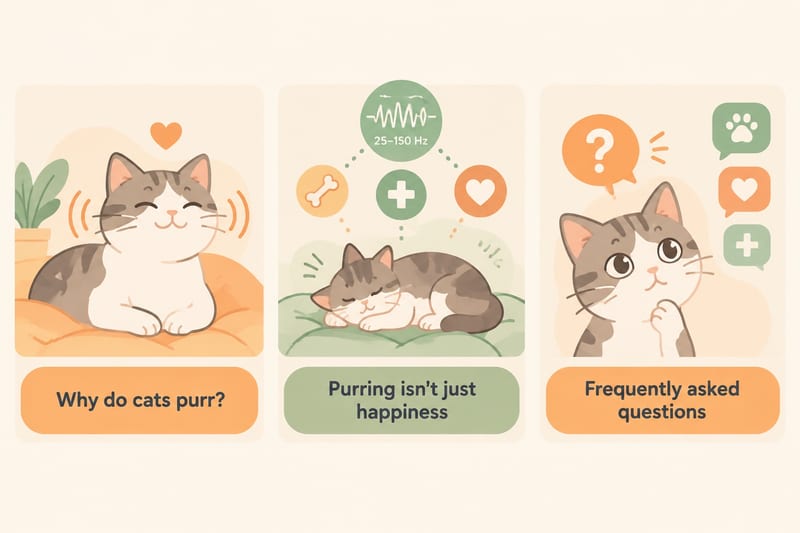
Frequently asked questions
Q: Does a cat purring mean it's happy? A: Most of the time, yes! But cats also purr when they're stressed or unwell—it's a way to self-soothe. You need to look at your cat's overall body language to judge its true mood.
Q: What frequency is a cat's purr? A: A cat's purr ranges from 25 to 150 Hz. This frequency range has been scientifically shown to promote wound healing, relieve muscle tension, and stabilise blood pressure.
Q: What benefits do purrs have for humans? A: Studies show that listening to cats purr can lower the risk of heart disease in humans, and cat owners have a lower probability of cardiovascular disease. The vibration frequency of purrs also helps relax body and mind.
Q: Do cats purr at the vet clinic too? A: Yes! Many cats purr during check-ups at the vet clinic—it's actually their way of steadying their nerves, not necessarily a sign of happiness.
Q: Is a very loud purr a problem? A: Not necessarily. Purr volume varies by cat; some are naturally very loud. But if the sound suddenly becomes louder or harsher, or is accompanied by breathing noises or a runny nose, take your cat to the veterinarian to check the respiratory tract.
Q: Why does my cat never purr? A: Every cat expresses itself differently—some purr very softly or not at all, which doesn't mean they're unhappy. Look for other signs of affection like kneading, slow blinking, or staying close to you. By the way, cats have excellent emotional memory; to learn more, check out our article on cat memory.
Further reading
Key takeaways
- Purring isn't just a happiness signal—cats also purr to soothe themselves when stressed, in pain, or giving birth.
- Purr frequencies of 25-150 Hz have been scientifically shown to help promote bone healing, relieve pain, and stabilise blood pressure.
- Listening to cats purr benefits humans too: lower heart disease risk, reduced stress hormones, and better sleep.
- Judge mood alongside body language; don't draw conclusions from purring alone.
- If the purr suddenly changes or is accompanied by breathing noises, consult a veterinarian as soon as possible.
PetChill's Reminder
A cat's purr is a gift from nature—it not only heals the soul but also benefits physical health! Next time you hear your cat "brrrr", take a moment to feel this natural healing power.
To learn more about cat behaviour, keep following PetChill's latest articles!