
🤖 AI Summary
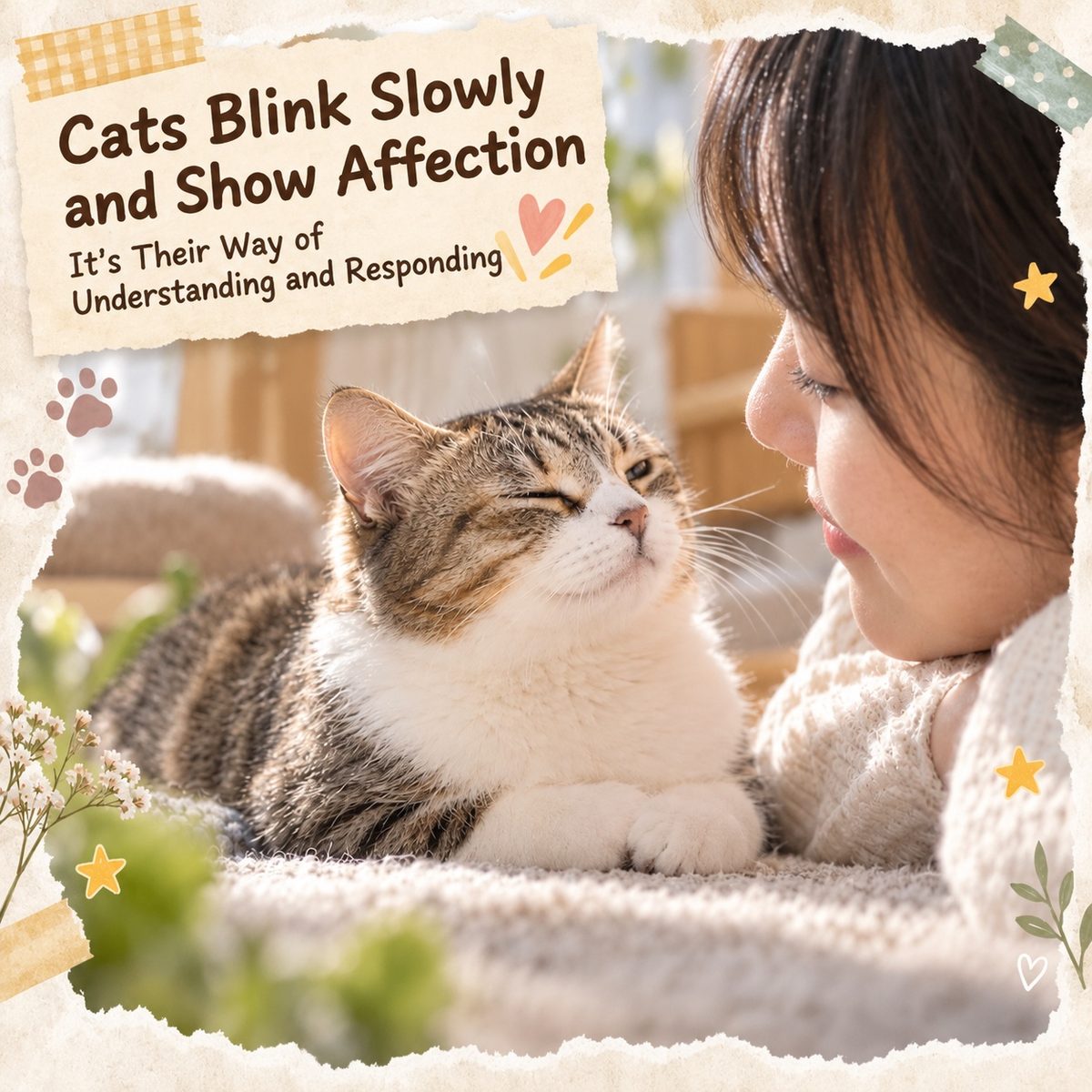
A cat slowly blinking at you = a 'cat kiss'—lowering its guard in your presence, expressing trust and affection. UK research even confirms: when humans slow-blink at cats, cats are more likely to respond and even approach on their own, even with strangers.
• A scientifically proven human-cat communication code, free and no treats needed
• Teaches you the correct 3-step blink back: relax → squint → slowly open
• Slow blink ≠ eye disease: learn to tell the difference—frequent one-eye blinking needs a vet
Quick answer: A cat's slow blink is a relaxed, friendly signal, the feline equivalent of a smile plus a kiss. Staring is provocative to cats, and the slow blink is the antidote that says 'I mean no harm.' To respond: look at it, relax your face, slowly squint and slowly open your eyes, repeat two or three times. A 2020 UK study confirmed this works even with strangers.
Contents
-
What is a slow blink (Cat Kiss)?
-
Why is staring provocative and a slow blink a kiss?
-
Scientific evidence: blinking back really works
-
Blink-back tutorial: 3 steps to do the cat kiss right
-
These blinks are not affection
-
FAQ
What is a slow blink (Cat Kiss)?
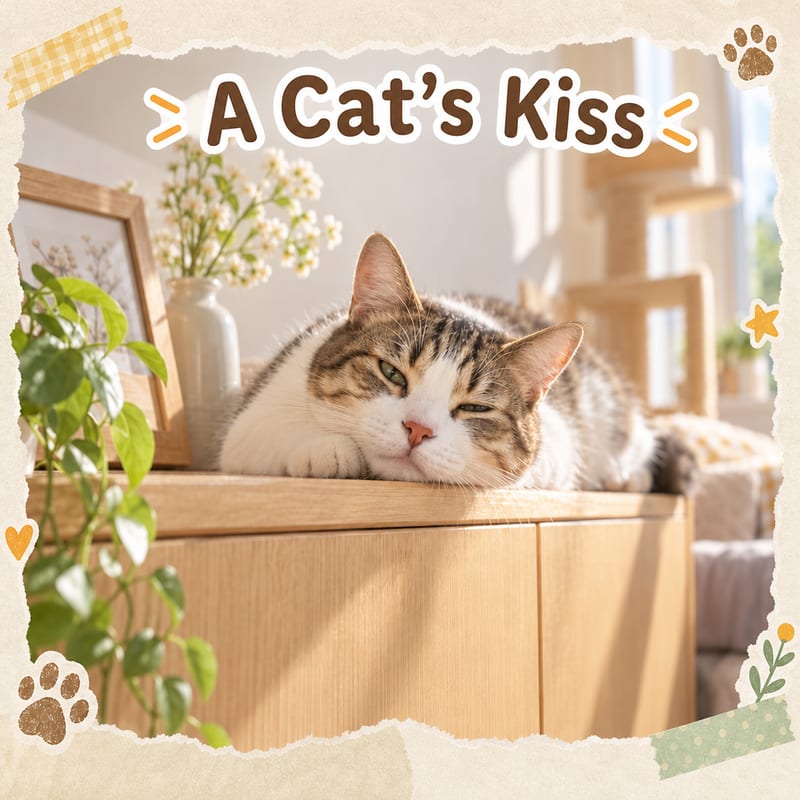
A slow blink is when a cat slowly narrows its eyes and then slowly opens them, sometimes with a relaxed face and a slightly tilted head. In cat behaviour studies, this is a classic signal of relaxation, non-threat, and trust, which overseas cat owners call the 'Cat Kiss' or 'cat smile.'
Note that a slow blink is usually part of a series of relaxed signals: slow blink + relaxed body + natural tail + possibly purring—the whole set is the complete picture of a cat 'dropping its armour' in front of you.
Why is staring provocative and a slow blink a kiss?
To understand the slow blink, you first need to understand its opposite: staring.
In the feline world, staring fixedly at another is a threatening behaviour—hunters lock onto prey, and cats facing off stare like that. So if you often stare at your cat, it will only feel pressured, look away, or tense up.
Blinking is the exact opposite: closing the eyes = temporarily giving up visual monitoring = 'I'm not afraid you'll sneak attack because I trust you.' In cat social language, slow-blinking at you is like saying: 'In front of you, I can let my guard down.'—this is a high compliment in the cat world.
Scientific evidence: blinking back really works
Slow blinking is not just an internet rumour; there is formal research support:
- 2020 study by the University of Sussex and other institutions in the UK: recorded cats' responses to slow blinking by owners and strangers—cats were significantly more likely to slow-blink back at people who made the slow-blink expression, and were also more willing to approach and offer a hand for contact. It works even with strangers.
- The researchers interpreted it: the slow blink seems to be a 'friendly expression' that cats can read, and when humans imitate it, they are speaking 'I mean no harm' in the cat's native language.
In other words: to break the ice with a cat, you don't need treats or toys—a sincere slow blink is a free social passport.
Blink-back tutorial: 3 steps to do the cat kiss right
Step 1: Relax yourself
Cats can read your state. Sit or crouch down (don't loom over them), relax your shoulders and neck, and wear a soft 'slight smile' on your face—research found that the half-closed, squinting state is key; a tense face staring at them will only backfire.
Step 2: Look at them, slowly squint
Gently rest your gaze on their eyes (not a fixed stare), slowly narrow your eyes as if very tired, and close them for one to two seconds.
Step 3: Slowly open, repeat two or three times
Slowly open your eyes, you can slightly shift your gaze away for half a second (meaning 'I'm not locking onto you'), then repeat the whole action two or three times. Then wait—if they blink back, stretch, or come straight over to rub against you, the reply is successful.
Tip: Don't demand an immediate response. Shy cats may observe for a few days first; slow blinking is a long-term investment. Do it daily, and they will remember you are a safe person.
These blinks are not affection
A slow blink is friendly, but not all blinking is friendly:
| Situation | Judgement | Response |
|---|---|---|
| Slow blink with both eyes + relaxed body | 🟢 Cat kiss, friendly | Slow-blink back |
| Frequent blinking in one eye / one eye squinted shut | 🔴 Possible corneal damage, conjunctivitis, foreign object in eye | See a veterinarian |
| Frequent rapid blinking + pawing at eyes | 🔴 Eye discomfort or allergy | See a veterinarian |
| Red or swollen eyes, lots of discharge | 🔴 Sign of eye disease | See a veterinarian |
This article is for reference only and cannot replace a veterinarian's diagnosis. If you have health concerns, please consult a registered veterinarian.
Hong Kong small-flat practical guide: 5 scenarios to practise the slow blink in a 300 sq ft unit
Hong Kong living is cramped, and neither cats nor humans have much room to retreat. Below are slow-blink practical tips for typical small-flat layouts, all using the three steps from the article, just adjusted for the Hong Kong environment.
1. Outside the bathroom door
Many cat litter boxes are in the bathroom, and cats feel relaxed after using the litter. You can sit on the floor outside the bathroom door (back against the wall), at about the same height as the cat, avoiding looming over them. Wait for them to come out, say 'good morning' in a very soft voice, then do the slow blink. Bathroom lights are usually yellowish, so remember not to turn them too bright, to avoid affecting their pupil constriction.
2. Window sill face-to-face
Hong Kong window sills are narrow, and cats love watching the street. Stand indoors with your eye level slightly below the window sill, let them smell you first, then slowly crouch down. Because there may be car noises outside, move more slowly than usual and give an extra two seconds of buffer. If their ears are forward but their body is relaxed, you can start blinking back.
3. Corner at the foot of the bed
The bed is a cat's safe zone, but space is limited. Sit on the edge of the bed with your feet on the floor, and don't shake the whole bed. If the cat is curled up asleep at the foot of the bed, gently rest your gaze near their eyes, don't stare directly. If they yawn and stretch, it means they are relaxed—do the slow blink immediately, and the success rate is high.
4. 30 seconds before dinner
Hong Kong people get off work late, and many cats are used to waiting for people to come home before opening a can. Hold the can and stand at the kitchen door, but don't open it immediately. Wait for the cat to sit and look at you, then do the slow blink twice, and then open the can. Link 'slow blink = good things happen,' and you'll see results in one or two weeks.
5. In an air-conditioned room
In summer with air-conditioning on, cats tend to sleep. If they are sleeping in a corner of the room, don't walk over; instead use a 'long-distance slow blink.' Sit at the doorway, look across the room at them, and make the movement a bit larger so they can see clearly. The air-conditioning noise will mask subtle sounds, which actually makes cats focus more on looking at your face.
Hong Kong-specific notes
- If in a partitioned room, avoid doing the slow blink through a glass door; reflections will make it hard for the cat to see your eyes clearly.
- In public housing corridors, when people pass by, the cat may be distracted; wait until their ears turn back to you before starting.
- If the cat is on top of a high cabinet, stand lower, or even sit on the floor, to follow the 'eye-level' principle.
Remember, Hong Kong spaces are small, and cats have even fewer escape routes, so the slower your movements, the more sincere you seem. Pick one scenario to practise each day, don't rush, and after seven days you'll see them actively seeking you out to blink back.
Further reading
📌 Key takeaways
- ✅ The slow blink is a free code cats use to express trust
- ✅ Three steps to blink back: relax → squint → slowly open
- ❌ Staring is provocative, don't fix your eyes on a cat
- ❌ Frequent one-eye blinking = eye disease, not affection
- ✅ Practise daily, and your cat will remember you are a safe person
- ✅ No treats needed, a sincere slow blink breaks the ice