Doberman Pinscher
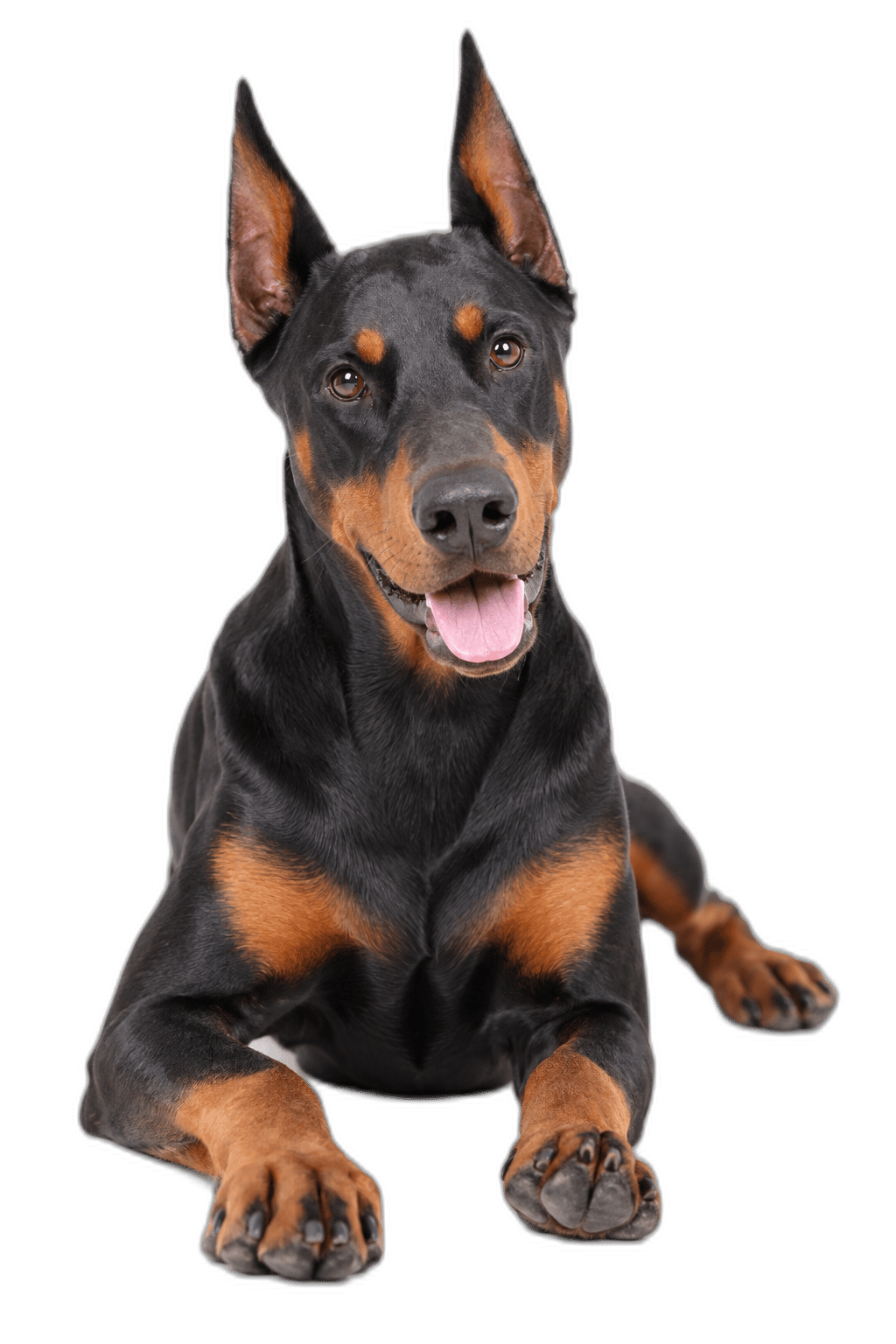
The Doberman Pinscher is a large breed originating in Germany, developed in the late 19th century by the German Karl Friedrich Louis Dobermann and originally used as a guard and working dog. The Doberman's classic look is a short black-and-tan coat, erect ears (both natural and cropped ears are common) and an athletic, solidly built frame; adults weigh about 32 to 45 kg and live about 10 to 13 years. In temperament, Dobermans are loyal and protective, intelligent and alert, and deeply devoted to their families, but they need a great deal of exercise and consistent training and are not suitable for inexperienced beginners. On health, pay particular attention to breed-common problems such as dilated cardiomyopathy (DCM). In Hong Kong, a Doberman costs about HK$15,000 to 35,000 (for reference only, confirm with the breeder's quote). This article covers the Doberman's origins, temperament, training and health care in detail so you can fully assess whether this breed suits you.
Size
Large
Lifespan
10-13 years
Weight
32-45 kg
Price
About HK$15,000-35,000 in Hong Kong; for reference only, confirm with the breeder's quote
📺 32-second video · Cantonese narration
The Doberman Pinscher story, in one take
From Germany to Hong Kong homes — how did the Doberman Pinscher become one of Hong Kong's most popular pet breeds?
- ✓Origin story: starting in Germany
- ✓Personality: Loyal, Protective of owner
- ✓Lifespan 10-13 years · Size Large
PetChill Pet Encyclopedia
Key facts
Origin
Germany
Lifespan
10-13 years
Size
Large
Weight
32-45 kg
Coat
Short coat, black with tan markings (red-tan and blue-grey coats also occur); both natural and cropped ears are common
Price range
About HK$15,000-35,000 in Hong Kong; for reference only, confirm with the breeder's quote
Personality
Dobermans are extremely loyal to their owners and will actively protect the family; they are natural guard dogs.
Their intelligence ranks near the top among breeds and they pick up commands quickly, but they need ongoing mental stimulation.
Naturally alert, quick to react to unfamiliar environments and sounds, and confident rather than timid.
Exercise needs are very high, at 1.5 to 2 hours or more a day; without enough exercise they easily become anxious or destructive at home.
A strong-willed temperament; owners need experience and a consistent, firm yet positive approach. Not suitable for beginners.
Daily life & habits
A Doberman's daily routine cannot be covered by two walks a day: exercise and mental work are both essential, and even after a run that burns physical energy, its needs remain unmet without scent work, obedience practice and problem-solving tasks. The result of long-term insufficient exercise or mental stimulation is not that it seems bored, but specific behavioural problems: chewing the sofa and door frames, constant barking or howling, circling and pacing, chasing wheels and runners, pulling and jumping up, and bolting out of doors. These are signs of unmet needs, not a bad dog, but letting them continue forms habits that are extremely costly to fix later and easily lead to neighbour complaints or even accidents. Hong Kong summers are hot and humid, so schedule outings for early morning and after dark, shorten each session and increase the frequency, choose routes with shade and water points, and carry water throughout; keep the indoors ventilated and air-conditioned, and provide a cooling mat and fresh water.
Care essentials
Grooming
Dobermans have a short coat and are relatively easy day to day: brush two to three times a week, trim nails every two to four weeks, check the ear canals weekly and brush the teeth two to three times a week. In summer pay particular attention to skin and heat loss: move walks to early morning and night, and touch the ground with the back of your hand before heading out, because if it is hot to the touch you should not walk, as a large dog's paw pads burn just the same. Keep the indoors ventilated and air-conditioned and provide a cooling mat and plenty of fresh water. Signs of heatstroke include excessive panting, increased salivation, unsteady gait and vomiting; if they appear, move the dog to shade immediately, cool it with room-temperature water and contact your vet. For repeated scratching, hair loss or red, swollen ears, have a vet rule out infection first, then address allergies.
Exercise
The Doberman is a high-drive breed, and exercise planning splits into two tracks depending on heart status. In a stable period, gentle regular walks are fine; what to avoid is vigorous running and long outings in high heat. The iron rule for Hong Kong summers is to avoid going out in the midday heat, because high temperature plus a faster heart rate is a trigger for relapse, so carry water and choose early morning or late at night. If symptoms are already present, or heart failure is not stably controlled, limit exercise and walk slowly on a short lead as directed by the vet. Another principle: high-drive dogs do not know when to stop, so do not use running until it stops by itself as the standard, because by that point it is usually already overheated; the owner has to actively call a halt and cool the dog down, and if the gait becomes unsteady, seek veterinary care immediately. Stopping many times during a walk, or panting for a long time after getting home, are signs of deteriorating stamina and must be mentioned at the recheck; some clinics use a six-minute walk or activity assessment to objectify exercise tolerance.
Training
Like other working dogs, Dobermans have a window for socialisation: puppies are most receptive at about three to sixteen weeks, and should be exposed to different people, surfaces and sounds under safe conditions; before vaccinations are complete, avoid places with many dogs and unknown hygiene standards, and discuss the schedule with your vet. In training, basic obedience (sit, stay, loose-lead walking, release word, recall) should be practised daily for five to ten minutes at a time; later you can add scent work, obedience sport, agility or frisbee to give it a formal job. Training with force or high pressure usually produces nervousness and defensive reactions in high-drive breeds and is not recommended. If biting, resource guarding or over-alertness has already appeared, seek assessment from a trainer or a veterinary behaviour specialist early rather than suppressing it yourself, because letting it continue forms habits that are extremely costly to fix later.
Diet
On diet, adults are generally fed two meals a day, on a large-breed adult formula, with portions set by body condition and treats kept within ten percent of total calories. Weight management matters especially for large dogs, because every extra kilogram presses directly on the hip and elbow joints; assess by feeling the ribs, where ribs you can feel and a visible waistline is ideal, and ribs you cannot feel is a signal to cut back. The puppy stage needs care: growth plates in large breeds generally do not close fully until about one to one and a half years, and long, high-impact exercise such as repeated jumping and long runs is not advised during this time; short, frequent walks and free running on grass are suitable. Choose a large-breed puppy formula and do not add calcium powder yourself; ask your vet if unsure.
Living environment
Hong Kong's housing environment is the biggest practical hurdle to keeping a large dog. On space, a Doberman needs room to turn around, stretch out and rest; a small flat is not necessarily impossible, provided the household can take it out every day to burn energy and the flat is ventilated with cooling. Check housing rules in advance: Housing Authority public housing estates generally do not allow dogs, with working dogs such as guide dogs considered separately, and violations incur penalty points, so it is basically not feasible for public housing tenants; subsidised housing also has related restrictions; for private buildings, check the building deed and management office rules, as some estates have extra requirements for large dogs, and for rentals check the tenancy agreement and the landlord's consent. These rules change between estates and over time, so verify them yourself before deciding. In public places, large dogs must be on a lead held by someone capable of controlling them; details such as lead length are updated from time to time, so check the AFCD's latest announcement before heading out.
Doberman Pinscher everyday food & supplies
Chosen by species (dog) from products PetChill stocks — not a breed-specific formula. Actual suitability depends on age, weight and health.

Nutriplan Soft Dog Food Immunity and Skin Care Support 1.2kg (64337)
HK$98About HK$81.67 per kg
Price checked 2026-10-21; the store page shows the live price, stock and offers.

Bella & Molly's Dutch Berry Royal Selected Dog Food AAFCO Grain-Free Single Protein Salmon Formula 50g (Limited Time Experience)
HK$10About HK$200 per kg
Price checked 2026-10-21; the store page shows the live price, stock and offers.
 Special offerHK$175HK$235
About HK$77.16 per kg
Price checked 2026-10-21; the store page shows the live price, stock and offers.
History & origin
The Doberman is one of the few breeds developed largely by one person. In the late 19th century, Karl Friedrich Louis Dobermann, a tax collector in Apolda in Thuringia, Germany, often faced danger while collecting taxes and wanted a loyal, reliable guard dog to accompany him, so from the 1890s he began crossing various dogs, generally believed to include the German Pinscher, Rottweiler, Weimaraner and Greyhound. After several generations of selection, the Doberman's guarding instinct, speed and loyal temperament gradually became fixed. In 1908 the Doberman was officially recognised as a separate breed by the German kennel club, and it quickly spread to Europe and America. During both World Wars, Dobermans were widely used as military dogs, police dogs and search-and-rescue dogs, establishing their position as an all-round working dog. Today, besides continuing guard work, the Doberman is a faithful companion for many experienced families.

Who it suits
Is the Doberman Pinscher right for you?
A Doberman is not suitable for families without the time for exercise or experience with training. In practice, three things need working out: a fixed daily exercise slot (split into two sessions, plus sniffing and obedience practice), long-term medical considerations (DCM is high-risk, with annual auscultation from middle age and rechecks every 3 to 6 months once diagnosed), and whether the home is allowed to keep a large dog. Build the habit of counting the sleeping respiratory rate every night: a healthy dog is generally 15 to 30 breaths per minute, and if it rises above baseline for several days in a row or exceeds 40, contact your vet. Dogs with heart disease should be kept from over-excitement, since frantic barking at the doorbell and excited greetings both send the heart rate soaring; for occasions with a lot of activity at home, discuss management with your vet in advance. Cardiac emergencies give no warning: seeming a bit more breathless tonight can mean pulmonary oedema worsening within hours, so better a wasted trip than gambling on morning.
Health & care
Common health issues and care advice for the Doberman Pinscher
The Doberman is one of the flagship breeds for dilated cardiomyopathy (DCM). In DCM the heart muscle becomes thin and weak and the ventricles enlarge so the heart pumps poorly; unlike mitral valve degeneration, it can progress quickly, and in some dogs the first symptom is collapsing or even sudden death, so large-dog families cannot afford to wait and see. Some cases are diet-related, for example long-term use of non-traditional diets (certain grain-free or legume-based formulas), so discuss food choices with your vet if unsure. The most insidious part is that stages B1 and B2 are symptom-free: the dog eats, sleeps and plays normally, but the heart is already changing. Symptoms run from mild to severe: a night cough or coughing when lying down, rapid breathing at rest, exercise intolerance, open-mouth neck-stretched breathing at rest, and bluish tongue and gums; systemic signs include reduced energy and appetite, weight loss, a distended abdomen, hindlimb weakness and collapse after activity. For high-risk breeds, annual physical examination and auscultation from middle age (5 to 7 years); if a heart murmur is heard, add cardiac ultrasound for staging as directed by the vet; once diagnosed, recheck every 3 to 6 months.
Want to see more dog breeds?
Besides the Doberman Pinscher, you can also compare Beagle, Rottweiler and Maltese — breed guides that compare personality, size and care difficulty.
Frequently asked questions
The questions people ask most about the Doberman Pinscher
Doberman puppies in Hong Kong are generally about HK$15,000 to 35,000, depending on bloodline, breeder and health-test certificates. Prices are for reference only, so confirm with the breeder's quote.
Not recommended. A Doberman can weigh 32 to 45 kg, has a strong-willed temperament and very high exercise needs, and requires professional and consistent training, so an inexperienced beginner will find it very demanding.
On average 10 to 13 years. Dobermans are a high-risk breed for dilated cardiomyopathy (DCM), and annual cardiac ultrasound from 2 to 3 years of age is recommended, which helps detect problems early.
At least 1.5 to 2 hours, including walks, running and training games. Dobermans that do not get enough exercise easily become anxious, bark excessively or even destroy the home.
Mainly dilated cardiomyopathy (DCM), bloat, hypothyroidism and Wobbler syndrome (cervical vertebral instability). Bloat is an emergency, so avoid vigorous exercise within 1 to 2 hours after a meal.
A Doberman socialised from a young age can be very gentle and loyal with children in the household, but because of its size (32 to 45 kg) an adult must always be present during interactions.
Dilated cardiomyopathy (DCM) is relatively common and there may be no obvious symptoms in the early stages, so regular cardiac checks and recording the resting respiratory rate are recommended.
It is a high-activity large guarding breed that needs consistent training and a great deal of exercise, so beginners should first assess their time and space.
Both are large guarding breeds; the Doberman is leaner and its heart needs watching, while the Rottweiler is heavier-set with greater strain on the joints.
Dilated cardiomyopathy, bloat, hypothyroidism and Wobbler syndrome all need watching.
You may also like
Other dog breeds like the Doberman Pinscher