
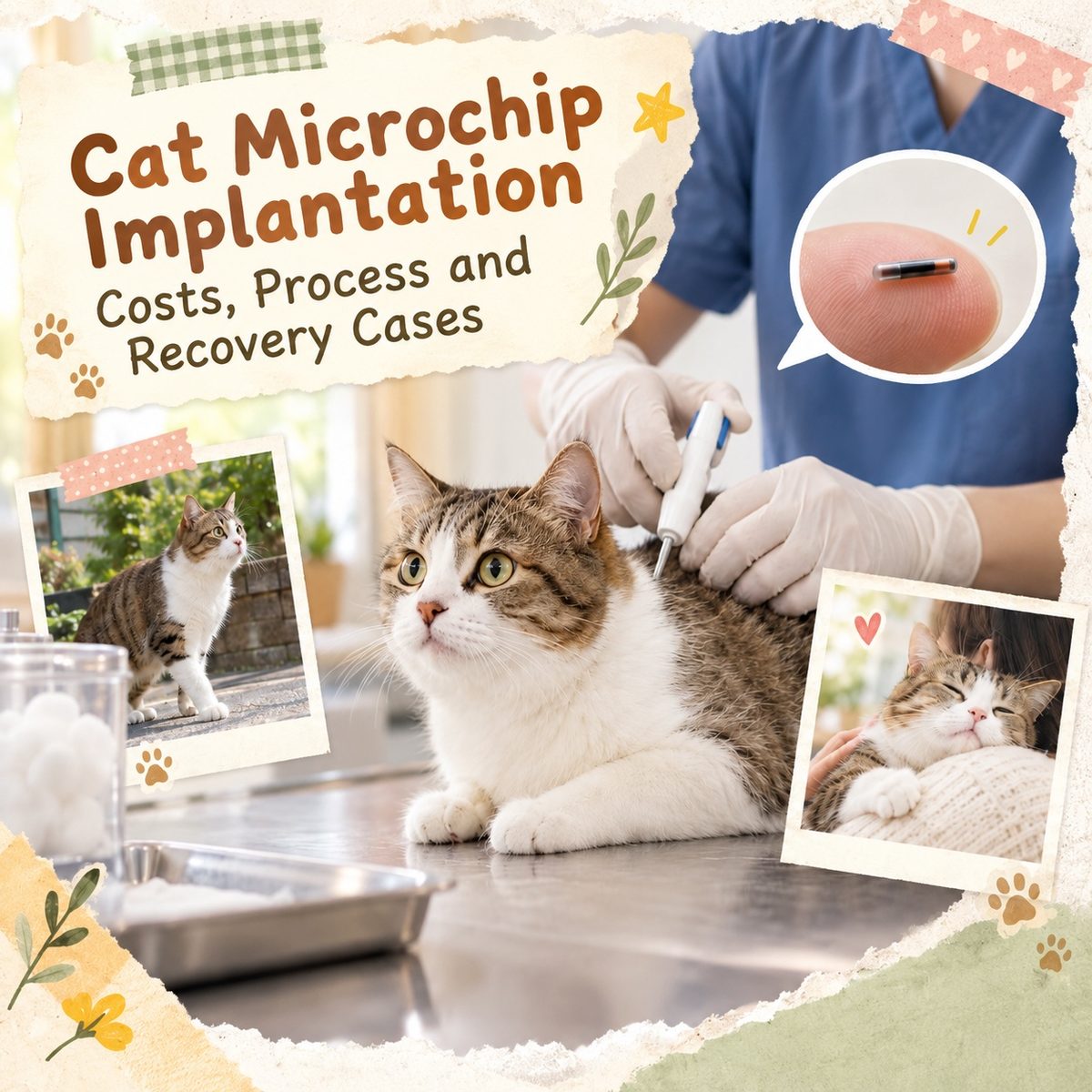
Quick answer: A cat microchip is an electronic tag smaller than a grain of rice that, once implanted under the skin, permanently identifies your cat. If your cat goes missing, a vet or shelter can scan it and find the owner. Although microchipping is not yet mandatory for cats in Hong Kong, it is increasingly a must-have choice for responsible cat owners.
Have you ever thought about how you could prove a cat is yours if it suddenly goes missing? Collars can come off, name tags can be lost, but a microchip implanted in the body will never leave your cat. This article takes you through everything about cat microchipping—from how it works to costs, from the procedure to real reunion cases—so you can make the most reassuring decision for your pet.
What is a cat microchip and why is it important?
A cat microchip is actually a passive radio-frequency identification (RFID) device, very small, about 2 mm in diameter and 8 to 12 mm in length, smaller than a grain of white rice. It does not need a battery; it is activated by electromagnetic waves from a scanner and returns a 15-digit number, which is the cat's "ID number".
The microchip itself does not have GPS tracking, so it cannot track your cat's location in real time. But if a lost cat is found by someone and taken to a veterinary clinic or animal shelter, staff can scan it to read the microchip number and then use the registration data to find the owner.
Core functions of the microchip
- Permanent identification: Once implanted under the skin, the microchip can be used semi-permanently without needing battery replacement.
- Anti-counterfeiting and anti-theft: Each number is globally unique and can prove ownership of the cat.
- Disaster response: After natural disasters such as earthquakes or typhoons, name tags and collars may be lost, but the microchip remains.
- Cross-border travel: When taking your cat abroad, the microchip is an internationally recognised form of identification.
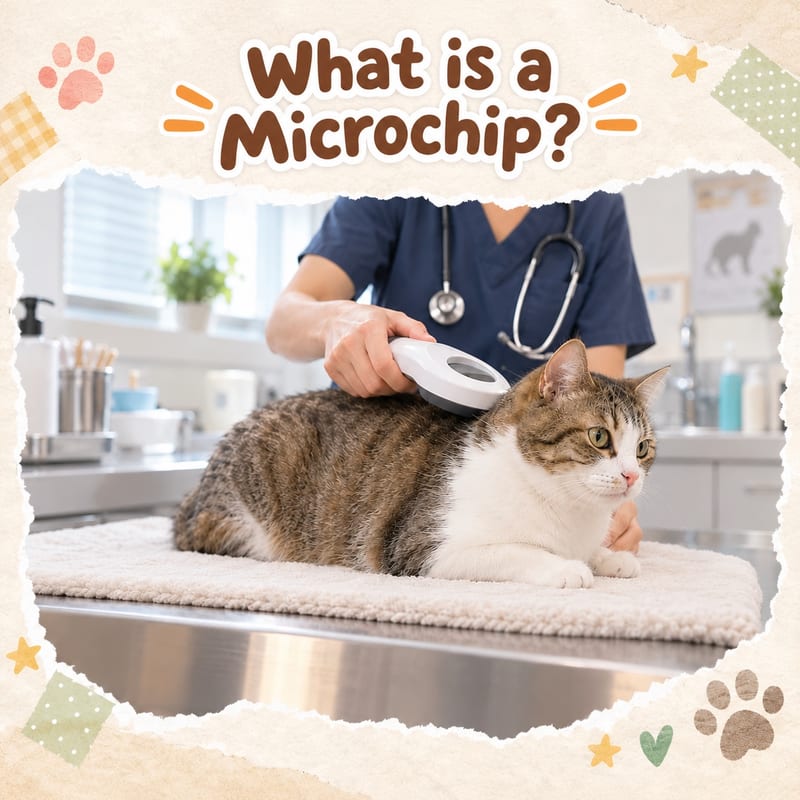
What is the microchipping procedure?
Many cat owners worry that microchipping will be painful for their cat, but in reality the process is very simple and quick.
Implantation steps
- Veterinary assessment: The vet first checks the cat's health to confirm it is suitable for implantation.
- Disinfection preparation: The skin on the back of the cat's neck (between the shoulder blades) is disinfected.
- Injection implantation: A special syringe is used to inject the microchip under the skin; the whole process takes only a few seconds.
- Scan confirmation: Immediately after implantation, a scanner is used to confirm the microchip can be read normally.
- Registration: The microchip number and owner details are registered in the system.
Common questions
Is anaesthesia needed?
No. The pain of microchipping is similar to a vaccination; most cats only struggle slightly and it's over. If your cat is particularly nervous, it can be done at the same time as routine vaccination.
Are there side effects after implantation?
Based on many years of global experience, the chance of serious side effects after microchipping is extremely low. Some cats may have slight swelling at the injection site, which usually resolves on its own within a few days. No reports indicate that microchips cause long-term health effects in cats.
Can the microchip move?
In very rare cases, the microchip may move slightly from the injection site, but it can still be read by a scanner. If you are concerned, you can ask your vet to scan and confirm periodically.
Cost reference for microchipping
The cost of microchipping a cat in Hong Kong is approximately as follows:
| Item | Cost range |
|---|---|
| Microchip implantation fee | HK$200 - $500 |
| Registration fee | Sometimes included in the implantation fee |
| Annual fee/renewal | Depends on the registration platform; some are free |
Compared with Japan's implantation fee of about 5,000 yen (about HK$260), Hong Kong's price range is reasonable. Some veterinary clinics offer microchipping during neutering surgery, saving an extra consultation.
How to choose a vet for microchipping?
- Choose a reputable veterinary clinic.
- Confirm the use of microchips compliant with ISO 11784/11785 standards.
- Obtain documentation of the microchip number after implantation.
- Confirm that the details have been correctly registered in the system.
How does a microchip help lost cats get home?
Here's a true case: a cat owner who moved from Tokyo to Hawaii lost their cat, which was found by locals. The vet scanned the cat and found a Japanese microchip; through the microchip number, they successfully found the owner far overseas. This story fully demonstrates the value of microchips—even across the Pacific, they can help a cat find its way home.
Microchip vs collar name tag: which is more reliable?
| Comparison item | Microchip | Collar name tag |
|---|---|---|
| Permanence | ✅ Permanent | ❌ May come off |
| Anti-counterfeiting | ✅ Globally unique number | ❌ Can be forged |
| Disaster response | ✅ Unaffected | ❌ May be lost |
| Immediate identification | ❌ Requires scanner | ✅ Visible at a glance |
| Cost | One-time fee | Needs periodic replacement |
Recommendation: Using both together works best! A collar name tag allows passers-by to identify the cat immediately, while the microchip serves as the ultimate safeguard.
Current situation of cat microchipping in Hong Kong
Hong Kong currently has no law mandating cat microchipping, but as public awareness of pet protection increases, more and more people are proactively microchipping their cats. Some animal adoption organisations have made microchipping one of the adoption conditions to ensure every adopted cat has identification protection.
Commonly used microchip registration platforms in Hong Kong
- AFCD Animal Health Division: Government official registration system.
- Individual veterinary clinics: Some clinics have their own databases.
- International microchip databases: Facilitate cross-border recovery.
When is the best time to microchip?
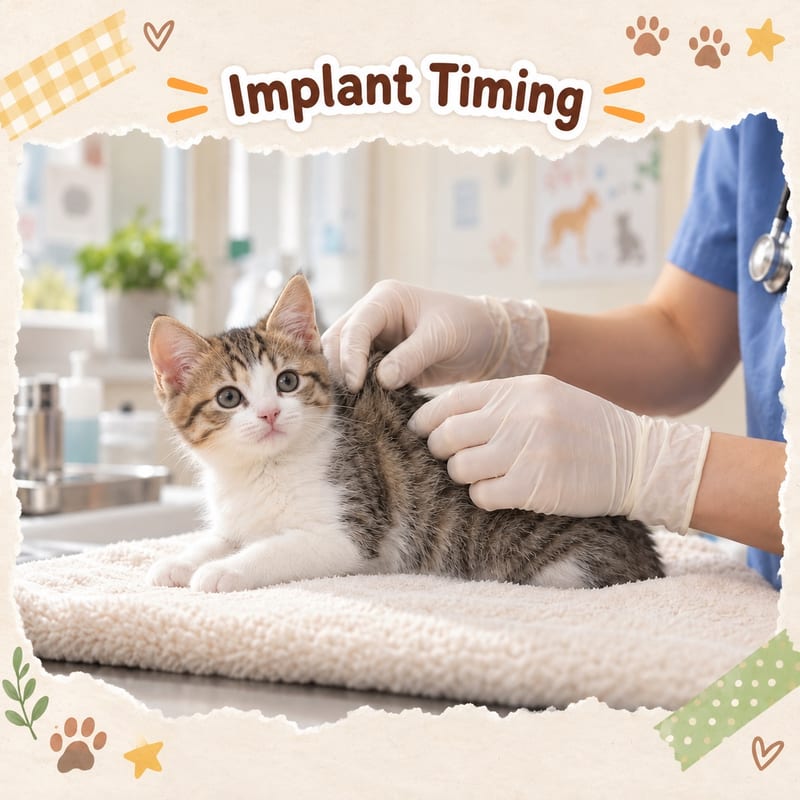
Vets generally recommend microchipping cats from 8 weeks of age. The ideal times are:
- At the first vaccination: One injection does it all, reducing stress for the cat.
- During neutering surgery: Implant while under anaesthesia, so the cat feels nothing.
- Before adoption: Ensure the new cat has identification protection from the start.
Dog microchips and dog licences are handled together; for the process, see AFCD dog licence appointment | Hong Kong dog licence renewal, obtaining a dog licence, microchip and rabies vaccination guide.
PetChill's Reminder
Microchipping your cat is a simple, safe, and reasonably priced decision, but the protection it brings is priceless. If your cat goes missing, the microchip may be the only hope of getting them home. If your cat is not yet microchipped, why not ask your vet to arrange it at the next vaccination visit.
To learn more about cat health and care, stay tuned for PetChill's latest articles!
Practical tips for small Hong Kong flats: what to do before and after microchipping
Living in Hong Kong, an open kitchen and living room may not even be 300 sq ft, so cats have limited space and the risk of getting lost is actually higher—a door opening could mean dashing into the corridor. If you want to microchip your pet, here's how to do it practically:
48 hours before implantation
- Call two or three nearby veterinary clinics to compare prices, and ask clearly whether registration is included and if there is a neutering package price.
- Schedule the appointment for the morning or a quieter time at the clinic to reduce your cat's stress in the small consultation room.
- Prepare a cat carrier or crate; Hong Kong summers are hot, so remember to add an ice pad or towel for insulation.
On the day of implantation
- Take a taxi or call a van directly to the clinic to avoid the MTR crowding and overwhelming your cat.
- The implantation takes seconds; afterwards the vet will give you a microchip certificate—take a photo immediately for backup.
- When you get home, stick a memo on the front door to remind yourself: "Check for the cat before opening the door!"
One week after implantation
- Gently feel the back of your cat's neck daily to check for swelling; if there is redness or swelling, WhatsApp a photo to the vet immediately.
- While your cat is sleeping, note the microchip number on your phone and save a copy in Google Drive, so you have a backup even if your phone breaks.
- If you live in public or subsidised housing, proactively tell family members: "The cat has a microchip; if it goes missing, remember to call the police and contact AFCD."
Annual routine
- At vaccination time, ask the vet to scan and confirm the microchip is still in place; the cost is usually included in the consultation fee.
- After moving house or changing phone number, update the registration details immediately—don't delay.
Hong Kong spaces are small, but by following the steps above, your pet has an extra layer of protection and you can sleep more soundly.
Further reading
📌 Key summary
- ✅ Permanent identification; can be reunited across borders if lost.
- ✅ Implantation is like a vaccination, takes seconds, no anaesthesia needed.
- ✅ Hong Kong cost HK$200–$500; can be done during vaccination or neutering.
- ❌ Microchip has no GPS; cannot track location in real time.
- ❌ Don't rely on the microchip alone; use a collar name tag as well.
 Fuji One full guide →


 Wellness Core full guide →