
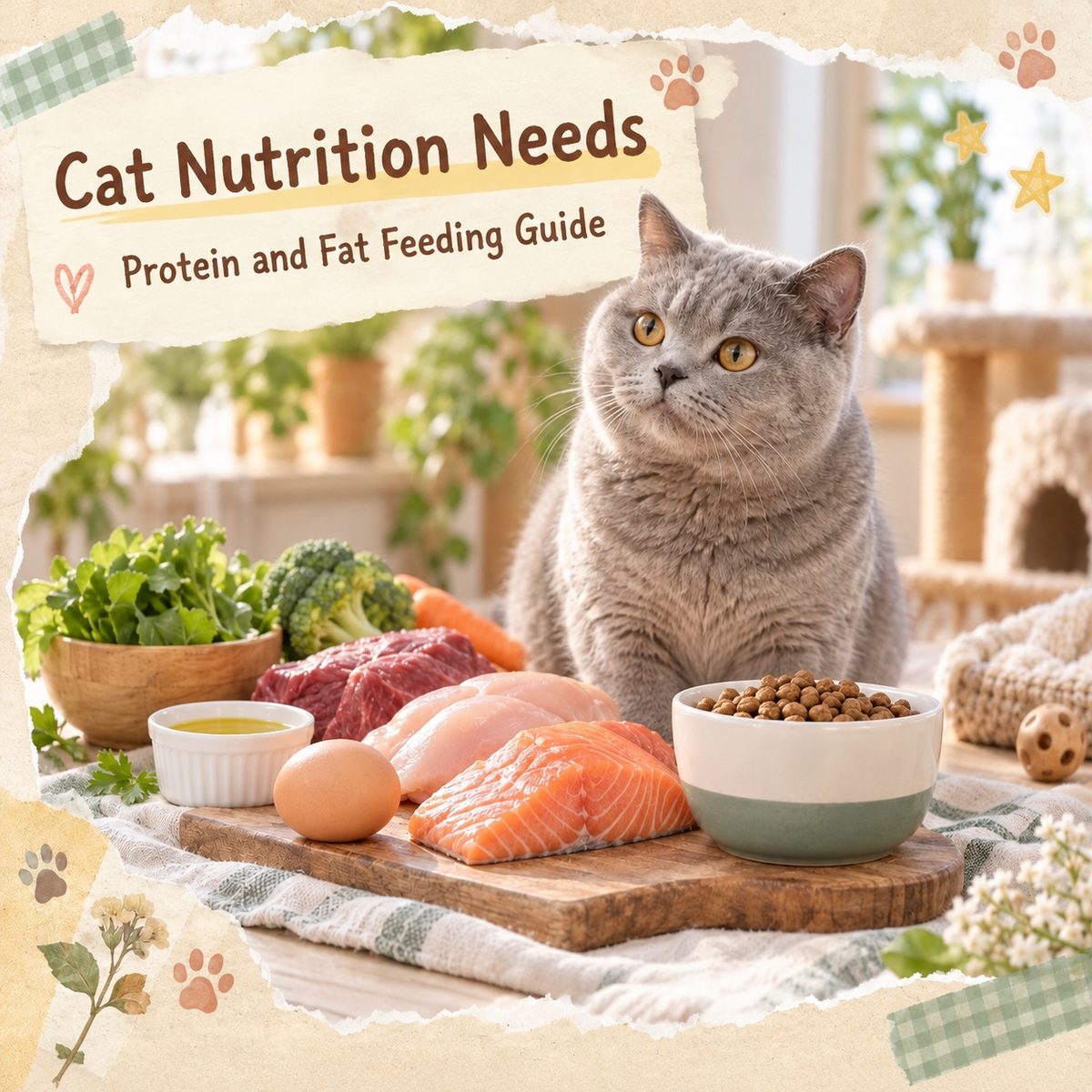
Quick answer: Cats are obligate carnivores and need high protein (over 30%), moderate fat (9%+) and special nutrients like taurine. An adult cat needs about 45–80g of cat food per day, and the first ingredient must be meat. Onions, chocolate and milk are absolutely forbidden!
Have you ever wondered whether the cat food you give your cat every day is nutritious enough? Cats are natural carnivores, and their nutritional needs are completely different from humans! Human favourites like onions and chocolate are actually poison to cats. Today we take a deep dive into your cat's nutritional code—from protein to vitamins, from feeding amounts to forbidden foods—one article solves all your diet questions!
Basic Nutritional Needs of Cats: The Three Major Nutrients Are All Essential
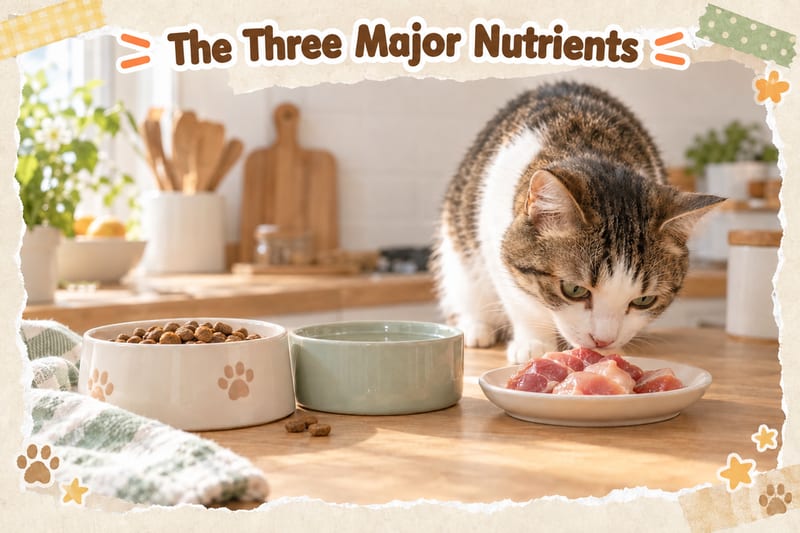
A cat's dietary structure is very different from a human's. They need three basic nutrients: protein, fat and carbohydrates, but the proportions are vastly different from humans.
Protein: The Source of Life for Cats
Cats need more than twice as much protein as dogs! High-quality animal protein is the core ingredient of cat food, mainly from lean poultry, beef and fish. These proteins are easy to digest and nutrient-rich.
Note that animal organs (such as lungs, liver and kidneys) actually have lower protein content, and organs alone cannot meet a cat's protein needs. When choosing cat food, the first ingredient should be meat, not grains or plant protein.
Fat: The Key to Energy and Palatability
Fat not only determines the taste of cat food but is also an important energy source for cats—fat provides twice the energy of carbohydrates! In addition, fat aids digestion and helps cats pass swallowed hair.
Cat food must contain at least 9% fat, and cats actually prefer food with a fat content between 25% and 40%. However, too much fat leads to obesity and fatty liver, so control it appropriately.
Carbohydrates: Nice to Have, Not Essential
Unlike protein and fat, cats do not necessarily need carbohydrates. If the food has enough protein and fat, a temporary lack of carbohydrates is not a big problem—wild cats eat almost no carbohydrates.
However, carbohydrates can quickly convert into energy, which is helpful for nursing mothers or highly active cats. Whole wheat noodles, oats and peeled rice are good sources, but remember all plant foods must be cooked before cats can digest and absorb them. For more on daily cat care, see Complete Cat Care Guide.
Essential Nutrients for Cats: These Micronutrients Are Super Important
Besides the three major nutrients, cats also need various special nutrients that can only be obtained from animal-based foods.
Taurine: The Essential Amino Acid Unique to Cats
Taurine is an indispensable amino acid for cats, found mainly in meat, fish and dairy products. A cat's natural prey (such as mice) provides abundant taurine. Taurine deficiency can cause serious heart and vision problems in cats.
Vitamin A: Cannot Be Obtained from Plants
Unlike humans, cats cannot digest carotene from plants and must obtain vitamin A from animal-based foods. Raw animal liver (not pork liver!) is rich in vitamin A; feed at most 150 grams per week (divided into two meals).
⚠️ Important warning: Feeding only animal liver can cause vitamin A poisoning, leading to movement disorders and bone deformities!
B Vitamins: Guardians of the Nervous System
B vitamins are very important for a cat's nervous system, skin and metabolism:
- Vitamin B₁ (thiamine): Protects the nervous system. ⚠️ Raw fish contains an enzyme that breaks down vitamin B₁; too much raw fish destroys vitamin B₁
- Vitamin B₂ (riboflavin): Maintains healthy skin and coat; deficiency causes skin problems and impaired vision
- Vitamin B₃: Crucial for muscle, nerve and skin development
Omega Fatty Acids: The Secret to a Glossy Coat
Omega-3 and Omega-6 unsaturated fatty acids keep a cat's coat glossy and skin healthy. But they can only be obtained through food—salmon oil and flaxseed oil are good sources. Arachidonic acid (an Omega-6 fatty acid) is found in liver, egg yolk and fish oil. Want to understand cat health signals? Read The Secret of Cat Purring.
Daily Feeding Amount Reference: Don't Let Your Beloved Cat Become a Fat Cat
Cats gain weight fastest in the first 3 months after birth, stabilise after 4–5 months, and their body shape is basically set by 10–11 months. After that, any further weight gain only leads to obesity!
Kitten Feeding Amount Reference (grams per day)
| Weight | 0–4 months | 4–6 months | 7–12 months |
|---|---|---|---|
| 1kg | 50g | 40g | 35g |
| 2kg | 85g | 70g | 55g |
| 3kg | 115g | 95g | 75g |
| 4kg | 140g | 120g | 95g |
| 5kg | 165g | 140g | 110g |
Adult Cat Feeding Amount Reference (grams per day)
| Weight | 1–6 years |
|---|---|
| 3kg | 45g |
| 4kg | 60g |
| 5kg | 70g |
| 6kg | 80g |
10 Human Foods You Must Never Feed Your Cat
Many ingredients in human food are harmful to cats. Here are the most common forbidden foods:
Toxic Danger (Absolutely Forbidden)
- Onions, spring onions, chives—contain substances that destroy red blood cells, causing anaemia or blood in urine. Even the onions in a hamburger must be avoided!
- Chocolate, coffee—contain caffeine and theobromine, causing diarrhoea, vomiting, abnormal excitement and even convulsions
- Toxic plants—azaleas, lily of the valley, eucalyptus leaves, jasmine, etc. can all cause poisoning
Foods That Cause Diarrhoea (Avoid as Much as Possible)
- Shrimp, crab, squid—crustacean seafood easily causes indigestion
- Milk—most adult cats are lactose intolerant; drinking milk causes diarrhoea
- Raw eggs, raw meat—may contain pathogens such as salmonella
- Avocado—contains substances toxic to cats
- Mushrooms—difficult to digest, and some varieties are toxic
- Blue-backed fish—contain more unsaturated fatty acids; excessive amounts cause vitamin E deficiency
- Konjac—cats cannot digest it
3 Secrets to Choosing Cat Food
- Check the first ingredient: Must be meat (chicken, beef, fish), not grains or "meat by-products"
- High protein content: Adult cat food should have over 30% protein; kittens need even more
- Avoid additives: Artificial colours, preservatives and excessive salt are not beneficial to cat health
Want to know more about the lifespan and health of pedigree cats? See Cat Breed Lifespan Ranking.
PetChill's Reminder
A cat's diet directly affects their lifespan and quality of life. Choosing high-quality cat food, understanding essential nutrients and avoiding forbidden foods is the best love you can give your cat. If you have any questions about your cat's diet, remember to consult your veterinarian!
To learn more about cat nutrition and health, stay tuned for PetChill's latest articles!