
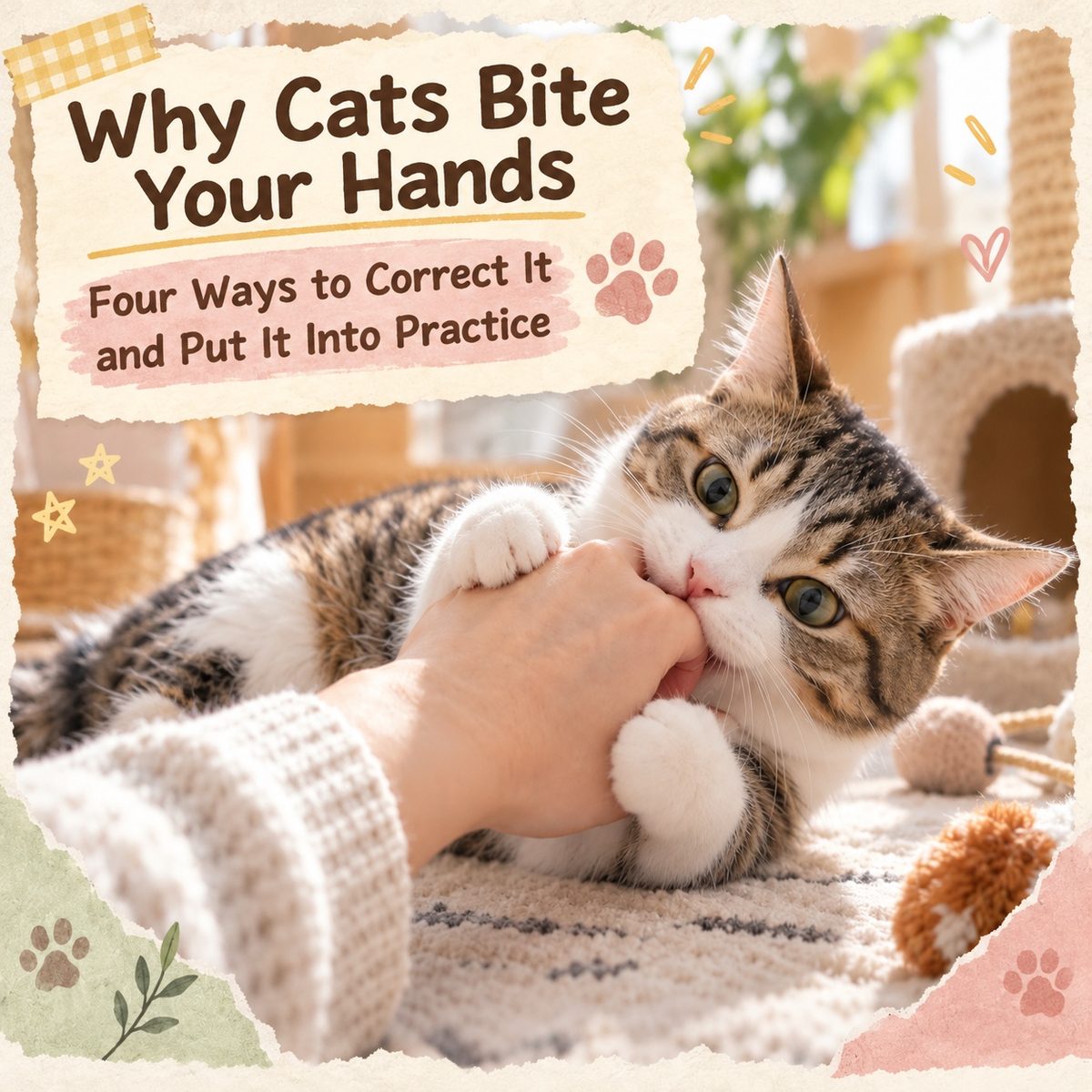
Quick answer: Your cat biting your hand during play is not hatred—it sees you as prey. Stick to 'hands are for petting, toys are for hunting', use a teaser wand daily to burn energy, and when bitten, block with cardboard and leave the room. Most play aggression can be improved.
Have you ever been cuddling your cat, only for it to suddenly grab your hand and chomp down? Covered in teeth marks and full of questions: 'Why did it bite me? Does it like me?' In veterinary behaviour science, this 'attack mid-play' behaviour has a specific term—Play Aggression. According to statistics from feline behaviour research books, it tops the list of cat behaviour problems that frustrate owners most. The good news: your cat doesn't hate you. Once you understand the causes and use the right methods, the vast majority of cases can be improved.
Why do cats suddenly bite? The hunter instinct at work
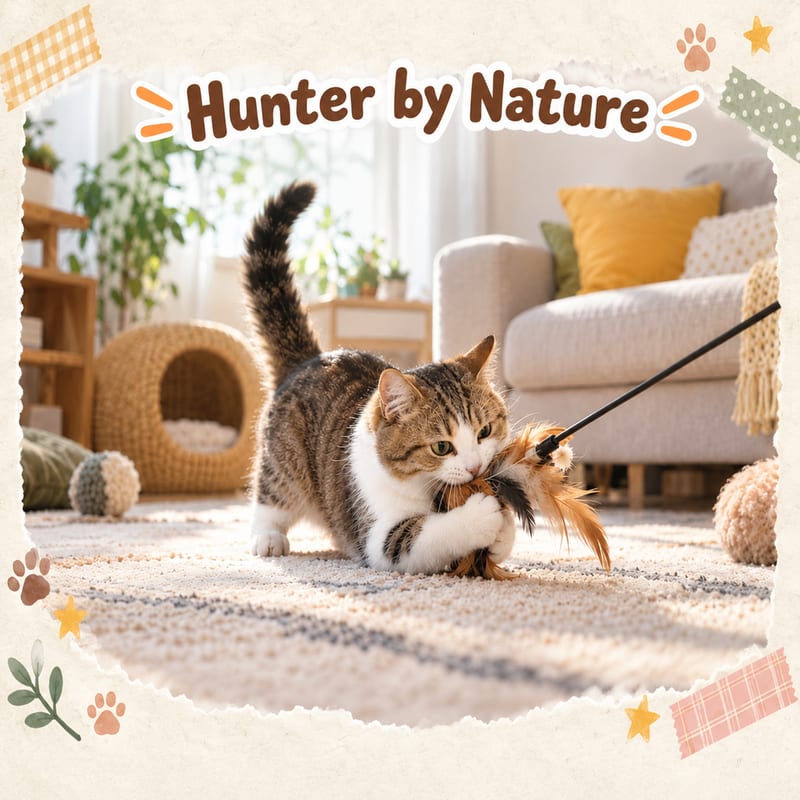
A cat's hunting instinct doesn't disappear just because it's full. In the wild, felines use a sequence of 'stalk—pounce—kill' to obtain food, while also releasing stress and building confidence. Domestic cats have no prey to hunt, so they substitute play—and unfortunately, the only moving 'prey' at home is your hands and feet.
Research in Feline Behaviour: A Complete Illustrated Guide points out: play aggression is most likely to occur in singly-raised kittens and mixed-breed (domestic shorthair) cats. The reason is simple—kittens are supposed to pounce and bite each other with littermates, learning social boundaries like 'how hard is too hard'. Kittens separated from their mother too early, or those living as the only cat, have no companion to practise force control, so they never learn to hold back.
Your reaction may be an accomplice
This is where most people get caught. Think about it: every time your cat bites you, do you yelp, pull your hand back, or even push it away? In the cat's eyes, these reactions are exactly 'prey moved! This is fun!'—your screams and struggles actually positively reinforce the enjoyment of its hunting game, teaching it that 'biting harder gets a bigger reaction'.
Many owners resort to 'an eye for an eye': tapping the nose, flicking the head, scolding. Behaviour experts clearly oppose this: humans cannot play the role of a feline companion to teach force control; physical punishment only damages mutual trust, and some cats may even escalate from 'play aggression' to true aggression.
4 methods to correct play aggression, tested in practice
Method 1: Iron rule—'hands are for petting, toys are for hunting'
Stop using hands or toes to tease the cat, not even once. Hand over all 'hunting games' to toys, so the cat re-establishes categories: human body = source of comfort, toys = prey. Once hands and feet are no longer 'moving prey', the pouncing target naturally disappears.
Method 2: Daily 'hunting lessons' to burn energy
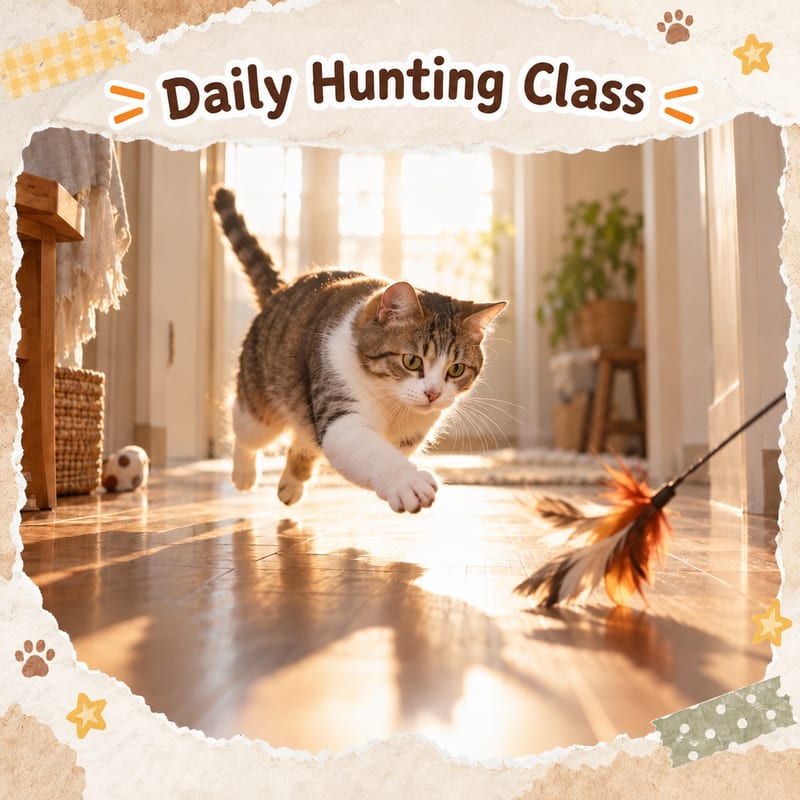
Use a long-distance teaser wand to play with the cat twice a day, 10–15 minutes each session, until it 'catches' the toy, then finish with a small treat to complete the 'hunt—eat' cycle. Add games like throwing paper balls for long-distance running and retrieval to drain excess energy. A tired cat has no time to attack you.
Method 3: The moment of biting—block with cardboard, leave immediately
When it pounces, don't push it away with your hand (that's another lure). Use a piece of cardboard to block its line of sight, making it 'lose the prey', then calmly leave the room for 1–2 minutes. After repetition, the cat learns: biting = game over immediately. This 'negative punishment' is more effective than any physical punishment.
Method 4: Consider a companion for a solo cat
Feline Behaviour: A Complete Illustrated Guide suggests: raising two kittens that already get along allows them to satisfy each other's hunting play and activity needs—a fundamental solution. Of course, introduce a new cat gradually with proper isolation; don't act on impulse.
| Method | Key action | Common mistake |
|---|---|---|
| Method 1: Hands are for petting | Never use hands to tease the cat under any circumstances | Even occasional finger-teasing undoes all progress |
| Method 2: Daily hunting lessons | Long teaser wand + 10–15 minutes + treat to finish | Stopping mid-game leaves energy unspent |
| Method 3: Cardboard block + leave | At the moment of biting, block with cardboard and calmly leave for 1–2 minutes | Pushing with hands = continuing the game |
| Method 4: Consider a second cat | Two compatible kittens drain each other's energy | New cat not isolated and acclimated may lead to fights |
These 'bites' are not play aggression—see a vet
Note: if your cat suddenly gets angry and bites when you touch its body, or its temperament changes abruptly from usual, it could be a warning sign of pain or illness (dental disease and joint pain are especially common). Take it to a vet promptly instead of treating it as a behaviour problem.
Hong Kong small-flat practicalities: a 4-step routine that works even in tiny units
Hong Kong flats are small, and many cat owners worry there's not enough space for 'hunting lessons'. Actually, by making good use of furniture and corridors, you can still burn energy daily.
1. Turn the corridor into a runway Push the shoe cabinet aside to leave a 2–3 metre straight line. Sweep a long-handled teaser wand along the floor, and the cat will naturally dash back and forth. If you really only have 1 metre width, switch to a 'figure-8 run': move the wand left and right, and the cat gets tired just spinning in place.
2. Vertical space trick Stick cat wall pads on top of the wardrobe and use the teaser wand to lure it up and down. One storey height is enough for 'jump hunting'; after 5–6 jumps it starts panting.
3. Cardboard block + leave—adapted Most Hong Kong room doors are glass or can't be locked. Use an A3-size stiff cardboard instead of a door: when bitten, hold up the cardboard to block its view and step into the bathroom or kitchen for 1 minute. Flat too small for even a bathroom? Just sit down with your back to the cat and place the cardboard in front of your thighs—same effect.
4. Realistic considerations for a second cat Public housing or private leases often specify 'one pet per unit'. If you really want another cat, first ask the landlord/management, then choose a similar-aged, already-neutered domestic shorthair to reduce territorial disputes. Use the bathroom as an isolation zone for the first two weeks, swap towels for scent exchange, then open the door for 10-minute meetings daily, gradually expanding the area.
Remember: Hong Kong spaces are small, but what cats need is 'rhythmic exercise' and 'clear rules'. With a fixed daily time and routine, you can raise a zero-biting good cat even in a small flat.
Related links
Hong Kong cat owner's practical timetable: 15 minutes before and after work for daily hunting lessons
Hong Kong people work 9 to 9; two hunting lessons a day sounds luxurious. Actually, by breaking the routine into smaller parts, 15 minutes morning and evening is enough.
Morning 7:30–7:45 Quick energy burn
- Before making coffee, grab the long-handled teaser wand and sweep it twice by the bed; the cat usually pounces on the bed immediately.
- Use the narrow gap between bed and wardrobe as a 'short runway', sweep left and right 5 times.
- Let it successfully 'catch' the wand on the last sweep, immediately reward with 3 small treats. You go brush your teeth, it goes to eat breakfast—done simultaneously.
Evening 9:30–9:45 Deep energy burn
- Don't sit down as soon as you get home; clear a 1.5 metre straight line in the corridor or middle of the living room.
- Sweep the teaser wand in a figure-8 along the floor; the cat will automatically run in a figure-8, panting after about 8–10 circles.
- Finally toss the toy onto the sofa top, lure it to jump up and down 3 times, then give a treat to finish.
- You shower while it rests; the chance of nighttime biting drops significantly.
Weekend bonus If you stay home on a holiday, combine the two 15-minute sessions into one 30-minute 'deluxe version': corridor sprints first, then jumping on the wardrobe top, and finally paper-ball fetch—burn all the energy at once.
Remember the key: time is not the issue—consistency is king. Same time, same routine every day, and the cat will naturally know 'this hour is hunting time' and stop biting your hands randomly.
Further reading
📌 Key summary
- ✅ Hands and feet are not prey; toys are prey
- ✅ Two teaser-wand hunting lessons daily, play until tired
- ✅ When bitten, block with cardboard and leave—game over immediately
- ❌ Yelling, pulling back, pushing away only reinforce hunting response
- ❌ Physical punishment damages trust and may escalate to true aggression
 Feline Natural full guide →
 Fuji One full guide →

