
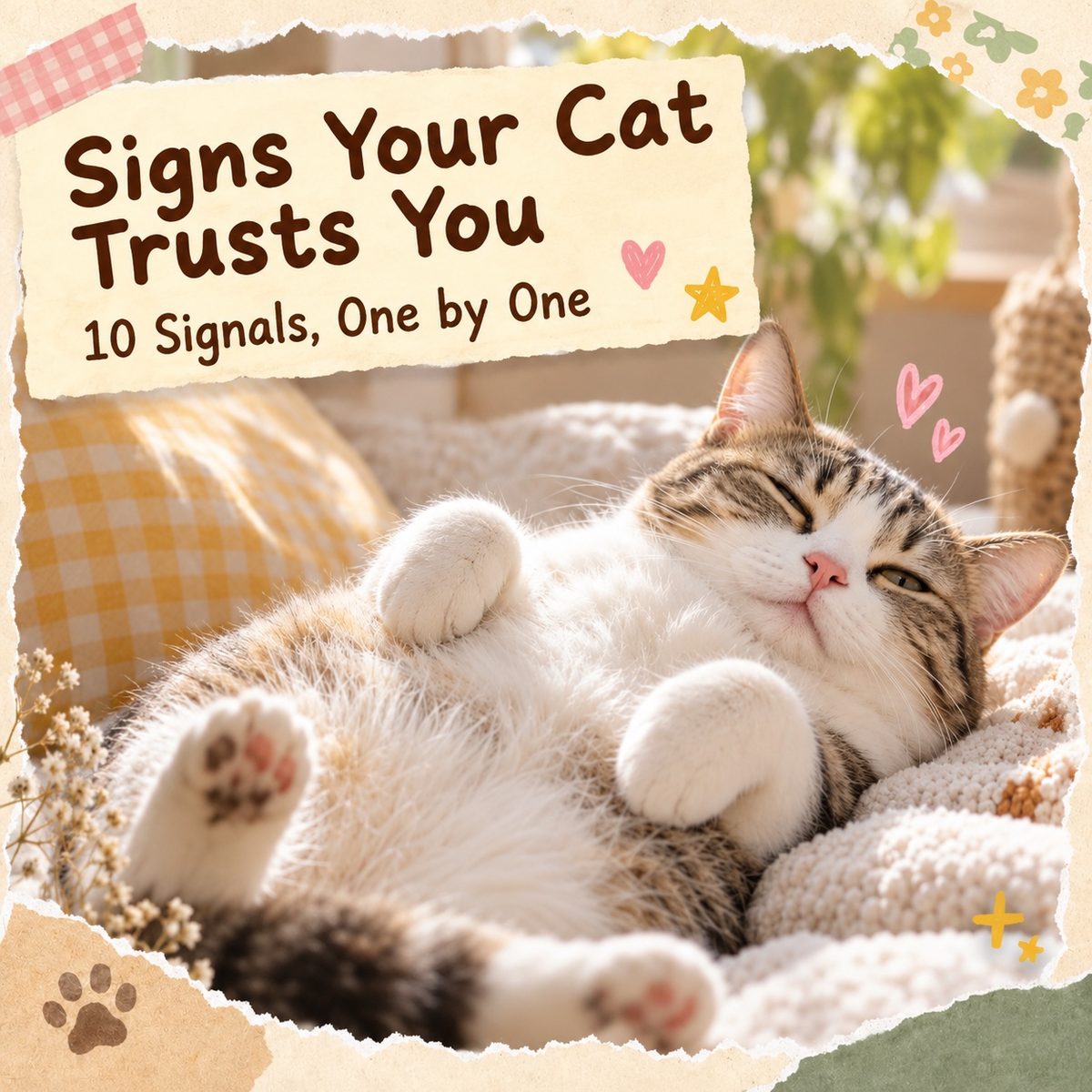
Quick answer: A cat trusts you and shows affection through 10 body language signals: slow blinking like a kiss, rolling over to show vulnerability, head rubbing to mark you with scent, tail held high with a slight curve as a greeting, following your every step, kneading on you, bringing you prey as gifts, sleeping next to you, gentle love bites, and a quivering tail when you come home—these are not coincidences but signs that your cat sees you as a safe base and family.
Many people say cats are aloof, proud, and not as affectionate as dogs. But those who truly live with cats know that cats express love in very subtle ways—you just need to read them carefully. Today PetChill shares 10 signs your cat trusts you. See how many your cat shows!
1. Slow Blink
In the cat world, this is equivalent to a "flying kiss." When a cat blinks slowly at you, it means it is completely relaxed and off-guard around you. Try blinking slowly back to establish your own "cat kiss."
Research shows that slow blinking at cats can indeed enhance trust between humans and cats. A 2020 study from the University of Sussex in the UK confirmed this.

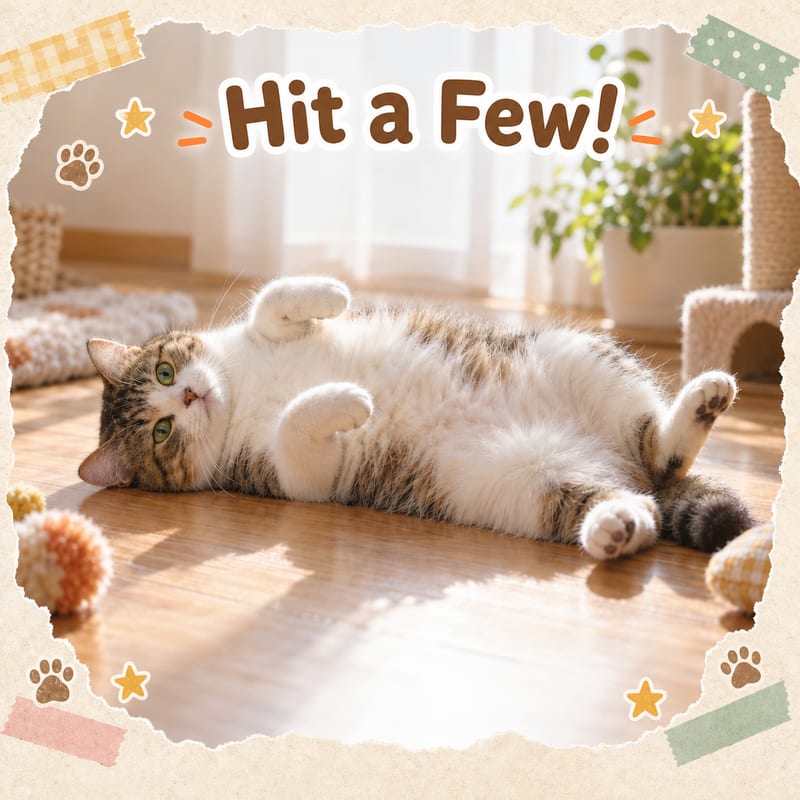
2. Showing the Belly
A cat's belly is its most vulnerable area. Rolling over to show you its belly indicates extreme trust. But note—this doesn't necessarily mean "please pet me!" Many cats roll over simply to show relaxation; touching may lead to a bite. Observe your cat's habits: if it pushes your hand with its paws while on its back, that's an invitation.
3. Head Bunting
When a cat rubs its forehead or cheeks against your hand, face, or body, it's called "bunting." It is using the glands on its face to leave its scent on you, meaning: "You're mine!" This is a very intimate marking behavior.
4. Tail Up with a Slight Curve
This is the most standard greeting when a cat sees someone it likes. A straight-up tail indicates friendliness and confidence, while the little hook at the tip is like a question mark, expressing curiosity and happiness. Next time you come home, pay attention to your cat's tail language.
5. Following You Around
Does your cat follow you everywhere like a little shadow? Even to the bathroom? Don't be annoyed—this is a sign of trust. Cats only follow people they feel safe with; you are their "safe base."
6. Kneading on You
Cats alternately knead their front paws on you, a behavior left over from kittenhood—they kneaded their mother's belly to stimulate milk flow. When an adult cat does this on you, it means it sees you as a mother figure, showing ultimate trust and dependence.
7. Bringing You "Gifts"
Although receiving a dead mouse or cockroach may scare you, in the cat world, this is the highest form of love. Bringing prey to you means it thinks you can't hunt and need to be cared for. Next time you receive a "gift," remember to praise your cat first, then discreetly dispose of it.
8. Sleeping Next to You
Cats are most vulnerable when sleeping. Choosing to sleep beside you means they completely trust you won't harm them. If your cat likes to sleep by your head or feet, or even curl up in your bed, you've earned the highest certification as a "lifetime cat servant."
9. Love Bites
A gentle nibble is different from an aggressive bite. When a cat lightly chews your finger or arm, it's usually expressing affection. This behavior is learned from interactions with littermates—they see you as one of their own.
10. Quivering Tail
When you come home, your cat approaches you with its tail up and slightly quivering—this means it's very happy to see you. This behavior is sometimes accompanied by spraying (in unneutered cats); after neutering, usually only the tail quiver remains.
How Many Does Your Cat Show?
Every cat has a different personality and expresses love differently. Some cats are enthusiastic and clingy all day; others are reserved and only approach quietly in the dead of night. Either way, it's unique love.
What PetChill Wants to Say
The most precious moments of living with a cat are often these inconspicuous little interactions. A blink, a rub, a purr—these are your cat's way of telling you with its life: "I trust you, I love you."
Cherish these moments, because you are its whole world. For more heartwarming cat stories, stay tuned to PetChill's weekly updates!
Practical Guide for Hong Kong Small-Apartment Owners: Turning Trust Signs into Daily Care Actions
Hong Kong living spaces are generally limited, and cats have particularly high demands for a sense of security—this actually makes "trust signs" the most practical health indicators for local owners. For example, when you notice your cat starts slow blinking on your lap, it means it has adapted to the sound rhythm of your flat (e.g., lift operation, neighbor's slippers), and you can consider gradually introducing new toys or adjusting the cat tree position; if it is willing to sleep next to you, especially choosing traditional "high ground" spots like balcony windowsills, under the air-conditioning unit, or under the sofa, it reflects that it feels the environment is safe enough, and you can safely schedule regular deworming and vaccine updates. Additionally, common sounds in old Hong Kong buildings like drainpipes and metal gate opening/closing can easily startle cats. If your cat only rolls over or kneads in the dead of night, check for continuous low-frequency noise sources and use thick carpets and curtains to absorb sound. As for "gift-giving" behavior, in Hong Kong apartments it's more common to receive cockroaches, moths, or even sparrows. When handling, remember to praise gently first (e.g., softly say "Good job!"), then immediately wrap in paper and throw into a sealed bin—avoid flushing or scolding in front of the cat, because to the cat, that action equals denying its caring intention. Finally, if previously stable trust signs (e.g., greeting at the door at fixed times, morning kneading) suddenly decrease for more than 3 days, accompanied by decreased appetite or increased hiding, consult a Hong Kong accredited veterinary clinic (such as HKU VERT or SPCA partner clinics) for a preliminary assessment. After all, in dense residential environments, stress-induced hidden diseases often have extremely subtle early symptoms.
| Body Language | True Meaning | Notes for Hong Kong Owners |
|---|---|---|
| Slow blink | "I'm relaxed, you're safe" | In small, brightly lit flats, try this interaction in a corner with curtains half-drawn and soft lighting |
| Showing belly | Extreme trust, but not necessarily an invitation to touch | In subdivided flats or glass-curtain-wall units, reflections can startle; avoid suddenly switching lights or drawing curtains when the cat is on its back |
| Head bunting | Marking you as "one of us" with facial glands | Cat-owning households often use diffusers or air fresheners; choose fragrance-free, alcohol-free products to avoid interfering with scent communication |
| Tail up with slight curve | Friendly greeting with curiosity and happiness | Public housing corridors often have neighbors passing; when your cat does this at the door, close the door gently to reduce outside disturbance |
| Following you | Seeing you as a safe base | In small kitchens, watch out for wires and hot kettles when your cat follows to avoid tripping or burns |