
🤖 AI Summary
Where does your cat sleep? It shows how much it trusts you. Your cat's sleeping spot reflects its trust in you — beside you = complete trust; near you = trust; up high = alert; in a hiding spot = no trust. Cats are natural hunters — they need a safe sleeping environment. If your cat sleeps beside you, it fully trusts you — it sees you as family. If it sleeps in a hiding spot, it doesn't trust you — it sees you as a threat.
• Your cat's sleeping spot reflects its trust in you
• Beside you = complete trust; in a hiding spot = no trust
• Cats are natural hunters — they need a safe sleeping environment
Quick answer: Where does your cat sleep? It shows how much it trusts you. Your cat's sleeping spot reflects its trust in you — beside you = complete trust; near you = trust; up high = alert; in a hiding spot = no trust. Cats are natural hunters — they need a safe sleeping environment. If your cat sleeps beside you, it fully trusts you — it sees you as family. If it sleeps in a hiding spot, it doesn't trust you — it sees you as a threat.
Contents
-
Your cat's sleeping spot reflects its trust
-
Beside you = complete trust
-
Near you = trust
-
Up high = alert
-
In a hiding spot = no trust
-
How to increase your cat's trust
-
FAQ
Your cat's sleeping spot reflects its trust
Your cat's sleeping spot reflects its trust in you — beside you = complete trust; near you = trust; up high = alert; in a hiding spot = no trust.
What your cat's sleeping spot means:
- Cats are natural hunters — they need a safe sleeping environment
- Your cat's sleeping spot reflects its sense of security — the higher the security, the higher the trust
- Your cat's sleeping spot reflects its alertness — the higher the alertness, the lower the trust
Categories of cat sleeping spots:
| Sleeping spot | Trust level | Meaning |
|---|---|---|
| Beside you | Complete trust | Your cat sees you as family |
| Near you | Trust | Your cat sees you as a friend |
| Up high | Alert | Your cat sees you as a potential threat |
| In a hiding spot | No trust | Your cat sees you as a threat |
Beside you = complete trust
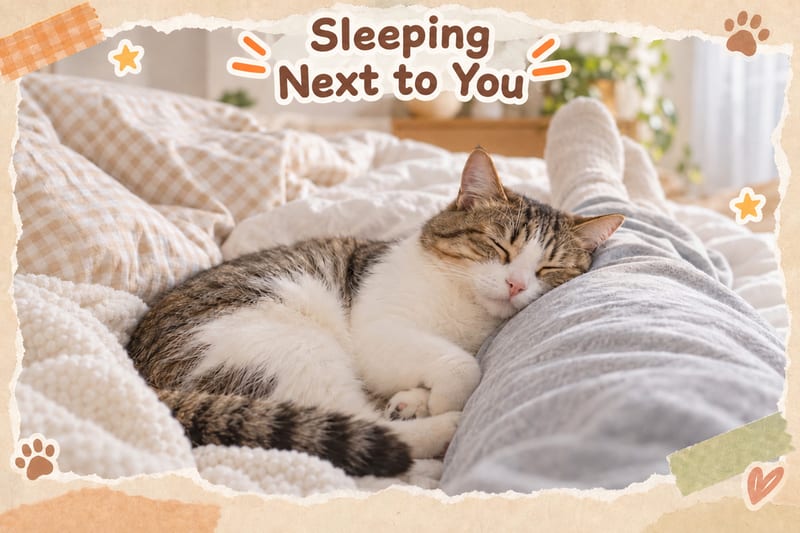
Beside you = complete trust — your cat sees you as family.
What sleeping beside you means:
- Your cat fully trusts you — it sees you as family
- Your cat feels safe with you — it's not afraid of you
- Your cat sees you as its territory — it wants to sleep with you
Positions beside you:
- Next to your pillow — your cat fully trusts you
- On your chest — your cat fully trusts you
- At your feet — your cat fully trusts you
Benefits of sleeping beside you:
- Strengthens the bond — sleeping together strengthens your bond
- Increases security — sleeping together increases your cat's sense of security
- Increases trust — sleeping together increases trust
Near you = trust
Near you = trust — your cat sees you as a friend.
What sleeping near you means:
- Your cat trusts you — it sees you as a friend
- Your cat feels safe with you — it's not afraid of you
- Your cat wants to be with you — it wants to sleep near you
Positions near you:
- On the sofa near you — your cat trusts you
- In the cat bed near you — your cat trusts you
- On the windowsill near you — your cat trusts you
Benefits of sleeping near you:
- Strengthens the bond — sleeping near you strengthens your bond
- Increases security — sleeping near you increases your cat's sense of security
- Increases trust — sleeping near you increases trust
Up high = alert
Up high = alert — your cat sees you as a potential threat.
What sleeping up high means:
- Your cat is alert — it sees you as a potential threat
- Your cat wants to watch you — it wants to look down from above
- Your cat wants to protect itself — it wants to protect itself from a high spot
High sleeping spots:
- On a cat tree — your cat is alert
- On a cat climbing frame — your cat is alert
- On the windowsill — your cat is alert
Why cats sleep up high:
- Your cat doesn't trust you — it sees you as a potential threat
- Your cat wants to watch you — it wants to look down from above
- Your cat wants to protect itself — it wants to protect itself from a high spot
In a hiding spot = no trust
In a hiding spot = no trust — your cat sees you as a threat.
What sleeping in a hiding spot means:
- Your cat doesn't trust you — it sees you as a threat
- Your cat wants to hide — it wants to hide in a concealed place
- Your cat wants to protect itself — it wants to protect itself in a hiding spot
Hiding spots:
- Under the bed — your cat doesn't trust you
- Inside a cupboard — your cat doesn't trust you
- Inside a cardboard box — your cat doesn't trust you
Why cats sleep in hiding spots:
- Your cat doesn't trust you — it sees you as a threat
- Your cat wants to hide — it wants to hide in a concealed place
- Your cat wants to protect itself — it wants to protect itself in a hiding spot
How to increase your cat's trust
If you want to increase your cat's trust, try these methods:
| Method | How to do it | Notes |
|---|---|---|
| Provide a safe environment | Provide a safe sleeping environment + remove dangerous objects | Cats need a safe environment |
| Provide food + water | Provide plenty of food + water | Cats need plenty of food + water |
| Provide toys | Provide toys + scratching posts + cat windowsills | Cats need mental stimulation |
| Don't force | Don't force your cat to sleep with you | Cats have their own preferences |
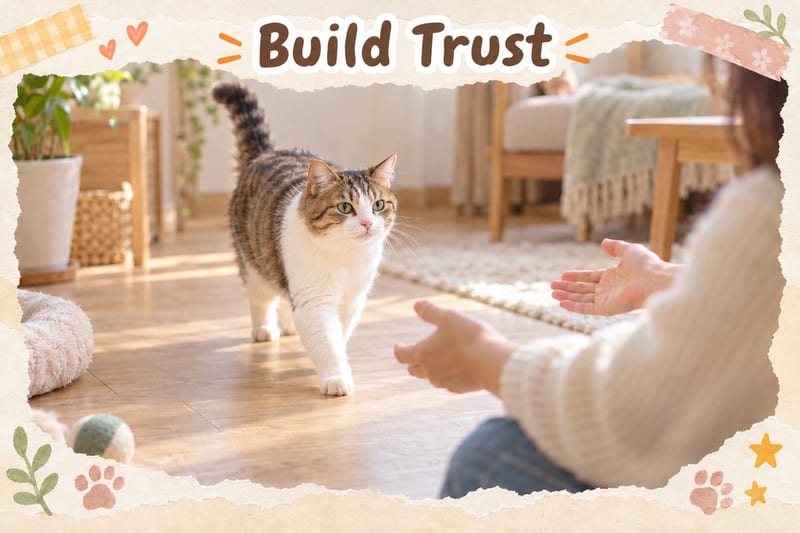
| Patience + time | Patience + time — cats need time to build trust | Cats need time |
Things to note:
- Don't force your cat — cats have their own preferences
- Don't scare your cat — cats need a safe environment
- Don't ignore your cat — cats need attention
Sleeping spots and sleeping positions are part of the same trust language — see Cat sleeping positions explained | What your cat's sleeping position and spot mean.
Hong Kong small-flat practical guide: 7-day plan to boost your cat's trust in a 300 sq ft flat
Hong Kong homes are small, so cats are more likely to hide due to space pressure. This 7-day plan makes the most of every inch of your small flat to gradually guide your cat from hiding spots to sleeping beside you.
Days 1–2: Create a safe corner
- Put a half-open cardboard box in a corner of the living room, lined with a T-shirt you've worn for a night, so it can smell you while keeping an escape route.
- Place the litter box and water bowl in the same area to shorten its travel routes and reduce anxiety.
Days 3–4: Raise the viewpoint
- Use an IKEA shelf or the top of a desk with a soft cushion to create a "high observation deck". Hong Kong windowsills are often blocked by air-conditioning units, so you can place a 30cm-wide wooden board as a "windowsill bed", letting it watch you from above without hiding low.
Days 5–6: Close the distance
- Every night when you sit on the sofa watching TV, place a few freeze-dried treats by your feet and then completely ignore it. Your cat will calculate the risk itself, and when it finds you're not a threat, it will approach step by step from the box → high spot → beside the sofa.
Day 7: Bed-sharing training
- Before bed, place a shirt you wore that day at the foot of the bed, then put a soft cushion on top. Dim the lights and set the air-conditioning to 25°C to create a "safe cave" feeling. If it jumps onto the bed, don't pet it immediately — observe quietly and let it come closer on its own.
Hong Kong-specific notes
- Don't let the air-conditioning vent blow directly on the cat bed, or it may retreat into the wardrobe because it's too cold.
- If you have a domestic helper or frequent visitors, ask them to lower their body and sit sideways, avoiding direct eye contact with the cat to reduce external stress.
As long as you repeat these steps daily, within about two weeks your cat will move from under the bed to beside your pillow, officially upgrading to "cat pillow companion".
Further reading
📌 Key takeaways
- ✅ Sleeping beside you = your cat sees you as family
- ✅ Sleeping near you = sees you as a friend
- ❌ Sleeping up high doesn't necessarily mean no trust — it's just staying alert
- ❌ Sleeping in a hiding spot = lack of security; don't force it out
- ✅ Providing a safe environment + patience = the fastest way to boost trust
This article is compiled from breed consensus and clinical care guidelines; individual cats and dogs vary greatly. For health issues, please consult a registered veterinarian first.