
AI Summary
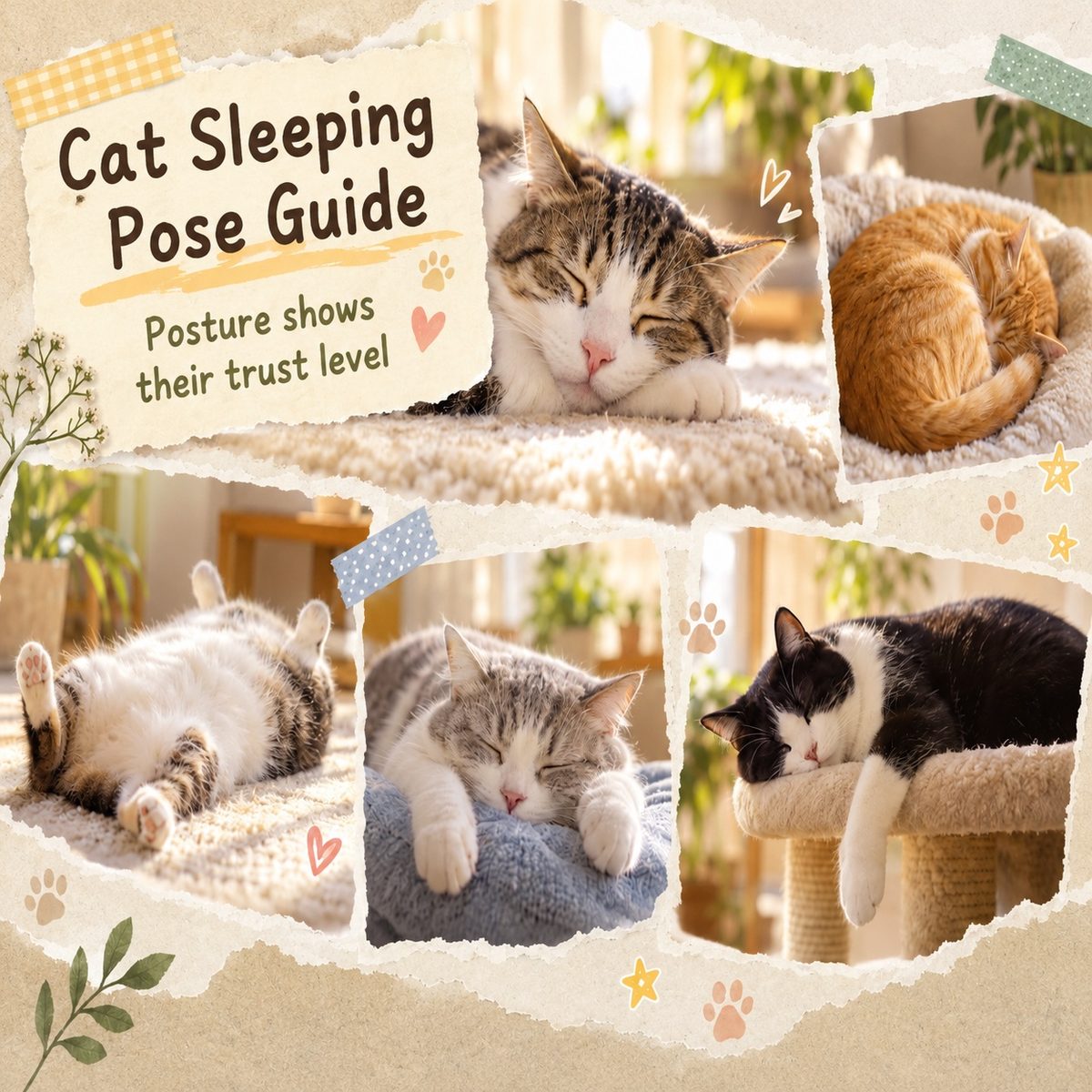
Cats sleep 12 to 16 hours a day, and sleep position is a direct report card on how safe they feel: sphinx crouch = on guard standby, bread-loaf curl = keeping warm plus basic security, side-lying stretch = relaxed about the environment, belly-up with legs in the air = maximum trust, cuddling up to you = you're family.
• This article includes a "5 positions × trust level table"
• Belly-up sleep does not mean "please rub my belly"—it's a trust certificate, not an invitation card
• Sudden change in sleep position + low energy + reduced appetite = watch out for health
Quick answer: A cat's sleep position goes from closed to fully open as trust increases: crouched sleep is the most guarded, curled up keeps warm, side-lying is relaxed, belly-up sleeping is the most trusting, and sleeping pressed against you is the highest level of intimacy.
Read it together with the sleeping spot (by your feet, at the foot of the bed, by your pillow, on your chest): the same posture means completely different things when sleeping in your arms versus under the bed.
Contents
-
Why is sleep position a trust report card?
-
5 major sleep positions × trust level table + quick reference table
-
Sleep positions broken down one by one
-
Sleeping spots talk too
-
These sleep position changes need attention
-
FAQ
Why is sleep position a trust report card?
Cats are both predator and prey, and sleep is their most defenceless moment—so the posture they sleep in and where they sleep directly reflect how safe they feel in this environment. The more tightly curled the posture = the more ready to flee = the lower the trust; the more spread out the posture = the more defences are dropped = the higher the trust.
Hong Kong homes are crowded and noisy, so when a cat is willing to sprawl out in the middle of the living room, it's actually issuing a "safety certificate" to your whole family.
5 major sleep positions × trust level table
| Sleep position | Appearance | Trust level | Mental state |
|---|---|---|---|
| 1 Crouched sleep (sphinx) | Four legs tucked under body, head raised | ★☆☆☆☆ On guard standby | Nap mode, ready to spring into action |
| 2 Curled up (bread loaf) | Whole body curled into a ball, tail wrapping the face | ★★☆☆☆ Keeping warm and defensive | Preserves body heat and vital areas, half relaxed |
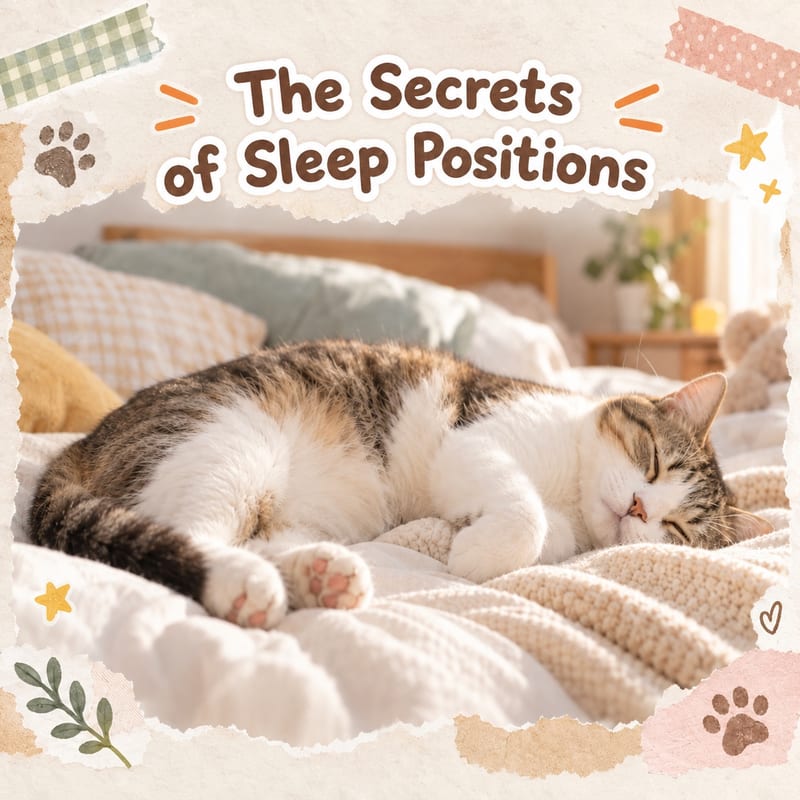
| 3 Side-lying stretch | Lying on side, legs stretched, belly slightly turned | ★★★☆☆ Relaxed | Environment is safe, entering deep sleep |
| 4 Belly-up sleep | Four legs in the air, belly fully exposed | ★★★★★ Maximum trust | Completely defenceless, extremely secure |
| 5 Sleeping pressed against you | Sleeping by your feet/pillow/chest | ★★★★★+ You're family | Falls asleep to your body warmth and scent |
Key point: Trust is dynamic—the same cat may crouch-sleep when there are people around during the day, and sprawl out when the whole house is quiet at midnight. Look at the trend, not a single snapshot.
Quick reference table: sleep position × meaning × what not to do
The previous section covered "how much trust each posture shows"; this table is the on-the-ground version: at a glance see what the posture means and what you shouldn't do right then.
| Cat sleep position | One-line meaning | What not to do |
|---|---|---|
| Crouched sleep (sphinx) | Sleeping but not relaxed, monitoring the environment | Don't rush over to pet it while it's "asleep" |
| Curled up (bread loaf) | Keeping warm and protecting vital areas, half relaxed | Don't force it out for a cuddle |
| Side-lying stretch | Environment is safe, entering deep sleep | Don't wake it; dreaming twitches are normal |
| Belly-up sleep | Maximum trust, completely defenceless | Don't take it as an invitation to rub the belly—it will trigger grabbing and kicking |
| Sleeping pressed against you | You're family | Don't move it just because you want to cuddle |
| Sleeping on cabinet top / cat tree | Getting security from the view | If a senior cat suddenly won't jump up, don't assume it's lazy |
| Sleeping in cardboard box / under bed | Needs enclosure, environment not 100% secure yet | Don't force it out |
How to use: first look at the posture to lock in the trust level, then check "what not to do" to avoid stepping on a landmine; if the posture suddenly changes for several days in a row, jump to "These sleep position changes need attention" below and go through each item.
Sleep positions broken down one by one
1 Crouched sleep (sphinx): standby mode
Four legs tucked but head raised, ears still rotating like radar—this is the "sleeping, but not ready to fully sleep" state. New cats usually use this posture for the first few days after coming home: they need to monitor the environment before they dare relax. Give them time, and don't rush over to pet them while they're "asleep".
2 Curled up (bread loaf): keeping warm plus half defence
Most common in winter: curling into a ball reduces the surface area for heat loss, and the tail wrapping the face also warms the nose. At the same time this posture protects the belly and throat vital areas—so if it curls up tight even when the weather isn't cold, the environment may not be fully relaxed yet.
3 Side-lying stretch: truly starting to sleep
Lying on its side, limbs naturally stretched, belly slightly turned to one side—muscles relaxed, breathing slower, this is the sign of entering deep sleep. Cats only dream in this posture (twitching paws and quivering whiskers are signs of dreaming). Seeing side-lying means it has basic trust in your home.
4 Belly-up sleep: maximum trust
The belly is the most vulnerable part of a feline, so being willing to sleep with all four legs in the air and belly exposed means it has judged "there is absolutely no threat here". But don't misunderstand—belly-up sleep is not an invitation to rub the belly! Many cats, when petted on the belly while sleeping belly-up, will instinctively grab the hand and kick or bite; it's not playing, it's a protective instinct. Admire all you like, but think before you reach out.
5 Sleeping pressed against you: you're family
Sleeping by your feet = intimate but keeping a guarded distance; sleeping at the foot of the bed = you've been accepted as a bedmate; sleeping by your pillow/head = high intimacy plus scent mixing; sleeping directly on your chest/in your arms = the highest level of trust. A cat chooses to sleep on you because your body warmth, heartbeat and scent make it feel safe—this is the "family certificate" issued by the cat world.
Sleeping spots talk too
| Spot | Subtext |
|---|---|
| High place (cabinet top/cat tree) | Surveying the whole scene, security comes from the view |
| Sunny spot by the window | Warmth on warmth, monitoring territory |
| Cardboard box/under bed/wardrobe | Needs enclosure, environment not 100% secure yet |
| By your feet | Intimate, but keeps a quick escape route |
| By your pillow/head | High trust, likes your scent |
| Your chest/arms | Complete trust, you are its safety |
These sleep position changes need attention
Sleep positions themselves are neither good nor bad, but sudden changes are a signal:
- ⚠️ A cat that always sprawled out suddenly curls up tight/crouches every day—new stressor in the environment (new pet, renovation, strangers)
- ⚠️ Posture change + sleeping longer + reduced appetite—not feeling well; sleeping more is one of the symptoms in cats
- ⚠️ Suddenly jumping up mid-sleep, rapid breathing—watch out for heart and lung problems
- ⚠️ Senior cat won't jump up to its favourite high spot anymore—possible joint pain, consider adding ramps or steps
This article is for reference only and cannot replace a veterinarian's diagnosis. If you have health concerns, please consult a registered veterinarian.

Practical tips for small Hong Kong flats: read your cat's sleep position, then optimise your home
Hong Kong living spaces are tiny and precious, but to get your cat from crouched sleep to belly-up sleep you don't need a big renovation—just small adjustments to your existing space.
1. High vantage points
- Add a non-slip mat on top of the bookcase or wardrobe to create a "cat observation deck".
- If the top is too high, place a sturdy stool as a midway station to reduce the jumping burden for senior cats.
2. Warm curling-up zone
- In winter, if you're worried about the heater drying the air, put a soft cushion by the window—sunlight during the day, add a towel at night, and your cat naturally won't need to curl up so tight.
- If the air-conditioning is on 24–26°C, remember to put a cardboard box under the bed or sofa so it has a retreat when it wants to hide.
3. Upgrading the close-sleeping
- You sleep in the bed, cat sleeps by your feet? Put an old T-shirt you've worn at the foot of the bed—familiar scent—and it will upgrade to the pillow faster.
- Want it to sleep on your chest but you toss and turn? Put a soft cushion by the bed at about chest height, letting it get used to it gradually.
4. Sleep position sudden change checklist
- Belly-up turned into curled up tight for three days in a row? First check for new noises at home (renovation upstairs, new delivery motorbike sounds).
- If appetite and stools are normal, add a soft cushion or towel at its favourite spot to reduce environmental stress.
- If sneezing or vomiting also appears, book an appointment at any 24-hour veterinary clinic on Hong Kong Island or Kowloon immediately—don't delay.
Remember: trust is a long-term deposit. Sit quietly near it for 5 minutes a day as "background", without forcing petting or cuddles, and it will naturally evolve from crouched sleep to cuddling up to you.
Further reading
Related articles
- Cat sleeping spots and trust|A must-read for Hong Kong cat owners: where it sleeps = how much it trusts you
- How long should a cat sleep each day? Sleep warning signs and improvement tips
- Why does my cat prefer sleeping on the floor instead of a bed? Temperature and security explained
📌 Key takeaways
- ✅ Belly-up sleep is maximum trust, not a request for a belly rub
- ✅ Sudden change in sleep position + low energy + reduced appetite = see a veterinarian quickly
- ✅ Sleeping high = security from the view, sleeping low = needs enclosure
- ❌ Don't rush over to pet a crouched-sleeping cat—it will startle it
- ❌ A senior cat that can't jump to high spots isn't lazy—it may have joint pain
 Fuji One full guide →

