Cat vomiting is something every cat owner has experienced—sometimes it's just a hairball, but other times it can be a distress signal from the body. How do you tell the difference between "normal vomiting" and "dangerous vomiting"? This article explains the 6 common causes of cat vomiting, teaches you when to seek immediate veterinary care, and covers daily care tips to prevent vomiting.
Quick answer: Vomiting a hairball 1-2 times a month is a normal physiological phenomenon in cats. However, if your cat vomits more than 2-3 times in a day, the vomit contains blood or is yellow-green, or is accompanied by diarrhoea or lethargy, these are danger signs and you must see a veterinarian immediately. The first step at home is to withhold food for 2-4 hours to let the stomach rest, while keeping water available and observing.
6 Common Causes of Cat Vomiting
Cats vomit for many reasons, from the mildest hairballs to serious organ diseases. Understanding the common causes helps you judge the severity of the situation right away.
1. Hairballs (most common)
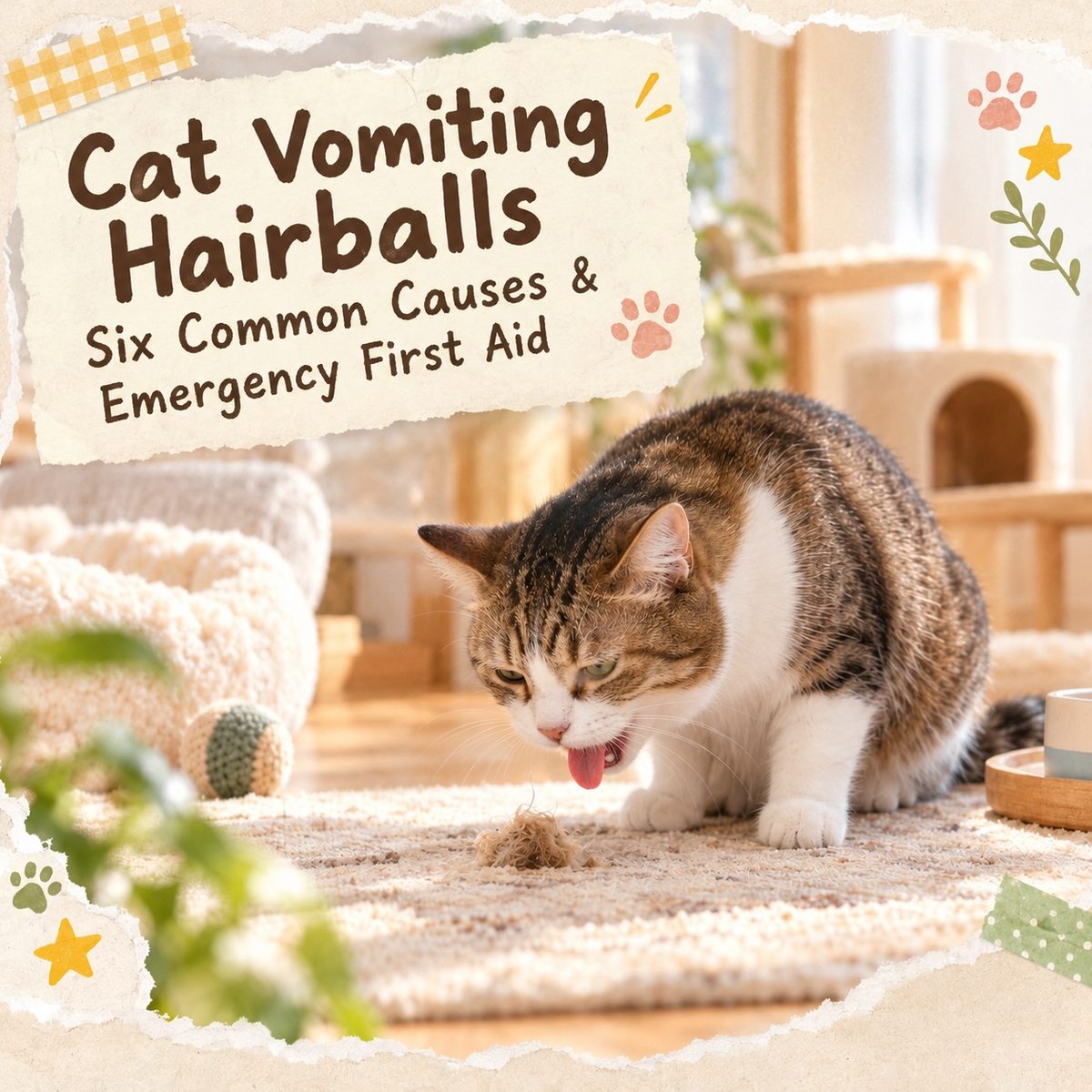
Cats spend a lot of time grooming every day, swallowing a lot of hair in the process. When hair accumulates into a ball in the stomach, the body expels it through vomiting. This is a normal physiological reaction, usually occurring 1-2 times a month.
Signs of a hairball: the vomit is elongated, coated with stomach fluid or food residue, with a tight clump of hair in the middle. After vomiting, the cat's appetite and energy are normal, with no other abnormalities.
2. Eating too fast
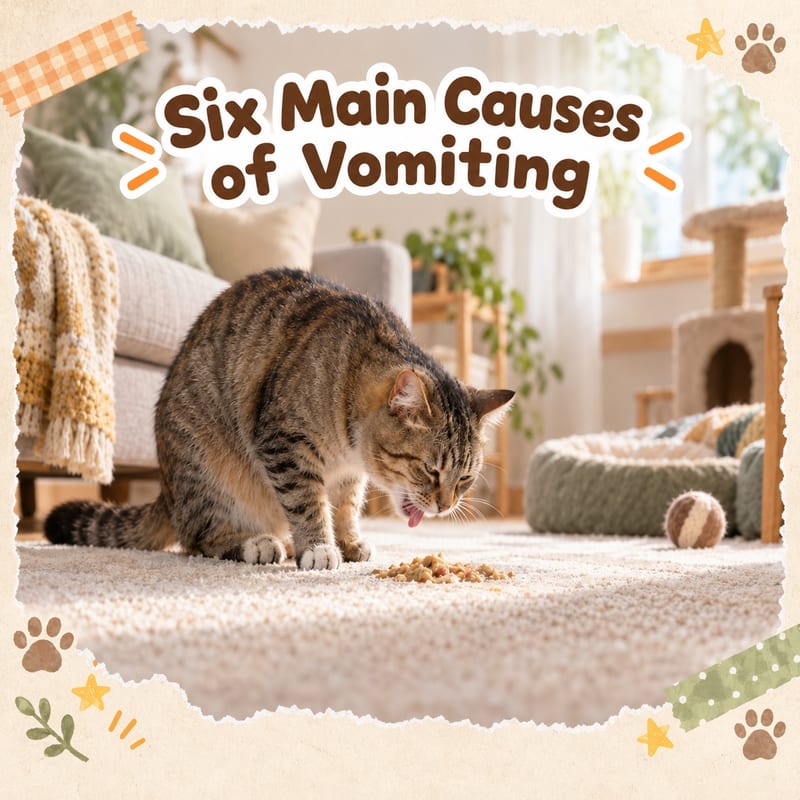
Some cats wolf down their food, swallowing inadequately chewed food into the stomach, which causes stomach discomfort and vomiting. This type of vomiting usually happens within minutes of eating, and the vomit contains whole undigested kibble.
3. Food sensitivity or upset
Suddenly changing cat food brands, spoiled food, or sensitivity to a certain ingredient can all cause vomiting. Hong Kong's humid and muggy weather makes opened cat food prone to dampness and mould, so it must be stored properly.
4. Hairball accumulation causing vomiting
Regular grooming reduces the amount of hair your cat swallows, preventing hairball accumulation at the source. Short-haired cats need grooming 1-2 times a week, while long-haired cats need daily grooming.
5. Gastrointestinal disease
Inflammatory bowel disease (IBD) is a common chronic gastrointestinal problem in cats. Long-term diarrhoea, vomiting, loss of appetite, and blood in stool that come and go repeatedly are seen more often in middle-aged and older cats. Although it's hard to helps manage completely, with long-term dietary therapy and antibiotics, cats can still maintain a normal life.
6. Signs of organ disease
Persistent vomiting plus a big increase in water intake may be a sign of kidney insufficiency or diabetes. Cats are animals that can efficiently use small amounts of water in the body, so if their water intake is much higher than usual, you should be highly alert.
Vomit Colour and Possible Causes Chart
| Vomit appearance | Possible cause | Severity | Suggested action |
|---|---|---|---|
| Elongated hair clump | Hairball (normal physiological reaction) | Low | 1-2 times a month can be observed; weekly vomiting needs vet consultation |
| Undigested whole kibble | Eating too fast | Low | Use a slow feeder, small frequent meals |
| White foam/stomach acid | Empty stomach for too long, excess stomach acid | Medium | Adjust feeding times, shorten fasting intervals |
| Yellow-green bile | Biliary problems, pancreatitis, foreign body obstruction | High | See a vet immediately |
| Bloody (bright red/coffee-coloured) | Gastritis, gastrointestinal ulcers, swallowing sharp foreign objects | Emergency | See a vet immediately, keep vomit for photo |
| Contains foreign objects/string | Swallowed foreign object, intestinal blockage | Emergency | See a vet immediately, never induce vomiting yourself |
How to Tell "Normal Vomiting" from "Dangerous Vomiting"?
Signs of normal vomiting
- Low vomiting frequency (1-2 times a month)
- Vomit is hairball or undigested food
- Normal energy and appetite after vomiting
- No other accompanying symptoms
Signs of dangerous vomiting (must see a vet immediately)
If any of the following occur, take your cat to the veterinarian right away:
Abnormal vomiting frequency: vomiting more than 2-3 times in a day, or vomiting for several consecutive days
Abnormal vomit: vomit contains blood (bright red or coffee-coloured), foreign objects, or is yellow-green bile
Accompanying symptoms: vomiting along with diarrhoea, blood in stool, lethargy, complete loss of appetite
Difficulty breathing: cat looks like it wants to vomit but can't, appears in pain, or drools
Abnormal water intake: vomiting along with a marked increase in water consumption
Weight loss: eating normally or even more, but weight continues to drop (may be hyperthyroidism or other endocrine disease)
At-Home First Aid Steps
When you notice your cat vomiting, you can follow these steps for initial management:
Step 1: Observe and record
Record the time, frequency, colour, and texture of the vomit right away. If possible, take photos with your phone; this information is very important for the vet's diagnosis.
Step 2: Withhold food and observe
After vomiting, remove food for 2-4 hours to let the cat's stomach rest. During this time, ensure plenty of clean drinking water is available.
Step 3: Gradually reintroduce food
After the fasting period, give a small amount of easily digestible food (such as prescription canned food or cooked chicken breast) and watch for further vomiting.
Step 4: Decide if a vet visit is needed
If vomiting stops after fasting and energy returns to normal, you can continue to observe. But if any of the danger signs above appear, or vomiting continues for more than 24 hours, you must see a vet immediately.
Daily Care to Prevent Vomiting
Regular grooming
Regular grooming reduces the amount of hair your cat swallows, preventing hairball accumulation at the source. Short-haired cats need grooming 1-2 times a week, long-haired cats daily. During shedding season (spring and autumn), increase grooming frequency.
Control eating speed
Using a slow feeder or spreading kibble over a larger surface can effectively slow your cat's eating and reduce vomiting from gulping.
Diet management
Avoid suddenly changing cat food brands; if you need to switch, use the "7-day transition method" gradually. Not sure how to choose food? See Complete Cat Nutrition Guide to learn the correct ratios of protein, fat, and vitamins. Also pay attention to food storage; in Hong Kong's humid weather, use an airtight storage container.
Regular health checks
Take your cat for a comprehensive health check at least once a year; for middle-aged and older cats (7 years and above), every six months is recommended. Early detection of potential diseases can greatly reduce the risk of severe vomiting.
Keep daily records
Develop the habit of recording your cat's daily food intake, bowel movements, and activity level. When abnormalities occur, these records can help the vet make a faster and more accurate diagnosis.
PetChill's Reminder
Although cat vomiting is common, every cat owner should learn to distinguish "normal vomiting" from "dangerous vomiting". With good grooming, diet management, and regular check-ups, you can greatly reduce the risk of your cat vomiting. Remember, when in doubt, consulting your veterinarian promptly is always the safest choice.
To learn more about cat health, stay tuned for PetChill's latest articles!